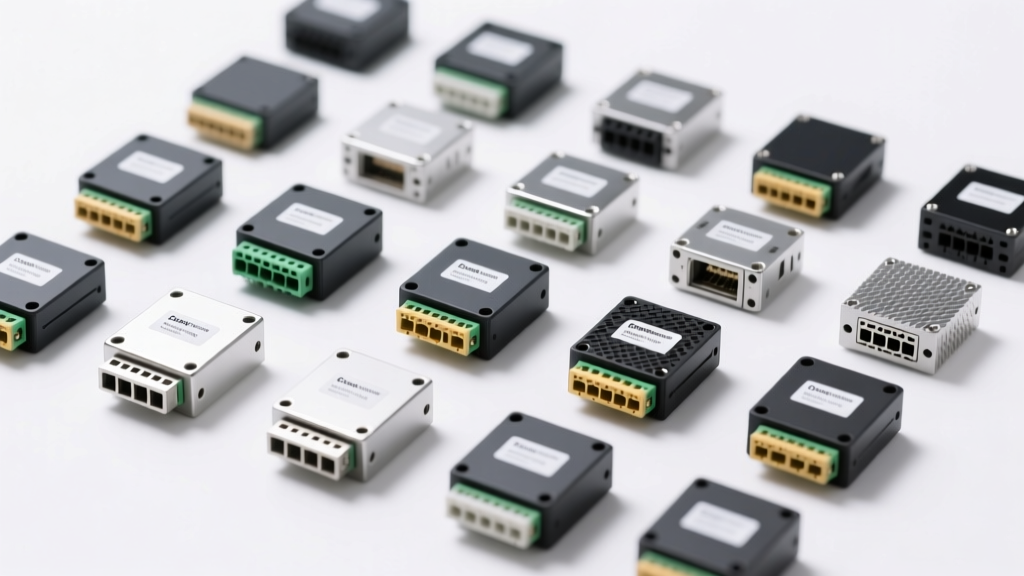
Types of 720p MIPI Camera Module Interfaces
A 720p MIPI camera module is a compact, high-efficiency imaging solution widely used in embedded systems, mobile devices, IoT applications, and industrial equipment. The MIPI (Mobile Industry Processor Interface) standard enables high-speed data transmission with low power consumption, making it ideal for real-time video capture. These modules come in various configurations tailored to specific use cases, each offering unique advantages in terms of field of view, size, environmental adaptability, and image quality.
Fixed Lens Modules
Equipped with a fixed focal length, these modules are optimized for consistent imaging at a specific distance range.
Advantages
- High optical consistency and reliability
- Cost-effective for mass production
- Low power and minimal processing overhead
- Ideal for automated inspection systems
Limitations
- Limited flexibility in focusing range
- Not suitable for variable-distance applications
- May require precise alignment during installation
Best for: Industrial automation, robotics vision, machine inspection, fixed-position monitoring
Wide-Angle Lens Modules
Designed with a broad field of view (FOV), often exceeding 110°, to capture expansive scenes in a single frame.
Advantages
- Captures large areas without panning
- Excellent for situational awareness
- Reduces the number of cameras needed
- Suitable for real-time surveillance
Limitations
- Potential image distortion (barrel effect)
- Reduced detail at edges
- Lower effective resolution in peripheral zones
Best for: Security systems, video conferencing, smart doorbells, panoramic monitoring
IR-Cutting Lens Modules
Featuring an IR-cut filter that automatically switches between day and night modes to optimize image clarity.
Advantages
- Accurate color reproduction in daylight
- Enhanced low-light performance with IR illumination
- Automatic switching between color and B/W modes
- Superior for 24/7 surveillance applications
Limitations
- Slightly higher cost due to filter mechanism
- Mechanical filter may wear over time
- Requires IR LEDs for night operation
Best for: Outdoor security cameras, night vision systems, all-weather monitoring
Micro-Camera Modules
Ultra-compact designs engineered for integration into space-constrained devices without sacrificing image quality.
Advantages
- Extremely small footprint (as small as 3–5mm)
- Lightweight and low power consumption
- Enables discreet or internal placement
- Supports real-time streaming via MIPI CSI-2
Limitations
- Limited lens options due to size
- May require custom mounting solutions
- Susceptible to overheating in enclosed spaces
Best for: Wearable devices, endoscopic medical tools, drones, miniature robots
Dome Camera Modules
Housed in a protective dome-shaped enclosure, these modules combine aesthetics with functionality for discreet monitoring.
Advantages
- Vandal-resistant and weatherproof design
- Discreet appearance reduces visual impact
- Often integrates wide-angle or varifocal lenses
- Suitable for indoor and outdoor environments
Limitations
- Glare or reflection on dome surface can affect image
- Requires regular cleaning for optimal clarity
- Bulkier than bare modules
Best for: Retail surveillance, public spaces, office buildings, transportation hubs
Adjustable Focal Length Modules
Also known as varifocal or zoom-enabled modules, these allow dynamic adjustment of focus and magnification.
Advantages
- Flexible focusing from close-up to distant objects
- Ideal for applications requiring variable detail levels
- Reduces need for multiple camera types
- Supports remote zoom control in some models
Limitations
- Higher cost and complexity
- Increased power consumption
- Potential mechanical wear over time
Best for: CCTV systems, intelligent traffic monitoring, robotic vision, adaptive surveillance
| Module Type | Image Quality | Flexibility | Size & Form Factor | Primary Applications |
|---|---|---|---|---|
| Fixed Lens | High (consistent) | Low | Compact | Industrial inspection, robotics |
| Wide-Angle | Good (edge distortion) | Medium | Standard | Security, conferencing, smart homes |
| IR-Cutting | Excellent (day/night) | High | Standard to Large | Surveillance, outdoor monitoring |
| Micro-Camera | Good (size-limited) | Medium | Very Small | Wearables, medical, drones |
| Dome | Good to High | Medium | Large (enclosed) | Indoor/outdoor surveillance |
| Adjustable Focal | High (variable) | Very High | Medium to Large | CCTV, adaptive vision systems |
Expert Tip: When selecting a 720p MIPI camera module, ensure compatibility with your host processor’s MIPI CSI-2 lanes and data rate. Also, consider using modules with built-in auto-exposure and noise reduction for improved performance in variable lighting conditions.
Features of 720p MIPI Camera Module Interface
The 720p MIPI (Mobile Industry Processor Interface) camera module is a widely adopted imaging solution in modern embedded and mobile systems. Combining high-speed data transmission, compact design, and reliable image quality, it serves as a versatile component across consumer electronics, industrial automation, and IoT devices. Below is a detailed breakdown of its key features and applications.
Core Features and Benefits
MIPI CSI Interface
The MIPI CSI-2 (Camera Serial Interface 2) is a standardized, high-speed interface developed by the Mobile Industry Processor Interface Alliance. It enables efficient, low-latency communication between the camera sensor and the host processor, such as SoCs in smartphones, single-board computers (e.g., Raspberry Pi), or AI vision modules.
With support for multiple data lanes (typically 1 to 4), MIPI CSI delivers high bandwidth while maintaining minimal power consumption—ideal for battery-powered and thermally constrained devices. Its differential signaling reduces electromagnetic interference (EMI), ensuring signal integrity even in compact layouts.
720p HD Resolution
Operating at 1280×720 pixels (720p HD), this camera module provides a balanced compromise between image clarity and processing efficiency. It captures smooth video at frame rates up to 30 or 60 fps, depending on the sensor and interface configuration.
This resolution is sufficient for applications like video conferencing, entry-level surveillance, educational robotics, and basic machine vision tasks. It reduces computational load compared to 1080p or 4K sensors, making it ideal for resource-limited platforms while still delivering recognizable facial details and readable text.
Compact and Modular Design
Designed for space-constrained environments, the 720p MIPI camera module features a miniature form factor with a flexible printed circuit (FPC) cable for easy routing. This allows seamless integration into wearable tech, drones, medical endoscopes, and compact IoT devices.
The small footprint supports modular system design, enabling manufacturers to embed vision capabilities without redesigning the entire chassis. Mounting options often include adhesive pads, screws, or clip-in housings, facilitating rapid prototyping and mass production alike.
Real-Time Video Streaming
Equipped with direct hardware-level video streaming capabilities, the MIPI interface supports real-time transmission of uncompressed or lightly compressed video data. This low-latency performance is crucial for time-sensitive applications such as remote monitoring, telepresence, and autonomous navigation in robotics.
When paired with compatible processors (e.g., NVIDIA Jetson Nano, Qualcomm Snapdragon, or NXP i.MX series), the module enables live preview, object detection, and edge AI inference with minimal delay—critical for security systems, telemedicine consultations, and drone piloting.
Enhanced Low-Light Performance
Many 720p MIPI camera modules incorporate sensors with backside illumination (BSI) technology, larger pixel sizes (e.g., 1.4µm–2.0µm), and wide-aperture lenses (f/2.0 or lower) to improve light sensitivity. Advanced image signal processors (ISPs) further enhance output through noise reduction, dynamic range optimization, and automatic gain control.
These features ensure usable image quality in dimly lit environments, making the module suitable for nighttime surveillance, indoor monitoring, and automotive rear-view systems. Some variants also support near-infrared (NIR) illumination for use with IR LEDs in complete darkness.
Power Efficiency & System Integration
Beyond the inherent low-power nature of the MIPI protocol, these modules are engineered for energy-efficient operation—often consuming less than 150mW during active video capture. This makes them ideal for portable and solar-powered devices.
They typically support standard power rails (e.g., 2.8V–3.3V), I²C control for configuration (exposure, white balance, resolution), and compatibility with Linux-based platforms via V4L2 (Video for Linux 2) drivers, simplifying software integration and customization.
| Feature | Description | Common Applications |
|---|---|---|
| Interface Type | MIPI CSI-2 (1–4 lanes) | Embedded vision, mobile devices, AI edge computing |
| Resolution | 1280 × 720 (720p HD) | Video calling, surveillance, education kits |
| Frame Rate | Up to 60 fps | Real-time analytics, motion tracking |
| Low-Light Sensitivity | BSI sensor, f/2.0 aperture typical | Night vision, indoor monitoring |
| Power Consumption | < 150mW (active mode) | Battery-powered IoT, wearables |
Summary of Advantages
- High-Speed Data Transfer: MIPI CSI ensures fast, reliable image transmission with minimal CPU overhead.
- Balanced Image Quality: 720p resolution offers clear visuals without excessive bandwidth or processing demands.
- Space-Saving Form Factor: Compact size enables integration into miniaturized and portable systems.
- Low Latency Streaming: Ideal for real-time applications requiring immediate visual feedback.
- Superior Low-Light Imaging: Enhanced sensors and optics maintain performance in challenging lighting.
- Energy Efficient: Optimized for long-term operation in battery-driven devices.
- Wide Compatibility: Works seamlessly with popular development platforms and operating systems.
Note: When selecting a 720p MIPI camera module, ensure compatibility with your host processor’s MIPI lane count, voltage requirements, and driver support. Using mismatched components may result in unstable video, boot failures, or permanent hardware damage. Always consult the datasheet and reference design guidelines before integration.
Applications of 720p MIPI Camera Module Interface
The 720p MIPI (Mobile Industry Processor Interface) camera module has become a cornerstone in embedded vision systems due to its balance of resolution, power efficiency, compact size, and high-speed data transmission. This interface enables seamless integration between image sensors and processors, making it ideal for a wide range of modern technological applications. Below is a comprehensive overview of its key uses across various industries.
IoT Devices
720p MIPI camera modules are widely used in Internet of Things (IoT) devices to enable real-time image and video capture. Their low power consumption and high data throughput make them perfect for smart sensors, connected appliances, and edge computing devices.
- Integrated into smart cameras for facial recognition, motion detection, and object tracking
- Enable visual data collection for smart city infrastructure like traffic monitoring and environmental sensing
- Support AI-powered analytics at the edge, reducing reliance on cloud processing
- Facilitate remote monitoring in agriculture, such as crop health assessment and livestock tracking
Key benefit: Enables intelligent, vision-based decision-making in distributed IoT networks
Robotics and Machine Vision
Due to their small footprint, low latency, and reliable interface, 720p MIPI camera modules are essential in robotics for navigation, object recognition, and task execution based on visual feedback.
- Used in autonomous mobile robots (AMRs) for SLAM (Simultaneous Localization and Mapping)
- Enable pick-and-place robots in manufacturing to identify and manipulate objects with precision
- Integrated into drones and exploration robots for terrain analysis and obstacle avoidance
- Support human-robot interaction through gesture and facial recognition
Technical advantage: MIPI CSI-2 interface ensures minimal processing delay, crucial for real-time robotic control
Augmented Reality (AR) Headsets
In AR systems, 720p MIPI cameras serve as environmental input devices, capturing real-world scenes before overlaying digital content. This functionality is critical for creating immersive and context-aware experiences.
- Provide pass-through video in mixed reality headsets for enhanced situational awareness
- Enable markerless tracking and spatial mapping for accurate digital object placement
- Support eye-tracking and hand-gesture recognition for intuitive user interfaces
- Used in industrial AR for remote expert assistance, training simulations, and maintenance guidance
Innovation driver: Compact MIPI modules allow sleek, wearable AR designs without compromising visual input quality
Medical Imaging Devices
The 720p resolution and reliable digital interface make MIPI camera modules ideal for medical applications where clarity, size, and sterility are paramount.
- Core component in endoscopic cameras for minimally invasive surgeries
- Used in dental imaging tools, dermatoscopes, and otoscopes for detailed visual diagnostics
- Enable real-time video streaming to monitors during procedures for team collaboration
- Support telemedicine applications with portable, high-quality imaging devices
Clinical value: 720p resolution provides sufficient detail for diagnosis while minimizing data bandwidth and processing needs
Smart Home Security Systems
720p MIPI camera modules are extensively integrated into smart security cameras, doorbells, and surveillance systems, offering homeowners reliable monitoring capabilities.
- Deliver HD-quality video for clear identification of people and activities
- Enable local AI processing for person detection, pet recognition, and anomaly alerts
- Support night vision and wide dynamic range (WDR) features for all-weather performance
- Facilitate two-way audio integration with synchronized video capture
User benefit: Balances image quality and storage efficiency, ideal for continuous recording and cloud backup
Additional Applications
Beyond the primary uses, 720p MIPI camera modules find utility in numerous emerging and niche markets.
- Automotive: Used in backup cameras, driver monitoring systems (DMS), and cabin occupancy detection
- Consumer Electronics: Found in smart displays, video conferencing devices, and gesture-controlled appliances
- Industrial Automation: Employed in quality inspection, barcode reading, and assembly line monitoring
- Education: Integrated into interactive learning tools and STEM robotics kits
Future potential: As AI and computer vision become more accessible, MIPI-based vision systems will expand into new domains
Design Recommendation: When selecting a 720p MIPI camera module, consider factors such as sensor type (CMOS), lens compatibility, field of view, low-light performance, and software support (e.g., Linux V4L2 drivers). Modules with built-in image signal processors (ISPs) can reduce host processor load and simplify system design.
| Application | Key Requirements | MIPI Advantage | Typical Use Case |
|---|---|---|---|
| IoT Devices | Low power, small size, edge AI | Energy-efficient interface with high bandwidth | Smart doorbell with facial recognition |
| Robotics | Low latency, real-time processing | Direct processor integration via CSI-2 | Warehouse robot navigation |
| AR Headsets | Compact design, high frame rate | Miniature form factor with reliable data transfer | Hands-free remote assistance |
| Medical Imaging | Image clarity, sterilization compatibility | Digital output avoids analog interference | Laparoscopic surgery camera |
| Home Security | HD video, motion detection | Supports H.264/H.265 encoding integration | Indoor security camera with night vision |
Why 720p MIPI Continues to Dominate Embedded Vision
- Cost-Effective: Offers HD-quality imaging at a lower price point than 1080p solutions
- Power Efficient: Consumes less energy, ideal for battery-powered and portable devices
- Mature Ecosystem: Widely supported by processors from Qualcomm, NXP, TI, and Raspberry Pi
- Scalable: Can be used in single or multi-camera configurations with proper MIPI lane management
- Reliable: Digital interface reduces noise and signal degradation compared to analog alternatives
How to Choose a 720p MIPI Camera Module Interface: A Comprehensive Guide for Resellers
Selecting the right 720p MIPI camera module for resale is a strategic decision that directly impacts customer satisfaction, product versatility, and profitability. As a business owner or distributor, understanding the technical and market-driven aspects of these modules ensures you stock products that meet diverse application needs—from DIY electronics and AI development to industrial automation and surveillance systems.
Important Note: The MIPI CSI-2 interface is the industry standard for high-speed data transmission in embedded vision systems. Choosing compatible, high-quality 720p modules ensures seamless integration with popular platforms like Raspberry Pi, NVIDIA Jetson, and various SoC-based devices.
Key Factors to Consider When Sourcing 720p MIPI Camera Modules
- Camera Specifications and Sensor Technology
- Focal Length Options: Offer a variety of focal lengths (e.g., wide-angle, standard, telephoto) to cater to different use cases such as robotics, drones, and smart home devices. This flexibility appeals to a broader customer base with varying optical needs.
- Aperture Types: Include models with fixed aperture lenses for consistent performance in video-centric applications like live streaming and conferencing. Fixed apertures simplify integration and reduce costs for end-users focused on reliability.
- Sensor Types:
- CMOS Sensors: Prioritize CMOS-based modules for low power consumption, cost-effectiveness, and widespread compatibility. These are ideal for battery-powered devices and consumer electronics.
- CCD Sensors: Stock select CCD sensor modules for niche markets requiring superior image quality, better light sensitivity, and reduced noise—ideal for scientific, medical, or industrial imaging applications.
- Hardware Compatibility and Platform Support
- MIPI CSI-2 Interface: Ensure all modules support the MIPI CSI-2 protocol, which provides high-bandwidth, low-latency communication between the camera and processor. This interface is essential for real-time video processing in embedded systems.
- Processor & Platform Integration: Verify compatibility with major platforms:
- Raspberry Pi: Offer plug-and-play modules with pre-tested drivers for RPi 4/5 and Zero series to attract hobbyists and educators.
- NVIDIA Jetson (Nano, Xavier, Orin): Stock high-performance modules optimized for AI inference, computer vision, and edge computing applications.
- Other SoCs: Include support for platforms using Allwinner, Rockchip, or Qualcomm chips to expand market reach.
- Provide documentation or datasheets indicating GPIO pinouts, clock requirements, and driver availability to assist developers during integration.
- Low-Light Performance for Surveillance and Security
- Sensor Size: Larger sensors (e.g., 1/3" or 1/2.7") capture more light, significantly improving image clarity in dim environments—critical for indoor/outdoor security cameras.
- Wide Dynamic Range (WDR): Modules with WDR technology balance exposure in high-contrast scenes (e.g., bright windows and dark interiors), making them ideal for surveillance and automotive applications.
- Low Lux Ratings: Look for modules rated at 0.1 lux or lower for usable night vision performance without additional illumination.
- Night Vision Support: Pair low-light capable sensors with IR illumination compatibility for 24/7 monitoring solutions.
- Optical Configurations and Lens Options
- Fixed Lenses: Ideal for industrial automation, machine vision, and fixed-position monitoring where consistent focus and durability are required. These offer better long-distance clarity and resistance to vibration.
- Wide-Angle Lenses (90°–120° FOV): Perfect for video conferencing, smart doorbells, and panoramic monitoring in confined spaces. Highlight these for customers needing broad coverage in compact setups.
- IR-Cut Filters: Essential for maintaining accurate color reproduction during daylight while enabling infrared sensitivity at night. Auto-IR-cut filters provide seamless day/night operation and are highly valued in professional surveillance systems.
- Focus Types: Offer both fixed-focus and manual-focus variants. Fixed-focus modules suit cost-sensitive applications, while manual-focus options give developers greater control for specialized installations.
- Quality, Pricing Strategy, and Sourcing Tips
- Balance Quality and Cost: Source modules from reputable manufacturers with consistent build quality, reliable image output, and stable firmware. Avoid overly cheap options that may compromise performance or longevity.
- Bulk Purchasing Advantages: Leverage platforms like Alibaba.com to negotiate volume discounts, reduce per-unit costs, and improve profit margins. Establish relationships with verified suppliers offering OEM/ODM services for private labeling.
- Certifications and Testing: Prioritize suppliers who provide FCC, CE, or RoHS compliance documentation. Request sample units to test image quality, thermal performance, and software compatibility before large orders.
- After-Sales Support: Choose vendors that offer technical support, driver updates, and return policies—this enhances your own customer service capabilities.
| Selection Factor | Target Applications | Recommended Features | Customer Benefits |
|---|---|---|---|
| CMOS Sensor + Fixed Aperture | DIY Projects, Streaming, Education | Low power, plug-and-play, MIPI CSI-2 | Easy setup, energy efficient, affordable |
| CCD Sensor + WDR | Industrial Inspection, Medical Imaging | High dynamic range, low noise | Superior image fidelity, precision |
| Large Sensor + IR-Cut Filter | Surveillance, Night Vision | Low lux rating, auto IR-cut | Clear 24/7 monitoring, accurate colors |
| Wide-Angle Lens + MIPI CSI-2 | Video Conferencing, Smart Homes | 100°+ FOV, compact design | Broad coverage, space-saving |
| Jetson/RPi Compatible | AI Development, Robotics | Pre-tested drivers, GPIO access | Faster prototyping, developer-friendly |
Pro Tip: Create bundled kits (e.g., camera + mounting bracket + IR lights + cable) tailored to specific use cases like home security or robotics. This increases average order value and positions your business as a one-stop solution provider.
Additional Recommendations for Resellers
- Maintain a diverse inventory with clear product categorization (e.g., by platform, lens type, or application) to simplify customer decision-making.
- Offer detailed product descriptions, including resolution, frame rate (e.g., 30fps at 720p), interface type, and compatible OS (Linux, Android, etc.).
- Provide sample images or demo videos to showcase real-world performance under different lighting conditions.
- Stay updated on emerging trends like AI-powered vision systems and edge computing to anticipate future demand.
- Partner with suppliers who offer fast shipping and MOQ (Minimum Order Quantity) flexibility to adapt to market changes quickly.
By carefully evaluating camera specifications, hardware compatibility, optical features, and sourcing strategies, you can build a competitive and profitable inventory of 720p MIPI camera modules. Focusing on quality, versatility, and customer needs will position your business as a trusted supplier in the rapidly growing embedded vision market.
Frequently Asked Questions About 720p MIPI Camera Modules
Q1: Can 720p MIPI camera modules be used for AR/VR applications?Yes, 720p MIPI camera modules can be effectively used in basic augmented reality (AR) and virtual reality (VR) applications. At 1280×720 resolution, they provide sufficient image clarity for overlaying digital content onto real-world environments, making them suitable for entry-level AR experiences such as object recognition, marker-based tracking, and simple spatial mapping.
However, for immersive VR systems or advanced AR headsets requiring high frame rates and ultra-low latency, developers typically opt for higher-resolution sensors (1080p or 4K) to ensure a seamless visual experience and reduce motion blur. Additionally, higher resolutions support better depth perception and field-of-view accuracy, which are critical in extended reality (XR) environments.
Use Case Examples:
- Educational AR apps using mobile platforms
- Basic gesture recognition systems
- Indoor navigation assistance with visual cues
720p MIPI camera modules are highly advantageous in robotics due to their combination of resolution, speed, and power efficiency. The MIPI (Mobile Industry Processor Interface) standard enables high-speed, low-latency data transmission between the camera sensor and the processing unit—typically an SoC (System on Chip) like those found in NVIDIA Jetson or Raspberry Pi platforms.
This fast communication is crucial for real-time applications such as obstacle detection, path planning, and autonomous navigation. The 720p resolution strikes a balance between image detail and computational load, allowing robots to process visual data efficiently without overwhelming onboard processors.
Key Benefits in Robotics:
- Real-Time Vision Processing: Enables immediate response to environmental changes.
- Compact Design: Ideal for space-constrained robotic systems.
- Low Power Consumption: Extends battery life in mobile robots and drones.
- Integration with AI Frameworks: Compatible with machine learning models for object detection, facial recognition, and SLAM (Simultaneous Localization and Mapping).
These features make 720p MIPI cameras a popular choice in educational robots, warehouse automation systems, and last-mile delivery bots.
Q3: Do these camera modules work seamlessly in low-light conditions?While 720p MIPI camera modules are not specifically designed as low-light optimized sensors (like those with starlight or thermal imaging capabilities), many models incorporate advanced image signal processors (ISPs) that enhance performance in dim environments.
Features such as automatic gain control (AGC), dynamic exposure adjustment, noise reduction algorithms, and wide dynamic range (WDR) help improve visibility in suboptimal lighting. Some variants also include back-illuminated (BSI) sensors to increase light sensitivity.
Typical Applications in Low-Light Scenarios:
- Indoor Surveillance: Monitoring hallways, server rooms, or smart homes during nighttime.
- Medical Imaging Devices: Used in endoscopic tools or portable diagnostics where ambient lighting is limited.
- Industrial Inspection: Inspecting equipment in poorly lit machinery enclosures.
For professional-grade low-light performance, pairing the module with infrared (IR) illumination or selecting a model with a larger pixel size (e.g., 3.0µm vs. 1.12µm) can significantly improve results.
Q4: Are 720p MIPI camera modules compatible with various operating systems?Yes, 720p MIPI camera modules are widely compatible with multiple operating systems, particularly Linux-based distributions and Android, which are commonly used in embedded and mobile computing environments.
Most manufacturers provide kernel drivers (V4L2 – Video for Linux 2) for seamless integration into Linux systems. Android devices leverage the Camera HAL (Hardware Abstraction Layer) to interface with MIPI cameras, enabling access through standard APIs like Camera2.
Supported Platforms Include:
- Ubuntu, Debian, and other Linux distros on single-board computers
- Android OS for tablets, smart glasses, and handheld devices
- Yocto Project and Buildroot for custom embedded OS builds
- RTOS (Real-Time Operating Systems) with MIPI support via middleware
Additionally, cross-platform frameworks such as OpenCV, GStreamer, and ROS (Robot Operating System) further simplify development across different environments, enabling rapid prototyping and deployment.
Q5: Do MIPI interfaces have higher advantages over other interface options?Yes, MIPI interfaces offer several key advantages over traditional camera interfaces like USB, CSI-2 alternatives, or parallel LVDS, especially in embedded and mobile applications.
The MIPI Alliance-designed D-PHY or C-PHY standards enable high-speed serial data transfer with minimal electromagnetic interference (EMI), reduced pin count, and excellent power efficiency. This makes MIPI ideal for compact, battery-powered devices where space and energy consumption are critical.
| Feature | MIPI Interface | Traditional USB/Parallel |
|---|---|---|
| Data Speed | Up to several Gbps per lane (e.g., D-PHY v2.0: 4.5 Gbps) | Limited by USB 2.0/3.0 or bus congestion |
| Power Efficiency | Low voltage swing and adaptive clocking reduce power use | Higher power draw, especially at high data rates |
| Form Factor | Ultra-compact, flexible PCB routing | Bulkier connectors and traces |
| Latency | Near real-time transmission ideal for video streaming | Higher latency due to protocol overhead |
| Use Cases | Smartphones, drones, AR/VR headsets, robotics | Webcams, external cameras, legacy systems |
These benefits make MIPI the preferred interface in modern compact electronics, where performance, size, and battery life are paramount. As a result, 720p MIPI camera modules are increasingly adopted in next-generation IoT devices, wearable tech, and edge AI systems.