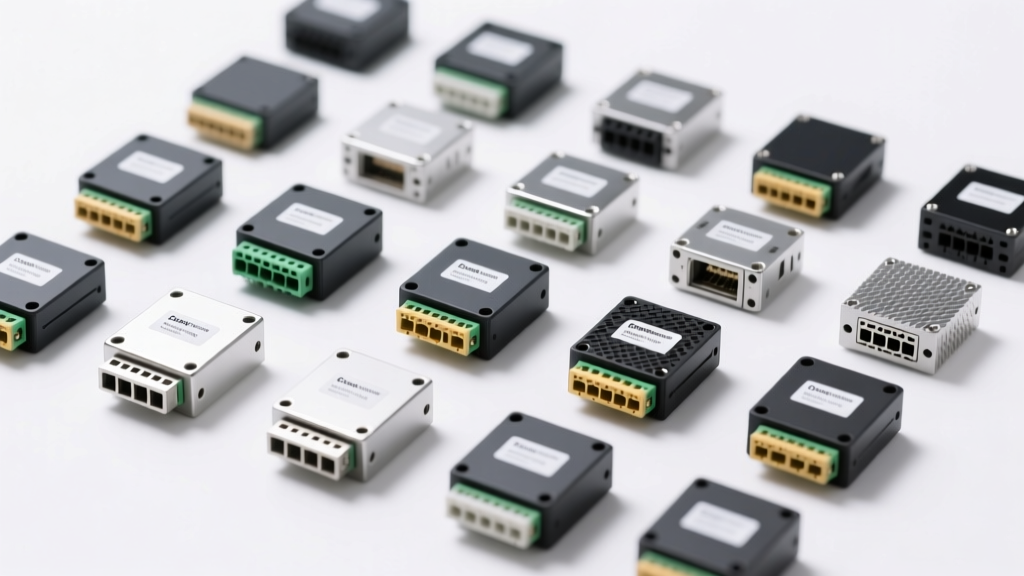
Types of 2-Pin Female JST Connectors
A 2-pin female JST connector is a compact, reliable electrical connector widely used across electronics, robotics, automotive systems, and industrial equipment. Manufactured by Japan Solderless Terminal (JST), these connectors are known for their secure fit, durability, and ease of use. Different JST series offer varying pitch sizes, locking mechanisms, and current ratings, making them suitable for specific applications.
Choosing the right 2-pin female JST connector depends on factors like space constraints, current requirements, environmental conditions, and whether frequent mating cycles are needed. Below is a detailed breakdown of the most common JST series used in 2-pin configurations.
JST XH Series
Pitch: 2.5 mm | Current Rating: Up to 10A
Advantages
- High current capacity (10A)
- Durable for frequent connect/disconnect cycles
- Widely available and easy to source
- Secure locking tab prevents accidental disconnection
Limitations
- Larger size limits use in compact devices
- Not ideal for ultra-miniature applications
Best for: Robotics, automotive systems, power delivery in household electronics
JST PH Series
Pitch: 2.0 mm | Current Rating: Up to 2A
Advantages
- Compact size ideal for tight spaces
- Secure fit with positive locking mechanism
- Commonly used in battery and sensor connections
- Excellent for low-voltage signal and power lines
Limitations
- Lower current capacity than XH series
- More delicate; requires careful handling
Best for: Drones, medical devices, portable electronics, battery packs
JST GH Series
Pitch: 1.25 mm | Current Rating: Up to 1A
Advantages
- Ultra-compact design for high-density PCBs
- Low contact resistance for signal integrity
- Used in precision instrumentation
- Reliable in sensitive electronic environments
Limitations
- Very low current handling
- Fragile; not suited for high-vibration areas
- Difficult to hand-solder without proper tools
Best for: Telecommunications equipment, optical systems, miniature sensors
JST BE Series
Pitch: 2.0 mm | Current Rating: Up to 3A
Advantages
- Integrated locking latches prevent disconnection
- Vibration-resistant design
- Ideal for harsh environments
- Secure retention under mechanical stress
Limitations
- Slightly bulkier than standard PH series
- Less common in consumer electronics
Best for: Automotive systems, industrial machinery, high-vibration applications
JST RCM Series
Pitch: 2.0 mm | Current Rating: Up to 2A
Advantages
- Designed for easy soldering and desoldering
- Right-angle and vertical options available
- Space-saving on PCB layouts
- Good thermal dissipation properties
Limitations
- Limited to PCB-mounted use
- Not suitable for field-replaceable wiring
Best for: Circuit boards, embedded systems, compact electronics with heat concerns
JST VP Series
Pitch: 2.0 mm | Current Rating: Up to 3A
Advantages
- Tactile lock ensures proper mating
- Prevents incomplete or improper connections
- High reliability in mission-critical systems
- Common in safety-sensitive applications
Limitations
- Requires precise alignment during mating
- Higher cost than standard connectors
Best for: Home appliances, industrial controls, machinery with limited visual access
| Series | Pitch | Current Rating | Key Feature | Best Application |
|---|---|---|---|---|
| JST XH | 2.5 mm | Up to 10A | High power, durable | Robotics, automotive, power systems |
| JST PH | 2.0 mm | Up to 2A | Compact, secure fit | Drones, medical devices, battery packs |
| JST GH | 1.25 mm | Up to 1A | Ultra-miniature, precision | Telecom, optical systems, sensors |
| JST BE | 2.0 mm | Up to 3A | Vibration-resistant lock | Industrial, automotive, high-vibration |
| JST RCM | 2.0 mm | Up to 2A | PCB-friendly, easy soldering | Embedded electronics, circuit boards |
| JST VP | 2.0 mm | Up to 3A | Tactile engagement, high reliability | Appliances, industrial machinery |
Expert Tip: Always verify the pitch and series before ordering or replacing JST connectors. Even small differences (e.g., 2.0 mm PH vs. 2.5 mm XH) are not interchangeable and can damage components. Use a caliper or reference datasheets for accuracy.
Specifications & Maintenance of 2-Pin Female JST Connectors
2-pin female JST connectors are widely used in electronics, robotics, battery packs, and PCB applications due to their compact size, secure locking mechanism, and reliable electrical performance. Understanding their technical specifications ensures compatibility and safety in your circuit design, while proper maintenance extends their lifespan and prevents connection failures.
Key Specifications
Material Composition
The housing of 2-pin female JST connectors is typically made from high-quality thermoplastic, most commonly Polybutylene Terephthalate (PBT). This material is chosen for its excellent resistance to heat, chemicals, and mechanical stress, making it ideal for use in demanding environments.
The internal contacts are usually constructed from copper alloy, often plated with tin or gold to enhance conductivity and prevent oxidation. This combination ensures low contact resistance and long-term reliability, even under repeated mating cycles.
Dimensions & Pitch
JST connectors come in various series with standardized pitch sizes. The most common pitches for 2-pin variants are 1.25 mm and 2.5 mm, which determine compatibility with mating headers.
For example, the XH series features a housing size of approximately 6.6 mm × 5.9 mm × 2.6 mm, while the smaller PH series measures around 4.7 mm × 4.0 mm × 1.7 mm. These compact dimensions make JST connectors ideal for space-constrained applications such as drones, wearable devices, and sensor modules.
Current Rating
The maximum current a JST connector can handle depends on its series and wire gauge. For instance, the GH series supports up to 1.5 A per contact, suitable for low-power signal or sensor connections.
In contrast, the XH series is rated for up to 10 A, making it appropriate for higher-power applications such as battery charging circuits or motor control systems. Always match the connector’s current rating with your circuit’s load to avoid overheating or failure.
Voltage Rating
Voltage ratings vary across JST series and are directly related to insulation quality and spacing. The PH series is typically rated for up to 250 VAC, sufficient for most consumer electronics and low-voltage DC systems.
Higher-end variants like the SEP5 series can withstand up to 600 V, making them suitable for industrial or power distribution applications where electrical isolation is critical. Always verify voltage compatibility, especially in mixed-signal or high-voltage environments.
Wire Gauge Compatibility
JST connectors are designed to accommodate a range of wire sizes to ensure flexibility in wiring. The standard range is between 18 AWG and 24 AWG, with the XH series specifically supporting wires from 14 AWG to 24 AWG (approximately 0.75 mm² to 1.5 mm²).
Using the correct wire gauge ensures a secure crimp and minimizes resistance at the contact point. Undersized wires may overheat, while oversized wires can damage the terminal or fail to seat properly.
Series Overview
JST offers multiple connector series, each tailored for specific applications:
- XH Series: High current (up to 10 A), ideal for power delivery.
- PH Series: Compact size, commonly used in battery packs and PCBs.
- GH Series: Moderate current (1.5 A), suitable for signal lines.
- SEP5 Series: High voltage (600 V), used in industrial controls.
Always confirm the series marking on the connector housing to ensure correct mating and performance.
| Specification | Typical Value | Notes |
|---|---|---|
| Housing Material | Polybutylene Terephthalate (PBT) | Heat and chemical resistant, flame retardant |
| Contact Material | Copper Alloy (Tin/Gold Plated) | Ensures low resistance and corrosion resistance |
| Pitch Size | 1.25 mm or 2.5 mm | Depends on series (PH, XH, etc.) |
| Current Rating | 1.5 A – 10 A | XH series: up to 10 A; PH/GH: lower |
| Voltage Rating | 250 V – 600 V | Varies by series and insulation |
| Wire Gauge Range | 14–24 AWG (0.75–1.5 mm²) | Ensure proper crimping for reliability |
Essential Maintenance Practices
Important: Always disconnect power before inspecting or handling connectors. Using incompatible mating pairs or exceeding current/voltage ratings can lead to arcing, overheating, or fire hazards. Follow manufacturer guidelines for crimping tools and wire preparation to ensure secure, long-lasting connections. Proper maintenance not only enhances performance but also ensures safety and reliability in your electronic systems.
Applications of 2-Pin Female JST Connectors
2-pin female JST connectors are compact, reliable, and widely used across numerous industries due to their secure locking mechanism, ease of use, and resistance to vibration and disconnection. These connectors, typically available in common pitch sizes such as 2.0mm and 2.54mm, serve as essential components in both consumer and industrial electronics. Their design ensures stable power and signal transmission in space-constrained environments, making them a preferred choice for engineers, manufacturers, and hobbyists alike.
Household Appliances
Modern household appliances such as washing machines, refrigerators, dishwashers, and microwaves increasingly rely on 2-pin female JST connectors for internal wiring and module interconnections. These connectors simplify assembly and serviceability by enabling quick disconnects between control boards, sensors, and motor drivers.
- Facilitate modular design, allowing for easier repairs and component replacements
- Provide secure, vibration-resistant connections in appliances with moving parts
- Support moisture-resistant enclosures when paired with appropriate housings
- Commonly used in temperature sensors, door switches, and display panels
Key benefit: Improved manufacturing efficiency and reduced downtime during maintenance
Automotive Industry
In automotive electronics, reliability under harsh conditions is paramount. 2-pin female JST connectors are widely used in vehicles to link sensors, lighting modules, and auxiliary control units. Their compact size and secure fit make them ideal for tight spaces within dashboards, engine compartments, and body control modules.
- Used in OBD-II systems, cabin sensors, and interior lighting circuits
- Resist loosening due to road vibrations and thermal cycling
- Support rapid assembly in production lines with polarized, foolproof design
- Compatible with automotive-grade wiring and insulation standards
Critical advantage: Enhanced durability in high-vibration and temperature-variable environments
Robotics
Robotics systems demand connectors that are small, lightweight, and capable of withstanding repeated mating cycles. The 2-pin female JST connector is a staple in robotic platforms, from educational kits to industrial automation systems, where modular design and easy troubleshooting are essential.
- Commonly used to connect power to servos, motors, and microcontrollers (e.g., Arduino, Raspberry Pi)
- Enable plug-and-play functionality for sensor arrays and actuator modules
- Support hot-swapping in development and testing phases
- Often found in battery management circuits for small robotic platforms
Pro tip: Use JST-PH or JST-XH series for better retention in mobile robotic applications
Commercial Electronics
From telecommunications infrastructure to medical diagnostic devices, 2-pin female JST connectors play a crucial role in ensuring signal integrity and power delivery. Their standardized design allows for interchangeability across different manufacturers and systems.
- Used in medical devices like glucose monitors and portable infusion pumps
- Integrated into telecom routers, switches, and power supply units
- Employed in test and measurement equipment for internal board-to-board connections
- Support low-current signal transmission with minimal interference
Design consideration: Choose connectors with gold-plated contacts for sensitive medical and communication applications
DIY Projects and Prototyping
Makers, students, and electronics enthusiasts frequently use 2-pin female JST connectors in prototyping due to their ease of soldering, compact footprint, and compatibility with breadboards and PCBs. They are especially popular in battery-powered and portable projects.
- Standard for LiPo battery connections in drones, RC vehicles, and wearable tech
- Used in Arduino and ESP32-based IoT devices for power input and peripheral linking
- Available in pre-crimped cables for quick integration
- Support polarity protection, reducing the risk of reverse connection damage
Popular variant: JST-PH 2.0mm is the de facto standard for single-cell Li-ion/LiPo battery connections
Industrial Machinery
In industrial automation and control systems, reliability and safety are non-negotiable. 2-pin female JST connectors are employed in PLCs, HMI panels, and sensor networks where secure, long-lasting connections are required despite exposure to dust, moisture, and chemical agents.
- Connect limit switches, proximity sensors, and encoder feedback systems
- Used in control cabinet wiring for modular I/O expansion
- Withstand operating temperatures from -40°C to +105°C depending on series
- Available in sealed variants for washdown and outdoor environments
Durability note: Look for connectors rated IP67 or higher for harsh industrial settings
Consumer Electronics
The miniaturization trend in smartphones, tablets, wearables, and audio devices has made 2-pin female JST connectors indispensable. Their small form factor allows for efficient internal layout while maintaining reliable power and data links between sub-assemblies.
- Used in battery connectors for fitness trackers and smartwatches
- Link internal modules like speakers, microphones, and charging circuits
- Enable compact flex cable routing in slim devices
- Support high-cycle life for devices requiring frequent servicing
Space-saving advantage: Enables sleek, lightweight designs without compromising connection integrity
Additional Applications
Beyond the major sectors, 2-pin female JST connectors are also found in emerging technologies and niche markets, demonstrating their versatility and future-proof design.
- Renewable Energy: Used in solar charge controllers and battery monitoring systems
- Aerospace & Drones: Connect flight controllers, GPS modules, and telemetry systems
- Education: Standard in STEM kits and robotics learning platforms
- Wearables: Power delivery in smart clothing and health monitoring patches
- LED Lighting: Interconnect strips and driver modules in smart lighting systems
Future outlook: Growing demand in IoT and edge computing devices will further expand their usage
Expert Recommendation: When selecting 2-pin female JST connectors, always verify the pitch (e.g., 2.0mm, 2.5mm), current rating (typically 2–3A), and mating cycle durability (often 500–1000 cycles). For high-reliability applications, opt for connectors with locking features and high-quality insulation materials. Consider using strain relief boots or cable clamps in mobile or vibrating environments to extend connector lifespan.
| Application Sector | Common JST Series | Typical Use Case | Key Requirement |
|---|---|---|---|
| Household Appliances | JST-XH, JST-VH | Sensor & control board links | Vibration resistance |
| Automotive | JST-PH, JST-ZH | Interior electronics & sensors | Temperature stability |
| Robotics | JST-PH, JST-SH | Motor & battery connections | High mating cycles |
| Medical Devices | JST-GH, JST-PA | Portable diagnostic tools | Signal reliability |
| Consumer Electronics | JST-PH, JST-NH | Battery & module interconnects | Miniaturization |
| Industrial | JST-XH, JST-PA | PLC & sensor networks | Durability in harsh environments |
Best Practices for Using 2-Pin Female JST Connectors
- Correct Polarity: Always observe pin orientation—most JST connectors are polarized to prevent reverse insertion
- Proper Crimping: Use the correct crimping tool and terminals to ensure low-resistance, gas-tight connections
- Strain Relief: Secure cables near the connector to prevent wire fatigue and breakage
- Environmental Protection: Use heat shrink tubing or conformal coating in humid or corrosive environments
- Current Rating: Do not exceed the manufacturer’s specified current load (typically 2–3A for 22 AWG wire)
- Compatibility: Ensure mating male connectors match the series and pitch to avoid damage
How To Choose a 2-Pin Female JST Connector: A Comprehensive Guide
Selecting the right 2-pin female JST connector is essential for ensuring reliable electrical connections in electronics projects, from DIY hobby circuits to industrial applications. JST (Japan Solderless Terminal) connectors are widely used due to their compact size, secure locking mechanism, and ease of use. However, with multiple series, pitches, and mounting options available, choosing the correct one can be challenging. This guide breaks down the key selection criteria to help you make an informed decision based on your project’s technical, mechanical, and economic requirements.
Important Note: Always verify compatibility with mating male connectors. Using mismatched JST series (e.g., PH vs. XH) can lead to poor connections, damage, or safety hazards. Double-check pitch and locking mechanism before purchase.
Key Factors When Choosing a 2-Pin Female JST Connector
- Compatibility with Project Requirements
Ensure the connector matches your application's electrical, mechanical, and environmental demands. For high-current circuits (e.g., motor drivers or battery packs), select a connector rated for sufficient current—typically 2A to 3A per pin depending on the series. In mechanically stressful environments (e.g., robotics or vehicles), prioritize connectors with reinforced housings and secure locking tabs. For outdoor or humid environments, consider using sealed or conformally coated variants to resist moisture and dust ingress, which can cause corrosion or short circuits over time.
- Connector Pitch Selection
JST connectors come in various pitch sizes, ranging from 1.25 mm to 2.5 mm. The pitch (distance between pin centers) determines compatibility and space requirements:
- 1.25 mm (e.g., JST PH series): Ideal for compact, space-constrained devices like drones, wearable electronics, and small sensors. Offers high density but requires careful handling during assembly.
- 2.0 mm (e.g., JST GH or SH series): Balances miniaturization and durability. Suitable for mid-sized PCBs, development boards, and consumer electronics.
- 2.5 mm (e.g., JST XH series): Larger and more robust, making them easier to handle and ideal for prototyping, power connections, and larger devices such as 3D printers or industrial controllers.
Choosing the correct pitch ensures mechanical compatibility and prevents damage to PCBs or mating connectors.
- Mount Type Consideration
The choice between through-hole and surface-mount (SMD) connectors depends on your PCB design and production needs:
- Through-Hole (THT): Provides superior mechanical strength and durability, making it ideal for applications subject to vibration or frequent plugging/unplugging. Also preferred in prototyping and low-volume builds due to easier manual soldering.
- Surface Mount (SMD): Saves PCB space and supports automated manufacturing processes. Best suited for high-density, high-volume production where board real estate is limited and mechanical stress is minimal.
Consider your assembly method and long-term reliability needs when selecting the mount type.
- Quality and Reliability
Always source connectors from reputable manufacturers or authorized distributors to ensure consistent quality. Genuine JST connectors undergo rigorous testing and meet international standards (e.g., UL, RoHS, REACH). Look for connectors with:
- High-quality thermoplastic housings resistant to heat and impact
- Phosphor bronze or beryllium copper contacts for excellent conductivity and spring retention
- Proper crimping and solderability for durable terminations
For mission-critical applications (e.g., medical devices or aerospace systems), verify performance under expected operating conditions, including temperature cycling, humidity exposure, and mechanical stress.
- Cost-Effectiveness
While cost is a factor, avoid compromising on quality for minor savings. Low-cost clones may have inconsistent dimensions, poor contact retention, or substandard materials that lead to intermittent failures. Evaluate total cost of ownership by considering:
- Bulk purchasing discounts for large-scale projects
- Long-term maintenance and replacement costs
- Warranty and technical support availability
- Potential downtime from connector failure
Investing in reliable connectors upfront often results in lower lifecycle costs and higher system reliability.
| JST Series | Pitch Size | Current Rating | Typical Applications | Mounting Options |
|---|---|---|---|---|
| PH | 1.25 mm | 2 A max | Drones, wearables, small sensors | THT, SMD |
| GH | 1.25 mm | 1.5 A max | Compact PCBs, battery connectors | THT |
| SH | 1.0 mm | 1 A max | Ultra-thin devices, fine-pitch boards | SMD only |
| XH | 2.50 mm | 3.5 A max | Power supplies, motors, 3D printers | THT, SMD |
| AH | 2.00 mm | 3 A max | Industrial controls, automotive | THT |
Expert Tip: Label your connectors and keep a reference chart of pitch sizes and compatible series. Using a digital caliper to measure pitch (center-to-center pin distance) can prevent mismatches when sourcing replacements or working with mixed JST types.
Additional Selection Tips
- Always check the mating male connector’s specifications to ensure compatibility in pitch, pin count, and locking mechanism.
- Use polarized connectors to prevent reverse insertion, which can damage sensitive electronics.
- For battery connections, prefer connectors with built-in strain relief or locking clips to prevent accidental disconnection.
- Consider pre-wired assemblies for faster integration, especially in production environments.
- Store unused connectors in anti-static bags to protect contacts from contamination and ESD damage.
Choosing the right 2-pin female JST connector involves balancing electrical performance, mechanical fit, environmental resilience, and cost. By carefully evaluating your project’s needs and understanding the differences between JST series, you can ensure a secure, long-lasting connection that enhances the overall reliability of your electronic system. When in doubt, consult the official JST datasheets or seek advice from experienced engineers or suppliers.
Frequently Asked Questions About 2-Pin Female JST Connectors
Q1: What exactly are the 2-pin female JST connectors intended for?2-pin female JST connectors are precision-engineered electrical components designed to establish secure, reliable, and reversible connections between wires and electronic devices. They are widely used in low-voltage applications to link power sources, sensors, microcontrollers, and various electronic modules.
- Common Applications: Battery packs (especially LiPo), drones, robotics, RC vehicles, 3D printers, development boards (e.g., Arduino, Raspberry Pi), and small consumer electronics.
- Functionality: These connectors act as an interface that ensures stable power delivery and signal transmission while minimizing the risk of short circuits or accidental disconnections.
- Design Advantage: The locking mechanism in many JST variants prevents unintentional unplugging, making them ideal for portable or vibration-prone environments.
Due to their compact size and reliability, 2-pin female JST connectors have become a standard in the electronics and DIY communities for efficient and safe wiring solutions.
Q2: What are the variations in the pin pitch size of these connectors and their uses?The pin pitch—defined as the distance between the centers of two adjacent pins—is a critical specification when selecting a JST connector. Using the wrong pitch can lead to poor connections or physical damage. The most common pitch sizes for 2-pin female JST connectors are:
| Pitch Size | Typical Use Cases | Key Features |
|---|---|---|
| 1.25 mm | Compact electronics, wearables, small PCBs | Ultra-miniature design; ideal for space-constrained applications |
| 2.0 mm | Battery connectors (e.g., LiPo), RC systems, hobby electronics | Balances current capacity and size; widely used in DIY projects |
| 2.5 mm | Power supplies, industrial sensors, larger electronic modules | Higher current handling; easier to handle and connect manually |
When choosing a pitch size, consider factors such as available board space, required current rating, ease of assembly, and compatibility with mating male connectors. Always verify the pitch using calipers or a datasheet to ensure a proper fit.
Q3: Which materials are typically employed in making JST connectors?JST connectors are constructed using high-performance materials to ensure durability, electrical efficiency, and resistance to environmental stress. The choice of materials directly impacts the connector’s longevity and performance.
- Insulating Housing: Made from polybutylene terephthalate (PBT), a thermoplastic polymer known for its excellent heat resistance, dimensional stability, and electrical insulation properties. This material prevents short circuits and withstands soldering temperatures during PCB assembly.
- Contact Pins: Typically crafted from phosphor bronze or beryllium copper, which offer good spring characteristics and conductivity. These pins are often plated with gold or tin to enhance corrosion resistance and ensure low contact resistance for reliable signal and power transfer.
- Gold Plating: A thin layer of gold (usually 0.5–1 micron) significantly reduces oxidation and improves connection reliability, especially in low-voltage or high-signal-integrity applications.
The combination of robust plastics and high-conductivity, corrosion-resistant metals makes JST connectors suitable for both commercial and industrial-grade electronic systems.
Q4: How to keep these female pin JST connectors in peak condition?Maintaining 2-pin female JST connectors ensures long-term reliability and prevents intermittent failures in electronic systems. Proper care extends their service life and maintains optimal electrical performance.
- Regular Inspection: Visually check for signs of wear, misalignment, or contamination before each use. Look for bent pins, cracked housing, or debris inside the socket.
- Gentle Handling: Avoid applying excessive force when mating or unmating connectors. Use a straight, aligned insertion to prevent pin bending.
- Cleaning: If dust or oxidation accumulates, use compressed air or a cotton swab with isopropyl alcohol to gently clean the contact area. Allow complete drying before reconnection.
- Storage: Store unused connectors in anti-static bags in a cool, dry place away from direct sunlight and moisture to prevent material degradation.
- Environmental Protection: In harsh environments, consider using protective boots or conformal coatings to shield connectors from moisture, dust, and vibration.
Proper maintenance not only preserves connectivity but also safeguards sensitive downstream electronics from voltage drops or connection failures.
Q5: Any signs that can help in knowing when to replace these connectors?Even high-quality JST connectors degrade over time. Recognizing early warning signs of failure is crucial to maintaining system integrity and preventing unexpected downtime or damage.
- Intermittent Connections: If devices power on and off unpredictably, it may indicate poor contact due to worn or oxidized pins.
- Visible Damage: Cracks in the plastic housing, bent or recessed pins, or discoloration (especially browning or blackening) suggest overheating or physical stress.
- Loose Fit: A male plug that feels loose or wobbles in the female connector indicates internal spring fatigue or contact wear.
- Difficulty Mating: Excessive resistance during insertion or a lack of the characteristic "click" (in locking types) may signal deformation or debris buildup.
- Heat Buildup: Warmth around the connector during operation can point to increased resistance due to corrosion or poor contact, posing a fire risk in extreme cases.
When any of these symptoms appear, it's best to replace the connector promptly. Continuing to use a compromised connector can lead to data errors, power loss, or permanent damage to connected devices. Always replace with the correct pitch and current rating to maintain system compatibility and safety.