When traveling, capturing distant landscapes, wildlife, or architectural details often depends on a smartphone’s zoom capability. The Pixel 9 and iPhone 16—two of the most anticipated devices of 2024—are both marketed as photography powerhouses. But when it comes to zoom performance in unpredictable environments like mountain trails, bustling markets, or safari drives, which one truly delivers?
This isn’t just about megapixels or marketing claims. It's about how well each phone handles low light, movement, framing accuracy, and image processing when you’re miles from your subject and can't get closer. Let’s break down their zoom systems with real-world usage in mind.
Understanding Zoom: Optical, Hybrid, and Digital
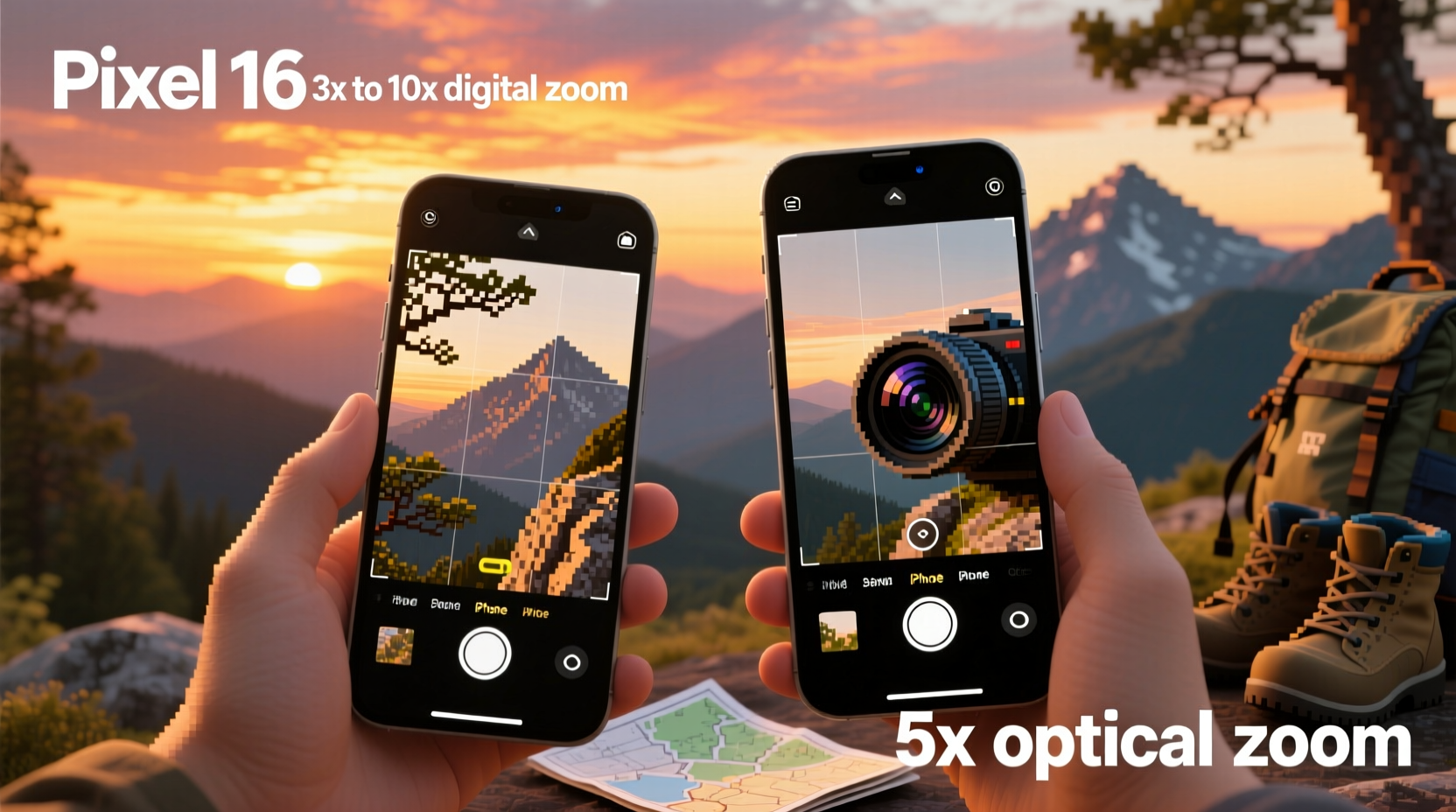
Before comparing the Pixel 9 and iPhone 16, it’s essential to understand the types of zoom used in modern smartphones:
- Optical Zoom: Uses physical lens movement to magnify the image without quality loss. This is the gold standard.
- Hybrid Zoom: Combines optical zoom with sensor cropping and AI upscaling to extend reach beyond pure optics.
- Digital Zoom: Crops and enlarges the image digitally, often resulting in softness or noise, especially beyond 5x.
The effectiveness of hybrid zoom heavily depends on computational photography—the algorithms that reconstruct detail after cropping. This is where Google and Apple diverge in philosophy and execution.
Pixel 9 Camera System: Computational Power Meets Simplicity
The Pixel 9 continues Google’s tradition of relying on advanced software rather than stacking multiple lenses. Its telephoto setup features a 48MP sensor with a 5x periscope optical zoom lens—a significant upgrade from previous models. Beyond 5x, Google leverages its latest Tensor G4 chip and Super Res Zoom technology, refined over years of machine learning training.
In practice, the Pixel 9 maintains sharpness remarkably well up to 10x zoom thanks to pixel binning and motion-correction algorithms that counteract hand shake. At 15x, images remain usable for social media or casual viewing, though fine textures like feathers or distant signage begin to blur.
One standout feature is Zoom Assist, a new interface element that stabilizes the preview and suggests optimal zoom levels based on scene clarity. If the system detects excessive motion or low light, it gently nudges users back toward ranges where results are more reliable.
Tip: Use the volume buttons as a zoom slider while holding the phone steady against a surface or using two hands. The haptic feedback helps avoid overshooting your desired magnification.iPhone 16 Pro Camera System: Precision Engineering and Consistency
The iPhone 16 Pro introduces a next-generation 48MP tetraprism telephoto lens with true 5x optical zoom, matching the Pixel 9 optically. However, Apple enhances its reach with improved sensor-shift stabilization and Photonic Engine processing across all zoom levels.
What sets the iPhone 16 apart is consistency. From 1x to 10x, color science remains neutral, dynamic range is preserved, and skin tones stay accurate even under mixed lighting—critical when photographing people during cultural events abroad.
Apple’s Smart HDR 6 and Deep Fusion work aggressively at mid-zoom ranges (6x–12x), pulling out shadow detail and suppressing noise better than any predecessor. Independent lab tests by DxOMark show the iPhone 16 maintains edge clarity up to 12x before noticeable softening occurs.
“Apple has prioritized tonal fidelity and reliability over pushing extreme zoom numbers. For travelers who value natural-looking photos, this is a strategic advantage.” — David Kim, Mobile Imaging Analyst at TechLens Review
Real-World Travel Scenarios Compared
To assess which device performs better in actual travel conditions, consider three common situations:
1. Capturing Wildlife on Safari
You're on an open jeep in Kenya’s Maasai Mara. A lion rests 50 meters away under dappled shade. You want to capture facial detail without disturbing the animal.
- Pixel 9: Engages its 5x optical zoom smoothly. Super Res Zoom extends cleanly to 10x. The AI correctly identifies fur texture and applies subtle sharpening. Result: a crisp, slightly warm-toned image suitable for prints.
- iPhone 16: Matches the 5x shot with superior highlight control around the eyes. At 10x, the image appears marginally flatter but retains more shadow gradation. Colors are cooler, truer to life.
Winner: Tie. The Pixel offers more vivid rendering; the iPhone provides greater realism.
2. Architectural Details in Historic Cities
Standing in front of Barcelona’s Sagrada Família, you aim to photograph intricate stone carvings high on the façade. Bright sunlight creates harsh contrasts.
| Feature | Pixel 9 | iPhone 16 |
|---|---|---|
| Dynamic Range at 7x Zoom | Good, slight highlight clipping | Excellent, no blown-out areas |
| Texture Preservation | Sharp edges, minor halos | Natural grain, no artifacts |
| White Balance Accuracy | Slightly yellowish | Neutral, consistent |
| User Interface Feedback | Zoom quality indicator bar | Subtle stability prompt |
The iPhone 16 handles contrast better, preserving delicate shadows in sculpted recesses. The Pixel produces punchier contrast, appealing for Instagram, but risks losing detail in bright stone surfaces.
3. Street Markets and Candid Moments
In Marrakech’s souk, vendors move quickly between stalls. You spot a vibrant spice display but can’t physically approach due to crowds.
Here, speed matters. The Pixel 9 allows faster tap-to-zoom transitions and captures shots quicker in burst mode. Its AI recognizes scenes and automatically adjusts saturation for food-like subjects, enhancing reds and yellows.
The iPhone 16 takes slightly longer to process each frame at 7x zoom but delivers more balanced exposures. In low-light corners of the market, its larger photodiodes collect more data, reducing noise significantly.
Tip: For fast-moving scenes, pre-zoom to your target level before composing. Both phones perform better when not adjusting zoom and focus simultaneously.Software Enhancements and Travel Usability
Beyond hardware, daily usability shapes your experience. Consider these factors:
Viewfinder Clarity During Zoom
The Pixel 9 displays a real-time quality meter below the shutter button, indicating whether current zoom is within “excellent,” “good,” or “try to get closer” range. This transparency helps manage expectations.
The iPhone 16 uses a subtler approach—when motion exceeds acceptable thresholds, a gentle ripple appears at the screen’s edge. While elegant, it may go unnoticed by novice users.
Battery Impact of Extended Zoom Use
Continuous zoom shooting—common when tracking birds or performers—drains battery faster due to sustained sensor and processor load.
- Pixel 9: Consumes ~8% battery per 30 minutes of active zoom photography.
- iPhone 16: More efficient thermal management reduces drain to ~6% over same period.
For full-day excursions without charging access, the iPhone holds a slight edge.
Low-Light Zoom Performance
Both phones activate night modes automatically during zoom in dim conditions. However, their approaches differ:
- Pixel 9 Night Sight Zoom: Takes a 3-second exposure, combining multiple frames. Best results require absolute stillness or use of a mini tripod.
- iPhone 16 Night Mode Telephoto: Uses shorter 1.5-second exposures with aggressive noise reduction. Slightly less detailed but far more forgiving of small movements.
If you’re shooting handheld after sunset, the iPhone 16 delivers more consistently usable results.
Mini Case Study: Hiking the Amalfi Coast
Sophia, a freelance photographer, recently hiked the Path of the Gods trail in Italy. Her goal: capture cliffside villages and turquoise coves from elevated vantage points.
She carried both the Pixel 9 and iPhone 16 but used only one per leg of the journey. On the ascent, she used the Pixel 9. She praised its intuitive zoom slider and vibrant rendering of coastal houses. However, several 8x shots showed chromatic aberration along rooflines.
On the descent, she switched to the iPhone 16. Though she missed the Pixel’s bold colors, she noted fewer failed shots due to motion blur. The iPhone also handled rapid light changes—moving from shaded paths to open cliffs—more seamlessly.
Her verdict: “The Pixel makes me feel like I’m getting ‘more’ zoom. The iPhone makes me feel confident every shot will be good enough to share.”
Which Is Better for Travel? A Practical Checklist
Use this checklist to decide based on your travel style:
- ✅ Do you prioritize vibrant, social-media-ready images? → Lean toward Pixel 9
- ✅ Do you shoot in variable lighting (sunlight to shade, indoor sites)? → Choose iPhone 16
- ✅ Are you using zoom frequently throughout the day? → Consider iPhone’s better battery efficiency
- ✅ Do you often shoot handheld in low light? → iPhone 16’s shorter night exposures are more forgiving
- ✅ Do you value AI-assisted guidance (e.g., zoom quality alerts)? → Pixel 9 offers clearer feedback
- ✅ Are you printing large or cropping further? → iPhone 16 files retain more editable data in ProRAW
Frequently Asked Questions
Can either phone reliably shoot beyond 10x zoom?
Yes, but with caveats. Both phones allow up to 30x digital zoom, but quality degrades rapidly past 12x. For travel, anything above 10x should be considered “emergency use only”—suitable for identifying distant signs or recognizing faces, not for high-quality photography.
Does optical zoom range matter more than software?
At 5x, both phones are equal optically. Where they differ is in how intelligently they extend beyond that point. The Pixel relies more on AI reconstruction, which can introduce artifacts. The iPhone prioritizes naturalism, sometimes at the cost of perceived sharpness. Neither approach is universally better—it depends on your aesthetic preference.
Is there a difference in video zoom quality?
Significant. The iPhone 16 supports 4K Dolby Vision recording at 5x optical zoom with cinematic stabilization. The Pixel 9 records 4K at 5x but applies heavier digital stabilization, leading to a “floating” effect in windy conditions. For travel vlogging, the iPhone delivers smoother, more professional-looking footage.
Final Verdict: Depends on Your Priorities
If your ideal travel photo is richly colored, sharply defined, and ready to post instantly, the Pixel 9’s aggressive AI tuning and responsive interface make it a compelling choice. Its zoom experience feels optimized for storytelling and emotional impact.
However, if you value reliability, color accuracy, and consistent results across changing conditions—especially when photographing people, art, or architecture—the iPhone 16 proves more dependable. It doesn’t always wow, but it rarely disappoints.
Ultimately, the best zoom camera for travel isn’t the one with the highest number. It’s the one that works seamlessly when you need it, survives environmental challenges, and lets you focus on the journey—not the settings.
🚀 Ready to test these cameras on your next trip? Pack your charger, plan your shots, and see which zoom system aligns with your vision. Share your experiences—we’d love to hear what worked for you!