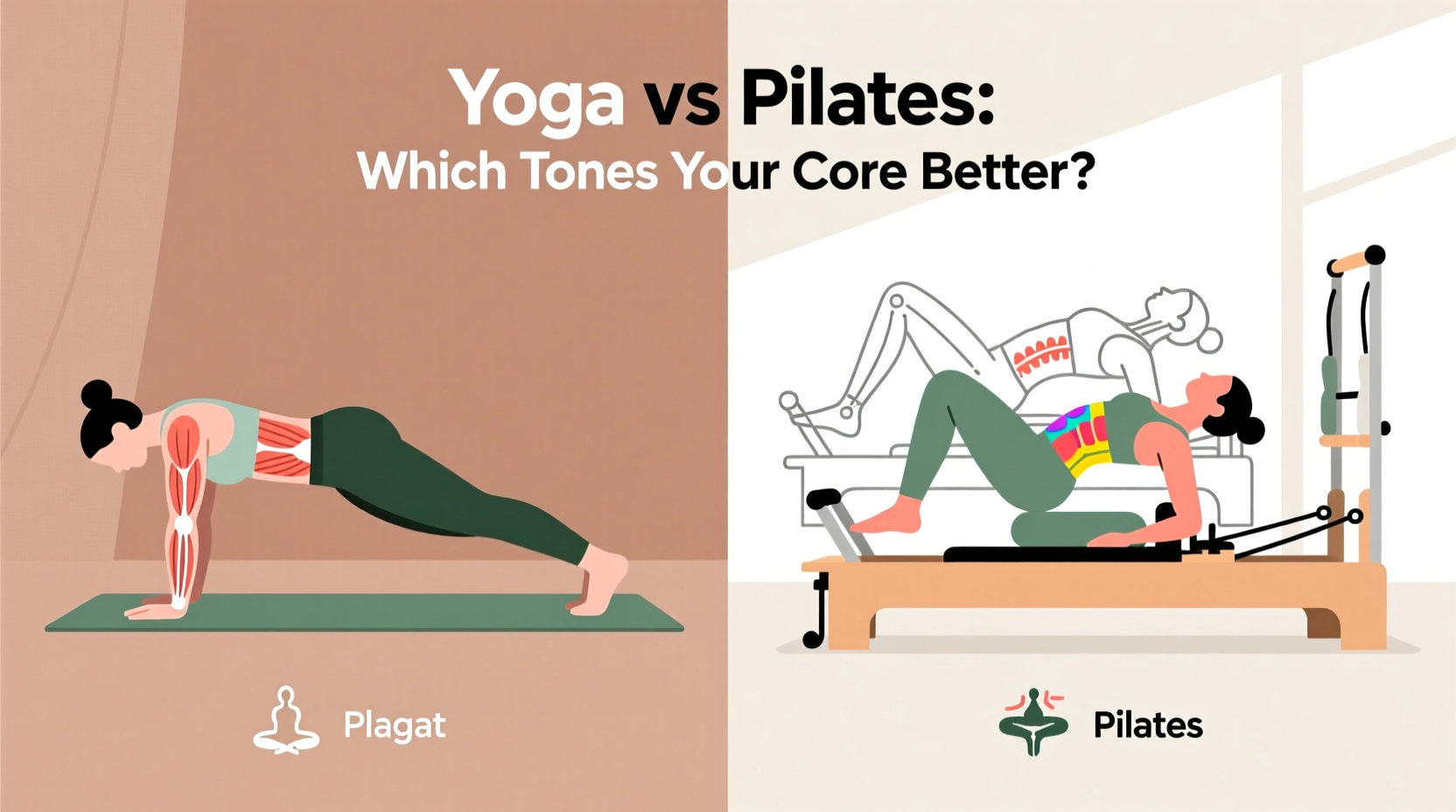
When it comes to sculpting a strong, defined core, few fitness practices are as frequently recommended — and debated — as yoga and Pilates. Both emphasize body awareness, controlled movement, and breath, but they differ significantly in structure, intensity, and muscle engagement. For someone aiming to tone their abdominal and deep core muscles, understanding these differences is essential. The answer isn’t straightforward: it depends on your goals, experience level, and physical needs. This article breaks down how each discipline targets the core, compares their effectiveness, and offers practical guidance for choosing the right path.
The Anatomy of Core Strength
Before comparing yoga and Pilates, it’s important to define what “core” really means. Many people equate the core with visible abs — the rectus abdominis — but true core strength involves a network of muscles that stabilize the spine and pelvis. These include:
- Transverse abdominis: The deepest abdominal layer, acting like a natural corset.
- Internal and external obliques: Support rotation and lateral flexion.
- Erector spinae: Spinal stabilizers along the back.
- Pelvic floor muscles: Provide foundational support from below.
- Diaphragm: Plays a role in intra-abdominal pressure and stability.
A well-toned core isn’t just about aesthetics; it enhances posture, reduces lower back pain, improves athletic performance, and supports daily movements. Both yoga and Pilates engage these muscles, but through different mechanisms and with varying degrees of precision.
How Yoga Tones the Core
Yoga tones the core primarily through static holds, balance challenges, and integrated full-body postures. While not all styles emphasize abdominal work equally, many poses require sustained engagement of deep core muscles to maintain alignment and prevent collapse.
In styles like Vinyasa, Ashtanga, or Power Yoga, transitions between poses — such as moving from Plank to Chaturanga to Upward Dog — demand continuous core activation. Poses like Boat Pose (Navasana), Plank, Side Plank, and Crow Pose challenge stability and muscular endurance.
However, traditional Hatha or restorative yoga may involve less direct core loading. The focus in these forms is often on flexibility, breathwork, and relaxation rather than muscular hypertrophy or definition.
Tip: To maximize core engagement in yoga, focus on drawing the navel toward the spine in every pose, especially during transitions.One of yoga’s strengths lies in its integration of breath and movement. Ujjayi breathing, commonly used in flowing sequences, increases intra-abdominal pressure, indirectly activating the transverse abdominis. This subtle but consistent engagement builds endurance over time.
“Yoga teaches you to use your core not just in isolated exercises, but in every movement — that’s functional strength.” — Dr. Lena Torres, Physical Therapist and Certified Yoga Therapist
How Pilates Targets the Core
Pilates was literally designed for core conditioning. Developed by Joseph Pilates in the early 20th century, the method centers around what he called the “powerhouse” — the muscles of the abdomen, lower back, hips, and glutes. Unlike yoga, Pilates is highly systematic, with precise cues for isolating and activating specific muscles.
Exercises like the Hundred, Roll-Up, and Teaser are staples in Pilates routines and directly target the rectus abdominis and transverse abdominis. The emphasis is on controlled, small-range movements performed with intention. Even seemingly simple motions — such as lifting one leg while lying on your back — become challenging when proper form is maintained.
Pilates also incorporates specialized equipment like the Reformer, Cadillac, and Stability Chair, which add resistance and instability to further challenge the core. On the Reformer, for example, footwork sequences require constant pelvic stabilization, forcing the deep core to work continuously.
Because Pilates prioritizes form over flow, it often leads to faster improvements in core definition and control compared to general yoga practice. A 2017 study published in the *Journal of Sports Science & Medicine* found that participants who practiced mat Pilates three times a week for eight weeks showed significant increases in abdominal muscle thickness and endurance.
Comparative Analysis: Yoga vs Pilates for Core Toning
| Feature | Yoga | Pilates |
|---|---|---|
| Primary Focus | Balancing flexibility, strength, and mindfulness | Core strength, alignment, and muscular control |
| Core Engagement Style | Integrated, dynamic, breath-linked | Isolated, targeted, precision-based |
| Best For | Functional core strength, stress reduction, overall wellness | Visible toning, posture correction, rehabilitation |
| Learning Curve | Moderate; varies by style | Steeper due to technical precision |
| Equipment Needed | Mat only (typically) | Mat, plus optional Reformer or accessories |
| Frequency for Results | 3–5 sessions/week for noticeable toning | 2–3 focused sessions/week sufficient |
This comparison reveals a key distinction: yoga builds core strength as part of a holistic system, while Pilates treats the core as the central pillar of all movement. If your primary goal is aesthetic toning — firmer abs, improved definition — Pilates typically delivers faster, more measurable results. However, if you value mental clarity, emotional balance, and whole-body integration alongside core development, yoga offers a broader benefit profile.
Real-World Example: Two Women, Two Paths
Consider the experiences of Maria and Jenna, both 38-year-old office workers seeking to strengthen their cores after years of sedentary work.
Maria chose Pilates after her physiotherapist recommended it for chronic lower back discomfort. She started with twice-weekly mat classes, focusing on pelvic stability and abdominal bracing. Within six weeks, she noticed her posture improving and her clothes fitting more snugly around the waist. After three months, she could perform advanced exercises like the Teaser with control and reported a 40% reduction in back pain.
Jenna, meanwhile, turned to Vinyasa yoga for stress relief and general fitness. While she didn’t see dramatic changes in abdominal definition initially, she became more aware of her posture and breathing. Over time, holding poses like Boat and Side Plank became easier, and she began to feel a deeper connection to her center. After five months, friends commented on her “toned silhouette,” though her progress was slower and less targeted.
Their stories illustrate that both methods work — but differently. Maria achieved quicker structural changes; Jenna developed sustainable habits and body awareness.
Step-by-Step Guide to Choosing the Right Practice
Follow this sequence to determine which discipline aligns best with your core-toning goals:
- Assess Your Primary Goal: Are you aiming for visible abs and tighter definition (Pilates) or overall wellness with moderate toning (yoga)?
- Evaluate Your Schedule: Can you commit to 2–3 technically focused sessions per week (Pilates), or do you prefer flexible, meditative movement (yoga)?
- Consider Physical Limitations: Do you have back issues? Pilates is often used in rehab settings. Joint sensitivity? Gentle yoga may be safer.
- Try Both for Two Weeks: Attend two beginner classes of each. Note how your body responds — fatigue, soreness, engagement.
- Track Core-Specific Improvements: Use markers like ability to hold Plank for longer, reduced lower back strain, or tighter waistline.
- Decide or Combine: Choose one, or blend both — e.g., Pilates on weekdays, yoga on weekends for balance.
Can You Combine Yoga and Pilates?
Many fitness professionals recommend combining both. Pilates builds the strength and precision; yoga enhances flexibility, breath control, and mind-muscle connection. Together, they create a balanced approach to core development.
For example, a weekly routine might include:
- Monday: Mat Pilates (core-focused)
- Wednesday: Vinyasa Yoga (flow and balance)
- Saturday: Mixed session — start with Pilates warm-up, transition into yoga cool-down
This hybrid model leverages the strengths of each system. Pilates primes the deep stabilizers, while yoga teaches you to maintain that engagement dynamically.
Frequently Asked Questions
Is Pilates better than yoga for getting abs?
Pilates is generally more effective for developing visible abdominal definition because it isolates and progressively loads the core muscles. Yoga contributes to core strength but often lacks the repetitive resistance needed for significant muscle hypertrophy.
Can beginners do Pilates or yoga for core toning?
Yes, both offer beginner-friendly options. Start with introductory mat classes and focus on form. Avoid rushing into advanced poses. Instructors can modify exercises to match your level.
How long does it take to see results?
With consistent practice (2–3 times per week), most people notice improved core control within 4–6 weeks. Visible toning typically appears after 8–12 weeks, depending on diet, body composition, and genetics.
Checklist: Getting Started with Core-Focused Practice
- ☐ Define your core toning goal (definition, stability, or both)
- ☐ Research local studios or online programs specializing in core development
- ☐ Attend at least one trial class of yoga and Pilates
- ☐ Invest in a quality mat and comfortable clothing
- ☐ Learn basic cues (e.g., “draw belly to spine” in yoga, “engage powerhouse” in Pilates)
- ☐ Track progress monthly using photos, measurements, or plank duration
- ☐ Pair training with balanced nutrition to reduce body fat and reveal muscle tone
“The core is not just something you train — it’s something you live from. Pilates gives you the tools; yoga helps you embody them.” — Rafael Mendez, Movement Specialist and Former Dancer
Conclusion: Strength From the Center
There is no universal answer to whether yoga or Pilates is better for toning core muscles — only what’s better for you. If your aim is efficient, targeted strengthening with clear progression, Pilates stands out. If you seek a holistic transformation that includes mental clarity and physical resilience, yoga offers profound benefits.
Ultimately, the best practice is the one you’ll stick with consistently. Core toning isn’t achieved in a single session but through repetition, mindfulness, and patience. Whether you choose the precision of Pilates, the flow of yoga, or a blend of both, the journey begins with awareness — learning to feel your center, protect your spine, and move with intention.
🚀 Ready to transform your core? Try a beginner Pilates or yoga class this week — and pay attention to how your body responds. Share your experience in the comments below!








