
As awareness grows about the dangers of prolonged sun exposure, more people are turning to protective accessories—especially hats. While both wide brim hats and baseball caps are popular, they differ significantly in how well they shield your skin from harmful ultraviolet (UV) radiation. Choosing between them isn’t just a matter of style; it’s a decision that affects long-term skin health. Understanding their differences in coverage, material quality, and practical use can help you make a safer, more informed choice.
Understanding UV Exposure and Skin Risk
The sun emits two types of ultraviolet rays that reach the earth: UVA and UVB. UVA rays penetrate deep into the skin, contributing to premature aging and long-term damage, while UVB rays are primarily responsible for sunburns and play a key role in the development of skin cancer. Both types increase the risk of melanoma and non-melanoma skin cancers, especially when exposure is frequent and unprotected.
The face, neck, ears, and scalp are particularly vulnerable because they’re consistently exposed. According to the Skin Cancer Foundation, up to 80% of visible facial aging is caused by sun exposure. Furthermore, dermatologists emphasize that no sunscreen alone is sufficient without additional physical barriers—like clothing and hats—for optimal protection.
While any hat is better than none, not all provide equal defense. The effectiveness of a hat depends on its design, fabric, and how consistently it covers at-risk areas throughout the day.
Design and Coverage: A Critical Difference
The most significant distinction between wide brim hats and baseball caps lies in coverage. This single factor determines how much skin is shielded from direct and indirect sunlight.
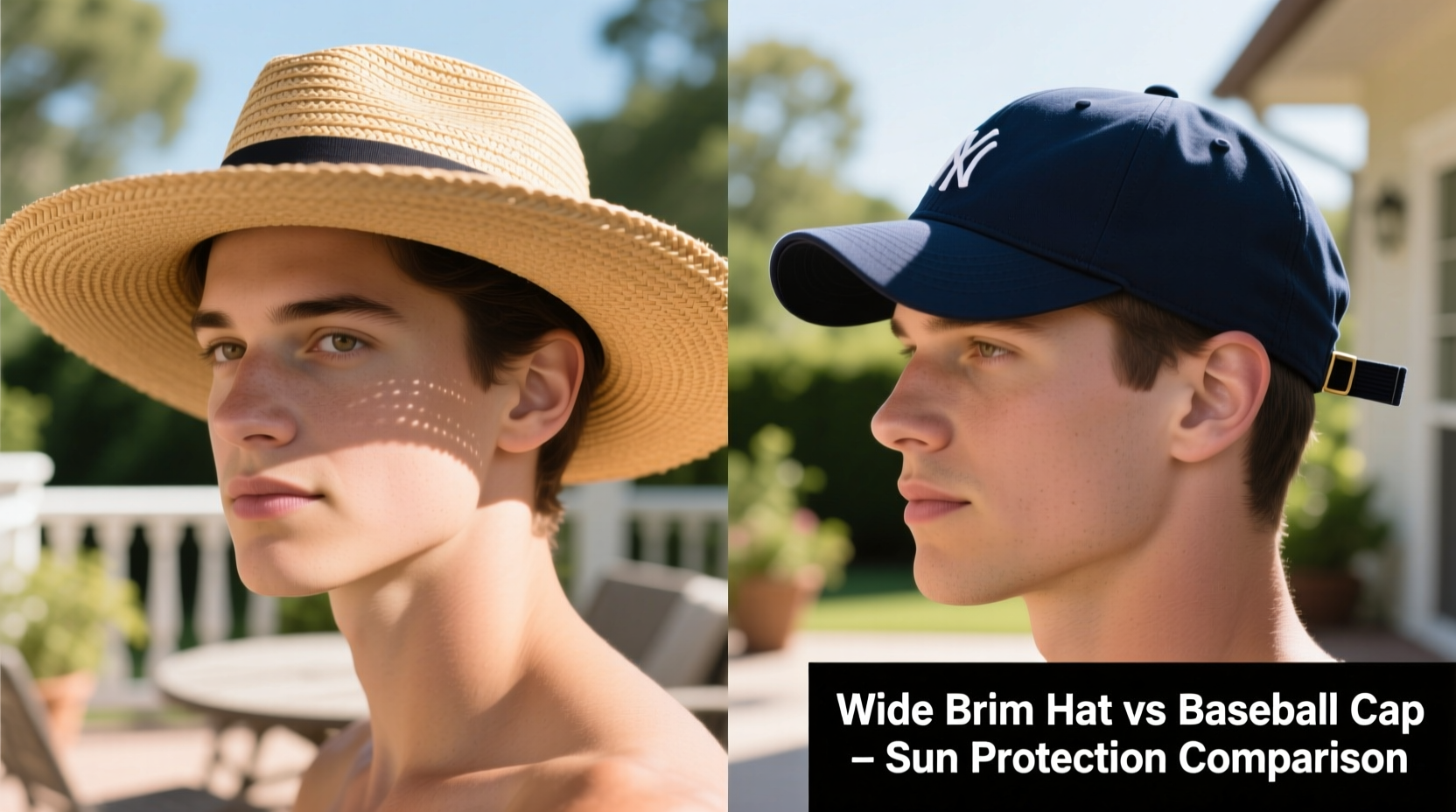
A wide brim hat typically features a brim that extends 3 inches or more around the entire circumference of the hat. This provides continuous protection for the face, ears, neck, and even shoulders, depending on brim width. In contrast, a baseball cap has a stiff, curved front bill that shades only the forehead, nose, and upper cheeks. The sides of the face, ears, back of the neck, and parts of the scalp remain exposed.
Consider this scenario: during a midday walk, the sun is high and intense. A baseball cap blocks overhead light but allows sunlight to hit the jawline, ears, and neck at oblique angles. Meanwhile, a wide brim hat creates a consistent shadow zone, reducing overall UV exposure across multiple sensitive zones.
Tip: For maximum protection, choose a wide brim hat with at least a 3-inch brim all around—this meets recommendations from the American Academy of Dermatology.Material and UPF: What Makes a Hat Truly Protective?
Coverage alone doesn’t guarantee sun safety. The fabric used plays an equally important role. Ultraviolet Protection Factor (UPF) measures how effectively a textile blocks UV radiation. A UPF 50 fabric, for example, allows only 1/50th (2%) of UV rays to pass through.
Many wide brim hats are made from tightly woven natural fibers like cotton, hemp, or straw with dense weaves, often rated UPF 30–50+. Some are even treated with UV-inhibiting coatings. In contrast, baseball caps are frequently constructed from cotton twill or polyester mesh panels, which may have lower UPF ratings—especially if worn thin from age or washed frequently.
Moreover, baseball caps often include breathable mesh backs for comfort, but these gaps increase UV penetration. Even high-quality versions rarely achieve the same level of full-spectrum protection as premium wide brim styles designed specifically for sun safety.
“Hats with broad, encircling brims offer superior protection compared to caps with front-only shading. They reduce cumulative UV dose to the head and neck by as much as 70%.” — Dr. Rebecca Tan, Board-Certified Dermatologist
Comparative Analysis: Wide Brim Hats vs Baseball Caps
| Feature | Wide Brim Hat | Baseball Cap |
|---|---|---|
| Coverage Area | Face, ears, neck, shoulders, scalp | Forehead, nose, upper cheeks |
| Brim Width | 3+ inches around entire hat | Front bill only (~2.5–3 inches) |
| Typical UPF Rating | UPF 30–50+ | UPF 15–30 (varies widely) |
| Vulnerable Zones | Minimal (if properly worn) | Ears, jawline, neck, back of scalp |
| Best Use Case | Beach, hiking, gardening, outdoor events | Sports, casual wear, quick errands |
| Fashion Flexibility | Moderate to high (styles vary) | Very high (widely accepted) |
| Ventilation | Varies; some models include vents | High (mesh panels common) |
This comparison underscores a central truth: while baseball caps win in convenience and cultural ubiquity, wide brim hats are objectively superior for comprehensive UV defense.
Real-World Performance: A Mini Case Study
Lena, a landscape photographer based in Arizona, spends 4–6 hours daily outdoors during peak sun hours. For years, she relied on a favorite baseball cap paired with SPF 50 sunscreen. Despite reapplying every two hours, she developed persistent dryness and discoloration behind her ears and along her neck—areas she hadn’t realized were getting direct sun.
After a precancerous lesion was detected during a dermatology check-up, Lena switched to a UPF 50+ wide brim hat with a chin strap to prevent shifting in wind. Within one summer, she noticed less redness and irritation. Her follow-up skin exam showed no new abnormalities. She now credits the hat change as a pivotal step in her sun safety routine.
Her experience illustrates a common blind spot: people assume they're protected because part of their face is shaded, overlooking peripheral exposure that accumulates over time.
When Baseball Caps Make Sense—and How to Improve Their Protection
Baseball caps aren’t inherently unsafe. They serve well in situations where agility, visibility, or sport-specific function matters—such as running, cycling, or team sports. However, relying solely on them for extended outdoor activity increases risk.
If you prefer baseball caps, consider these strategies to enhance protection:
- Pair the cap with a high-SPF, broad-spectrum sunscreen applied to the neck, ears, and back of hands.
- Choose caps with extended back flaps or built-in neck curtains.
- Look for performance fabrics labeled UPF 30+ rather than standard cotton.
- Add a lightweight scarf or bandana around the neck during prolonged exposure.
For children, who often resist bulky hats, a baseball cap combined with proper sunscreen and seeking shade can still be effective—provided caregivers remain vigilant about reapplication and limiting midday sun.
Actionable Checklist: Maximizing Sun Protection with Hats
Use this checklist to evaluate and improve your current sun protection strategy:
- ✅ Assess your typical outdoor duration and UV index in your region.
- ✅ Choose a hat with at least a 3-inch brim for full-face and neck coverage when possible.
- ✅ Verify the UPF rating—aim for UPF 30 or higher.
- ✅ Inspect hats regularly for wear; thinning fabric reduces UV blocking ability.
- ✅ Combine hat use with other protections: sunscreen, sunglasses, and seeking shade.
- ✅ Replace hats every 1–2 years if used frequently, as UV protection degrades over time.
- ✅ Avoid straw hats with large weave gaps unless lined or specially treated.
Expert Recommendations and Common Misconceptions
One widespread myth is that darker hats are always better because they absorb heat. While dark colors do absorb more solar energy (which can make the head feel warmer), they also block more UV radiation than lighter colors. However, modern sun hats often use reflective linings or cooling technologies to offset heat absorption—making UV protection and comfort compatible.
Dermatologists recommend wide brim hats as part of a complete “Slip, Slop, Slap” approach: slip on a shirt, slop on sunscreen, and slap on a hat. This public health campaign, originally from Australia (a country with one of the highest skin cancer rates), has proven effective in reducing UV-related damage through layered protection.
Another misconception is that hair provides adequate scalp protection. In reality, thinning hair, part lines, and bald spots leave the scalp highly vulnerable. Even thick hair typically offers only UPF 5–10, far below the recommended minimum.
Frequently Asked Questions
Do wide brim hats cause overheating?
Not necessarily. Many wide brim hats are designed with ventilation holes, moisture-wicking inner bands, and lightweight materials like raffia or recycled polyester. Some feature cooling gel inserts or sweat-absorbing liners. Proper fit and breathable fabrics ensure comfort even in hot climates.
Can I wear a wide brim hat while playing sports?
It depends on the sport. Activities like golf, tennis, or beach volleyball can accommodate wide brim styles. However, fast-paced or contact sports may require more secure, streamlined headwear. In such cases, combining a baseball cap with additional protection (like sunscreen and UV-blocking clothing) is advisable.
Are all straw hats effective for sun protection?
No. Straw hats with loose weaves (like Panama hats with wide gaps) allow UV rays to pass through. Look for tightly woven straw or those labeled with a UPF rating. Alternatively, opt for synthetic materials engineered for UV resistance.
Final Thoughts: Prioritizing Long-Term Skin Health
Choosing between a wide brim hat and a baseball cap ultimately comes down to purpose. If your priority is fashion or athletic performance, a baseball cap may suffice—especially when supplemented with other protections. But if your goal is genuine sun safety, minimizing UV exposure to prevent skin damage and reduce cancer risk, a wide brim hat is the superior choice.
Think of your hat as armor against invisible threats. Just as seatbelts are non-negotiable for road safety, protective headwear should be a standard part of any outdoor routine. With skin cancer rates rising globally, small habits—like wearing a properly designed hat—can yield lifelong benefits.
💬 Ready to upgrade your sun protection? Start by trying a wide brim hat on your next outdoor adventure. Share your experience or tips in the comments—your insight could inspire someone else to make a healthier choice today.








