Tyler Lockett, the Seattle Seahawks’ dynamic wide receiver, has carved out a reputation not just for speed and precision, but for an uncanny ability to avoid contact altogether. Unlike power runners or physical receivers who thrive on contested catches and after-the-catch collisions, Lockett operates in a different dimension—one defined by agility, spatial awareness, and intelligent elusiveness. His approach isn’t about fear; it’s about efficiency. By minimizing unnecessary hits, he preserves his body, maximizes yardage, and extends his career longevity. Understanding why Lockett avoids contact reveals deeper insights into modern wide receiver play, where survival and sustained performance often hinge on what you *don’t* do as much as what you do.
The Philosophy Behind Avoiding Contact
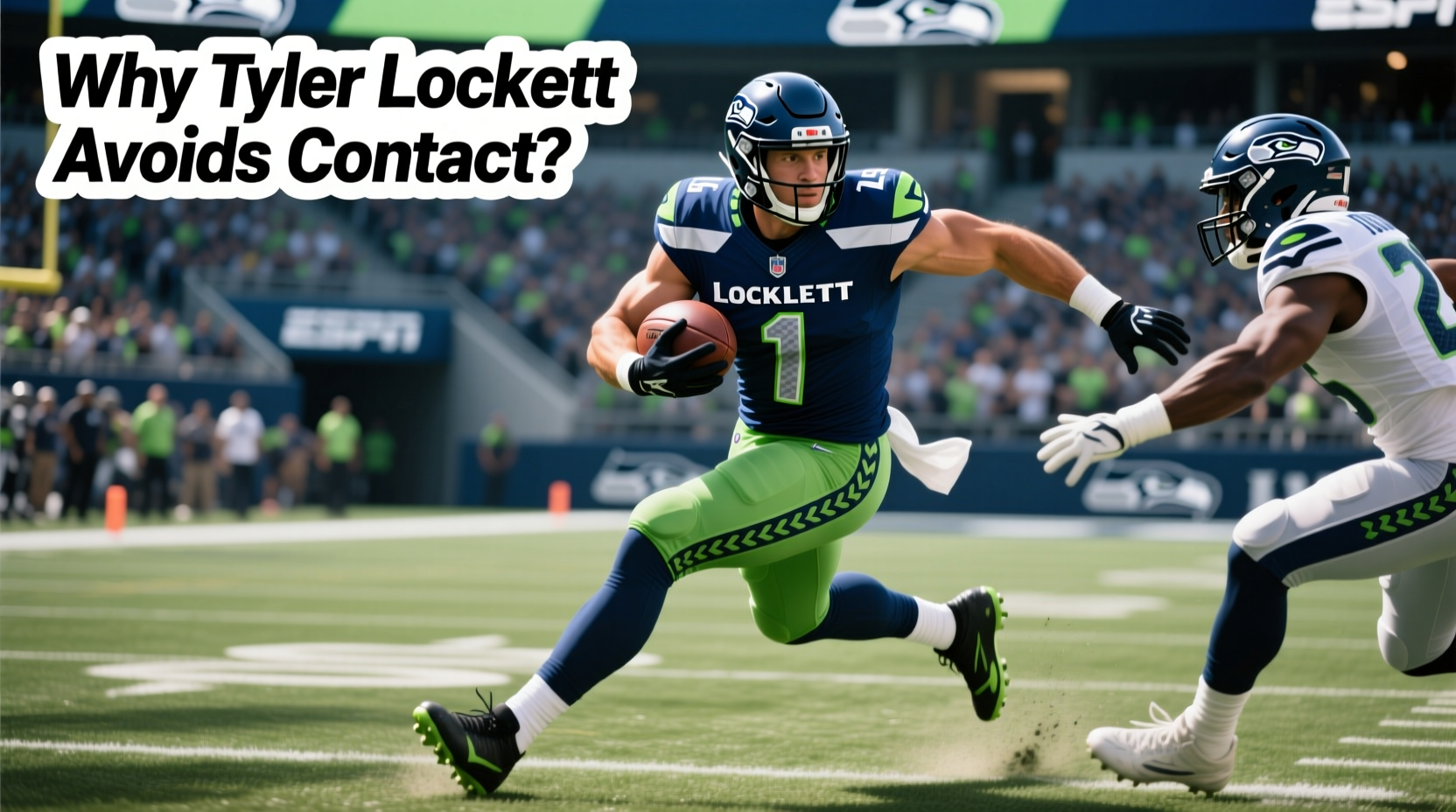
Lockett’s aversion to contact isn’t passive—it’s strategic. In football, every collision carries risk: bruised ribs, sprained joints, concussions, or worse. For a player whose game relies on burst, acceleration, and route sharpness, absorbing repeated punishment can degrade performance over time. Lockett, standing at 5'10\" and around 182 pounds, doesn’t have the frame to absorb hits like larger receivers such as Davante Adams or Mike Evans. Instead, he leverages his elite change-of-direction skills and field vision to slip tackles before they happen.
This philosophy aligns with a growing trend in the NFL: prioritize longevity through intelligent play. Players like Tyreek Hill and Christian McCaffrey also exemplify this mindset—using speed and misdirection to evade defenders rather than testing durability through brute force.
Tip: Evasion isn't weakness—it's a calculated decision to stay healthy and effective over 17+ games.Breakdown of Lockett’s On-Field Mechanics
Lockett’s technique is rooted in subtlety. He rarely attempts to “break” tackles. Instead, he uses subtle shoulder dips, stutter steps, and lateral bursts to create separation just before contact occurs. His route-running reflects the same principle: crisp cuts, sudden stops, and well-timed releases that make defenders miss in space.
One of his signature traits is the ability to turn short completions into long gains without ever engaging in a full-on collision. This is achieved through:
- Lateral Agility: Exceptional hip flexibility allows quick redirection.
- Body Control: Staying low and balanced helps maintain momentum while avoiding lunges.
- Spatial Awareness: He reads defenders’ angles early and adjusts his path preemptively.
- Timing with Quarterbacks: Syncs perfectly with QBs to catch the ball in stride, reducing exposure in traffic.
These mechanics aren’t accidental—they’re trained, refined, and executed with consistency. Lockett spends extensive time in film study, analyzing defensive back tendencies to anticipate when and where contact might occur, then planning his movements accordingly.
Comparison: Lockett vs. Physical Receivers
| Aspect | Tyler Lockett (Evasive Style) | Physical Receiver (e.g., Allen Robinson) |
|---|---|---|
| Primary Strength | Speed, agility, route precision | Size, strength, contested catching |
| Contact Frequency | Low – avoids engagement | High – embraces physical battles |
| Injury Risk (Long-Term) | Reduced due to less wear-and-tear | Higher from repeated impacts |
| Yardage Source | After-catch elusiveness, YAC | Contested grabs, power runs |
| Career Longevity Focus | Preservation through evasion | Durability through conditioning |
Expert Insight: What Coaches Say About Evasive Play
“Tyler plays fast and smart. He doesn’t look for contact because he knows his value is in his legs, not his shoulders. The best way to help your team week after week is to stay healthy—and he does that better than most.” — Pete Carroll, Head Coach, Seattle Seahawks
Carroll’s coaching philosophy has always emphasized speed and competitive toughness, but never recklessness. Under his system, players are encouraged to play hard—but also wisely. Lockett embodies that balance. His ability to finish runs without taking direct hits reflects not only athleticism but football IQ.
Real Example: The 65-Yard Touchdown Against the Rams (2020)
A prime example of Lockett’s contact-avoidant mastery came during a Week 10 matchup against the Los Angeles Rams in 2020. On a simple slant route, Russell Wilson delivered a quick pass just past the line of scrimmage. Three defenders converged, expecting a pile-up. Instead, Lockett took two lateral steps, let the first defender over-pursue, then cut sharply upfield along the sideline.
He didn’t juke aggressively or lower his shoulder. He simply moved out of the impact zone before it formed. Once clear, he accelerated, using untouched lanes to race 65 yards for a touchdown. Not a single defender made clean, full contact. That play wasn’t just explosive—it was sustainable. No toll was paid for the score.
Actionable Tips for Players: Emulating Lockett’s Approach
Tip: Don’t wait for contact to react—anticipate it and move before it happens.Young receivers and athletes looking to adopt Lockett’s style should focus on these key areas:
- Improve Change-of-Direction Speed: Use ladder drills and cone-based zig-zag exercises to enhance foot quickness.
- Study Defensive Angles: Learn to read leverage—when a DB is squared up versus when they’re leaning.
- Practice Catch-and-Glide Routes: Work on securing the ball while maintaining forward momentum, avoiding pauses in high-traffic zones.
- Strengthen Core and Hips: A strong core improves balance when making sharp cuts under pressure.
- Use Film to Anticipate Contact Zones: Identify patterns in coverage and blitz packages that lead to congestion.
Frequently Asked Questions
Does avoiding contact mean Lockett lacks toughness?
No. Toughness in football isn’t measured solely by how many hits you take. Lockett plays with high effort, blocks downfield, and competes on every route. His toughness is expressed through consistency, resilience, and mental discipline—not gratuitous physicality.
Can this style work in the red zone or short-yardage situations?
It has limitations. Lockett isn’t typically used as a primary red-zone target because his skill set shines in open space. However, his quickness still makes him effective on slants, screens, and back-shoulder throws near the goal line, where timing and precision matter more than power.
Is avoiding contact teachable for youth players?
Absolutely. Teaching young athletes to protect their bodies by sidestepping unnecessary hits can extend their playing careers and reduce injury risk. Coaches should emphasize agility, awareness, and smart running over “running through” defenders.
How This Style Impacts Career Longevity
NFL careers average just over three years. For skill-position players, especially smaller ones, staying healthy is the biggest challenge. Lockett, now in his tenth season (as of 2024), remains a key contributor—rare for a receiver of his size. His avoidance of contact plays a major role in that durability.
By minimizing high-impact collisions, he reduces cumulative stress on joints, muscles, and the central nervous system. This means fewer nagging injuries, faster recovery between games, and preserved explosiveness late in seasons. It’s a model of sustainable performance in a sport that often rewards short-term heroics at long-term cost.
Conclusion: Intelligence Over Impact
Tyler Lockett’s choice to avoid contact isn’t about caution—it’s about control. It reflects a deep understanding of his strengths, the physics of football, and the long arc of a professional career. In an era where analytics and sports science increasingly influence play style, Lockett stands as a case study in efficiency: doing more by enduring less.
His approach teaches a broader lesson: excellence doesn’t require self-sacrifice. Sometimes, the smartest move is the one that keeps you off the ground and on the field. As younger players and fans observe his craft, they see not just a receiver who dodges defenders—but one who masters the game by mastering himself.
💬 What do you think—should more receivers adopt an evasive style? Share your thoughts and discuss Lockett’s legacy in the comments.








