
When investors research financial products or companies, platforms like Morningstar are often among the first stops. Known for rigorous analysis, independent ratings, and comprehensive data, Morningstar has become a trusted source for evaluating investment opportunities. However, some investors may notice that certain entities—like Xent—are not listed in Morningstar’s database. This absence can raise questions: Is the company risky? Unregulated? Or simply overlooked? The reality is more nuanced. There are several legitimate and practical reasons why Xent might not appear on Morningstar, none of which necessarily reflect negatively on the company itself.
Lack of Public Financial Disclosure
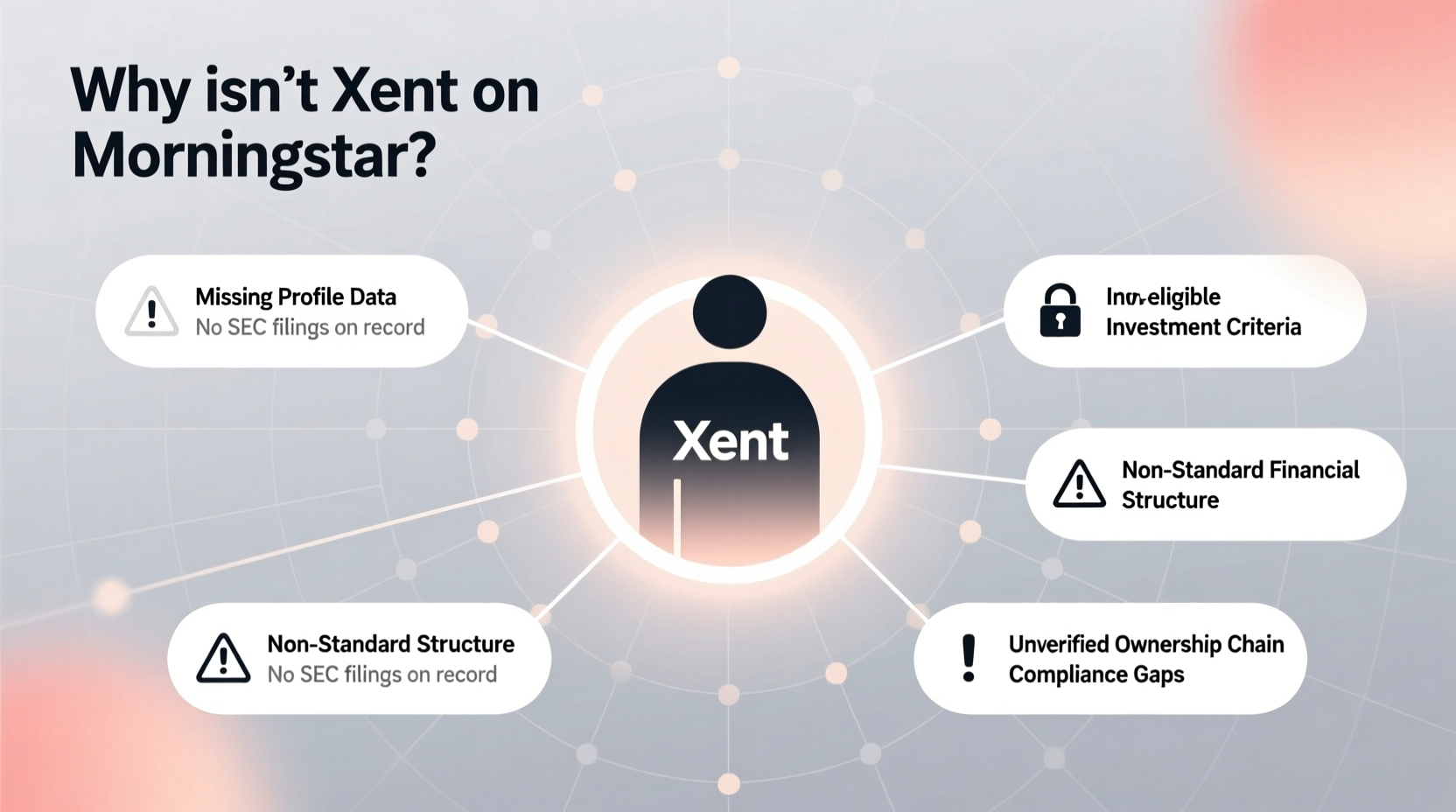
Morningstar relies heavily on publicly available financial data to analyze and rate companies. This includes audited financial statements, balance sheets, income reports, and governance disclosures. If Xent operates as a private entity, startup, or non-reporting organization, it may not be required to publish this information. Without access to standardized financials, Morningstar cannot perform its typical valuation or risk assessment.
Private fintech firms, especially those in early growth stages, often avoid public disclosure to maintain competitive advantage or comply with lighter regulatory frameworks. As one financial analyst noted:
“Morningstar’s models depend on consistency and transparency in reporting. If a firm doesn’t file under recognized standards like GAAP or IFRS, inclusion becomes nearly impossible.” — Daniel Reeves, Investment Research Lead at FinScope AnalyticsTip: A missing Morningstar profile does not automatically indicate poor performance—it may simply mean the company isn’t required to disclose data.
Niche Market or Limited Geographic Reach
Morningstar prioritizes coverage based on investor demand and market significance. Companies operating in niche sectors or serving limited geographic regions may fall outside their current indexing scope. Xent could be focused on a specific demographic, such as decentralized finance (DeFi) users, cross-border remittance in emerging markets, or blockchain-based identity solutions—areas that, while innovative, may not yet meet Morningstar’s threshold for broad inclusion.
For example, if Xent primarily serves customers in a single country or operates through a specialized platform (e.g., crypto wallets or micro-lending apps), Morningstar may classify it as too narrowly scoped for general investment evaluation.
Comparison: Coverage Criteria Across Platforms
| Platform | Data Requirement | Market Scope | Typical Inclusion Timeframe |
|---|---|---|---|
| Morningstar | Audited financials, public filings | Global, institutional-grade | 6–18 months after IPO |
| CoinGecko / CoinMarketCap | Token availability, trading volume | Crypto-focused, global | Days to weeks post-launch |
| Bloomberg Terminal | Regulatory filings, press releases | Enterprise and public firms | Varies by region |
| Crunchbase | Funding rounds, leadership updates | Startups, private tech | Immediately upon verification |
This contrast shows that exclusion from Morningstar doesn’t equate to obscurity—Xent might be well-documented on alternative platforms tailored to startups or digital assets.
Regulatory Classification and Entity Structure
Another key factor is how Xent is legally structured. If it operates as a decentralized autonomous organization (DAO), a fintech cooperative, or a blockchain protocol rather than a traditional corporation, it may not fit Morningstar’s standard categorization system. Morningstar typically evaluates registered securities, ETFs, mutual funds, and publicly traded equities—all of which require formal registration with bodies like the SEC or equivalent international regulators.
If Xent issues tokens instead of shares, lacks a centralized board, or functions without a formal parent company, it may not qualify for inclusion under existing Morningstar classification rules. Regulatory gray zones, especially in crypto and Web3 spaces, often delay or prevent integration into mainstream financial databases.
Mini Case Study: DeFi Platform “Lendr”
In 2022, Lendr, a decentralized lending protocol, gained traction among crypto investors but remained absent from Morningstar despite significant user growth. Analysts later confirmed that the platform wasn’t listed because it had no legal incorporation, issued no equity, and published no audited financials. While popular on Chainalysis and Dune Analytics, Lendr didn’t meet Morningstar’s criteria for entity recognition. Two years later, after forming a regulated subsidiary and releasing transparent revenue reports, it was added to Morningstar Direct for institutional review.
Xent may be in a similar position—innovative and active, but not yet aligned with traditional financial tracking frameworks.
Data Availability and Third-Party Verification
Morningstar does not rely solely on self-reported data. It sources information from regulatory filings, third-party auditors, and established financial data providers like S&P Global, Refinitiv, and Bloomberg. If Xent hasn’t partnered with any of these systems or undergone an external audit, there’s no verified pipeline for Morningstar to pull accurate, consistent data.
Even if Xent publishes internal metrics—such as transaction volume or user growth—these figures may lack the third-party validation Morningstar requires. Without verification, including such data would compromise the platform’s reputation for reliability.
Step-by-Step: How Morningstar Adds a New Company
- Identification: The company appears in public markets or regulatory filings.
- Data Collection: Morningstar gathers financials from SEC, EDGAR, or international equivalents.
- Verification: Data is cross-checked with auditors and partner databases.
- Classification: The firm is categorized (e.g., fintech, payment processor).
- Analysis: Analysts assign star ratings, risk scores, and fair value estimates.
- Publishing: Profile goes live on Morningstar.com and institutional platforms.
If Xent hasn’t reached step one—public listing or formal registration—it won’t enter the pipeline.
Strategic Omission vs. Oversight
It’s also possible that Morningstar has evaluated Xent but chosen not to include it due to strategic priorities. The platform continuously assesses which sectors and companies warrant coverage based on investor interest, market maturity, and analytical feasibility. Emerging fintech ventures often go through a “watchlist” phase before full inclusion.
Additionally, if Xent operates in a high-volatility or unregulated space—such as cryptocurrency intermediation without licensing—Morningstar may delay inclusion until clearer regulatory standards emerge. This caution protects investors from premature exposure to poorly understood risks.
Tip: Monitor Xent’s partnerships with auditors, exchanges, or compliance firms—these are early signs they may soon qualify for broader financial coverage.Checklist: Is Xent Likely to Appear on Morningstar Soon?
- ✅ Has Xent filed audited financial statements with a recognized regulator?
- ✅ Does it operate as a publicly traded or formally registered private company?
- ✅ Are its financials available through Bloomberg, S&P Capital IQ, or Refinitiv?
- ✅ Has it announced plans for an IPO, SPAC merger, or regulatory licensing?
- ✅ Is there third-party verification of revenue, user base, or asset holdings?
If most answers are “no,” then the absence from Morningstar is expected and procedural—not a red flag.
Frequently Asked Questions
Does not being on Morningstar mean Xent is unsafe to invest in?
No. Absence from Morningstar doesn’t imply risk or illegitimacy. Many promising startups and digital asset platforms aren’t covered due to structural or reporting limitations. Always conduct independent due diligence using multiple sources.
Can Xent request to be listed on Morningstar?
Not directly. Morningstar independently determines coverage based on data availability and market relevance. However, Xent can improve its chances by increasing transparency, undergoing audits, and engaging with major financial data providers.
Are there alternatives to Morningstar for researching Xent?
Yes. Consider platforms like Crunchbase for funding history, CoinGecko or Messari for token metrics (if applicable), PitchBook for institutional insights, or even regulatory databases like the SEC’s EDGAR system if Xent has affiliated public entities.
Conclusion
The absence of Xent from Morningstar is likely not a reflection of quality or potential, but rather a consequence of structural, regulatory, or procedural factors. Whether due to private status, lack of audited financials, niche operations, or evolving legal structure, many innovative companies remain outside Morningstar’s current scope. Investors should view this gap as a signal to dig deeper—not walk away.
As the financial landscape evolves, especially with the rise of decentralized platforms and hybrid fintech models, data ecosystems like Morningstar will adapt. For now, supplement traditional tools with modern analytics platforms and always verify claims through multiple credible channels.
🚀 Stay informed, stay critical. Just because a company isn’t on Morningstar today doesn’t mean it won’t shape tomorrow’s finance. Share your thoughts—do you think Xent deserves wider financial coverage?








