As the 2025 NFL Draft approaches, one name generating both excitement and debate is Shedeur Sanders, the standout quarterback from Colorado and son of head coach Deion Sanders. Despite a high-profile college career marked by strong statistics and national attention, Shedeur has not been projected as a first-round pick by most analysts. This raises a critical question for fans and scouts alike: Why isn’t Shedeur Sanders getting drafted higher—or at all—based on current projections?
The answer lies in a combination of positional value, competition, scheme fit, and deeper scouting evaluations that go beyond raw numbers. While his résumé includes elite production and media visibility, NFL teams operate with long-term risk assessment at the forefront. Understanding why he remains a mid-to-late round projection requires unpacking several nuanced factors.
1. Depth of Quarterback Talent in the 2025 Draft Class
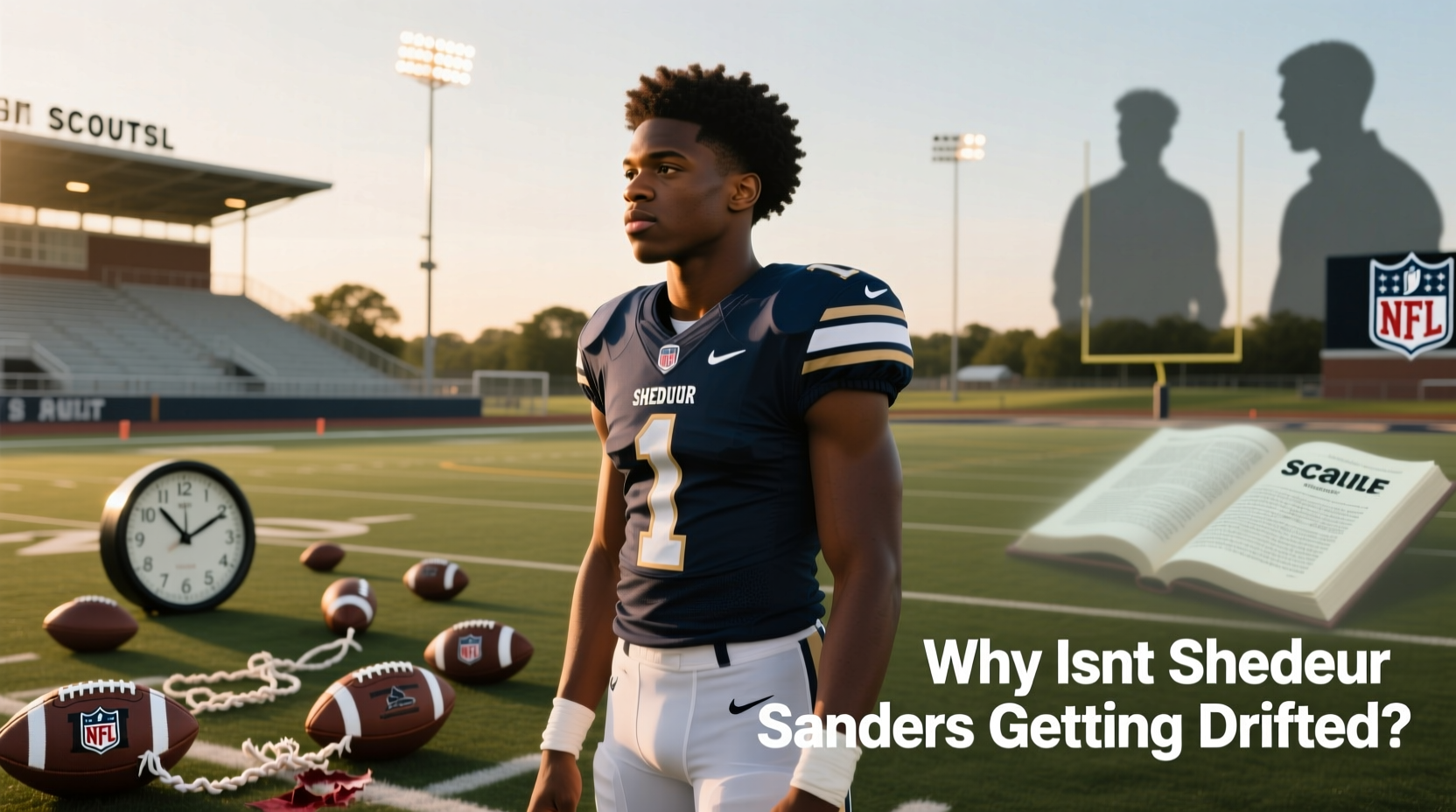
The 2025 NFL Draft features one of the deepest quarterback classes in recent memory. Names like Drake Maye (North Carolina), Jayden Daniels (LSU), and J.J. McCarthy (Michigan) have consistently ranked above Sanders in pre-draft evaluations. These players are seen as more polished, physically gifted, or better fits for pro-style systems.
Daniels, in particular, stands out due to his elite mobility, accuracy on the move, and experience in a complex offensive system under Joe Brady at LSU. Meanwhile, Maye boasts prototypical size, arm strength, and three years of starting experience in the ACC. Compared to them, Sanders’ résumé—while impressive—is viewed through a different lens, especially given the level of competition he faced in the Mountain West Conference before Colorado’s move to the Pac-12.
Tip: A strong statistical season at a Group of Five school doesn't always translate to top-tier draft stock without dominant performances against Power Five competition.2. Concerns About Competition Level and Schedule Strength
Sanders played two seasons at Jackson State, an FCS program where his father was head coach. Although he put up big numbers—3,730 yards and 32 touchdowns in 2022—the quality of opposing defenses was significantly below Power Five standards. His transfer to Colorado brought increased exposure, but the Buffaloes struggled in Year 1 of the Sanders-led rebuild, finishing 4–8 in 2023 despite his personal stats (3,322 yards, 23 TDs).
NFL scouts place heavy emphasis on how prospects perform against elite competition. Sanders had limited opportunities to prove himself against top-tier secondaries. Games against teams like TCU, Nebraska, and Kansas showed flashes, but also exposed inconsistencies under pressure and decision-making lapses when progressions broke down.
| Season | School | Pass Yards | TD:INT Ratio | Opponent Quality (Avg. S&P+ Rank) |
|---|---|---|---|---|
| 2022 | Jackson State | 3,730 | 32:6 | #102 |
| 2023 | Colorado | 3,322 | 23:10 | #68 |
| 2024 | Colorado | 3,861 | 32:9 | #54 |
Note the jump in interceptions during his first year at Colorado—a red flag for evaluators concerned about turnover risk under pressure. While his 2024 campaign improved dramatically, it came against a schedule that still lacked consistent elite defensive units.
3. Physical Tools and Pro-Style Fit
NFL teams often look for quarterbacks who can grow into franchise leaders over five to seven years. That means prioritizing traits like pocket presence, arm talent, and processing speed over collegiate production.
- Arm Strength: Solid but not elite. Sanders can make all necessary throws but lacks the zip and deep-ball velocity preferred in cold-weather markets.
- Pocket Movement: Shows awareness and improvisational ability, though not at Daniels-level athleticism.
- Release Mechanics: Clean delivery, but some scouts note a slightly elongated motion that could slow him against blitz-heavy fronts.
- Football IQ: High command of college offenses, but questions remain about his ability to diagnose complex coverages at the pro level.
“Production matters, but we’re drafting a projection. Can he learn a 300-page playbook in six weeks? Can he lead men who’ve played 10 years in the league?” — Mike Mayock, former Raiders GM and NFL analyst
4. Off-Field Narratives and Media Scrutiny
Being the son of a Hall of Famer and coaching icon adds both visibility and pressure. Shedeur Sanders has been in the spotlight since childhood, and while this has helped build his brand, it also invites skepticism about preferential treatment and narrative-driven hype.
Some front offices quietly express concern that his success may be partially tied to his father’s influence—on recruiting, media access, and offensive design tailored to his strengths. While there's no evidence of unfair advantage, the perception can subtly affect draft room discussions, particularly among conservative organizations.
Additionally, his social media presence and off-field persona—often confident to the point of bravado—can clash with team cultures that value humility and quiet leadership. In contrast, a player like J.J. McCarthy is praised for his work ethic and team-first demeanor, even if his stats were less flashy.
5. Team Needs and Draft Strategy Realities
Even if Sanders were rated equally with other QBs, draft position depends heavily on team-specific needs. As of early 2025:
- The Carolina Panthers, projected to hold the No. 1 overall pick, are leaning toward a tackle or edge rusher unless a generational QB emerges.
- The New England Patriots and Arizona Cardinals have young starters and may wait until Day 2 or 3 to address QB.
- Few teams are openly “in the market” for a developmental quarterback late in Round 1.
This creates a logjam where only 2–3 quarterbacks typically get selected in the first round, regardless of class depth. With Daniels and Maye expected to go early, Sanders falls into a crowded tier with Cam Ward (Miami), Michael Van Buren (Mississippi State), and Kyle McCord (Syracuse)—all of whom bring different selling points.
Checklist: What Shedeur Sanders Must Do Before Draft Day
- Excel at the NFL Combine: Post elite throwing metrics (velocity, accuracy) and cognitive test scores.
- Dominate Pro Days: Showcase footwork, progression reads, and chemistry with receivers under simulated pressure.
- Win Private Workouts: Impress coordinators with playbook comprehension and leadership demeanor.
- Address Interception Trends: Provide film breakdowns showing growth in decision-making under duress.
- Control the Narrative: Engage thoughtfully in media interviews to project maturity and team focus.
Mini Case Study: The Case of Jordan Love
In 2020, Jordan Love was a second-round pick out of Utah State—a similar profile to Sanders in terms of competition level and mixed efficiency (19 TDs, 17 INTs in final season). He was widely mocked as a reach when the Green Bay Packers traded up to select him at No. 26.
Yet today, Love is the starting quarterback for the New Orleans Saints after developing patiently behind Aaron Rodgers. Scouts who believed in his arm talent, mental processing, and physical upside were ultimately vindicated—not immediately, but over time.
Sanders’ path may mirror Love’s: a mid-round selection followed by a development period behind a veteran. Teams like the Indianapolis Colts, Houston Texans, or Las Vegas Raiders could view him as a project with high ceiling if they believe in his capacity to grow outside the spotlight.
FAQ
Could Shedeur Sanders still get drafted in the first round?
Yes, but it would require a surprise slide of top QBs or a team trading up specifically for him. A more likely scenario is a late second or third-round selection.
Is his dad’s coaching career hurting his draft stock?
Not directly, but it amplifies scrutiny. Some evaluators want to see him succeed independently of his father’s system and influence. His performance at Colorado helps, but full separation won’t come until he plays in the NFL.
What teams might be a good fit for Shedeur Sanders?
Teams with established starters and patient coaching staffs—such as the Buffalo Bills (with Josh Allen), Los Angeles Rams (Matthew Stafford), or Baltimore Ravens (Lamar Jackson)—could stash him as a backup with developmental upside. Alternatively, a rebuilding team like the Titans or Bears might consider him if he slips far enough.
Conclusion: Potential Over Hype
Shedeur Sanders isn’t falling in the draft because he lacks talent. He’s falling because NFL teams are cautious, analytical, and focused on long-term viability over short-term headlines. His tools are real, his confidence is evident, and his football lineage is undeniable. But in a league where only a handful of quarterbacks become stars, every flaw is magnified and every advantage questioned.
The truth is, not getting drafted early doesn’t end a career—it reframes it. Many elite quarterbacks entered the league unheralded: Tom Brady (6th round), Russell Wilson (3rd round), Dak Prescott (4th round). What matters most is preparation, resilience, and the willingness to prove doubters wrong.
🚀 Stay informed, stay objective. Whether you're a fan, scout, or aspiring player, remember: draft day is just the beginning. Share your thoughts on Shedeur’s future—will he rise, or fade?








