Breakdancing, or breaking, made history when it was officially announced as a new Olympic sport for the 2024 Paris Games. After decades of grassroots growth, global competitions, and cultural influence, the inclusion was seen as a landmark moment for urban dance. Yet, despite this breakthrough, breaking will not be part of the 2028 Los Angeles Olympics program. This decision has sparked confusion, disappointment, and widespread debate within the dance community and among sports enthusiasts. Understanding why breaking was left out—and what that means for its long-term future—requires a closer look at Olympic politics, event logistics, and the evolving identity of modern sport.
The Rise of Breaking in the Olympic Movement
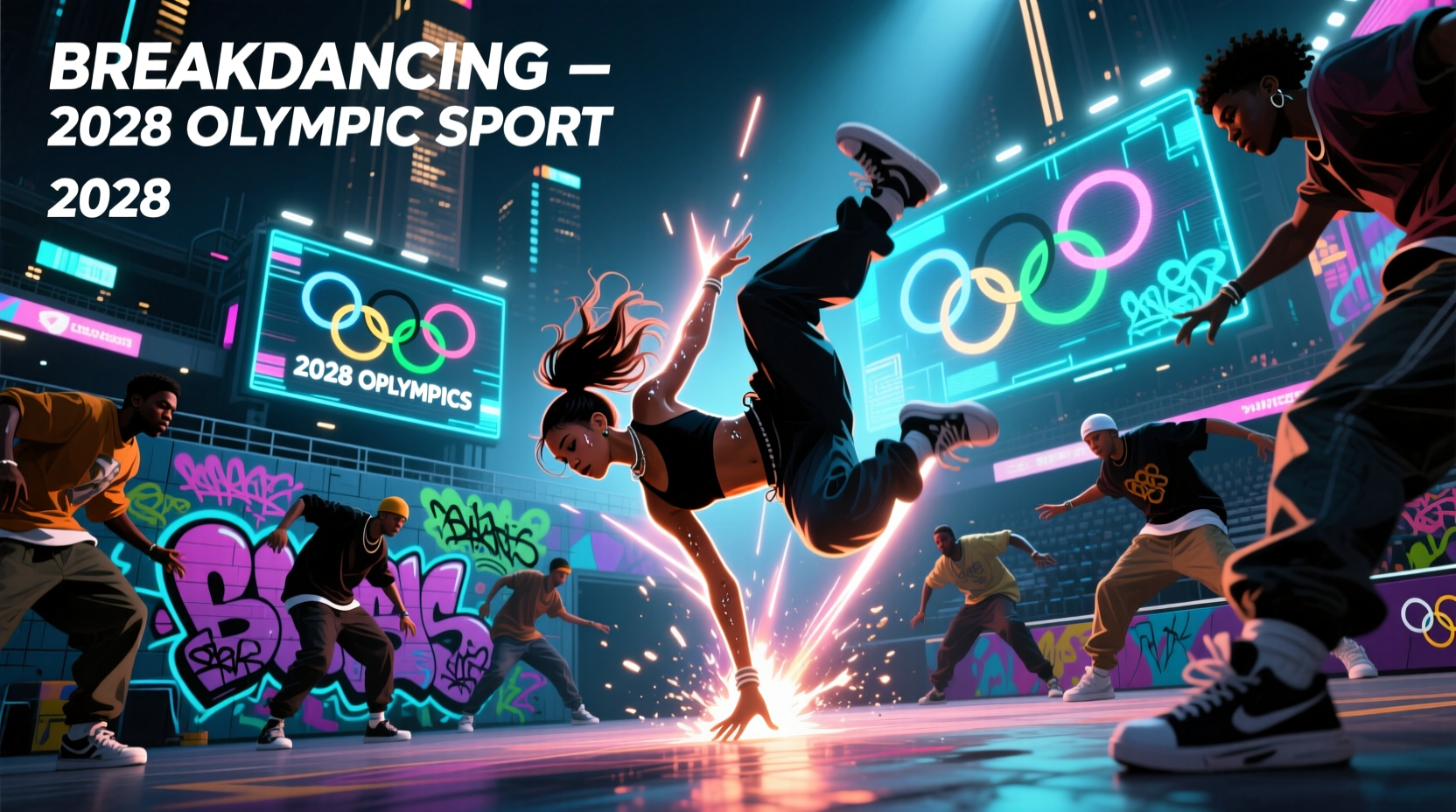
Breaking’s path to the Olympics began with deliberate efforts by the International Olympic Committee (IOC) to rejuvenate the Games and appeal to younger audiences. The IOC introduced the concept of “Olympic Agenda 2020,” which encouraged innovation, flexibility, and inclusion of non-traditional sports. This paved the way for skateboarding, sport climbing, and surfing in Tokyo 2020—and eventually, breaking in Paris 2024.
The World DanceSport Federation (WDSF), recognized by the IOC as the governing body for competitive dance, played a central role in standardizing rules, organizing international events, and promoting breaking as a legitimate athletic discipline. By framing breaking around criteria like difficulty, creativity, execution, and musicality, organizers were able to create a judging system compatible with Olympic standards.
“Breaking is more than dance—it’s athleticism, expression, and culture fused into one. Its Olympic debut was about visibility and legitimacy.” — Dr. Lena Torres, Cultural Sports Analyst
Why Breaking Was Excluded from LA28
The decision to exclude breaking from the 2028 Los Angeles Olympics stems from the host-city-specific nature of recent additions. Unlike core Olympic sports, which are permanent fixtures, newer disciplines like breaking are subject to approval on a Games-by-Games basis. Each host city can propose up to five additional sports, provided they align with local relevance and audience engagement.
In the case of LA28, organizers chose to spotlight sports with deep roots in Southern California culture: baseball/softball, cricket (T20), flag football, lacrosse (sixes), and squash. These selections reflect regional popularity and potential for high viewership. While breaking has a strong presence in U.S. hip-hop culture, particularly in cities like New York and Atlanta, it lacks the same institutional infrastructure as these other sports.
Tip: Don’t assume Olympic inclusion guarantees permanence—new sports must continuously prove their value across different host nations.Key Factors Behind the Omission
- Limited Venue Capacity: LA28 organizers face tight scheduling and venue constraints. Adding multiple new sports meant tough trade-offs.
- American Sporting Priorities: The U.S. Olympic & Paralympic Committee prioritized sports where American athletes could medal, such as flag football and lacrosse.
- Lack of Domestic Pipeline: Unlike countries like France or South Korea, the U.S. does not have a formalized youth or collegiate breaking circuit.
- Commercial Viability Concerns: Broadcasters and sponsors favored sports with established fan bases and media rights models.
The Future of Breaking Post-2024
While exclusion from LA28 is a setback, it doesn’t spell the end for breaking’s Olympic aspirations. In fact, the sport’s performance in Paris could determine whether it becomes a recurring feature in future Games. The IOC evaluates demonstration sports based on several metrics: athlete conduct, audience response, broadcast ratings, and organizational efficiency.
If breaking delivers compelling competition, garners strong global viewership, and maintains clean, transparent judging, it stands a chance of being reinstated in Brisbane 2032 or later editions. Moreover, success in Paris may catalyze investment in national programs, training facilities, and youth development—key prerequisites for long-term sustainability.
What Needs to Happen for Breaking to Return?
- Establish certified coaching and裁判 (judge) certification programs in major markets.
- Develop domestic leagues and school-based curricula in key countries, including the U.S.
- Improve anti-doping compliance and athlete eligibility frameworks.
- Secure partnerships with global brands and streaming platforms to boost exposure.
- Demonstrate gender parity and inclusivity across all levels of competition.
Mini Case Study: France’s Breaking Boom Ahead of Paris 2024
In preparation for the Olympic debut of breaking, France launched a nationwide initiative called *“Break au Collège”* (Breaking in Middle School). Partnering with the Ministry of Education and WDSF, the program introduced weekly breaking classes in over 150 public schools. Students learned foundational moves, music theory, and the cultural history of hip-hop—all while earning physical education credits.
The impact was immediate: participation in youth breaking competitions rose by 200% between 2022 and 2024. More importantly, the initiative helped shift public perception, positioning breaking not just as street art but as a disciplined, physically demanding sport. French athletes like Syssy and Dany Dann entered the Olympics with robust support systems—a model other nations could replicate.
Olympic Inclusion Checklist for Urban Sports
For any emerging sport aiming for Olympic recognition, the following elements are essential:
| Criterium | Met by Breaking? | Notes |
|---|---|---|
| Global Participation (≥75 countries) | ✅ Yes | Recognized in Africa, Asia, Europe, Americas |
| Anti-Doping Compliance | ✅ Yes | WDSF follows World Anti-Doping Agency rules |
| Standardized Rules & Judging | ✅ Yes | Scored on technique, creativity, and musicality |
| Youth Development Infrastructure | ⚠️ Partial | Strong in Europe, weak in North America |
| Gender Equality | ✅ Yes | B-Boys and B-Girls compete separately with equal slots |
| Host Nation Support | ❌ No (for 2028) | Not selected by LA28 organizers |
FAQ: Breaking and the Olympics
Will breaking ever return to the Olympics after 2028?
Possibility remains high. If breaking performs well in Paris 2024 and gains broader institutional support—especially in the U.S. and Asia—it could be reconsidered for Brisbane 2032 or Los Angeles again in 2036. The IOC values innovation, and breaking still represents a fresh, youth-oriented addition.
Is breaking still considered an official Olympic sport?
Yes—but conditionally. Breaking is recognized as an Olympic discipline for Paris 2024 under the authority of the IOC and WDSF. However, it is not yet part of the permanent program. Its status depends on post-Games evaluation.
How can I help support breaking’s Olympic future?
Support local crews, attend competitions, advocate for school programs, and engage with national federations. Public interest and grassroots momentum influence Olympic decisions more than many realize.
Conclusion: A Pause, Not an End
The absence of breaking from the 2028 Olympics is not a rejection of the culture, but a reflection of complex logistical and strategic choices. While Los Angeles opted for sports with deeper American roots, the global stage in Paris offers breaking a powerful opportunity to prove its worth. The next few years are critical: how dancers, federations, educators, and fans respond will shape whether breaking becomes a staple of the Games or fades as a one-time experiment.
Olympic inclusion was never the sole measure of breaking’s significance. Born in the Bronx, forged in cyphers, and elevated through sheer passion, breaking has already won in the arena of culture. Now, it must win on organization, consistency, and outreach. The floor is still open.
🚀 Love breaking? Share your thoughts online using #BreakInLA2032 and help build momentum for its return. The next chapter starts now.








