Katie Ledecky isn’t just a swimmer—she’s a phenomenon. With seven Olympic gold medals, 21 World Championship titles, and multiple world records, she has redefined what’s possible in women’s distance swimming. Her ability to maintain blistering pace over long distances sets her apart from her peers. But what exactly makes her so dominant? It’s not just talent or training; it’s a confluence of physiology, mental resilience, technical precision, and relentless consistency that creates a blueprint for excellence.
The Physiology Behind the Machine
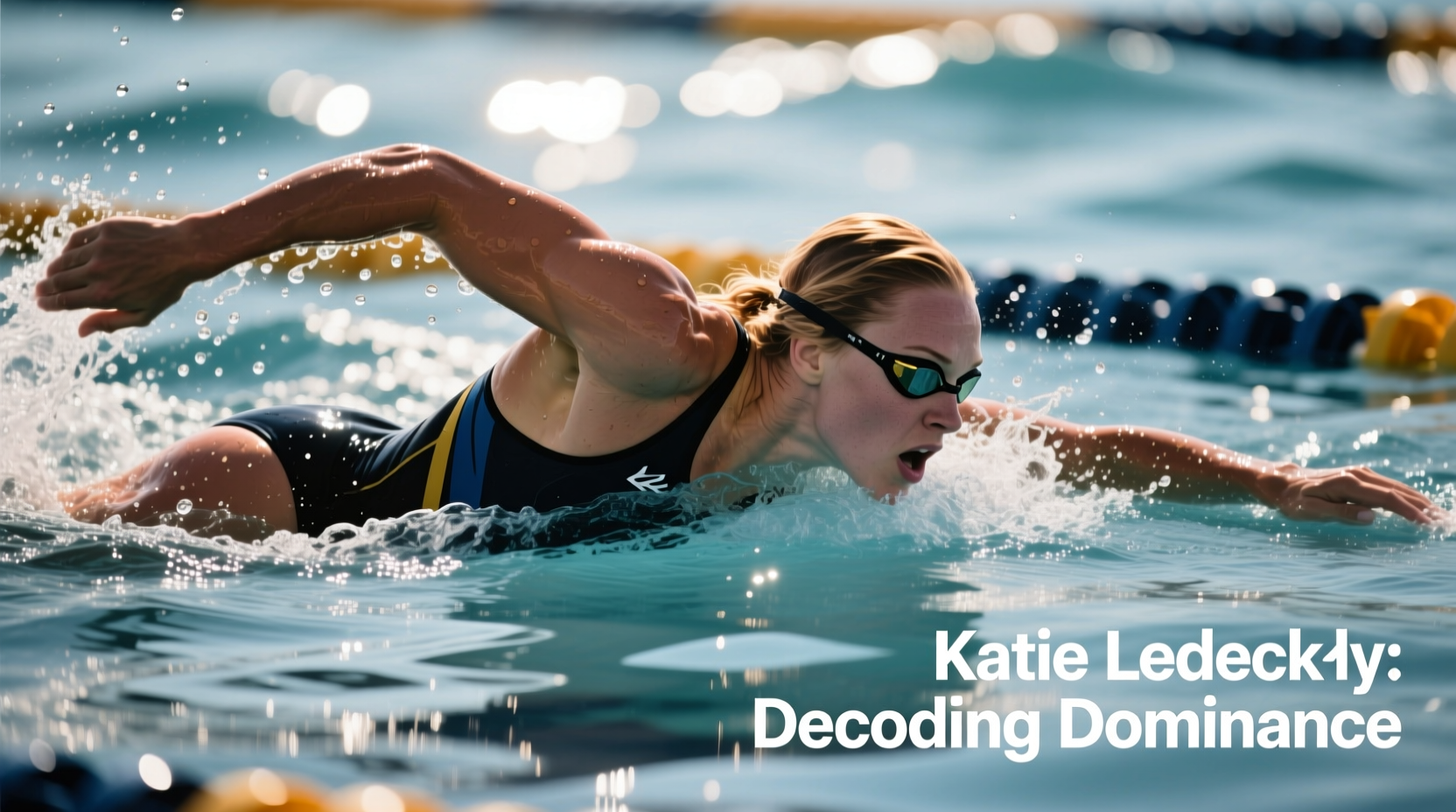
Ledecky’s physical attributes are exceptional, even among elite athletes. At 6 feet tall with a wingspan exceeding her height, she generates tremendous propulsion with each stroke. But more telling is her aerobic capacity—one of the highest ever recorded in female athletes. Estimated VO₂ max levels exceed 70 ml/kg/min, placing her in the same echelon as Tour de France cyclists and East African marathoners.
Her heart, trained through years of high-volume swimming, can pump extraordinary volumes of oxygenated blood with each beat. This allows her to sustain near-maximal effort for minutes on end without lactate buildup overwhelming her system. In races like the 800m and 1500m freestyle, where pacing and endurance are paramount, this physiological edge translates into devastating kick finishes when others are fading.
“Katie’s cardiovascular efficiency is off the charts. She recovers faster between intervals than anyone I’ve tested.” — Dr. David Costill, Exercise Physiologist & Emeritus Professor, Ball State University
Training Volume and Discipline
Ledecky trains up to 10 times per week, logging between 50,000 and 70,000 meters weekly—equivalent to nearly 40 miles. That volume isn’t arbitrary; it builds mitochondrial density, capillary networks, and muscular endurance essential for distance dominance.
Her regimen, under longtime coach Greg Meehan, blends steady-state swimming, threshold work, and race-pace intervals. A typical week includes:
- Daily double sessions (morning and afternoon)
- Two anaerobic sprint sets targeting lactic tolerance
- Three long aerobic swims exceeding 10,000 meters
- Cross-training: core stability, resistance bands, light weights
- Mental rehearsal and video analysis
Technical Precision in Every Stroke
Beyond raw fitness, Ledecky’s technique maximizes efficiency. Her catch—how her hand enters and grips the water—is textbook: high elbow, early vertical forearm, minimal splash. This reduces drag and increases propulsion per stroke.
She maintains a flat body position with minimal lateral sway, reducing resistance. Her kick, though subtle, provides critical stabilization and rhythm. Most impressively, her stroke rate remains remarkably consistent across distances—even in the final 50 meters of a 1500m race, when fatigue would cause most swimmers to shorten their stroke or drop elbows.
| Technique Element | Ledecky's Execution | Common Error in Swimmers |
|---|---|---|
| Hand Entry | Finger-first, clean entry just past shoulder line | Slapping water, wide reach |
| Body Position | Near-horizontal, hips at surface level | Hips sinking, increased drag |
| Stroke Rate (800m) | 54–58 strokes/minute, steady throughout | Decreases significantly in final laps |
| Kick Efficiency | 6-beat kick timed with arm cycle | Over-kicking or dead legs |
Mental Toughness and Race Strategy
Ledecky’s psychological edge is as refined as her stroke. She thrives in solitude—the pool becomes her arena of focus. Unlike sprinters who rely on explosive reaction, distance swimmers must manage pain, boredom, and self-doubt over extended periods.
Her signature strategy is “negative splitting”—swimming the second half of a race faster than the first. In the 800m freestyle at the 2016 Rio Olympics, she split the race into two 400m segments: 4:03.86 and 4:00.46. While others slowed, she accelerated. This requires not just fitness but supreme confidence in pacing and self-control.
She uses internal cues—counting strokes, monitoring breath rhythm, visualizing splits—to stay locked in. There’s no panic, no deviation. Even when challenged, as in her narrow 2013 World Championships win over Mireia Belmonte, she stays composed and adjusts seamlessly.
Mini Case Study: The 2016 400m Freestyle Final
In Rio, Ledecky faced strong competition from Australia’s Emma McKeon and Spain’s Mireia Belmonte. From the start, she took control, hitting the 100m mark in 57.0 seconds—a pace many sprinters couldn’t maintain for 50m. By 200m, she was already three body lengths ahead.
What made it remarkable wasn’t just the margin of victory (nearly five seconds), but how she managed effort. Her stroke count remained stable at 18 per 25 meters. Her breathing pattern—every two strokes—never faltered. No surge, no hesitation. She executed her plan with robotic precision, finishing in 3:56.46, then a world record.
This performance wasn’t an outlier. It was the result of thousands of hours refining her process until execution became instinct.
The Role of Lifestyle and Recovery
Elite performance demands elite recovery. Ledecky sleeps 9–10 hours nightly and prioritizes naps after morning workouts. She follows a nutrient-dense diet rich in lean protein, complex carbs, and healthy fats—critical for repairing muscle and fueling volume.
Hydration is non-negotiable. She drinks electrolyte-enhanced fluids throughout the day, especially during heavy training blocks. Cold-water immersion and compression therapy help reduce inflammation. Importantly, she avoids burnout by balancing training with downtime—reading, spending time with family, and engaging in light hobbies.
“She treats recovery like another workout. If she trains hard, she recovers harder.” — Greg Meehan, Head Coach, Stanford Swimming
Checklist: Elements of Ledecky’s Dominance
- ✅ Exceptional VO₂ max and cardiovascular efficiency
- ✅ High training volume with structured periodization
- ✅ Flawless freestyle technique minimizing drag
- ✅ Mastery of negative-split racing strategy
- ✅ Mental resilience and focus under pressure
- ✅ Prioritization of sleep, nutrition, and recovery
- ✅ Long-term consistency over short-term heroics
FAQ
Has Katie Ledecky ever lost a major 800m freestyle race?
As of 2023, Ledecky has never been defeated in the 800m freestyle at the Olympics or World Championships—a streak spanning over a decade and including nine global titles.
How does she handle competition pressure?
Ledecky focuses on process over outcome. She breaks races into manageable segments, concentrating on executing each lap correctly rather than reacting to rivals. This internal focus insulates her from external noise.
What makes her different from other great swimmers?
While many swimmers excel in one area—speed, endurance, or technique—Ledecky combines all three at an unprecedented level. Her ability to sustain near-sprint pace over extreme distances defies conventional limits of human performance.
Conclusion: The Blueprint of Greatness
Katie Ledecky’s dominance isn’t accidental. It’s engineered—through physiology honed by evolution and training, technique refined to near perfection, and a mindset built on discipline and quiet confidence. She doesn’t rely on bursts of inspiration; she operates on systems, habits, and an unshakable belief in incremental progress.
Her story isn’t just about winning races—it’s about redefining what’s possible. For aspiring athletes, coaches, or anyone pursuing excellence, Ledecky offers a powerful lesson: greatness isn’t a moment. It’s a method.
🚀 What habit will you build today to move closer to your own version of greatness? Share your goal in the comments and commit to the process.








