The Stanley Cup is more than just a championship trophy in professional hockey—it’s a symbol of excellence, endurance, and tradition. Every year, teams across the NHL battle through grueling playoffs for the chance to hoist the silver chalice. But why is it called the Stanley Cup? Who was Stanley, and how did a British nobleman become forever linked with North America’s most storied winter sport? The answer lies in a blend of imperial legacy, personal passion, and cultural evolution that stretches back over a century.
The Man Behind the Name: Lord Stanley of Preston
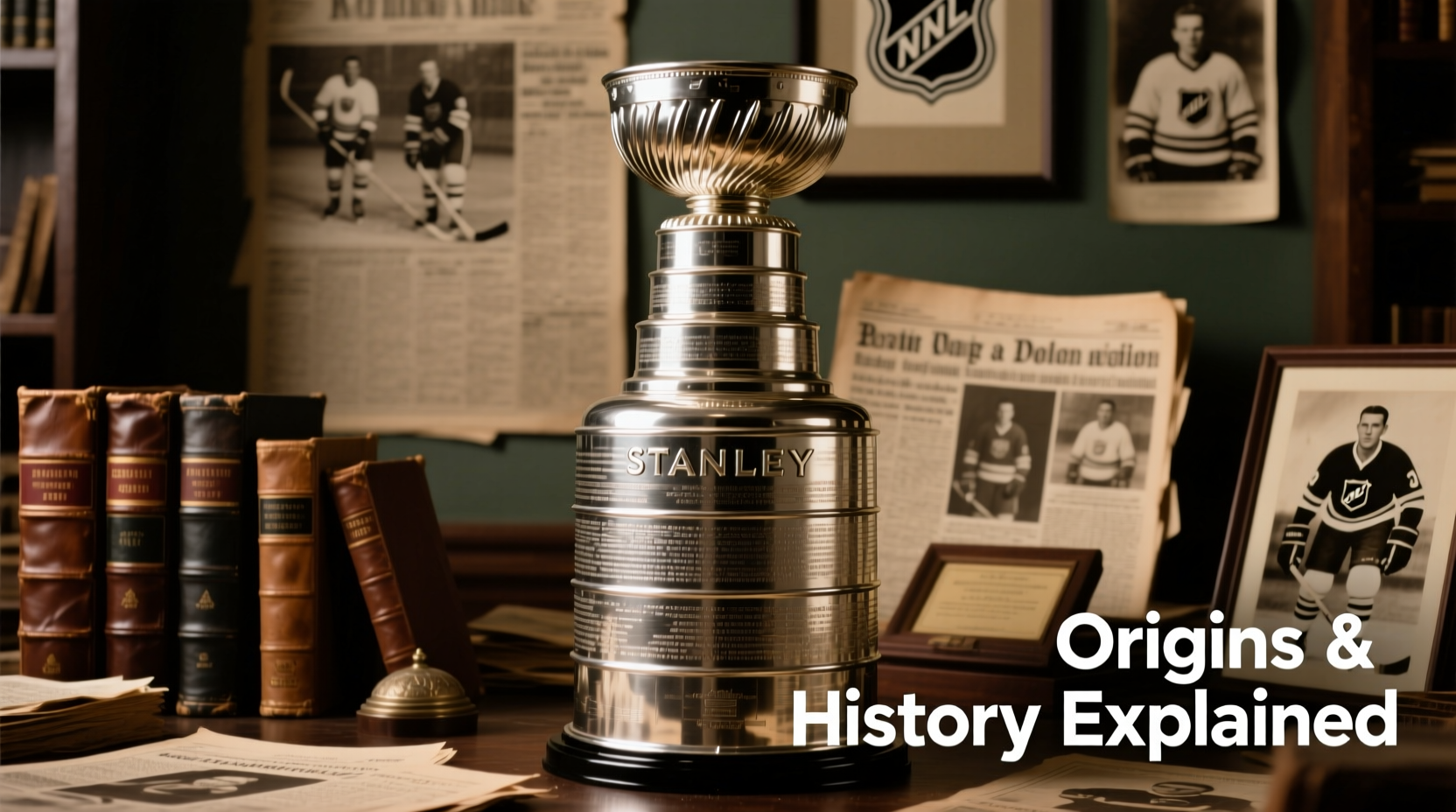
The “Stanley” in Stanley Cup refers to Frederick Arthur Stanley, 16th Earl of Derby, better known as Lord Stanley of Preston. Born in 1841 into one of England’s most prominent aristocratic families, he served in various political roles, including Colonial Secretary, before being appointed Governor General of Canada in 1888—a position he held until 1893.
Though not Canadian by birth, Lord Stanley developed a deep affection for his adopted country. He quickly became immersed in Canadian life, attending public events, supporting local institutions, and even learning to skate at age 57. It was during this time that he discovered ice hockey, which was rapidly gaining popularity among young men in Montreal, Ottawa, and other cities.
What set Lord Stanley apart from other colonial officials was his genuine enthusiasm for Canadian culture. Rather than viewing hockey as a mere pastime, he saw it as a unifying national sport. In 1892, inspired by the growing competitiveness of amateur leagues, he announced he would donate a trophy to be awarded to the top-ranking amateur hockey team in Canada.
“Although I am not familiar with the rules of the game, I have come to appreciate its vigor and skill. I wish to encourage such manly sport.” — Lord Stanley, 1892
The Birth of the Dominion Hockey Challenge Cup
Lord Stanley purchased the original bowl-shaped trophy for 10 guineas (about $50 CAD at the time) from a silversmith in London, England. Officially named the \"Dominion Hockey Challenge Cup,\" it was inscribed with the words:
“From Stanley, Lord Stanley of Preston, to the Champion Hockey Team of the Dominion of Canada.”
The first winners were the Montreal Amateur Athletic Association (MAAA) in 1893, though the Cup wasn’t actually presented to them until 1894 due to production delays. At the time, the trophy was governed by a set of conditions drafted by Lord Stanley himself, including provisions for challenge matches and eligibility criteria for competing teams.
Unlike modern trophies that are retired after each season, the Stanley Cup was designed to be a perpetual award—passed from champion to champion, with each winning team’s name engraved upon it. This tradition continues today, making the Cup one of the few sports trophies that physically evolves over time.
Tip: The original base of the Stanley Cup only had room for seven team engravings. Over time, additional bands were added to accommodate more champions.From Amateur Prize to Professional Legacy
In its early years, the Stanley Cup rotated among amateur clubs like the Ottawa Senators, Quebec Bulldogs, and Toronto Arenas. However, as professional leagues began forming in the early 20th century, control of the Cup shifted hands multiple times. By 1910, the National Hockey Association (NHA)—predecessor to the NHL—gained authority over its distribution.
After several disputes between rival leagues, particularly the Pacific Coast Hockey Association (PCHA), the NHL emerged as the sole league competing for the Cup following the 1926 season. From that point forward, the Stanley Cup became synonymous with NHL supremacy.
One of the most enduring traditions associated with the trophy is the practice of each player on the winning team spending a day with the Cup during the offseason. First introduced in 1995 by the NHL and the Hockey Hall of Fame, this ritual has led to countless memorable moments—from players bringing the Cup to visit family in remote villages to using it as a baptismal font.
A Century of Evolution: Key Milestones
| Year | Event |
|---|---|
| 1892 | Lord Stanley announces donation of a championship hockey trophy. |
| 1893 | Montreal AAA becomes first official winner. |
| 1914 | First U.S.-based team (Seattle Metropolitans) reaches Final. |
| 1917 | National Hockey League (NHL) founded. |
| 1926 | NHL becomes sole league competing for the Cup. |
| 1993 | Last Canadian team (Montreal Canadiens) wins the Cup. |
| 2005 | Cup not awarded due to NHL lockout—the first cancellation since 1919. |
The Design and Physical Transformation
The original Stanley Cup stood just under seven inches tall and resembled a punch bowl. Over time, as more teams won and space ran out for engravings, rings (called \"bands\") were added beneath the original bowl. When a band fills up, it is removed and preserved in the Hockey Hall of Fame, replaced by a new one.
Today, the trophy stands over three feet tall and weighs approximately 34 pounds (15.5 kg). It consists of five components: the original bowl, five barrel-shaped bands, and a base structure that supports the entire piece. Each year, the names of all players, coaches, management, and staff from the winning team are meticulously engraved—a process that takes nearly three months.
Interestingly, errors do occur. Misspellings, missing names, or incorrect dates have made their way onto the Cup throughout history. Some notable examples include:
- Billy Smith misspelled as “Silky” (1980, New York Islanders)
- Two players from the 1980 team listed as “Eric” instead of “Anders” (Håkansson)
- “Tampa Bay Lighning” instead of “Lightning” (2004)
These mistakes are never corrected; they remain part of the Cup’s living history.
Mini Case Study: The 1919 Pandemic and the Unawarded Cup
One of the most dramatic chapters in Stanley Cup history occurred in 1919, when the series between the Montreal Canadiens and Seattle Metropolitans was canceled due to the Spanish flu pandemic. After five games—with the series tied at two wins apiece and one tie—several players fell seriously ill. Joe Hall, a defenseman for Montreal, died four days after the cancellation.
This remains the only time in history the Cup was not awarded despite a series being underway. The tragedy underscored both the fragility of human life and the emotional weight attached to the trophy. Nearly a century later, during the 2020 pandemic pause, the NHL completed a modified playoff in a bubble environment, ensuring the Cup could still be awarded—this time, to the Tampa Bay Lightning.
Frequently Asked Questions
Why isn't the Stanley Cup awarded every year?
It almost always is, but there have been exceptions. The Cup was not awarded in 1919 due to the influenza outbreak and in 2005 because of an NHL labor lockout. Otherwise, it has been presented annually since 1893.
Can women have their names engraved on the Stanley Cup?
Yes. While rare, female executives and staff members have been included. Kim Davis, senior executive with the Pittsburgh Penguins, had her name engraved in 2016 and 2017. Additionally, Marguerite Norris, president of the Detroit Red Wings, was the first woman to oversee a Cup-winning team in 1954 and 1955.
Is the original Stanley Cup on display?
The original bowl is housed permanently at the Hockey Hall of Fame in Toronto, along with retired bands and replicas. The version used in ceremonies today is a working model maintained by the NHL.
Tip: Fans can view the current Stanley Cup and the original bowl during public exhibitions hosted by the Hockey Hall of Fame.How to Appreciate the Stanley Cup Beyond the Game
Understanding the history of the Stanley Cup enriches the experience of watching modern hockey. Whether you're a lifelong fan or a newcomer to the sport, consider these ways to deepen your appreciation:
- Visit the Hockey Hall of Fame in Toronto to see the original trophy and learn about its journey.
- Follow the “Day with the Cup” program—many teams share photos and videos of players celebrating in unique locations.
- Read biographies of Lord Stanley or early hockey pioneers to understand the social context of the era.
- Watch archival footage of past finals to witness how the game—and the Cup presentation—has evolved.
- Attend a local junior or amateur hockey game and reflect on how far the sport has come since 1893.
Conclusion
The name “Stanley Cup” carries more than just historical weight—it embodies a legacy of unity, perseverance, and national pride. What began as a gesture from a British governor general to promote amateur sport in a young nation has transformed into the pinnacle of professional hockey achievement. From its modest origins as a Dominion-wide challenge trophy to its status as a global icon, the Stanley Cup remains a testament to how sports can bridge cultures, generations, and continents.
💬 Did you know the Stanley Cup was almost forgotten in a closet? In 1962, it was reportedly stored in a broom cupboard at the NHL offices. Share this story—or your favorite Stanley Cup moment—in the comments below!








