
A greasy, oily, or iridescent film floating on the surface of your homemade brandy is not merely an aesthetic concern—it’s a diagnostic signal. Unlike commercial brandies, which undergo rigorous filtration, stabilization, and quality control, small-batch or hobbyist distillations are uniquely vulnerable to subtle biochemical disruptions. This film—sometimes described as “rainbow-slick,” “soapy sheen,” or “thin plastic-like scum”—is rarely caused by a single factor. Instead, it emerges from the intersection of fermentation hygiene, still operation, aging conditions, and post-distillation handling. Understanding what that film means requires reading between the layers: not just observing its appearance, but interpreting its texture, timing of appearance, odor profile, and interaction with light and agitation. This article breaks down the five most probable causes—not as abstract theory, but as actionable forensic categories—with diagnostic criteria, real-world examples, and precise corrective steps.
1. Yeast Autolysis and Protein Breakdown: The “Wine Lees” Effect
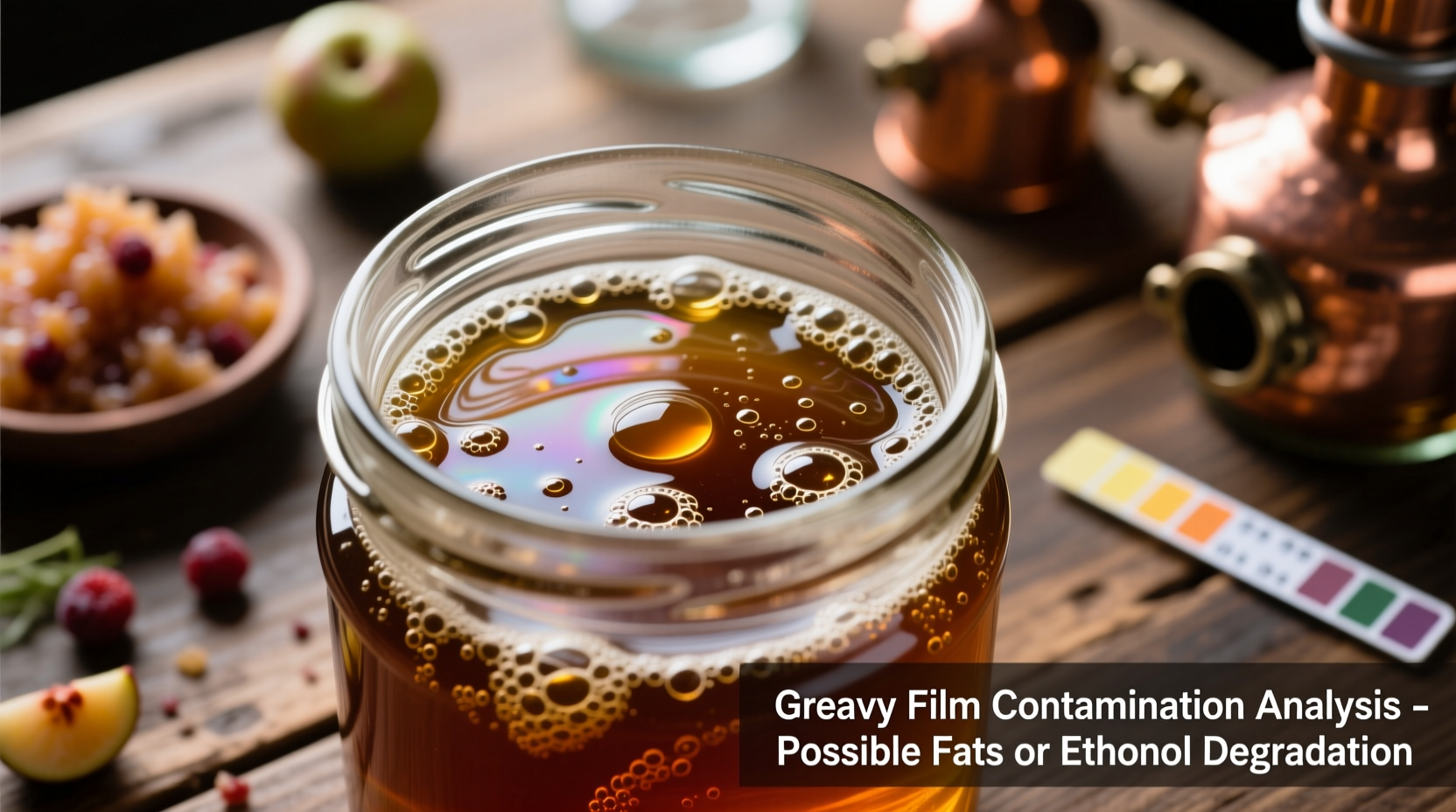
When fermentation stalls prematurely—or when wine base sits too long on yeast sediment before distillation—yeast cells begin to self-digest (autolysis). This releases intracellular proteins, nucleic acids, and fatty acid esters into the wash. During distillation, while ethanol and volatile congeners vaporize efficiently, certain amphiphilic peptides and glycoproteins can co-distill, especially under suboptimal reflux or low-cut-point conditions. These compounds carry hydrophobic tails and hydrophilic heads, allowing them to align at the air-liquid interface and form persistent, cohesive films. The result is often a delicate, shimmering layer that doesn’t break easily upon swirling and may leave faint oily residue on glass walls.
This phenomenon is particularly common in fruit brandies made from high-protein substrates (e.g., apple pomace, pear must, or stone-fruit pulps) or when fermentations exceed 14–16 days without racking. It’s not inherently unsafe—many traditional Calvados producers embrace extended lees contact—but it becomes problematic when carried over in excess during distillation due to rushed spirit cuts or inadequate copper contact in the still.
Tip: Before distilling fruit wine, rack off gross lees after 5–7 days and fine with bentonite if protein haze persists. Always discard the first 50–100 mL of foreshots and make your hearts cut only after the heady, solvent-like notes fully dissipate.2. Acetic Acid Bacteria (AAB) Contamination: The Vinegar Film Pathway
A greasy film appearing *after* distillation—especially during aging or even in bottled product—is frequently the work of acetic acid bacteria (Acetobacter, Gluconobacter). These aerobic microbes convert ethanol into acetic acid, but their metabolic byproducts include cellulose-based pellicles: thin, flexible, gelatinous biofilms that float atop liquid. In wine, this is known as “mother of vinegar.” In brandy, it manifests as a slightly opaque, rubbery, or slimy film that may contract at the edges or form concentric rings. Unlike yeast-derived films, AAB pellicles often emit a sharp, vinegary tang—even at low concentrations—and may be accompanied by increased acidity (measurable via titratable acidity test) and subtle caramelized or bruised-apple off-notes.
Critical risk windows include: open-air barrel sampling without flame-sanitized tools; storing partially filled bottles or demijohns with loose corks; transferring spirit using unsterilized funnels or tubing; or aging in porous wood without adequate sulfur dioxide management. Temperature matters: AAB thrive between 25–30°C and become nearly dormant below 12°C.
| Clue | Yeast Autolysis Film | AAB Pellicle | Oxidative Rancidity Film |
|---|---|---|---|
| Timing of Appearance | Within hours/days post-distillation | Days to weeks post-distillation or during aging | Weeks to months, especially in warm/light exposure |
| Texture | Thin, elastic, iridescent, breaks unevenly | Thicker, matte, slightly rubbery, pulls like tissue paper | Greasy, non-elastic, leaves smudge on glass |
| Odor Profile | Bready, yeasty, umami, sometimes sulfury | Vinegary, cidery, fermented apple skin | Cardboard, stale nuts, wet newspaper, waxy crayon |
| Response to Swirling | Reforms quickly, minimal residue | Shreds but re-coalesces slowly | Breaks into globules, coats sides |
| Corrective Action | Rerun through copper-packed column; add fining agent pre-distillation | Filtration + potassium metabisulfite (50 ppm); sterile filtering; rebottle with inert gas | Discard affected batch; improve storage protocol |
3. Oxidative Rancidity of Unsaturated Fatty Acids
Some fruits—particularly pears, plums, and certain apples—contain trace lipids rich in linoleic and oleic acids. During fermentation and distillation, these lipids remain largely intact unless exposed to prolonged heat or oxygen. Once in the spirit, unsaturated fats undergo autoxidation: a free-radical chain reaction accelerated by light (especially UV), heat, and trace metals (copper, iron). The end products include short-chain aldehydes (hexanal, nonanal) and ketones, but crucially, also oxidized triglyceride polymers that lack solubility in high-proof ethanol. These precipitate as a greasy, non-iridescent film that feels distinctly slick to the touch and may separate into tiny droplets when agitated.
This type of contamination is almost always tied to storage conditions—not production flaws. It appears gradually, worsens in clear glass exposed to sunlight, and correlates strongly with batches stored near heaters, in attics, or in south-facing cabinets. The film itself may carry a faint, unpleasant “waxy” or “stale frying oil” note detectable only on close olfactory inspection.
“Oxidative rancidity in fruit spirits isn’t about ‘bad fruit’—it’s about the invisible triad of oxygen, light, and time. One unprotected bottle in a sunny window can degrade faster than ten in a dark cellar.” — Dr. Lena Varga, Food Chemist & Distillation Consultant, Cognac Research Institute
4. Copper Sulfide Precipitation and Still Carryover
Copper is essential in distillation—it binds sulfur compounds (H₂S, mercaptans) and improves flavor. But when copper surfaces corrode (due to acidic washes, chlorinated water rinses, or improper cleaning), they release copper ions. If the distillate contains residual hydrogen sulfide or thiols, copper sulfide (CuS) can precipitate as microscopic black or brown particles—or, more problematically, as colloidal suspensions that coalesce into a greasy, metallic-smelling film. This is most likely in pot stills with old, pitted copper, or in reflux columns where condensate pools and stagnates between runs.
The film often has a faint rotten-egg or burnt-match undertone, especially when warmed. It may appear within minutes of collection and persist despite filtration. Crucially, it’s not biological—it won’t grow or spread, but it won’t dissipate either without physical removal.
Step-by-Step: Diagnosing & Removing Copper-Related Film
- Isolate the sample: Pour 50 mL into a clean, dry glass vial. Seal tightly and observe for 24 hours.
- Check for growth: If the film thickens or spreads, it’s microbial (AAB or wild yeast). If unchanged, suspect chemical origin.
- Test pH: Use narrow-range pH strips (3.0–6.0). If pH < 4.2, copper corrosion is likely.
- Add chelator: Introduce 1 drop of food-grade EDTA solution (0.1%). If film disperses within 1 hour, copper complexes are involved.
- Filter & polish: Pass through a 0.45-micron PTFE membrane filter, then polish with activated carbon (1 g/L, 30 min contact, gentle agitation).
5. Mini Case Study: The Pear Brandy Incident of 2023
In late autumn 2023, home distiller Marcus R. in Vermont produced 22 liters of pear brandy from locally pressed Seckel pears. He fermented for 12 days, racked once, then distilled in a 20L copper pot still. The first run yielded clear, aromatic hearts—but within 48 hours of barreling in a used 5-gallon oak cask, a faint rainbow film appeared on the surface. By day 7, it had thickened into a cohesive, stretchy layer. Marcus noted no vinegar smell, but detected a subtle “damp wool” nuance and confirmed the cask had been rinsed with tap water (chlorinated) and air-dried—not sterilized.
Testing revealed: pH 3.9, TA 6.2 g/L (high for brandy), and microbiological culture positive for Gluconobacter oxydans. The chlorine rinse had damaged the cask’s natural microbiome, creating a niche for AAB colonization. Worse, the cask’s previous contents (a sherry-style fortified wine) left residual sugars absorbed in the wood, feeding the bacteria. Marcus corrected the issue by: (1) siphoning spirit off the pellicle into a stainless steel tank; (2) treating with 75 ppm potassium metabisulfite; (3) filtering through a 0.65-micron depth filter; and (4) re-barreling into a steam-sanitized cask dosed with SO₂ gas. No recurrence occurred over 18 months of aging.
Essential Prevention Checklist
- ✅ Ferment fruit wines to dryness (<0.5% residual sugar) and rack off lees within 7 days
- ✅ Sanitize all post-fermentation equipment with food-grade peracetic acid or 70°C steam—not bleach or vinegar
- ✅ Make precise spirit cuts: discard foreshots (first 50 mL/20L charge), separate heads sharply at 82–84°C vapor temp, and stop hearts before tail notes emerge
- ✅ Age in dark, cool (12–16°C), humidity-stable environments—never in direct light or near heat sources
- ✅ Use inert gas (argon or nitrogen) to blanket barrels during sampling and when topping up
- ✅ Test copper stills annually for pitting; replace gaskets and solder joints showing green corrosion
- ✅ Store finished brandy in amber glass or stainless steel; avoid clear glass for long-term holding
FAQ
Can I safely drink brandy with a greasy film?
Not without verification. Yeast-derived films are generally non-toxic but indicate process inconsistency—taste may be compromised. AAB pellicles suggest active spoilage; while acetic acid itself isn’t hazardous at low levels, the presence of biofilm signals uncontrolled microbial activity and potential for biogenic amines. Oxidized or copper-related films don’t pose acute toxicity but reflect degradation that affects sensory integrity and stability. When in doubt, discard. Your palate and safety aren’t worth the risk.
Will filtering through coffee filters fix it?
No. Standard paper or cloth filters cannot remove colloidal proteins, dissolved lipids, or bacterial pellicles. They may temporarily clarify the surface but won’t eliminate root causes—and may even introduce lint or paper fibers. Use certified 0.45-micron membrane filters for microbial removal or activated carbon for oxidative compounds. Always follow filtration with stability testing: store filtered samples at 35°C for 72 hours and inspect for reformation.
Does adding sulfites after distillation prevent all films?
Sulfites (potassium metabisulfite) effectively suppress AAB and wild yeast—but they do nothing against yeast autolysis proteins, oxidized lipids, or copper precipitates. Overuse (>150 ppm total SO₂) can create reductive off-notes (rotten egg, burnt rubber) and mask true defects. Reserve sulfites for microbial control only, and always measure free SO₂ levels with aeration-oxidation titration—not guesswork.
Conclusion
A greasy film on your homemade brandy is never random. It’s data—encoded in texture, timing, scent, and behavior. Treating it as mere “scum” invites repeated failure. But decoding it—as evidence of yeast stress, bacterial opportunity, oxidative exposure, or metallurgical carryover—transforms troubleshooting into mastery. Every batch you diagnose deepens your intuition about fermentation kinetics, still dynamics, and aging science. You’re not just making spirit; you’re cultivating a responsive, living system where cause and effect remain legible—if you know where and how to look. Don’t rush to discard or mask the symptom. Pause. Observe. Test. Record. Then act with precision. That discipline separates craft from accident—and transforms a flawed batch into your next breakthrough.
💬 Have you encountered this film—and solved it your own way? Share your timeline, test results, and correction method in the comments. Real-world data from fellow distillers is the most valuable resource we have.








