Craft whiskey is a landscape of bold experimentation—small batches, local barley, unconventional casks, and hands-on distillation. But with that freedom comes risk: a surprising number of new American and international craft releases carry unmistakable medicinal notes—iodine, antiseptic, bandages, burnt plastic, or wet wool—that unsettle even seasoned drinkers. These flavors aren’t always flaws. Sometimes they’re the deliberate signature of peat smoke, carefully calibrated by the distiller. Other times, they signal something gone wrong: stressed fermentation, copper contamination, poor cut management, or microbial spoilage. The difference isn’t academic—it’s sensory literacy. Knowing *why* a whiskey tastes medicinal, and *which kind* of medicinal it is, separates curious tasters from confident ones.
The Two Faces of Medicinal: Peat-Derived vs. Process-Derived
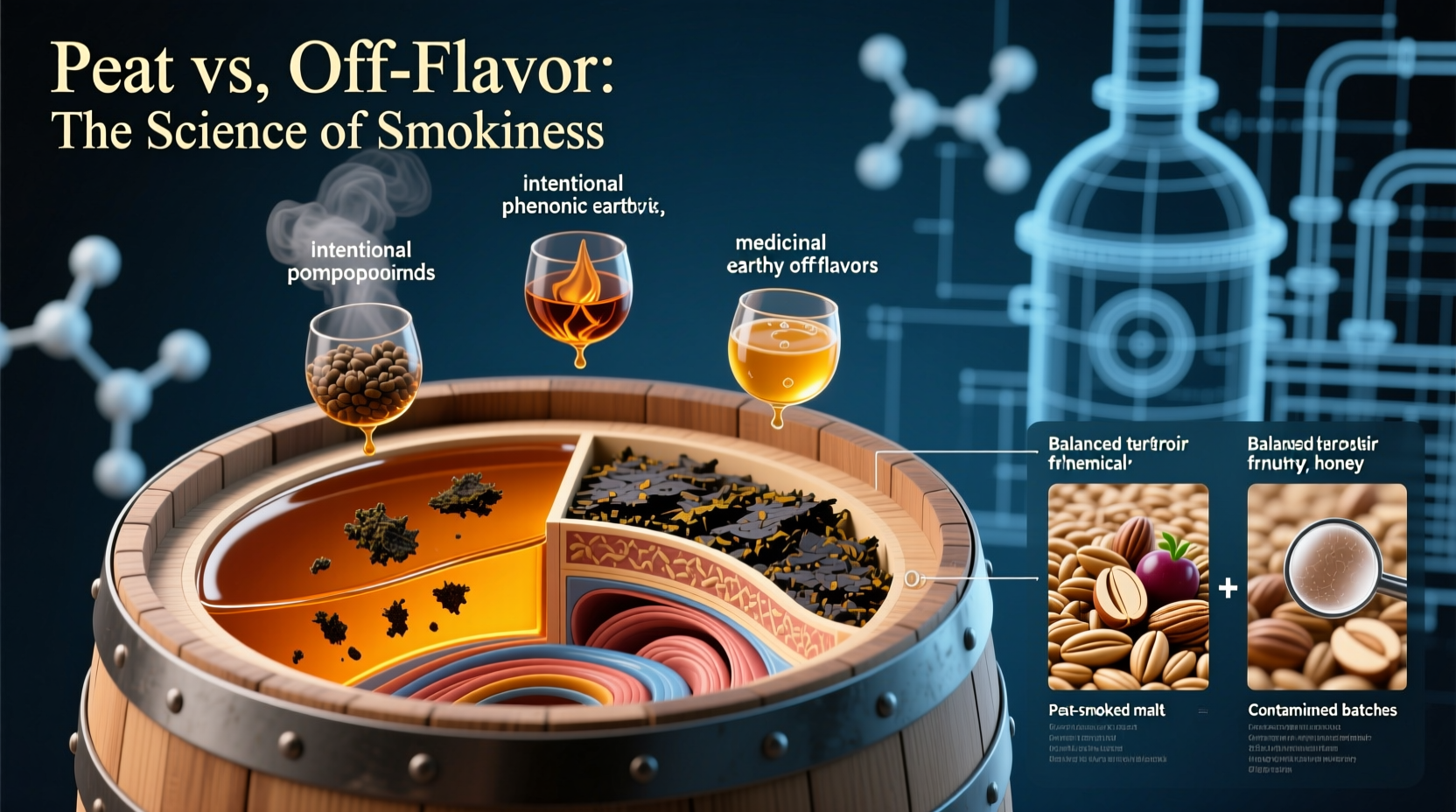
Medicinal character in whiskey arises from volatile phenolic compounds—but their origin determines whether they belong or betray. True peat-derived medicinal notes (think Islay Scotch) come from lignin breakdown during the slow, low-temperature burning of ancient, waterlogged peat. This produces key compounds like guaiacol (smoky, spicy), cresols (antiseptic, barnyard), and especially 4-ethylphenol and 4-ethylguaiacol, which deliver that classic iodine, seaweed, and hospital corridor nuance. These phenols bind to barley during kilning and survive fermentation and distillation in predictable ratios.
Process-derived medicinal notes, however, stem from unintended chemistry: bacterial infection (especially Lactobacillus or Pediococcus strains producing phenolic off-flavors), excessive copper leaching from stills under acidic conditions, or fusel oil oxidation during poor aging. These often manifest as sharp, acrid, or synthetic medicinal notes—burnt rubber, chlorinated water, or chemical disinfectant—that lack the earthy depth and integration of true peat smoke.
Tip: Swirl, wait 30 seconds, then nose again. Peat-derived medicinal notes soften and reveal underlying sweetness (dried fruit, honey, oatmeal); process-derived ones intensify or turn metallic or sour.How Craft Distillers Accidentally Create Medicinal Off-Flavors
Small-scale distillation magnifies variables that large producers tightly control. Three common missteps explain many “medicinal” surprises:
- Fermentation stress: Overly long ferments (beyond 96–120 hours), inconsistent temperature control, or nutrient-deficient wort encourage wild bacteria to metabolize ferulic acid into 4-vinylguaiacol—which oxidizes into harsh, medicinal 4-ethylguaiacol. This is especially common in open fermenters without strict sanitation protocols.
- Cut timing errors: The “hearts” cut—the clean, flavorful core of the distillate—is narrower in craft stills due to less reflux. Taking hearts too early (including more foreshots) introduces volatile sulfur compounds (e.g., dimethyl trisulfide) that smell like cabbage, garlic, or, at higher concentrations, iodine and burnt match heads.
- Copper contact imbalance: Copper in stills binds sulfur compounds, cleaning the spirit. But if wash pH drops below 4.0 (common with aggressive sour mashes or bacterial activity), copper can leach excessively—creating copper sulfate residues that impart a bitter, metallic, almost “hospital-cleaner” note. Conversely, insufficient copper contact leaves sulfur compounds unscrubbed.
Unlike traditional Scotch producers—who test phenol levels in malted barley (measured in parts per million, ppm) and track sulfur compounds throughout production—many craft distillers rely on sensory cues alone, leaving room for inconsistency across batches.
Peat Intentionality: Reading the Label, the Context, and the Glass
Not all peat is created equal—and not all ��peated” craft whiskey delivers the same medicinal profile. Here’s how to assess intentionality:
- Check the malt specification: Does the label state “peated malt,” “peated barley,” or “peated grain”? Vague terms like “smoked grain” or “wood-fired” don’t guarantee peat. True peat smoke requires specific fuel—not just any wood fire.
- Look for phenol ppm data: A growing number of U.S. craft distillers (e.g., Westland, Balcones, FEW Spirits) now list phenol levels (e.g., “35 ppm”). For reference: unpeated malt sits near 0–2 ppm; medium-peated (like Ardmore) runs 15–25 ppm; heavily peated (Ardbeg, Laphroaig) hits 40–55+ ppm. Anything above 30 ppm strongly suggests intentional medicinal design.
- Consider regional context: A peated rye from Colorado using local peat bogs reads as intentional. A “bourbon-style” wheated whiskey from Tennessee labeled “lightly smoked” with no malt sourcing details warrants skepticism—especially if it smells aggressively iodine-forward without supporting smoke or brine.
“Phenolics are the fingerprint of place and process—but only if you know what the fingerprint *should* look like. A 22-ppm peated malt fermented cleanly and distilled precisely gives complexity. The same ppm level from stressed fermentation gives confusion.” — Dr. Emily Rho, Whiskey Chemist & Sensory Consultant, Caskworks Labs
Diagnostic Table: Peat-Derived vs. Process-Derived Medicinal Notes
| Characteristic | Peat-Derived Medicinal | Process-Derived Medicinal |
|---|---|---|
| Nose Profile | Iodine + seaweed + damp earth + smoked bacon + brine; layered and evolving | Antiseptic + burnt rubber + wet dog + chlorine + metallic tang; one-dimensional and persistent |
| Mouthfeel | Oily, rounded, with residual sweetness (caramel, dried apricot) | Thin, sharp, drying, or astringent; may cause tongue pucker |
| Development in Glass | Softens with air; reveals smoke, oak spice, cereal notes | Intensifies or turns sour/bitter; little positive evolution |
| Water Reaction | Opens up smoke and fruit; medicinal note recedes slightly but remains integrated | Often amplifies harshness or exposes hidden sulfur (rotten egg, cabbage) |
| Typical Origin Clues | Stated peated malt; visible smoke in production photos; consistent batch-to-batch | No malt source disclosed; “experimental” or “small-batch” labeling without technical transparency; single-offending batch |
A Real Tasting Moment: When Intention Met Ambiguity
Last spring, I tasted two bottles side-by-side at a Portland whiskey festival: Westland’s Garryana (peated with native Pacific Northwest peat, ~38 ppm) and a limited-release bourbon from a respected Kentucky craft distillery labeled “Hickory-Smoked Finish.” Both registered strong medicinal notes on first nosing—so much so that three attendees walked away from the table.
Westland’s poured deep amber, with an immediate wave of iodine and sea spray—yet within ten seconds, it unfolded into cedar, black tea, and baked pear. On the palate, it was rich and viscous, the medicinal edge perfectly balanced by barrel char and malt sweetness. The hickory bourbon, by contrast, hit with a piercing, artificial antiseptic note—like a freshly opened bottle of rubbing alcohol—followed by a hollow, green-wood bitterness and zero fruit or grain character. Later, I learned the distillery had rushed a new finishing experiment: hickory chips added directly to new charred barrels, causing rapid lignin degradation and uncontrolled phenol release. No malt was peated; the “smoke” was pyrolytic contamination—not terroir-driven intention.
The takeaway wasn’t that one was “good” and the other “bad”—but that context, transparency, and sensory coherence separate artistry from accident.
Step-by-Step: How to Assess Medicinal Character Like a Pro
- Observe the label: Note grain bill, mash type, still type (pot/column), aging vessel, and any mention of peat, smoke, or fermentation method. Flag missing details.
- Nose neat, undiluted: Hold glass 2 inches from nose. Breathe gently. Identify dominant impression: Is it iodine + ocean, or iodine + bleach? Jot down the first three descriptors.
- Add two drops of water: Wait 60 seconds. Does the aroma deepen and harmonize—or fracture into disjointed, sharper elements?
- Taste slowly: Let spirit coat your tongue. Focus on mid-palate: Does medicinal character sit *with* other flavors (smoke, oak, fruit), or does it dominate and leave a bitter, drying finish?
- Compare to known references: If possible, taste alongside a benchmark (e.g., Ardbeg 10 for peat-integrated medicinal; a faulty bottle of young rye known for sulfur for process-derived flaws). Note structural differences—body, texture, length.
- Revisit after 15 minutes: True peat evolves gracefully. Off-flavors rarely improve—and often worsen with oxidation.
FAQ
Can “medicinal” notes develop in the bottle after bottling?
Rarely. Once bottled, whiskey is largely stable. What changes is perception: as ethanol evaporates from an open bottle over months, higher-alcohol volatiles dissipate, sometimes making underlying medicinal notes more apparent. But true new off-flavors (e.g., cork taint, oxidation) present as mustiness, sherry-like staleness, or flat cardboard—not fresh iodine or antiseptic.
Is a medicinal whiskey safe to drink?
Yes—almost always. Phenolic compounds from peat are non-toxic at whiskey concentrations. Even process-derived off-flavors (e.g., excess sulfur, bacterial metabolites) fall well below safety thresholds. They affect enjoyment, not safety. The exception is extreme copper leaching (rare, and usually accompanied by visible particulate or severe metallic bitterness)—in which case discontinue use and contact the distiller.
Why do some unpeated craft whiskeys still taste medicinal?
Three primary reasons: (1) Local water high in chloramine (used in municipal treatment) reacts with organic matter during fermentation to form chlorophenols—sharp, medicinal, and notoriously hard to remove; (2) New make spirit aged in heavily charred or toasted barrels can extract lignin-derived phenols that mimic peat; (3) Yeast strains (especially certain Belgian or wild strains) produce elevated 4-ethylphenol as a metabolic byproduct—even without peat.
Conclusion
Medicinal flavor in whiskey isn’t inherently good or bad—it’s information. It tells you about soil, fire, time, copper, microbes, and human choice. In the craft whiskey world, where transparency is still emerging and experimentation outpaces documentation, that information is your most valuable tool. Next time you encounter iodine, antiseptic, or bandage notes, pause before reaching for the dump bucket. Ask instead: Is this the voice of peat speaking clearly—or the static of a process gone quietly awry? Read the label closely. Trust your nose—but verify with water and time. Compare, question, and listen. The most rewarding craft whiskeys don’t just taste complex—they tell a coherent story, from bog to barrel to bottle. And the more you learn to hear that story, the more confidently you’ll choose, share, and savor.
💬 Your tasting notes matter. Share a whiskey that surprised you—medicinally or magnificently—in the comments. What did you learn? What would you ask the distiller?








