
It’s a familiar sound—creak, pop, snap—as you lower into a squat. For many people, knee cracking is routine, almost expected. But when should you be concerned? And more importantly, can you do anything about it?
Knee crepitus—the medical term for joint noises like cracking, popping, or grinding—is extremely common, especially during movements like squatting, standing up from a chair, or climbing stairs. While often harmless, persistent or painful knee sounds may signal underlying biomechanical imbalances or early signs of joint stress.
This article breaks down the science behind why knees crack when you squat, identifies red flags that warrant medical attention, and provides targeted stretches and mobility exercises to support long-term knee health.
Understanding Knee Crepitus: The Science Behind the Snap
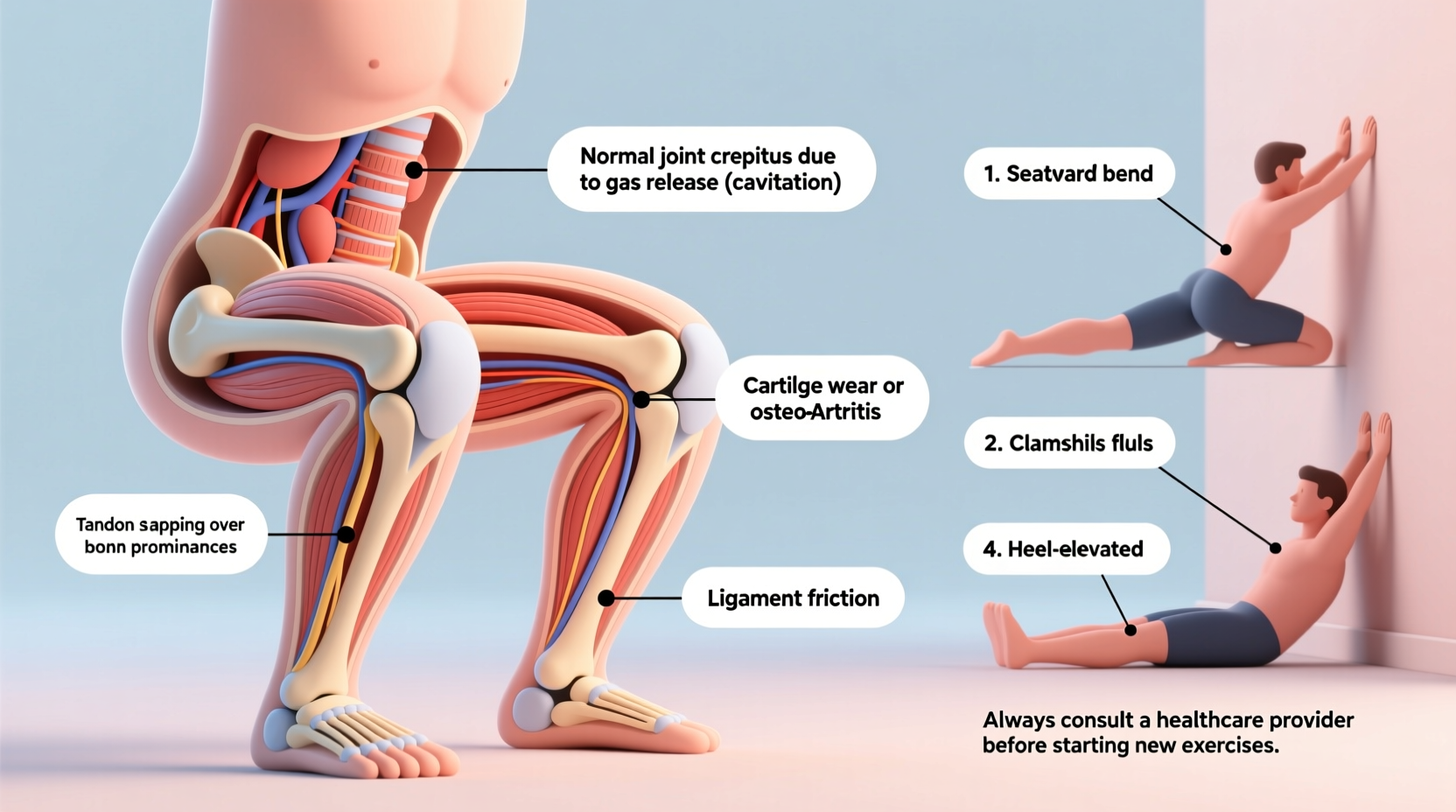
The sound of cracking knees isn’t magic—it’s physics. When you move your knee through its range of motion, several physiological processes can generate audible pops.
Cavitation is the most common explanation. Synovial fluid lubricates your joints, and within this fluid are dissolved gases like nitrogen and carbon dioxide. When a joint is stretched or bent rapidly—such as during a deep squat—a sudden change in pressure can cause these gases to form tiny bubbles that quickly collapse, producing a popping noise. This is the same phenomenon responsible for knuckle cracking.
Another cause is tendon snapping. Tendons and ligaments glide over bony structures as the knee bends and straightens. If a tendon shifts slightly out of its usual path—due to tightness, weakness, or alignment issues—it may “snap” back into place with movement, creating an audible click.
In some cases, the sound comes from cartilage wear. As we age or accumulate repetitive stress, the smooth cartilage lining the knee joint (especially under the kneecap) can become roughened. When the patella moves across this uneven surface, it may produce a grinding or grating sensation known as crepitus.
“Joint noise alone is rarely a concern. It’s the combination with pain, swelling, or instability that signals a need for evaluation.” — Dr. Lena Torres, Sports Medicine Physician
When Is Knee Cracking a Problem?
Most knee popping is benign. However, certain symptoms suggest the noise is more than just gas bubbles releasing. These warning signs indicate possible structural damage or degeneration:
- Pain accompanying the crack or pop
- Swelling or warmth around the joint
- Feeling of instability or “giving way”
- Reduced range of motion
- Recurrent locking or catching sensations
If you experience any of these, particularly after an injury or with increasing frequency, consult a healthcare provider. Conditions such as meniscus tears, chondromalacia patellae (softening of kneecap cartilage), or early osteoarthritis may be at play.
Tip: Record a video of your squat—even without sound—to observe tracking of the knee. If your knees cave inward (valgus collapse), it increases joint stress and may contribute to noisy or painful movement.Common Causes of Knee Popping During Squats
Squatting places significant demand on the entire kinetic chain—from hips to ankles. Misalignment or dysfunction anywhere along this chain can manifest as knee noise. Below are the most frequent contributors:
1. Poor Patellar Tracking
The kneecap (patella) should glide smoothly in a groove on the femur. Muscle imbalances—particularly weak vastus medialis obliquus (VMO) and tight lateral structures—can pull the patella off track, causing friction and noise.
2. Tight Muscles Around the Knee
Tight quadriceps, hamstrings, iliotibial (IT) band, or calf muscles restrict normal joint mechanics. This tension alters how forces are distributed across the knee during flexion and extension.
3. Weak Glutes and Hip Stabilizers
The gluteus medius and maximus control pelvic alignment. Weakness here leads to internal rotation of the femur, which pushes the knee inward during squats—increasing pressure on the joint surfaces.
4. Limited Ankle Dorsiflexion
If your ankle can’t bend sufficiently (dorsiflex), your body compensates by shifting weight forward or rotating the knee excessively. This altered mechanics contributes to abnormal joint loading and potential popping.
5. Previous Injuries or Joint Degeneration
Past sprains, meniscus injuries, or arthritis can leave behind scar tissue or irregular joint surfaces that create noise during movement—even if fully healed.
| Cause | Symptoms | Solutions |
|---|---|---|
| Cavitation (gas release) | Occasional pop, no pain | No treatment needed |
| Tight IT band | Lateral knee snap, tightness | Stretching, foam rolling |
| Weak VMO | Pain under kneecap, grinding | Targeted quad strengthening |
| Poor hip control | Knees caving in, fatigue | Glute activation drills |
| Ankle stiffness | Heels lifting, forward lean | Mobility work, heel lifts (temporary) |
Effective Stretches to Reduce Knee Popping
Addressing muscle tightness and improving joint mobility can significantly reduce knee noise and discomfort during squats. Perform these stretches daily or before workouts for best results.
1. Standing Quad Stretch
Targets: Rectus femoris and quadriceps
How to do it: Stand on one leg, grab the opposite ankle, and gently pull your heel toward your glutes. Keep your knees close together and avoid arching your back. Hold for 30 seconds per side.
2. Seated Hamstring Stretch
Targets: Hamstrings and posterior chain
How to do it: Sit on the floor with one leg extended, the other bent with foot against inner thigh. Hinge at the hips to reach toward your toes. Keep your spine long. Hold 30–45 seconds per leg.
3. IT Band Foam Rolling (Side-Lying)
Targets: Iliotibial band and tensor fasciae latae
How to do it: Lie on your side with a foam roller under your outer thigh. Support your upper body with your forearm. Roll slowly from just below the hip to above the knee. Pause on tender spots for 20–30 seconds.
4. Calf Stretch Against Wall
Targets: Gastrocnemius and soleus
How to do it: Place hands on wall, step one foot back with heel down and knee straight (for gastrocnemius). Then bend the back knee slightly to target the deeper soleus. Hold each for 30 seconds.
5. Hip Flexor Lunge Stretch
Targets: Psoas and rectus femoris
How to do it: Step into a lunge position with back knee on the ground. Tuck your pelvis slightly and shift weight forward until you feel a stretch in the front of the hip. Hold 30 seconds per side.
6. Figure-Four Stretch (Piriformis Stretch)
Targets: Glutes and external rotators
How to do it: Lie on your back, cross one ankle over the opposite knee, and pull the uncrossed leg toward your chest. You’ll feel a stretch in the buttock. Hold 30 seconds per side.
“Improving flexibility in surrounding muscles takes pressure off the knee joint and promotes smoother movement patterns.” — James Reed, Physical Therapist
Step-by-Step Routine to Improve Knee Health
Follow this sequence regularly to address the root causes of knee cracking. Perform 3–5 times per week, especially if you squat frequently.
- Ankle Mobility Drill: 2 sets of 10 reps per leg. Use a wall to test dorsiflexion—knee over toes without heel lifting.
- Glute Activation: Banded clamshells (2x15 per side) and glute bridges (2x20).
- Foam Rolling: Focus on quads, IT bands, hamstrings, and calves (1–2 minutes each).
- Static Stretching: Perform all six stretches listed above, holding each 30 seconds.
- Controlled Squat Practice: Do 2 sets of 10 bodyweight squats in front of a mirror. Focus on keeping knees aligned over toes, chest upright, and heels down.
Mini Case Study: Resolving Chronic Knee Popping in a Fitness Enthusiast
Mark, a 34-year-old CrossFit participant, reported consistent knee cracking during back squats and box jumps. Although pain-free, he worried about long-term damage. A movement assessment revealed tight quads and calves, weak gluteus medius, and limited ankle dorsiflexion.
His trainer implemented a corrective routine including daily calf and quad stretching, foam rolling, and glute activation drills before workouts. Within three weeks, Mark noticed reduced knee noise and improved squat depth. After six weeks, his knee popped only occasionally and never during controlled movements.
The key wasn’t avoiding squats—but preparing his body to perform them safely.
Checklist: Daily Habits to Protect Your Knees
- ✅ Perform ankle mobility drills every morning
- ✅ Stretch quads, hamstrings, and calves daily
- ✅ Foam roll tight areas 3–4 times per week
- ✅ Activate glutes before lower-body workouts
- ✅ Check squat form in a mirror weekly
- ✅ Avoid prolonged sitting without stretching
- ✅ Stay hydrated to maintain synovial fluid quality
Frequently Asked Questions
Is it bad if my knees crack when I squat?
Not necessarily. If there’s no pain, swelling, or instability, knee cracking is usually harmless. It often results from gas bubbles in the joint fluid or tendons snapping over bone. However, if symptoms develop, seek evaluation.
Can stretching really stop my knees from cracking?
Yes, in many cases. Tight muscles alter joint mechanics, increasing friction and noise. Regular stretching—especially of the quads, hamstrings, calves, and hip flexors—can restore balance and reduce abnormal stresses on the knee.
Should I stop squatting if my knees pop?
No, unless you feel pain. Avoiding movement can weaken supporting muscles and worsen joint health. Instead, refine your technique, improve mobility, and strengthen stabilizing muscles. Properly performed squats are beneficial for knee function.
Conclusion: Listen to Your Body, Not Just the Sound
The sound of cracking knees doesn’t have to be a lifelong annoyance or a sign of impending injury. In most cases, it’s a mechanical side effect of movement—one that can be minimized with proper care.
By understanding the causes, implementing targeted stretches, and correcting movement imbalances, you can maintain strong, resilient knees that support an active lifestyle. Don’t fear the pop—address the pattern behind it.
💬 Have questions about your knee noise or success with these stretches? Share your experience in the comments—your story could help someone else move better and worry less.








