Fish behavior is one of the most telling indicators of aquarium health. When fish consistently linger near the surface, gulping air or hovering just below the waterline, it’s rarely a random habit—it’s often a distress signal. While occasional surface activity may be normal, persistent top-dwelling behavior usually points to underlying issues related to water chemistry, oxygen availability, or biological stress. Understanding the reasons behind this behavior empowers aquarists to diagnose problems early, prevent fish loss, and maintain a thriving aquatic ecosystem.
Oxygen Deprivation: The Most Common Cause
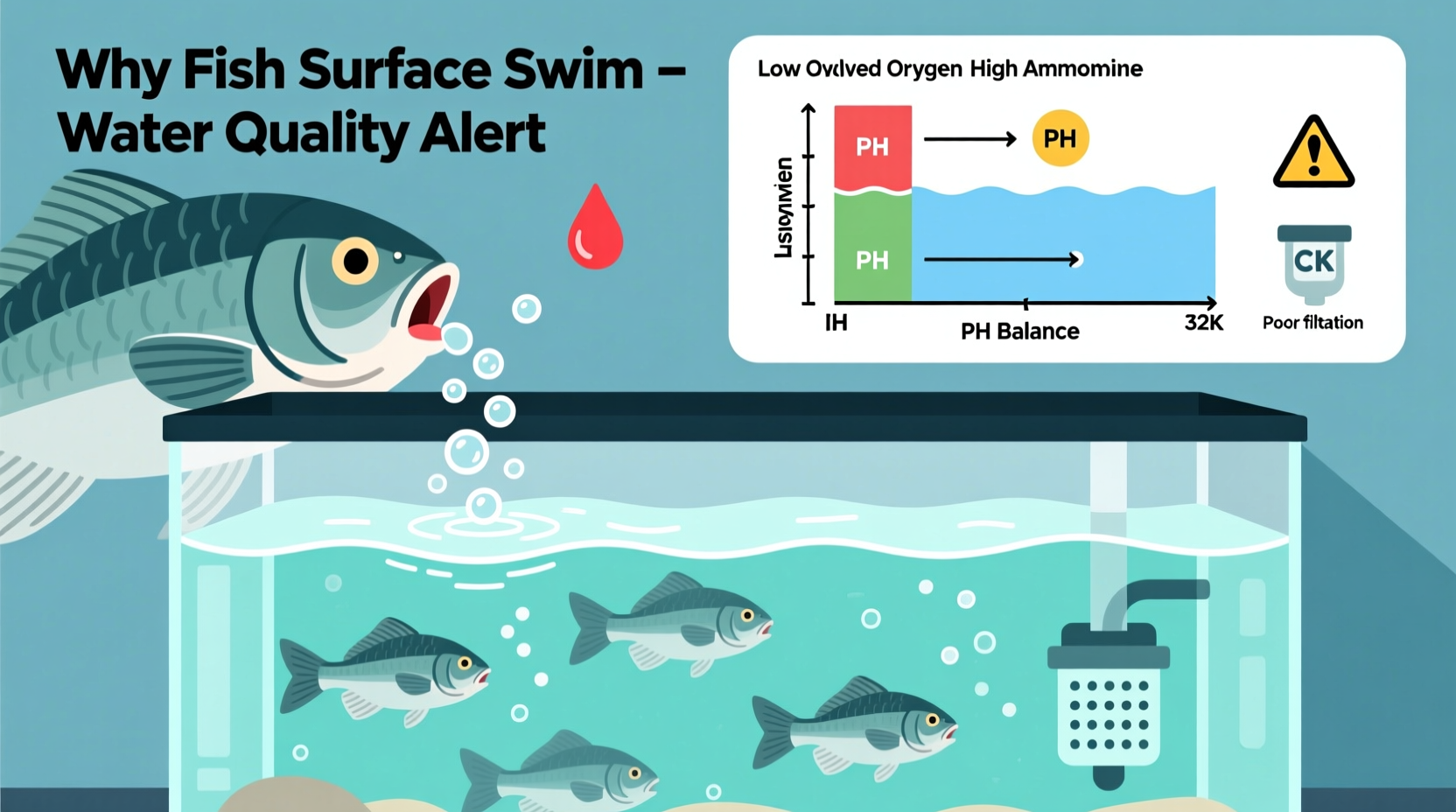
Fish rely on dissolved oxygen in the water to breathe through their gills. When oxygen levels drop, they instinctively move toward the surface, where gas exchange with the atmosphere occurs. This area typically contains higher oxygen concentrations due to interaction between air and water. Fish seen “gasping” at the surface—rapidly opening and closing their mouths—are likely struggling to extract enough oxygen from the water.
Low dissolved oxygen (DO) can stem from several factors:
- Overcrowding: Too many fish in a limited volume increase oxygen demand beyond what the system can supply.
- Poor surface agitation: Still water reduces gas exchange. Lack of bubblers, filters, or wavemakers limits oxygen diffusion.
- High water temperature: Warm water holds less oxygen than cooler water. Tropical tanks above 80°F (27°C) are especially vulnerable.
- Decomposing organic matter: Rotting plants, uneaten food, and waste consume oxygen during decomposition, lowering available DO.
Water Quality Parameters and Their Impact
Oxygen levels don’t exist in isolation. They’re deeply intertwined with other water quality metrics. Ammonia, nitrite, and pH fluctuations can impair a fish’s ability to utilize oxygen, even when it’s present in sufficient amounts—a condition known as functional hypoxia.
Ammonia, highly toxic even in low concentrations, damages gill tissues. When gills are compromised, fish cannot efficiently absorb oxygen, forcing them to seek relief at the surface. Similarly, high nitrite levels interfere with hemoglobin’s oxygen-carrying capacity, leading to internal suffocation despite adequate DO.
“Fish gasping at the surface is often the last visible sign before a crash. Test your water immediately—it could be ammonia poisoning.” — Dr. Rebecca Lang, Aquatic Veterinarian
A well-maintained nitrogen cycle should keep ammonia and nitrite at 0 ppm. Nitrates, while less toxic, should remain under 40 ppm for most freshwater species. Regular partial water changes (20–30% weekly) and proper filtration help maintain these levels.
Key Water Parameters and Ideal Ranges
| Parameter | Ideal Range | Effect on Fish Behavior |
|---|---|---|
| Dissolved Oxygen | 5–8 mg/L | Below 5 mg/L causes surface breathing |
| Ammonia (NH₃/NH₄⁺) | 0 ppm | Gill damage, reduced oxygen uptake |
| Nitrite (NO₂⁻) | 0 ppm | Blood oxygen transport failure |
| pH | 6.5–7.8 (species-dependent) | Extreme shifts cause stress and respiration issues |
| Temperature | 72–80°F (22–27°C) | Higher temps reduce oxygen solubility |
Species-Specific Behaviors vs. Warning Signs
Not all top-swimming indicates distress. Some fish are naturally inclined to occupy the upper water column. For example:
- Gouramis and bettas are labyrinth fish—they possess a special organ that allows them to breathe atmospheric air directly. It’s normal for them to rise to the surface periodically.
- Tetras like black phantom or hatchetfish often feed and swim near the top, especially if they’re active hunters of floating insects.
- Mollies and guppies may cruise the surface but typically do so without rapid gill movement or signs of stress.
The key differentiator is behavior. Healthy top-dwellers move freely, have steady breathing, and interact normally. In contrast, distressed fish exhibit:
- Rapid, labored gill movements
- Lethargy or listlessness after brief activity
- Clamped fins or hunched posture
- Loss of appetite
Step-by-Step Guide to Diagnosing and Fixing Surface Swimming
If multiple fish are swimming at the top, especially with signs of distress, follow this protocol to identify and resolve the issue:
- Observe closely: Note which species are affected, how long the behavior has been occurring, and whether gill movement is rapid.
- Test water immediately: Use a liquid test kit (not strips) to check ammonia, nitrite, nitrate, pH, and temperature. Focus on ammonia and nitrite first—they act fast and are deadly.
- Check equipment: Ensure the filter is functioning, impeller isn’t clogged, and air pump or sponge filter is creating surface agitation.
- Perform a water change: If toxins are present, do a 30–50% water change using dechlorinated water matched in temperature.
- Increase aeration: Add an air stone, increase filter outflow, or create surface ripples with a powerhead.
- Reduce bioload temporarily: Stop feeding for 24 hours to minimize waste production. Resume with small, frequent portions.
- Monitor for 24–48 hours: Re-test water and observe behavior. If fish return to mid-water swimming, the crisis is likely resolved.
If symptoms persist despite improved water conditions, parasitic infections such as gill flukes or bacterial gill disease may be present. These require targeted treatment and possibly veterinary consultation.
Real-World Case: A Beginner’s Tank Crisis
Mark, a new aquarium owner, set up a 20-gallon freshwater tank stocked with tetras, a pleco, and two guppies. Within three weeks, he noticed all the fish spending increasing time at the surface, especially in the mornings. He assumed they were hungry and fed them more, worsening the problem.
After researching online, Mark tested his water and found ammonia at 1.2 ppm and nitrite at 0.8 ppm—both dangerously high. His filter was undersized, and he hadn’t performed any water changes. Following advice, he upgraded his filter, conducted a 40% water change, added an air stone, and paused feeding for a day.
Within 36 hours, ammonia dropped to 0.25 ppm and fish began swimming normally. After another week of consistent maintenance, parameters stabilized, and the fish resumed healthy mid-tank activity. Mark learned that overstocking and neglecting the nitrogen cycle were the root causes.
“New tank syndrome kills more fish than predators. Cycling your tank before adding livestock is non-negotiable.” — James Reed, Aquarium Technician with 15 years of experience
Preventive Checklist for Long-Term Tank Health
To avoid recurring issues with surface swimming and poor water quality, follow this checklist regularly:
- ✅ Cycle your tank fully before adding fish (takes 4–6 weeks)
- ✅ Test water weekly for ammonia, nitrite, nitrate, and pH
- ✅ Perform 20–30% water changes weekly
- ✅ Clean filter media monthly (rinse in old tank water, not tap water)
- ✅ Avoid overfeeding—food should be consumed within 2 minutes
- ✅ Ensure adequate surface agitation and aeration
- ✅ Quarantine new fish for 2–3 weeks before introduction
- ✅ Keep stocking levels appropriate for tank size (rule of thumb: 1 inch of fish per gallon for small species, adjusted for waste producers)
Frequently Asked Questions
Is it normal for my betta to stay at the top?
Yes, to an extent. Bettas are labyrinth breathers and need to access surface air. However, if your betta is constantly gasping, lying on its side, or showing clamped fins, it may indicate poor water quality or illness. Ensure the tank is heated, filtered, and maintained with regular water changes.
Can plants affect oxygen levels?
Yes—during daylight, live plants produce oxygen via photosynthesis, which benefits fish. But at night, they consume oxygen and release CO₂. In heavily planted tanks with poor circulation, oxygen can dip dangerously low by morning. Using a timer-controlled air pump overnight can prevent this.
Why do fish swim at the top after a water change?
This can happen if the new water is colder or has lower dissolved oxygen than the tank water. Always match temperature and let tap water sit or aerate it before use. Sudden parameter shifts can also stress fish, causing temporary erratic behavior. Let them acclimate slowly and monitor for recovery.
Conclusion: A Call for Vigilant Stewardship
Fish don’t communicate in words, but their behavior speaks volumes. Swimming at the top of the tank is more than a quirk—it’s often a cry for help rooted in water quality, oxygen imbalance, or biological overload. By learning to interpret these signals, testing proactively, and maintaining consistent care routines, aquarists can prevent crises before they escalate.
Your aquarium is a closed ecosystem, delicate and interdependent. Every action—from feeding habits to filter maintenance—ripples through the water column. Stay observant, act swiftly when something seems off, and never underestimate the power of a simple water test. The health of your fish depends not just on equipment, but on your attention and commitment.
💬 Have you experienced fish gasping at the surface? What did you discover—and how did you fix it? Share your story in the comments to help fellow hobbyists learn and grow.








