
Many adults want to learn how to swim but find themselves held back—not by lack of desire, but by deep-seated fears, misconceptions, or past experiences. Swimming is a life skill that offers physical, mental, and emotional benefits, yet millions avoid it due to anxiety around water. The truth is, most people who believe they \"can’t swim\" are actually capable of learning—it’s the psychological and emotional barriers that need addressing first.
Understanding why you struggle with swimming is the first step toward overcoming those obstacles. Whether it's fear of drowning, lack of early exposure, or embarrassment about learning as an adult, each challenge has a solution rooted in patience, practice, and proper support.
Common Psychological Barriers to Swimming
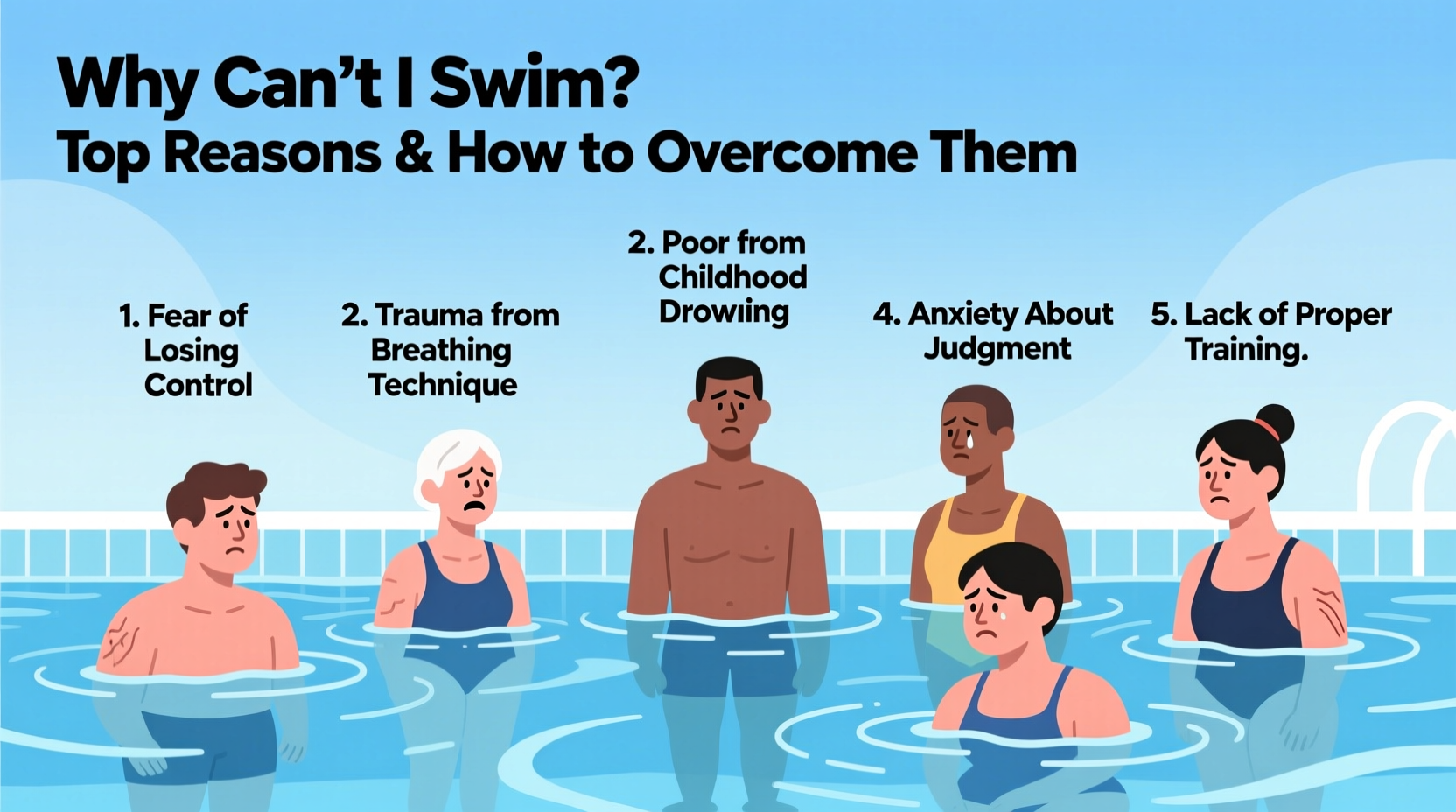
Fear of water is one of the most significant reasons adults avoid swimming. This fear often stems from childhood incidents, lack of early exposure, or stories of drowning passed down through families. Unlike other physical activities, water presents a unique environment where control feels limited—breathing changes, movement slows, and balance shifts. These unfamiliar sensations can trigger panic even in calm pools.
For some, the fear isn’t of water itself but of losing control. Submerging the face, floating on the back, or being unable to touch the bottom can provoke anxiety. Others worry about judgment from peers, especially in group classes where they may feel self-conscious about their lack of ability.
Tip: Start in chest-deep water where you can stand comfortably. Practice controlled breathing by gently exhaling into the water and lifting your mouth to inhale.The Role of Trauma and Negative Experiences
Past traumatic events—such as nearly drowning, being pushed into a pool, or struggling during a swim lesson—can leave lasting emotional imprints. Even indirect trauma, like witnessing someone else in distress, can create subconscious fear responses. These experiences condition the brain to associate water with danger, triggering fight-or-flight reactions when near pools or open water.
It’s important to recognize that this response is natural and protective. The key is not to suppress fear, but to retrain your nervous system through gradual exposure and positive reinforcement.
Physical and Environmental Factors
While fear dominates the conversation, physical factors also play a role in why someone might struggle to swim. Poor coordination, muscle tension, or difficulty with breath control can make swimming feel more difficult than it needs to be. Some individuals have conditions such as vertigo, asthma, or sensory sensitivities that complicate water adaptation.
Additionally, lack of access to safe, clean, and welcoming swimming facilities can prevent consistent practice. Adults without nearby community centers or affordable lessons face real structural barriers to learning.
“Fear of water isn’t weakness—it’s a survival instinct. Our job as instructors is to help students recalibrate that instinct through trust and repetition.” — Dr. Lena Torres, Aquatic Psychologist & Swim Educator
Myths That Hold People Back
- “You have to start young.” While early exposure helps, adults successfully learn to swim every day. Neuroplasticity allows the brain to adapt at any age.
- “If I sink once, I’ll drown.” Sinking momentarily doesn’t mean failure. Learning buoyancy and recovery techniques reduces risk significantly.
- “Swimming requires athleticism.” Technique matters far more than strength. Proper form enables even beginners to glide efficiently.
- “I’m too old or out of shape.” Water supports the body, making swimming accessible regardless of fitness level.
Step-by-Step Guide to Overcoming Fear and Learning to Swim
Overcoming fear isn’t about forcing yourself into deep water. It’s a structured process that builds confidence gradually. Follow this timeline to develop comfort and competence in the water.
- Week 1–2: Water Reacclimation
Visit a quiet pool during off-hours. Stand in shallow water, walk back and forth, splash your face, and practice blowing bubbles. Focus on relaxing your shoulders and jaw. - Week 3–4: Breathing and Floating
Practice rhythmic breathing at the surface. Hold the wall and alternate submerging your face while exhaling, then turning to inhale. Try supported back floats with a teacher or noodle. - Week 5–6: Gliding and Kicking
Push off the wall with your face in the water, gliding while using gentle flutter kicks. Use a kickboard for support. Gradually increase distance. - Week 7–8: Arm Movements and Coordination
Combine arm strokes with breathing. Practice freestyle motions slowly, focusing on timing rather than speed. - Week 9+: Full Strokes and Confidence Building
Swim short lengths with instructor guidance. Incorporate turns, underwater exploration, and deeper water (with safety present).
Do’s and Don’ts When Learning to Swim
| Do | Don’t |
|---|---|
| Take private lessons if group settings increase anxiety | Rush progression before mastering foundational skills |
| Use flotation devices designed for learning (e.g., swim belts) | Depend on inflatable arm bands—they promote poor posture |
| Breathe slowly and fully; oxygen calms the nervous system | Hold your breath—this increases tension and sinking risk |
| Practice mindfulness or box breathing before entering water | Force yourself into situations that trigger panic |
| Choose instructors trained in adult or fearful swimmers | Train with someone who dismisses your fear as “illogical” |
Real Example: Maria’s Journey from Panic to Pool Confidence
Maria, 42, avoided pools her entire life after falling into a lake as a child. At family gatherings, she stayed on the sidelines while others swam. After her daughter signed up for swim lessons, Maria decided to confront her fear.
She began with weekly 30-minute sessions in an empty therapy pool. Her instructor had her sit on the steps, then gradually lower herself until water reached her shoulders. For weeks, she practiced blowing bubbles and holding onto the edge. There were setbacks—moments of panic, tears, and hesitation—but consistency paid off.
By month three, Maria floated independently. By month six, she swam 10 meters of freestyle. Today, she swims twice a week for exercise and recently joined her daughter in the ocean—something she once thought impossible.
Essential Checklist for Adult Beginners
- ✅ Choose a supportive, patient instructor experienced with adult learners
- ✅ Start in a warm, quiet, shallow pool (avoid crowded or loud environments)
- ✅ Wear comfortable, well-fitting swimwear and goggles
- ✅ Practice relaxation techniques before each session (deep breathing, visualization)
- ✅ Set realistic goals (e.g., “Today I will put my face in the water for 5 seconds”)
- ✅ Keep a journal to track progress and emotional responses
- ✅ Avoid comparing yourself to others—focus on personal milestones
FAQ
Can I learn to swim as an adult if I’ve been afraid my whole life?
Absolutely. Age is not a barrier. Thousands of adults learn to swim each year, many starting in their 50s, 60s, or later. With the right approach, fear can be unlearned through gradual exposure and skilled guidance.
What if I panic when my face is in the water?
This is common. Begin by standing in shallow water and gently splashing water over your face. Then try exhaling through your nose or mouth while leaning forward. Use goggles to keep eyes open underwater—they reduce disorientation. Work at your own pace; no rush.
How long does it take to learn to swim as a beginner?
Most adults gain basic competency—floating, gliding, and swimming 25 meters—in 10 to 20 hours of instruction. Progress varies based on frequency, fear level, and prior experience. Consistency matters more than intensity.
Conclusion: Take the First Step Toward Freedom in Water
Not being able to swim doesn’t define your capabilities—it reflects unmet opportunities and unaddressed fears. The journey to swimming begins not with a dive, but with a decision: to face discomfort, seek support, and move forward one small step at a time. Every master swimmer was once a beginner who hesitated at the pool’s edge.
You don’t need to become an Olympian. You just need to gain enough skill and confidence to enjoy water safely—whether it’s playing with your kids, surviving an accidental fall, or simply feeling free in a way only swimming provides.
💬 Ready to begin? Book a lesson with a certified adult swim instructor this week. Share your story or goal in the comments—your courage might inspire someone else to take their first step.








