Puzzle games have long been a staple of casual entertainment, from crosswords in morning newspapers to digital Sudoku apps on smartphones. But beyond their appeal as time-fillers, these games offer measurable benefits for the brain. Neuroscientists, psychologists, and cognitive researchers increasingly recognize puzzle-solving as a powerful tool for maintaining and improving mental agility, especially as we age. Engaging with puzzles isn't just about passing time—it's an active workout for the mind that strengthens neural connections, enhances memory, and promotes overall brain resilience.
The human brain thrives on challenge. When exposed to novel problems requiring logic, pattern recognition, or spatial reasoning, the brain activates multiple regions simultaneously. This stimulation encourages neuroplasticity—the brain’s ability to reorganize itself by forming new neural pathways. Over time, consistent engagement with puzzles can slow cognitive decline, improve concentration, and sharpen recall. In a world where distractions are constant and attention spans are shrinking, dedicating even 15 minutes a day to thoughtful problem-solving can make a lasting difference.
The Cognitive Mechanisms Behind Puzzle Games
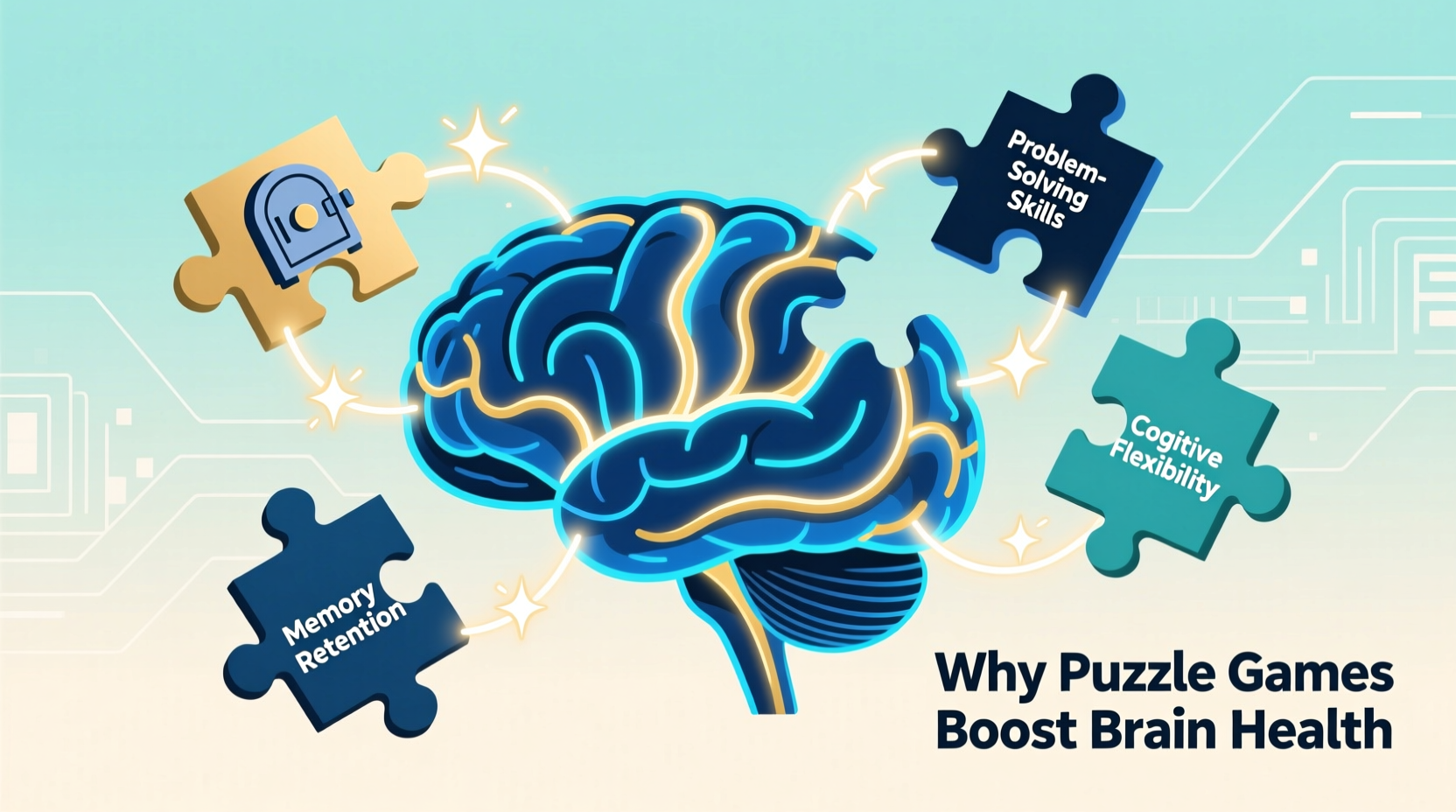
At the core of every puzzle game is a demand for focused thinking. Whether it’s finding hidden words, completing number grids, or navigating mazes, each task requires specific cognitive functions: attention, working memory, logical reasoning, and executive control. These are not isolated skills—they work together in a networked system that defines how we process information, solve problems, and remember experiences.
When you play a puzzle game, your prefrontal cortex—the area responsible for decision-making and planning—becomes highly active. Simultaneously, the hippocampus, crucial for memory formation, works to retrieve relevant knowledge and store new patterns. For example, solving a crossword clue like “capital of Peru” triggers semantic memory (knowledge of facts), while placing numbers correctly in a Sudoku grid relies on procedural memory and rule-based logic.
Studies using functional MRI scans show increased blood flow and synchronized activity across brain regions during puzzle tasks. This connectivity strengthens over time, leading to faster processing speeds and improved accuracy in real-world situations. A 2020 study published in Frontiers in Aging Neuroscience found that adults who engaged in daily word and number puzzles performed cognitively at levels equivalent to people ten years younger in certain memory and reasoning tests.
“Puzzle games provide a low-stress yet effective way to maintain cognitive vitality. They engage multiple domains of thinking without overwhelming the user, making them ideal for lifelong brain health.” — Dr. Laura Simmons, Cognitive Psychologist, University of Edinburgh
Memory Retention and Long-Term Brain Benefits
One of the most compelling reasons to incorporate puzzle games into daily life is their impact on memory retention. Memory isn’t a single entity; it consists of short-term (working) memory, long-term storage, and retrieval mechanisms. Puzzles directly train all three.
Take jigsaw puzzles, for instance. Assembling scattered pieces demands constant visual-spatial tracking—holding shapes and colors in working memory while scanning for matches. This repeated rehearsal strengthens synaptic efficiency, making future recall quicker and more accurate. Similarly, memory-matching games (like pairs or concentration cards) force players to encode and retrieve visual information under time constraints, mimicking real-life scenarios such as remembering names or locations.
Longitudinal research supports this. A landmark study conducted over 14 years by the American Journal of Geriatric Psychiatry followed over 3,000 participants aged 65 and older. Those who regularly played puzzles showed significantly slower rates of memory decline compared to non-players. The data suggested that engaging in mentally stimulating activities could delay the onset of dementia symptoms by up to five years.
Tip: To maximize memory gains, alternate between different types of puzzles—crosswords for verbal memory, Sudoku for numerical logic, and jigsaws for visual recall.Types of Puzzle Games and Their Specific Benefits
Not all puzzles are created equal. Each genre targets distinct cognitive abilities, offering varied benefits depending on design and complexity.
| Type of Puzzle | Cognitive Skill Targeted | Real-World Application |
|---|---|---|
| Crossword Puzzles | Verbal fluency, vocabulary, semantic memory | Improved reading comprehension, better communication |
| Sudoku | Logical reasoning, number sequencing, focus | Enhanced math skills, better decision-making |
| Jigsaw Puzzles | Visual perception, spatial reasoning, patience | Stronger hand-eye coordination, improved navigation |
| Logic Grids (e.g., Einstein Riddles) | Deductive reasoning, hypothesis testing | Problem-solving in complex environments |
| Memory Matching Games | Short-term recall, attention to detail | Remembering appointments, names, or instructions |
Diversifying puzzle types ensures comprehensive brain training. Just as physical fitness requires strength, cardio, and flexibility exercises, mental fitness benefits from variety. Rotating between linguistic, numerical, spatial, and memory-based challenges prevents adaptation plateaus and keeps the brain engaged.
Step-by-Step Guide to Building a Brain-Healthy Puzzle Routine
Incorporating puzzle games into your lifestyle doesn’t require drastic changes. With a structured approach, even small daily habits can yield significant results over time.
- Assess Your Current Mental Activity Level
Track how much time you spend on passive vs. active thinking each day. If most of your screen time involves scrolling social media or watching videos, identify a 10–15 minute window to replace one session with a puzzle. - Choose One Starting Game Type
Select a puzzle format that aligns with your interests—crosswords if you enjoy language, Sudoku if you like numbers, or jigsaws if you prefer visual tasks. Begin with easy-to-medium difficulty to build confidence. - Set a Daily Time Slot
Anchor your puzzle habit to an existing routine: after breakfast, during lunch break, or before bed. Consistency reinforces habit formation. - Gradually Increase Difficulty
Every two weeks, move up one level. Challenge yourself, but avoid frustration. The goal is engagement, not perfection. - Add Variety After Four Weeks
Introduce a second type of puzzle twice a week. Alternate days to keep cognitive engagement broad. - Track Progress Monthly
Note improvements: faster completion times, fewer errors, easier recall of clues. Subjective feelings of sharper focus count too.
Mini Case Study: How a Daily Crossword Habit Changed One Woman’s Focus
Maria Thompson, a 58-year-old librarian from Portland, noticed her ability to concentrate was slipping. She’d forget details from meetings, lose track mid-conversation, and felt mentally fatigued by midday. Concerned about early signs of cognitive aging, she began doing the New York Times Mini Crossword every morning with her coffee.
Initially, she struggled to finish within ten minutes. Some clues stumped her entirely. But after three weeks, she completed puzzles faster. By week six, she rarely needed hints. More importantly, she observed subtle shifts: she remembered patron requests more accurately, recalled book titles instantly, and felt less overwhelmed during multitasking.
After six months, Maria added Sudoku on weekends. Her annual check-up revealed no signs of cognitive impairment—her doctor noted her scores were above average for her age group. While genetics and lifestyle also played roles, Maria credits the mental discipline from puzzles as a key factor in maintaining clarity and confidence.
Common Misconceptions About Puzzle Games
Despite growing evidence, several myths persist about the value of puzzle games.
- Myth: Only hard puzzles are beneficial.
Reality: Even simple puzzles stimulate the brain when done consistently. Enjoyment matters more than difficulty. - Myth: You’re too old to benefit.
Reality: Studies confirm cognitive gains in adults over 80. It’s never too late to start. - Myth: Digital puzzles are inferior to paper ones.
Reality: Both formats are effective. Digital versions offer adaptive difficulty and instant feedback, which can enhance learning. - Myth: Puzzle games prevent Alzheimer’s.
Reality: While they reduce risk and delay symptoms, they are not a cure. Think of them as preventive maintenance, not a shield.
Checklist: Optimize Your Puzzle Practice for Maximum Brain Benefit
- ✅ Play at least 5 days per week
- ✅ Rotate between at least two puzzle types monthly
- ✅ Limit sessions to 15–30 minutes to avoid mental fatigue
- ✅ Choose puzzles slightly above your comfort level
- ✅ Combine with other brain-healthy habits: sleep, hydration, and physical activity
- ✅ Avoid rushing—focus on accuracy and thought process, not speed alone
- ✅ Reflect briefly after each session: What did I learn? Where did I struggle?
Frequently Asked Questions
Can children benefit from puzzle games too?
Absolutely. Children who engage with age-appropriate puzzles develop stronger foundational skills in logic, language, and spatial awareness. Early exposure fosters curiosity and problem-solving resilience, which supports academic performance and emotional regulation.
How much time should I spend on puzzles each day?
Research suggests 15 to 30 minutes daily is sufficient to see cognitive benefits. Quality matters more than quantity—focused, deliberate practice yields better results than longer, distracted sessions.
Are mobile puzzle apps as effective as traditional ones?
Yes, many well-designed apps offer structured progression, immediate feedback, and adaptive challenges. However, be mindful of excessive screen time and gamification elements (e.g., ads, rewards) that may distract from deep thinking.
Conclusion: Make Puzzles Part of Your Brain Care Regimen
The case for puzzle games as tools for brain health is robust and growing. Far from being mere diversions, they are accessible, enjoyable forms of mental exercise with tangible returns. From strengthening memory circuits to enhancing focus and delaying age-related decline, the cumulative effects of regular puzzle-solving are profound.
Unlike expensive supplements or intensive programs, puzzles are affordable, widely available, and adaptable to any lifestyle. Whether you prefer pen-and-paper crosswords or quick mobile challenges, integrating them into your routine is one of the simplest steps you can take toward long-term cognitive wellness.
💬 Ready to boost your brainpower? Start today with one puzzle—set a timer, stay present, and notice how your mind responds. Share your favorite puzzle or progress story in the comments below.








