Kawaii fashion, rooted in Japanese culture, has evolved from a niche aesthetic into a powerful visual language of self-expression. More than just pastel colors and cartoon motifs, kawaii—meaning “cute” in Japanese—represents an emotional philosophy that celebrates innocence, playfulness, and individuality. What began as a youth-driven rebellion against formality in 1970s Japan has now captivated audiences across continents, inspiring fashion lines, social media trends, and even luxury collaborations. But what makes this style so emotionally compelling? And more importantly, is kawaii fashion finally stepping out of subculture and into the global mainstream?
The Psychology Behind the Appeal
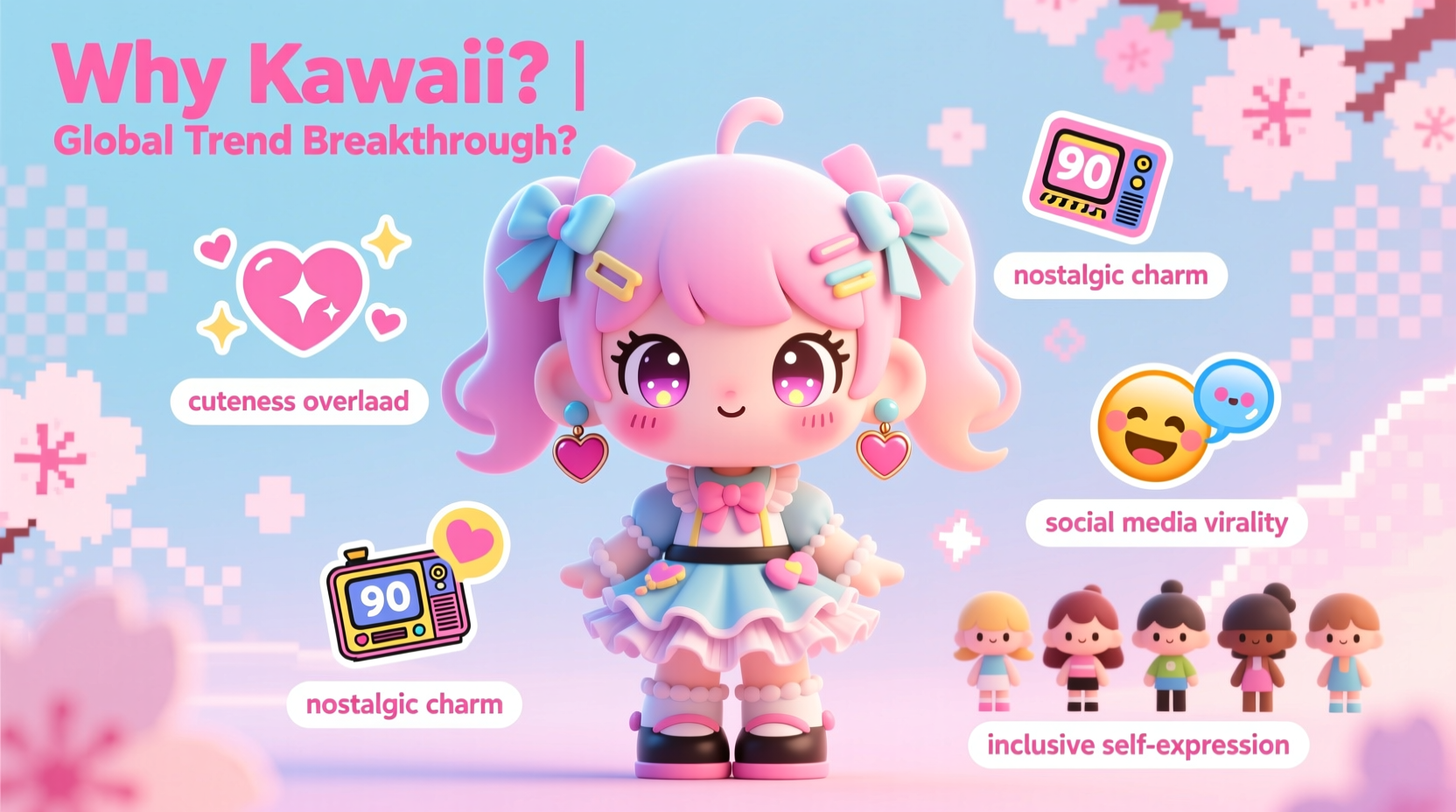
The allure of kawaii fashion goes far beyond aesthetics—it taps into deep psychological triggers. The human brain is naturally drawn to features associated with youth: large eyes, soft shapes, rounded edges, and bright, cheerful colors. These traits activate nurturing instincts and positive emotional responses, a phenomenon known in psychology as \"baby schema\" or *Kindchenschema*. Kawaii fashion amplifies these cues through oversized bows, plush accessories, cartoon prints, and doll-like silhouettes.
This emotional resonance is one reason people report feeling happier when wearing or viewing kawaii styles. It’s not merely about looking cute; it’s about embodying a sense of lightness and emotional safety. In high-stress environments, adopting a kawaii wardrobe can function as a form of emotional armor—a deliberate choice to reclaim joy and whimsy in daily life.
“Kawaii is resistance disguised as sweetness. It’s a way of saying, ‘I don’t have to be serious all the time to be valid.’” — Dr. Mika Tanaka, Cultural Anthropologist at Tokyo UniversityTip: If you're new to kawaii fashion, start small—add a pin, hair clip, or pastel accessory to your outfit. Gradual integration helps build confidence without overwhelming your personal style.
Key Elements That Define Kawaii Fashion
Kawaii isn’t monolithic. It encompasses multiple substyles, each with distinct rules and cultural references. Understanding these variations reveals why the aesthetic feels both cohesive and endlessly adaptable.
- Lolita Fashion: Inspired by Victorian and Rococo clothing, featuring puffed sleeves, petticoats, and elaborate headwear. Subcategories include Sweet Lolita (pastels and desserts), Gothic Lolita (dark elegance), and Classic Lolita (refined historical nods).
- Decora: Characterized by excessive layering of colorful accessories—necklaces, bracelets, hair clips—often worn in coordinated color palettes. Originating in the 1990s Harajuku scene, Decora emphasizes maximalism and childlike exuberance.
- Fairy Kei: A nostalgic style drawing from 1980s Western toys and pop culture, using vintage sweaters, pastel tones, and enamel pins of My Little Pony or Care Bears.
- Guro Kawaii: A darker twist blending cuteness with grotesque elements—think bandages, fake blood, and cracked doll makeup. This variant explores the tension between beauty and decay.
- Yume Kawaii (Dream Cute): Focuses on surreal, dreamlike visuals with clouds, rainbows, and celestial motifs, often incorporating blue and white tones.
What unites these styles is their shared commitment to intentional cuteness—not as superficial decoration, but as a curated identity. Wearing kawaii fashion is often a conscious act of defiance against minimalist norms, corporate dress codes, and gendered expectations.
Is Kawaii Fashion Going Mainstream?
For decades, kawaii fashion remained largely confined to Japan and dedicated international fandoms. However, recent years have seen unmistakable signs of mainstream infiltration. High-profile designers like Jeremy Scott (Moschino) and Vivienne Westwood have incorporated kawaii motifs into runway collections. Moschino’s 2014 fast-food-themed line, complete with McDonald’s-inspired dresses and fries-shaped handbags, brought kawaii absurdity to Paris Fashion Week.
Social media has accelerated this shift. TikTok, Instagram, and YouTube are flooded with creators styling kawaii outfits, sharing thrift hauls, and teaching makeup techniques for achieving “anime eyes.” Hashtags like #kawaifashion and #cutecore have billions of views collectively. Even non-kawaii influencers now incorporate elements—pastel hair, jelly shoes, heart-shaped sunglasses—into their looks.
Retailers are responding. Brands such as & Other Stories, H&M, and Sanrio have launched kawaii-inspired capsule collections. Hello Kitty, once considered a children’s mascot, now appears on luxury items via collaborations with brands like Off-White and Comme des Garçons. The Sanrio x Target partnership in 2023 generated $50 million in sales within three weeks, signaling strong consumer appetite.
Yet, there remains a tension between authenticity and commercialization. Purists argue that mass-market versions dilute the subversive roots of kawaii fashion, reducing it to a fleeting trend rather than a lifestyle. Others welcome broader visibility, believing that democratization allows more people to explore identity through playfulness.
Global Adoption: A Comparative Overview
| Region | Level of Adoption | Key Influences | Local Interpretations |
|---|---|---|---|
| Japan | Origin & Core Culture | Harajuku, Anime, J-Pop | Strict adherence to substyle rules; seasonal street snap coverage |
| South Korea | High | K-Pop idols, K-Beauty | Cute office wear, “bby” makeup, pastel tailoring |
| United States | Moderate-Growing | TikTok, Cosplay, LGBTQ+ communities | DIY customization, gender-neutral kawaii |
| Europe | Emerging | Streetwear fusion, art collectives | Kawaii punk hybrids, avant-garde runways |
| Southeast Asia | Rapid Growth | Influencer culture, affordable fashion | Bold colors, local textile adaptations |
The Emotional Addiction: Why People Keep Coming Back
Many who adopt kawaii fashion describe it as transformative—not just in appearance, but in self-perception. Wearing a frilly dress or carrying a character backpack can feel like stepping into a different persona: one that’s unapologetically joyful, imaginative, and free from judgment.
This transformation explains its addictive quality. Unlike minimalist or utilitarian fashion, which often prioritizes function over feeling, kawaii fashion centers emotional experience. Each piece carries symbolic meaning: a unicorn represents magic, a strawberry symbolizes sweetness, a cloud stands for daydreaming. These symbols become part of a personal narrative.
Moreover, kawaii communities—both online and offline—are known for their inclusivity. For many, especially those who’ve felt marginalized due to gender expression, neurodivergence, or body type, kawaii spaces offer acceptance. There are no strict body requirements for Lolita fashion; sizes range widely, and modifications are encouraged. Events like “Lolita meetups” foster real-world connections built on mutual appreciation rather than competition.
“I started wearing kawaii clothes after my anxiety diagnosis. Putting on a cupcake skirt feels like armor. It reminds me I’m allowed to be soft in a world that demands toughness.” — Lila Chen, 24, Toronto-based designer and kawaii advocate
Step-by-Step: Building Your First Kawaii Outfit
Transitioning into kawaii fashion doesn’t require a full wardrobe overhaul. Follow this practical guide to create a balanced, authentic look:
- Choose a Base Style: Pick one substyle that resonates—Sweet Lolita, Fairy Kei, or casual Decora—and research its core elements.
- Start with One Statement Piece: A pastel skirt, printed hoodie, or character bag can anchor your outfit.
- Add Coordinated Accessories: Use hair clips, knee-high socks, or layered necklaces to enhance the theme.
- Play with Color Palettes: Stick to soft pinks, blues, whites, or rainbow schemes depending on your chosen style.
- Balance with Simplicity: Pair bold pieces with neutral layers to avoid visual overload.
- Photograph and Reflect: Take outfit photos to see what works and refine your approach over time.
Challenges and Criticisms
Despite its growing popularity, kawaii fashion faces criticism. Some view it as infantilizing, particularly when worn by adults. In professional settings, it can be perceived as unserious or unprofessional. Women, especially, report being taken less seriously in academic or corporate environments when embracing overtly cute aesthetics.
There’s also the issue of cultural appropriation. As kawaii spreads globally, some Western interpretations strip away its cultural context, treating it as mere costume rather than a lived philosophy. Authentic engagement requires understanding its origins in Japanese societal dynamics, including post-war femininity, economic shifts, and youth countercultures.
Additionally, sustainability concerns arise. Fast-fashion brands produce low-quality kawaii-style garments that contribute to textile waste. True kawaii enthusiasts often emphasize craftsmanship, handmade pieces, and careful curation—values at odds with disposable fashion.
Tip: Support independent makers and vintage sellers. Many kawaii designers sell custom skirts, bags, and accessories through platforms like Etsy or Booth.pm.FAQ: Common Questions About Kawaii Fashion
Can men wear kawaii fashion?
Absolutely. While historically associated with femininity, kawaii fashion is increasingly embraced by all genders. Male and non-binary individuals participate in styles like OTT (Over-The-Top) Decora, gender-bent Lolita, and kawaii streetwear. Icons like musician Atsushi Nakajima (of Golden Bomber) and drag performer Yuki Chiba challenge traditional gender norms through bold, cute expressions.
Isn’t kawaii fashion just for kids?
No. While inspired by childhood imagery, kawaii fashion is a sophisticated aesthetic movement. Adults engage with it as a form of artistic expression, emotional regulation, and community belonging. Just as abstract art uses simple shapes to convey complex ideas, kawaii uses cuteness to explore identity, nostalgia, and resistance.
How do I explain kawaii fashion to someone who doesn’t get it?
Frame it as intentional emotional design. Say: “I wear kawaii clothes because they make me feel confident, creative, and connected to a global community. It’s not about age—it’s about choosing joy as a daily practice.”
Conclusion: The Future of Cute
Kawaii fashion is no longer a hidden subculture. Its emotional depth, visual richness, and inclusive ethos have earned it a place in the global conversation about identity and self-presentation. While commercialization risks diluting its essence, widespread adoption also offers opportunities for deeper cross-cultural dialogue and innovation.
The addiction to kawaii lies not in the frills or the glitter, but in the freedom it provides—to be soft in a hard world, to embrace fantasy in the face of routine, and to declare, through fabric and color, that joy is a valid way of being.
🚀 Ready to explore your own kawaii journey? Start with one accessory, join an online community, or attend a local meetup. Share your first look with #MyKawaiiStart and inspire others to embrace their inner cuteness.








