As fitness enthusiasts seek ways to intensify workouts without adding impact, weighted vests have gained popularity. Whether used during walking or running, these vests increase resistance, boost calorie burn, and enhance muscular engagement. However, when it comes to knee health—especially for individuals managing joint concerns, recovering from injury, or aging—the choice between weighted vest walking and running becomes critical. The knees bear significant load during lower-body movement, and introducing extra weight alters biomechanics in ways that can either support or compromise long-term joint integrity.
This article examines the comparative effects of walking and running with a weighted vest on knee health. It explores joint loading mechanics, injury risk, bone density benefits, and practical guidelines for safe implementation. By understanding the physiological differences between these two modalities, you can make informed decisions about which approach aligns best with your fitness goals and joint resilience.
Mechanical Load on the Knee: Walking vs Running
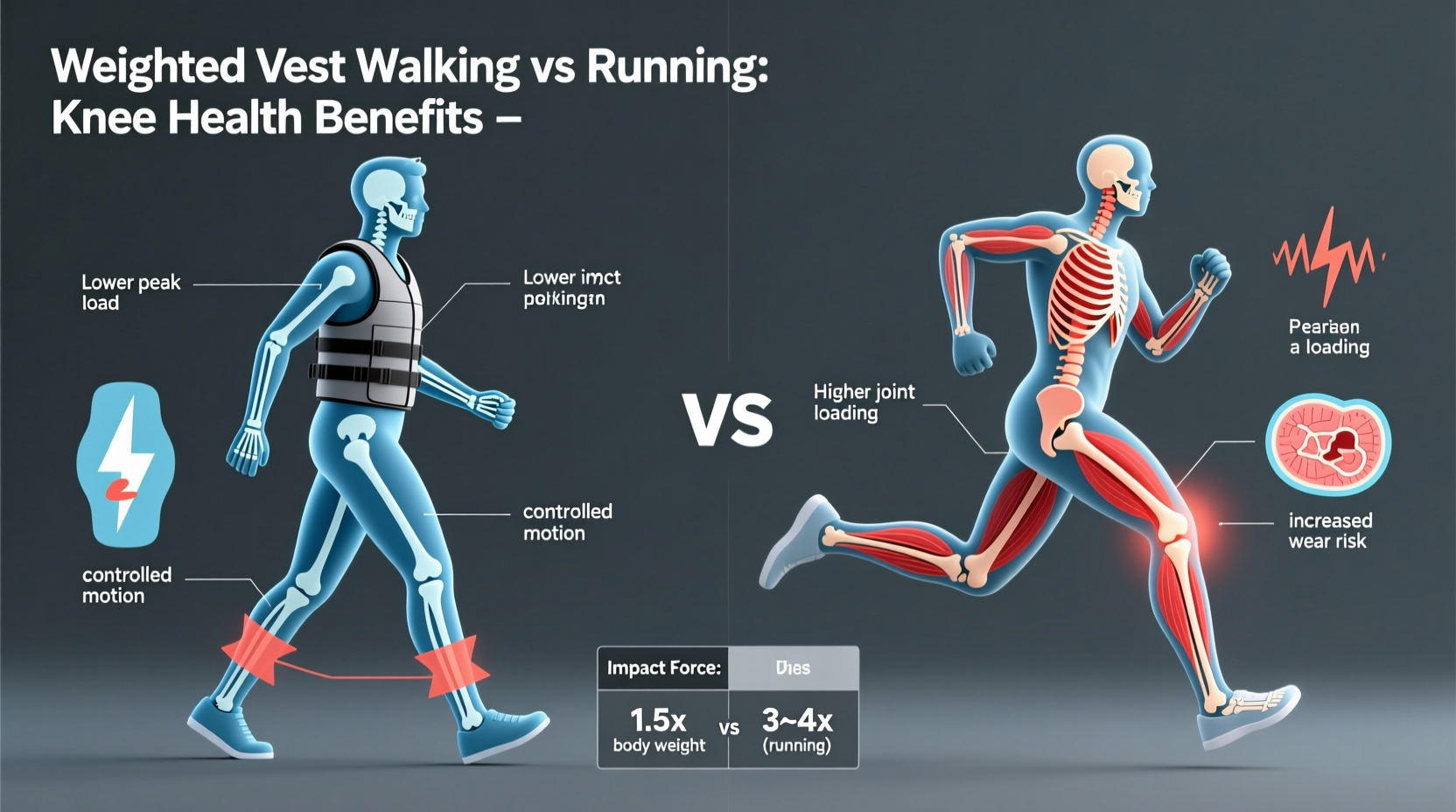
The fundamental difference between walking and running lies in gait cycle dynamics. During walking, one foot is always in contact with the ground, resulting in a smooth transfer of force through the joints. Peak vertical ground reaction forces are typically 1.2 to 1.5 times body weight. In contrast, running involves a flight phase where both feet leave the ground, causing impact spikes that reach 2.5 to 3 times body weight upon foot strike.
When a weighted vest is added—typically ranging from 5% to 15% of body weight—these forces scale proportionally. For example, a 180-pound person wearing a 20-pound vest increases their effective mass by over 11%. While this enhances metabolic demand and muscle activation, it also amplifies stress across the tibiofemoral and patellofemoral joints.
Studies show that while walking with a weighted vest elevates knee joint moments (torque) by approximately 15–20%, running under similar conditions increases them by 30–40%. This disproportionate rise in torque during loaded running significantly raises shear and compressive forces within the knee, particularly at the patella and meniscus.
Tip: Start with a lighter vest (5–8% of body weight) and gradually increase only after confirming no joint discomfort during or after activity.Impact on Joint Health and Osteoarthritis Risk
Chronic exposure to high-impact loading is a known contributor to cartilage degradation and early-onset osteoarthritis, especially in weight-bearing joints like the knees. Research published in the Journal of Orthopaedic & Sports Physical Therapy indicates that repetitive high-force activities accelerate wear in individuals with pre-existing joint vulnerabilities, such as prior ligament injuries or malalignment.
Walking, even with added load, remains a low-impact exercise. The continuous foot contact and controlled cadence distribute forces more evenly across the joint surfaces. This makes it a preferred modality for those managing mild arthritis, post-surgical rehabilitation, or general joint preservation.
Running, particularly with external load, concentrates force rapidly through the knee during heel or midfoot strike. A 2021 biomechanical analysis found that runners using weighted vests experienced up to 47% greater patellofemoral joint stress compared to unweighted running. Over time, this repeated microtrauma may contribute to cartilage thinning and increased synovial inflammation, especially in individuals with poor running form or weak hip stabilizers.
“Controlled resistance walking builds strength without excessive joint insult. Loaded running should be approached cautiously, especially in populations with history of knee pain.” — Dr. Lena Torres, Biomechanist and Sports Medicine Researcher
Comparative Benefits Table: Walking vs Running with Weighted Vest
| Factor | Weighted Vest Walking | Weighted Vest Running |
|---|---|---|
| Knee Joint Load | Moderate increase (1.5–2x body weight + vest) | High increase (3–4x body weight + vest) |
| Impact Shock Absorption | Natural gait allows better shock dissipation | Higher peak impact; reduced absorption time |
| Osteoarthritis Risk | Low to moderate if form is maintained | Moderate to high with prolonged use |
| Bone Density Stimulation | Effective due to consistent loading | Highly effective but higher injury trade-off |
| Muscle Activation (Quadriceps/Glutes) | Increased endurance recruitment | Greater explosive activation |
| Suitability for Rehab | Generally safe with professional guidance | Rarely recommended during recovery phases |
| Calorie Burn per 30 min | ~200–250 kcal (vs ~150 unweighted) | ~350–450 kcal (vs ~300 unweighted) |
While running burns more calories and delivers cardiovascular intensity faster, the trade-off in joint stress must be weighed against individual tolerance and long-term health goals. For those prioritizing knee preservation, walking offers a sustainable path to improved strength and metabolism with lower risk.
Real-World Example: Managing Knee Pain with Strategic Loading
Consider Mark, a 52-year-old office worker with mild medial compartment osteoarthritis diagnosed two years ago. His orthopedic specialist advised against high-impact activities but encouraged daily movement to maintain joint lubrication and muscle support. Initially hesitant, Mark began walking 30 minutes a day with no added weight. After six weeks of consistent practice and improved quad strength, his physical therapist introduced a 10-pound weighted vest (about 7% of his body weight).
He wore the vest only twice weekly at first, focusing on posture and stride symmetry. Over four months, he progressed to using it on four walks per week. Follow-up imaging showed no progression of cartilage loss, and Mark reported reduced stiffness and greater confidence on stairs. When he attempted a short jog with the vest, however, he experienced sharp anterior knee pain within minutes. His therapist explained that running—even briefly—increased patellar compression beyond what his joint could tolerate.
Mark’s case illustrates how progressive, monitored loading through walking can benefit knee health without provoking flare-ups. It also underscores that individual thresholds vary widely, and subjective feedback should guide progression.
Step-by-Step Guide to Safely Incorporating a Weighted Vest
If you're considering using a weighted vest to improve fitness while protecting your knees, follow this phased approach to minimize risk and maximize benefit:
- Assess Joint Readiness: Consult a physical therapist or sports medicine provider if you have a history of knee pain, surgery, or instability. Ensure proper alignment and adequate range of motion before adding load.
- Select the Right Vest: Choose a vest that distributes weight evenly across the torso, fits snugly without restricting breathing, and allows full shoulder mobility. Avoid vests that shift or bounce during movement.
- Start Light and Short: Begin with 5–8% of your body weight. Walk for 10–15 minutes on flat terrain. Focus on maintaining upright posture and natural stride length.
- Monitor for Discomfort: Pay attention to any joint ache, swelling, or altered gait. Delay progression if symptoms arise. Mild muscle fatigue is expected; joint pain is not.
- Gradually Increase Duration Before Weight: Extend walking time to 30–45 minutes over 3–4 weeks before increasing vest weight. Add no more than 2–4 pounds at a time.
- Incorporate Terrain Variability Cautiously: Once adapted, introduce gentle inclines to further challenge muscles. Avoid steep hills or uneven trails until fully conditioned.
- Avoid Running Initially: Do not combine a weighted vest with running unless cleared by a professional and only after mastering loaded walking for several months.
Benefits Beyond the Knee: Bone, Balance, and Metabolism
Despite the focus on knee safety, it's important to recognize the systemic advantages of weighted walking. Skeletal health improves under mechanical loading—a principle known as Wolff’s Law. Regularly walking with a vest stimulates osteoblast activity, helping maintain or increase bone mineral density, which is crucial for preventing osteoporosis, especially in older adults.
Additionally, the increased proprioceptive demand enhances balance and neuromuscular control. This is particularly beneficial for aging populations who face higher fall risks. The slight forward shift in center of mass caused by the vest prompts subtle adjustments in posture and core engagement, training postural reflexes over time.
Metabolically, weighted walking elevates heart rate and oxygen consumption by 15–25% compared to unweighted walking. This makes it an efficient option for fat loss and cardiovascular conditioning without requiring high-speed movement. For individuals unable to run due to joint limitations, this modality closes part of the fitness gap safely.
Frequently Asked Questions
Can walking with a weighted vest help strengthen my knees?
Yes, but indirectly. The vest increases demand on the quadriceps, hamstrings, glutes, and calf muscles, which support and stabilize the knee joint. Stronger surrounding musculature reduces strain on ligaments and cartilage, improving overall joint resilience. However, strengthening occurs only if the exercise is performed with proper form and without pain.
Is it ever safe to run with a weighted vest if I have bad knees?
Generally, no. Running inherently places high compressive and shear forces on the knees, and adding weight exacerbates this. If you have existing knee damage, chronic pain, or degenerative changes, running with a vest is likely contraindicated. Low-impact alternatives like weighted walking, stair climbing, or elliptical training are safer choices for building endurance and strength.
How heavy should my weighted vest be for walking?
Begin with 5–8% of your body weight. For most adults, this means 10–15 pounds. Never exceed 15% of body weight without professional supervision. The vest should feel challenging but not distort your gait or cause breathlessness. Adjust based on comfort and performance—not just difficulty.
Final Recommendations and Action Plan
For most individuals concerned with knee health, walking with a weighted vest is a superior choice over running. It provides meaningful resistance training, cardiovascular benefit, and bone stimulation while minimizing destructive joint forces. Running with added load, while effective for athletic conditioning, carries a significantly higher risk of accelerating joint wear—especially in non-athletes or those with predisposing factors.
To protect your knees while maximizing fitness gains:
- Prioritize form over load.
- Progress slowly and listen to your body.
- Avoid combining weight with high-impact movements.
- Use the vest as a tool for functional strength, not punishment.
- Pair weighted walking with flexibility and mobility work for balanced joint care.
“The goal isn’t to endure pain for progress. It’s to build capacity without compromising structure.” — Dr. Alan Meeks, Rehabilitation Specialist🚀 Ready to move smarter? Start your first weighted walk this week—with no more than 10 pounds—and track how your body responds. Your knees will thank you years from now.









