
As home fitness gains momentum, two devices have emerged as popular choices for cardio: the traditional treadmill and the compact walking pad. While both offer ways to walk or run indoors, their design, functionality, and structural integrity differ significantly—especially when it comes to higher-impact activities like running. The central question many consumers face is whether a walking pad, designed for space-saving convenience, can truly support the demands of running without compromising safety or longevity.
This article breaks down the structural and functional differences between walking pads and treadmills, evaluates their suitability for running, and provides practical guidance on choosing the right machine based on your fitness goals.
Understanding the Core Differences
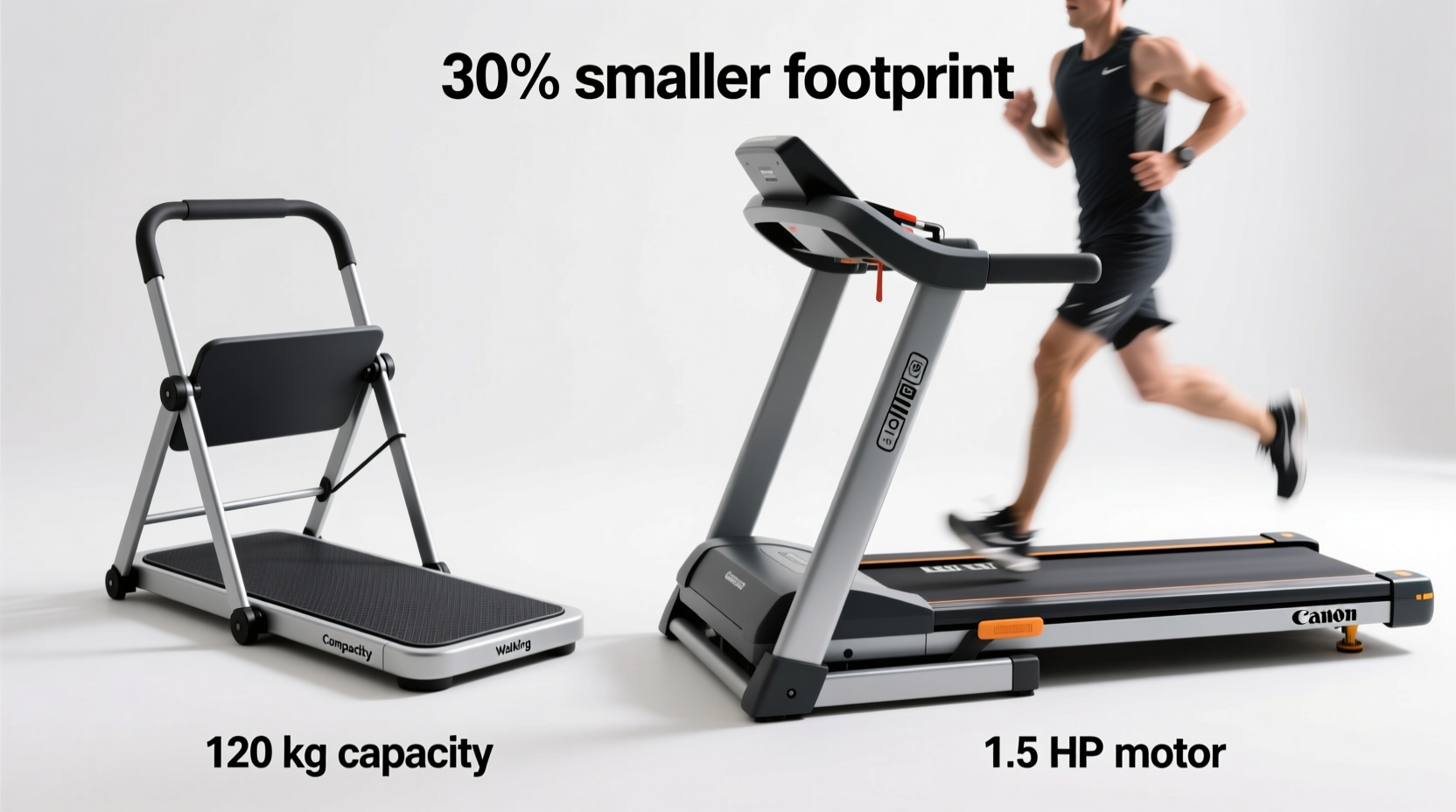
At first glance, walking pads and treadmills may appear similar—both feature a moving belt powered by a motor, allowing users to walk or jog in place. However, their engineering, build quality, and intended use cases diverge significantly.
Treadmills are full-sized cardiovascular machines built with reinforced frames, powerful motors (typically 2.5–4.0 continuous horsepower), shock absorption systems, and wider, longer decks. They are engineered to handle sustained running at speeds exceeding 8 mph and accommodate users across a wide weight range (often up to 300 lbs or more).
Walking pads, on the other hand, prioritize portability and minimal footprint. Most models are under 20 inches wide and can be rolled up or stored vertically. Motors are smaller (usually 0.75–1.5 HP), decks shorter (30–45 inches), and weight capacities lower (220–265 lbs). They are primarily marketed for walking, light jogging, and desk integration.
Tip: If you plan to run regularly, always verify the manufacturer’s maximum speed rating and weight limit—many walking pads cap out at 6 mph, which is insufficient for most runners.Structural Integrity: Can Walking Pads Handle Running?
The core concern with using a walking pad for running lies in its structural design. Running generates forces up to 2.5 times body weight with each stride. A machine must absorb this impact consistently without excessive vibration, frame flex, or belt slippage.
Most walking pads lack the following features critical for safe running:
- Reinforced steel frames: Many walking pads use lightweight aluminum or composite materials that flex under dynamic load.
- Advanced shock absorption: Treadmills often include elastomer cushions or spring systems beneath the deck; walking pads typically have minimal padding.
- Belt stability at high speeds: Smaller motors struggle to maintain consistent belt speed during running, increasing the risk of tripping or uneven gait.
A study published in the *Journal of Sports Engineering and Technology* (2022) found that compact fitness devices experienced 40% more deck oscillation during simulated running compared to full-size treadmills, raising concerns about long-term joint stress and user safety.
“Running requires consistent surface stability and energy return. Most walking pads aren’t engineered to provide either at higher intensities.” — Dr. Marcus Lin, Biomechanics Researcher, University of Colorado Boulder
Performance Comparison: Walking Pad vs Treadmill
| Feature | Walking Pad | Traditional Treadmill |
|---|---|---|
| Motor Power (Continuous HP) | 0.75 – 1.5 HP | 2.5 – 4.0 HP |
| Max Speed | 3.5 – 6 mph (some up to 7 mph) | 8 – 12+ mph |
| Deck Length | 30 – 45 inches | 50 – 60 inches |
| Weight Capacity | 220 – 265 lbs | 300 – 400 lbs |
| Shock Absorption | Limited or none | Dual-zone cushioning, elastomers |
| Foldable/Compact Design | Yes, often rollable | Sometimes (hydraulic fold) |
| Price Range | $300 – $800 | $800 – $3,000+ |
| Suitable for Running? | Rarely recommended | Yes, standard use case |
The data shows a clear divide: while walking pads excel in convenience and low-impact usability, they fall short in the power, stability, and ergonomics required for safe, effective running.
Real-World Use Case: Can You Run Safely on a Walking Pad?
Consider the experience of Sarah K., a 155-lb fitness enthusiast who purchased a popular under-desk walking pad for light exercise. Initially satisfied with walking at 2–3 mph while working, she decided to increase her pace to 5.5 mph for a jogging session. Within minutes, she noticed the belt hesitated slightly with each footfall, producing an inconsistent rhythm. After two weeks of intermittent jogging, the motor began emitting a burning odor, and the frame developed a slight wobble.
She contacted customer support, only to learn that the manufacturer explicitly advised against running and that such use voided the warranty. Sarah ultimately replaced the unit with a mid-tier treadmill better suited to her evolving routine.
Her story illustrates a common pattern: users assume versatility based on advertised “jogging” capabilities, but fail to recognize the mechanical limitations inherent in compact designs. Even if a walking pad allows speeds up to 6 mph, maintaining that pace under impact may exceed its thermal and structural tolerances.
When a Walking Pad Might Suffice (And When It Won’t)
Walking pads serve a valuable niche for specific users and scenarios:
- Desk exercisers: Ideal for walking while working, promoting movement during sedentary hours.
- Low-impact rehab: Useful for physical therapy patients needing gentle gait training.
- Small living spaces: Apartments or dorm rooms where floor space is limited.
- Seniors or beginners: Those building stamina with slow, controlled walks.
However, they are ill-suited for:
- Regular running or interval training
- Users over 220 lbs
- High-incline workouts (most walking pads offer ≤10% incline vs. 15%+ on treadmills)
- Long-duration cardio sessions due to motor overheating risks
Expert Recommendations for Safe, Effective Cardio
According to the American Council on Exercise (ACE), proper equipment selection is crucial for injury prevention and workout efficacy. Their guidelines emphasize matching machine capabilities to activity intensity.
For running, ACE recommends:
- A treadmill with at least 3.0 CHP (continuous duty horsepower)
- A deck length allowing for full stride extension (minimum 55 inches for runners)
- Adjustable incline (to vary intensity and reduce joint strain)
- Integrated safety features (emergency stop clip, stable handrails)
While some premium walking pads now advertise “running modes,” these are often marketing exaggerations. Even high-end models like the WalkingPad Pro R1 (with a 2.0 HP motor and 7.5 mph max speed) still feature a relatively short deck and lack advanced cushioning—critical elements for joint protection during repeated impact.
Step-by-Step Guide: Choosing the Right Machine for Your Needs
Follow this decision framework to determine whether a walking pad or treadmill best fits your lifestyle and fitness objectives:
- Assess your primary workout type: Do you want to walk, jog, or run? If running is a regular goal, lean toward a treadmill.
- Measure your available space: Ensure you have at least 7 feet of clearance behind a treadmill for safe use. If space is extremely limited, a walking pad may be the only viable option.
- Evaluate your budget: Entry-level treadmills start around $800, while robust walking pads cost $400–$700. Consider long-term value over initial savings.
- Check user weight and height: Taller individuals (>5'10\") may find walking pad decks too short for natural strides.
- Review warranty and support: Look for at least a 1-year parts/labor warranty and 3–5 years on the motor and frame.
- Test before buying (if possible): Visit a fitness store to feel deck stability and motor responsiveness at various speeds.
Frequently Asked Questions
Can I run on a walking pad if it says max speed is 7 mph?
Technically, yes—but not safely or sustainably. Even if the motor reaches 7 mph, the lack of shock absorption, short deck, and lightweight frame make it risky for running. Most manufacturers discourage running in their manuals, even if the speed suggests otherwise.
Are folding treadmills as sturdy as non-folding ones?
Many modern folding treadmills use hydraulic assist and reinforced hinges to maintain stability. High-quality folding models from brands like NordicTrack or Sole perform nearly as well as non-folding units. Always check user reviews for reports of wobbling or creaking.
Do walking pads wear out faster than treadmills?
Generally, yes—especially with heavy or high-speed use. Smaller motors and thinner belts degrade faster under stress. With moderate walking use, a walking pad may last 2–4 years; a treadmill used for running can last 7–10 years with maintenance.
Final Verdict: Compact Design vs. Running Demands
The compact design of walking pads makes them excellent tools for walking-focused routines, especially in space-constrained environments. However, their structural limitations—lightweight frames, underpowered motors, and minimal cushioning—make them unsuitable for regular running.
If your fitness goals include jogging or running, investing in a full-sized treadmill is not just preferable—it’s necessary for safety, performance, and equipment longevity. While walking pads continue to innovate, they remain fundamentally optimized for low-impact mobility, not high-intensity cardio.
Ultimately, the choice isn't just about space or price—it's about aligning your equipment with how you actually move. For runners, that means choosing stability, durability, and biomechanical support over convenience.
🚀 Ready to upgrade your home gym? Share your experience below—have you tried running on a walking pad? What worked, what didn’t? Join the conversation and help others make informed fitness decisions.








