Soccer jerseys are more than just sportswear—they’re symbols of national pride, cultural identity, and passionate fandom. Nowhere is this rivalry more palpable than in the United States versus Mexico matchup, a fixture known as the \"Dos a Cero\" or \"El Clásico Norteño.\" Beyond the pitch, one question fans often debate: whose jersey holds greater popularity? Is it the bold stars-and-stripes kits of the U.S. Men’s National Team (USMNT), or the iconic green, white, and red of El Tri? The answer isn’t just about aesthetics—it’s shaped by history, demographics, marketing, and global reach.
The Cultural Weight Behind the Kits
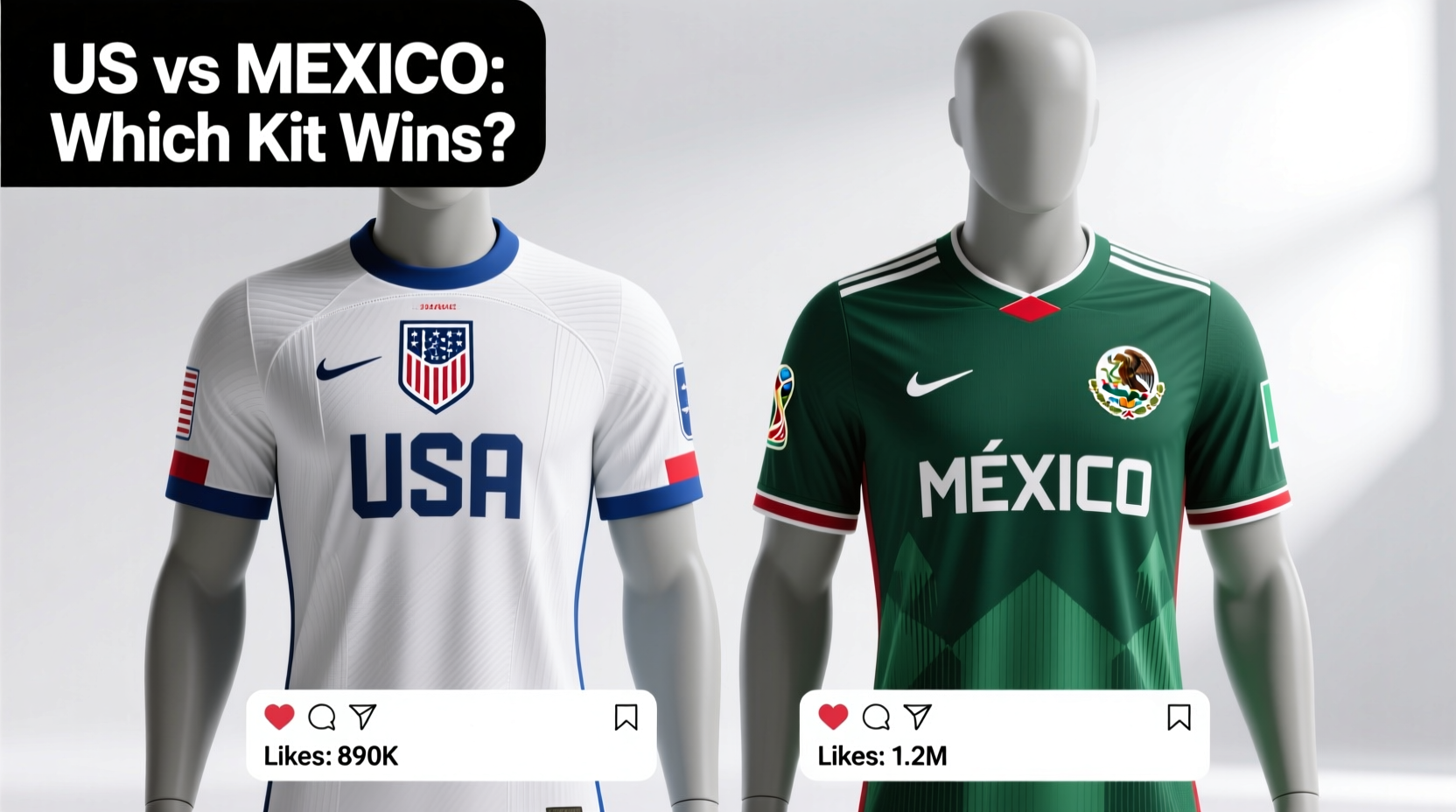
The Mexico national team jersey carries a deep emotional resonance for millions. With roots tracing back to the early 20th century, El Tri’s traditional green kit—inspired by the colors of the Mexican flag and the historic Army of the Three Guarantees—has become a symbol of heritage for Mexican communities worldwide. In the U.S., where over 37 million people identify as Hispanic (with nearly 63% being of Mexican origin), wearing the green jersey is an act of cultural affirmation.
Conversely, the U.S. soccer jersey has evolved from relative obscurity into a modern emblem of rising football ambition. Once overshadowed by American football and basketball, the USMNT kit now represents a growing soccer culture, particularly among younger, diverse, and urban populations. Nike’s sleek designs—like the controversial 2022 away kit with its black base and red gradient—have pushed boundaries and attracted fashion-conscious fans.
“Jerseys are wearable nationalism. For Mexican-Americans, wearing El Tri isn’t just supporting a team—it’s honoring family, language, and tradition.” — Dr. Carlos Mendoza, Sports Sociologist at UC Berkeley
Sales and Market Data: What the Numbers Say
Popularity can be measured in passion, but commercial success provides tangible insight. According to FIFA and third-party retail analytics from 2020–2023, Mexico consistently ranks among the top five best-selling national team jerseys globally. In 2022, during the Qatar World Cup, Mexico’s home kit was the third most purchased national team jersey on Fanatics, behind only Argentina and England—and ahead of the U.S.
In contrast, the U.S. jersey has seen rapid growth. The 2022 USMNT home kit became the fastest-selling in U.S. Soccer Federation history, moving over 500,000 units in the first three months post-launch. While impressive, that still trails Mexico’s estimated annual jersey sales in North America, which exceed 700,000 units when factoring in unofficial merchandise.
| National Team | Estimated Annual Jersey Sales (North America) | Top Retail Platforms | FIFA Global Rank (Jersey Sales) |
|---|---|---|---|
| Mexico | 700,000+ | Fanatics, Adidas.com, Mercado Libre | 3rd |
| United States | 500,000–600,000 | Fanatics, Nike.com, Academy Sports | 6th |
Design Evolution and Fan Appeal
Aesthetics play a major role in jersey desirability. Mexico’s kit has remained remarkably consistent—emerald green with white trim, a vertical stripe, and the national coat of arms. This consistency builds brand recognition and emotional loyalty. Even when Adidas introduces subtle updates—like textured patterns inspired by Aztec motifs—the core identity remains intact.
The U.S. approach is more experimental. Nike has used the USMNT jersey as a canvas for innovation: the 2014 stripes, the 2018 minimalist crest, and the 2022 \"unity\" design featuring a starburst pattern symbolizing inclusivity. These changes attract attention and media buzz, but sometimes alienate traditionalists.
Yet, innovation pays off. The 2022 black alternate jersey sold out within 48 hours of release, becoming a streetwear staple. It was even spotted at music festivals and fashion runways—proof that the U.S. kit is transcending sports.
Checklist: What Makes a National Jersey Culturally Iconic?
- Consistent color scheme and visual identity
- Connection to national symbols or history
- Strong diaspora support and cross-border fandom
- High-profile players who popularize the look
- Integration into fashion and pop culture
Regional Influence and Diaspora Impact
In cities like Los Angeles, Houston, Chicago, and San Antonio, Mexican flags and jerseys dominate during international fixtures. Local businesses display El Tri banners, and murals of legends like Chicharito or Rafael Márquez adorn neighborhood walls. This visibility reinforces the perception of Mexico’s jersey as a community standard.
Meanwhile, U.S. jersey visibility is strongest in planned soccer-centric environments: MLS stadiums, youth academies, and collegiate tournaments. The “I Believe That We Will Win” chant echoes through these spaces, but the cultural penetration isn’t yet as deeply woven into everyday life.
A mini case study in San Diego illustrates this divide. During a 2023 friendly between the two nations, local vendors reported selling three Mexico jerseys for every one U.S. jersey. Interviews with buyers revealed that many Mexican-Americans wore the green shirt to honor their parents’ homeland, while U.S. supporters were more likely to be native-born fans under 30.
“When my abuela sees me in the green jersey, she smiles. It’s not just a game—it’s memory.” — Diego R., 24, San Diego resident and dual-national fan
Global Perception and Future Trends
Internationally, both teams are gaining traction, but in different ways. Mexico is respected for its consistency in CONCACAF and regular World Cup appearances. Its jersey is a common sight in Latin America, Japan, and parts of Europe with strong Mexican expat communities.
The U.S., meanwhile, is building a new narrative. With co-hosting rights for the 2026 World Cup alongside Canada and Mexico, the USMNT is investing heavily in youth development and fan engagement. Their jersey strategy reflects this: inclusive designs, gender-neutral fits, and sustainability efforts (like recycled polyester materials) appeal to Gen Z and environmentally conscious consumers.
Experts predict that by 2030, the popularity gap could narrow significantly. As the U.S. develops homegrown superstars—players like Christian Pulisic, Gio Reyna, and Ricardo Pepi—the emotional connection to the jersey may deepen beyond patriotism into personal admiration.
Step-by-Step: How National Jerseys Gain Popularity
- Establish a signature look – Consistent colors and crest placement build instant recognition.
- Leverage star players – When a player becomes iconic, their jersey number sells out.
- Engage the diaspora – Target expatriate communities through localized marketing.
- Cross into fashion culture – Collaborate with designers or influencers to elevate the jersey’s status.
- Celebrate victories publicly – Parades, social media campaigns, and fan events boost visibility.
FAQ
Why do so many people in the U.S. support Mexico’s team?
Due to the large Mexican-American population and deep cultural ties, many choose to support El Tri as a way to maintain connections to their heritage, especially during high-profile matches against the U.S.
Are U.S. jerseys becoming more popular outside the country?
Yes. The U.S. kit is increasingly visible in Africa, Southeast Asia, and parts of South America, driven by online retail and the NFL-style branding approach adopted by U.S. Soccer.
Which jersey resale value holds up better over time?
Mexico’s limited-edition kits, especially World Cup editions, tend to appreciate faster due to high demand and collectibility. However, special U.S. releases (like the 2022 black jersey) are also gaining collector interest.
Conclusion: A Rivalry That Fuels Passion
The debate over which national team jersey is more popular—U.S. or Mexico—isn’t settled by a single metric. Mexico currently leads in raw sales, cultural depth, and emotional resonance across North America. But the U.S. is closing the gap with strategic branding, innovative design, and a growing domestic soccer infrastructure.
Ultimately, popularity isn’t zero-sum. The intensity of the U.S.-Mexico rivalry amplifies interest in both jerseys. Fans wear them proudly—not just to support a team, but to declare identity, belonging, and hope for the future of soccer in the region.
💬 Which jersey do you wear with pride—and why? Share your story in the comments and join the conversation about what these kits mean beyond the game.








