
Choosing between trail shoes and road running shoes isn't just about where you run—it's about how your body moves, what kind of protection you need, and how efficiently you perform over time. While both are designed for running, their construction, materials, and intended use diverge significantly. Understanding these distinctions can prevent injuries, improve comfort, and extend the lifespan of your footwear. Whether you're transitioning from pavement to dirt or simply curious about optimizing your gear, knowing the real differences matters more than marketing claims.
Outsole Design and Traction: Grip That Matches the Ground
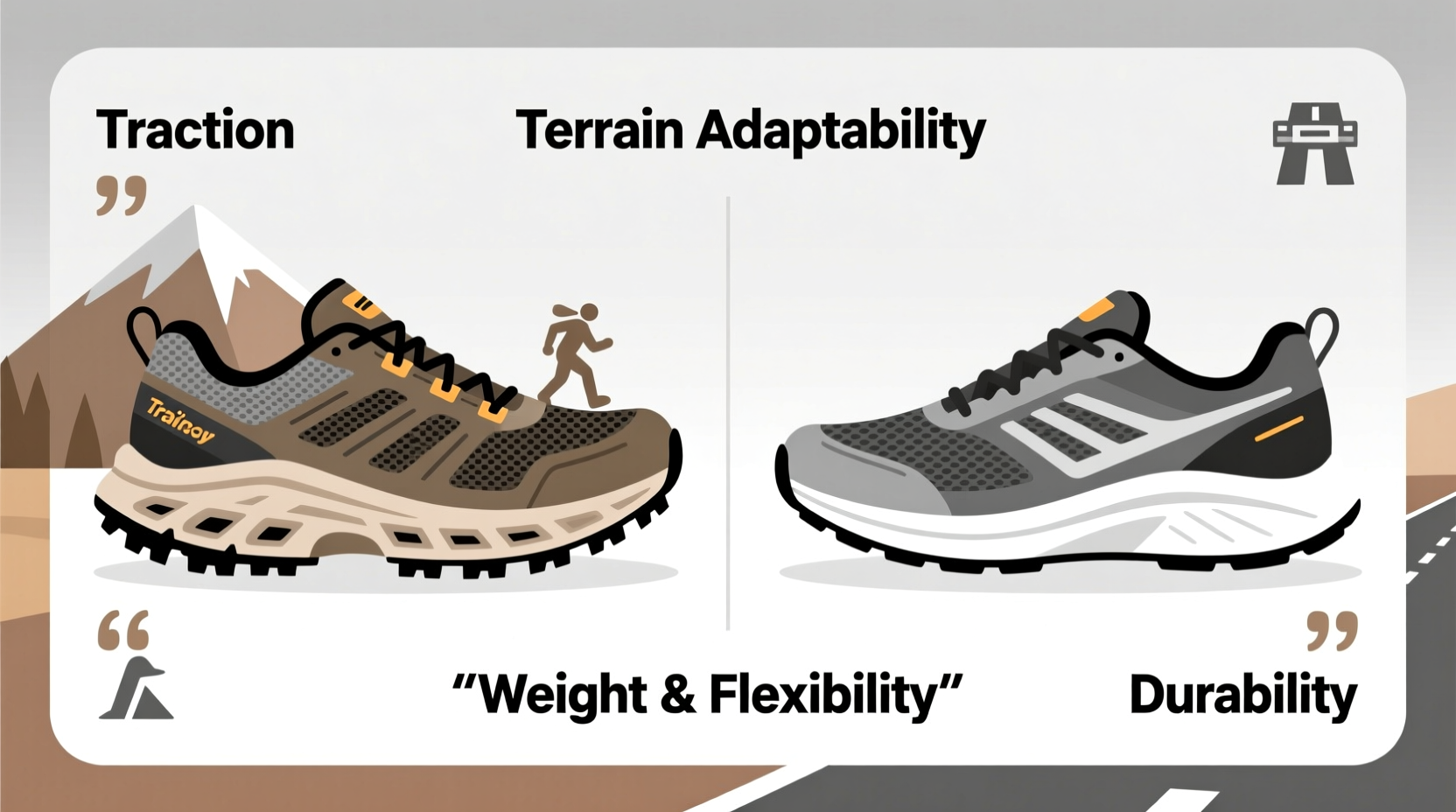
The outsole is the first point of contact with the surface, and it plays a crucial role in stability and safety. Road running shoes feature smooth, flat rubber outsoles optimized for consistent, hard surfaces like asphalt and concrete. The tread pattern is minimal—often just shallow grooves—to reduce weight and increase efficiency on predictable terrain.
In contrast, trail shoes have aggressive lug patterns—deep, widely spaced rubber protrusions—that bite into loose soil, mud, gravel, and wet rocks. These lugs vary in height (typically 3–6mm) depending on the shoe’s intended use. For example, shoes built for technical alpine trails often have taller lugs than those meant for packed forest paths.
Tip: If you’re running on muddy or slippery trails, look for directional lugs and multidirectional patterns that enhance forward propulsion and lateral grip.The rubber compound also differs. Trail shoes use stickier, more durable rubber—often labeled as \"high-traction\" or \"sticky rubber\"—to maintain grip on unpredictable surfaces. Road shoes prioritize carbon rubber in high-wear zones for longevity but sacrifice grip versatility.
Cushioning and Midsole Technology: Absorbing Impact Differently
Cushioning needs change dramatically based on surface variability. Road shoes typically offer more uniform cushioning because asphalt delivers consistent, predictable impact. Manufacturers design them with responsive foam (like EVA or PEBA) to return energy with each stride, promoting speed and efficiency over long distances.
Trail shoes, however, must handle uneven terrain where impacts come from multiple angles. Their midsoles are often firmer to provide better ground feedback and protect feet from sharp rocks or roots. Some models include rock plates—a thin layer of thermoplastic or EVA embedded under the footbed—to shield against punctures and bruising.
“On trails, you need enough cushion to absorb shock but not so much that you lose stability. It’s a balancing act between protection and proprioception.” — Dr. Lena Torres, Sports Podiatrist and Endurance Coach
Foam density in trail shoes tends to be higher to resist compression in rugged conditions. However, this doesn’t mean they’re less comfortable. Many modern trail models now incorporate lightweight foams without sacrificing durability, narrowing the performance gap between road and trail cushioning.
Upper Construction and Protection: Shielding Against the Elements
The upper—the part of the shoe wrapping the top of your foot—is engineered differently based on environmental exposure. Road shoes use lightweight, breathable mesh to maximize airflow and minimize weight. This works well in dry, urban environments but offers little defense against debris, water, or abrasion.
Trail shoes, by comparison, feature reinforced uppers made from tougher materials like ripstop nylon, synthetic overlays, or even waterproof membranes such as Gore-Tex. These additions protect against twigs, gravel, and moisture intrusion during stream crossings or rainy hikes.
| Feature | Road Running Shoes | Trail Running Shoes |
|---|---|---|
| Upper Material | Lightweight mesh | Durable mesh + synthetic reinforcements |
| Water Resistance | Rarely included | Common (Gore-Tex or hydrophobic coatings) |
| Debris Protection | Minimal | Tongue gussets, sealed collars |
| Breathability | High | Moderate to low (varies by model) |
A notable detail is the gusseted tongue—common in trail shoes—which prevents small stones and dirt from entering the shoe during off-road runs. Road models usually have non-gusseted tongues for reduced weight and increased ventilation.
Fitness and Fit: How the Shoe Holds Your Foot
Fit is another area where purpose shapes design. Road running shoes generally follow a snug, sock-like fit to minimize internal movement during repetitive strides on flat surfaces. They often have lower heel-to-toe drops (4–8mm), encouraging a midfoot strike ideal for efficient pavement running.
Trail shoes frequently adopt a wider toe box to accommodate foot swelling during long mountain runs and allow natural splay when navigating uneven ground. The heel cup is stiffer and more enveloping to lock the foot in place during descents or sidehill traverses. Heel-to-toe drop varies more widely, from zero-drop minimalist designs to 10mm+ for added downhill control.
Additionally, trail shoes emphasize lockdown through secure lacing systems and padded collars. A loose heel on rocky terrain increases the risk of ankle rolls or blisters. Many runners size up half a size in trail models to account for swelling and ensure adequate room in the forefoot.
Tip: Always test trail shoes with the socks you plan to run in and simulate downhill motion to check heel slippage.Durability and Longevity: Built to Withstand Abuse
Durability isn’t just about mileage—it’s about resistance to abrasion, weather, and mechanical stress. Road shoes degrade primarily through foam compression and outsole wear at the heel strike zone. Most last 300–500 miles before losing responsiveness.
Trail shoes face broader challenges: scraping against rocks, soaking in mud, repeated flexing over roots. As a result, they’re built with abrasion-resistant overlays, thicker midsoles, and more robust stitching. Despite similar mileage expectations, trail shoes often show visible signs of wear earlier due to external damage—even if the cushioning remains intact.
However, using trail shoes on roads accelerates wear unnecessarily. The aggressive lugs aren’t designed for constant friction on hard surfaces, leading to faster breakdown of the outsole. Conversely, taking road shoes onto technical trails risks injury and premature failure.
“I once saw a runner finish a 50K trail race in road shoes. He finished—but needed weeks of recovery for bruised metatarsals. The right shoe isn’t just about comfort; it’s injury prevention.” — Marcus Reed, Ultrarunning Coach and Gear Tester
When Hybrids Make Sense: The Rise of All-Terrain Runners
Not all runners fit neatly into “road” or “trail” categories. Commuters who transition from sidewalk to park path, hikers adding short runs to backpacking trips, or fitness enthusiasts exploring mixed routes may benefit from hybrid shoes—sometimes called “road-to-trail” models.
These shoes blend features: moderate lug depth (3–4mm), slightly reinforced uppers, and responsive yet protective midsoles. Brands like Hoka, Salomon, and Altra offer models designed for versatility without extreme specialization.
While hybrids can’t match dedicated trail shoes on steep, muddy climbs or compete with racing flats on tempo runs, they serve a growing niche of adaptable athletes. Just don’t expect peak performance in either environment—they’re compromises, not replacements.
Mini Case Study: Sarah’s Transition from Pavement to Peaks
Sarah, a former city marathoner, moved to Colorado and began exploring mountain trails. She initially used her favorite road shoes, assuming “running is running.” After two weeks, she developed persistent knee pain and blistering on her left heel.
Upon consultation with a physiotherapist, she learned that the lack of lateral support and inadequate grip caused micro-slips on loose gravel, straining her joints. Switching to a trail-specific model with a rock plate and secure heel cup resolved both issues within days.
Her experience highlights a common mistake: underestimating how terrain alters biomechanics. The same runner who glides effortlessly on pavement may struggle on trails without proper equipment.
Step-by-Step Guide: Choosing the Right Shoe for Your Route
Selecting footwear should be intentional, not habitual. Follow this sequence to make an informed decision:
- Assess your primary running surface: Is it paved, compacted dirt, rocky singletrack, or a mix?
- Evaluate terrain complexity: Are there elevation changes, loose gravel, or frequent obstacles?
- Consider weather and conditions: Do you often encounter rain, mud, or snow?
- Determine distance and duration: Longer trail runs demand more protection and stability.
- Try before you buy: Walk or jog on varied surfaces in-store or during a trial period.
- Check wear patterns: Inspect old shoes for signs of misalignment or excessive wear.
This process helps align your biomechanics with your environment—ensuring safer, more enjoyable runs.
Checklist: Trail vs Road Shoes Decision Tool
- ✅ Am I running mostly on paved, flat surfaces? → Lean toward road shoes.
- ✅ Will I encounter mud, rocks, roots, or loose gravel? → Choose trail shoes.
- ✅ Do I need waterproofing or extra protection? → Prioritize trail models.
- ✅ Am I training for speed or racing on roads? → Stick with road-specific designs.
- ✅ Is my route unpredictable or technically challenging? → Go for trail support and grip.
- ✅ Do I want one shoe for everything? → Consider a hybrid, but understand the trade-offs.
Frequently Asked Questions
Can I use trail shoes for road running?
Yes, especially for shorter distances or recovery runs. However, the stiffer build and heavier weight make them less efficient than road shoes over long pavement stretches. Prolonged road use will also wear down aggressive lugs faster.
Are trail shoes necessary for dirt paths or park trails?
It depends on the trail’s condition. Well-maintained, dry, and flat dirt paths may not require full trail shoes. But if the path includes loose rocks, roots, or becomes slippery when wet, trail shoes provide meaningful benefits in grip and protection.
Do trail shoes prevent ankle sprains?
They don’t eliminate risk, but they reduce it. Enhanced outsole grip, supportive midfoot wraps, and stable platforms help maintain balance on uneven terrain. Combined with strong ankles and proper technique, trail shoes contribute to overall joint security.
Conclusion: Match Your Shoes to Your Environment
The difference between trail and road running shoes goes far beyond aesthetics. Each is engineered for specific demands: one for consistency and speed, the other for adaptability and protection. Using the wrong type doesn’t just dull performance—it increases injury risk and shortens gear life.
Respect the terrain. Invest in the right tool for the job. Whether you're chasing PRs on city streets or summiting backcountry ridgelines, your feet deserve footwear that supports your goals. Take the time to assess your routes, try different models, and listen to what your body tells you.
🚀 Ready to upgrade your run? Re-evaluate your current shoes today—ask whether they truly match your most common terrain. Share your favorite trail or road model in the comments and help others find their perfect fit.








