In dense urban environments where traffic congestion eats time and public transit schedules feel restrictive, personal micro-mobility options like standing scooters and bicycles have surged in popularity. Both promise efficient, eco-friendly travel over short to medium distances. But when it comes to daily city commuting, how do they stack up in terms of speed and safety? The answer isn’t one-size-fits-all—it depends on infrastructure, rider experience, route conditions, and even local regulations. This article breaks down the real-world performance of standing scooters and bicycles, helping you make an informed decision based on your commute needs.
Speed Comparison: Real-World Performance
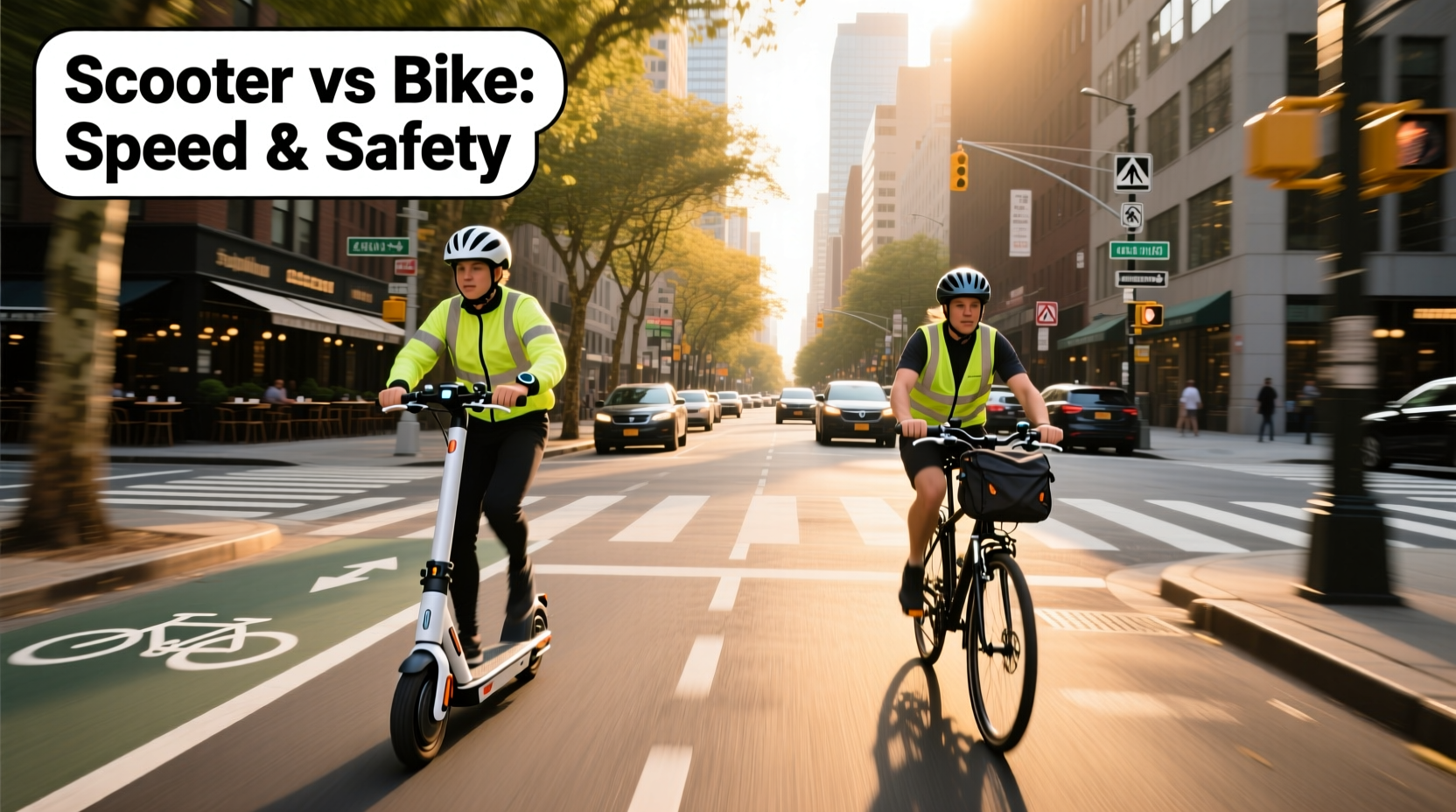
On paper, both electric standing scooters and bicycles can reach similar top speeds. Most e-scooters are capped at 15–20 mph (24–32 km/h), while average commuter bicycles travel between 10–18 mph (16–29 km/h), with experienced riders sustaining higher averages. However, peak speed doesn’t tell the full story—urban riding is more about stop-and-go efficiency, acceleration, and route adaptability.
E-scooters often have an edge in initial acceleration. Their electric motors allow instant torque, enabling quick getaways from traffic lights or crosswalks. In contrast, bicycles require physical effort to build momentum, which can be taxing during long commutes or hilly routes. Yet, on uninterrupted bike lanes or dedicated paths, a cyclist can maintain a steady pace that outperforms a scooter’s limited battery range and lower sustained speed.
A 2022 study by the European Transport Safety Council found that over a typical 3-mile (5 km) urban commute, bicycles averaged 2–3 minutes faster than e-scooters due to fewer interruptions and better flow on protected bike infrastructure. However, in mixed-traffic zones without bike lanes, scooters were slightly quicker in dense pedestrian corridors thanks to their maneuverability and compact size.
Tip: For commutes under 2 miles (3.2 km), e-scooters often offer the fastest door-to-door time due to ease of parking and agility in traffic.Safety: Risk Factors and Urban Hazards
Safety remains a critical concern in the standing scooter vs. bicycle debate. While both are non-motorized (or low-powered) vehicles, they face distinct risks on city streets.
Bicycles generally sit higher off the ground and are more visible to drivers. Their larger wheels absorb road imperfections better, reducing the risk of losing control on potholes or gravel. Additionally, most bikes come equipped with hand brakes, lights, reflectors, and sometimes even disc braking systems—features that enhance stopping power and nighttime visibility.
Standing scooters, particularly compact foldable models, are more vulnerable to tripping hazards. Small wheels (typically 8–10 inches) struggle with uneven pavement, tram tracks, or wet surfaces. A 2023 report from the U.S. Consumer Product Safety Commission noted that nearly 60% of e-scooter injuries stemmed from loss of balance due to poor road conditions. Furthermore, riders stand in an upright position with less stability, increasing fall risk during sudden stops or turns.
“While e-scooters offer convenience, their design prioritizes portability over stability. That trade-off increases injury risk, especially at higher speeds.” — Dr. Lena Patel, Urban Mobility Researcher at MIT Transportation Lab
Crash severity also differs. Bicycle accidents often result in scrapes, sprains, or fractures, but fatalities remain relatively rare with proper helmet use. E-scooter crashes, however, show a higher incidence of head injuries—even at low speeds—due to the lack of protective framing and the tendency for riders to be thrown forward upon impact.
Infrastructure and Legal Considerations
The suitability of scooters versus bicycles depends heavily on local infrastructure and laws. Cities with extensive, protected bike lanes—like Copenhagen, Amsterdam, or Portland—favor bicycles. These lanes provide separation from motor vehicles, reducing collision risk and allowing cyclists to maintain consistent speeds.
In contrast, many cities classify e-scooters as sidewalk vehicles, forcing riders into pedestrian zones where speed limits are low (often 8–10 mph) and conflicts with walkers are common. Other cities ban scooters from sidewalks entirely, pushing them into traffic lanes where their smaller size makes them less visible and more vulnerable.
Legal frameworks vary widely. In Paris, e-scooters must use bike lanes and are limited to 12.4 mph (20 km/h). In Los Angeles, riders under 18 must wear helmets, and scooters cannot exceed 15 mph. Meanwhile, traditional bicycles enjoy broader legal acceptance, with established right-of-way rules and widespread access to bike racks and storage facilities.
Do’s and Don’ts: Navigating City Rules
| Action | Recommended? | Reason |
|---|---|---|
| Ride e-scooter on sidewalk | No | Prohibited in most major cities; high pedestrian conflict |
| Park bicycle at designated rack | Yes | Legal and secure; avoids fines |
| Use e-scooter without helmet | No | Increases head injury risk; illegal in some areas |
| Ride bike in bike lane | Yes | Safer, faster, and legally protected |
| Modify scooter for higher speed | No | Illegal and unsafe; voids warranty |
Practicality and Commuter Lifestyle Fit
Beyond speed and safety, practicality plays a decisive role. Consider storage, carrying capacity, weather resistance, and integration with public transit.
Foldable e-scooters win in portability. Weighing 25–30 lbs (11–14 kg), they can be carried onto buses, trains, or elevators and stored under desks. This makes them ideal for multimodal commuters who combine scooting with subway rides. Bicycles, even folding models, are bulkier and heavier, often requiring roof racks, storage fees, or dedicated parking.
However, bicycles offer greater utility. With front baskets, rear racks, and panniers, they accommodate groceries, work gear, or even small pets. E-scooters typically support only a backpack or handlebar bag, limiting load capacity. Rain exposure is another factor: while both vehicles suffer in wet conditions, bicycles with fenders and waterproof bags handle damp commutes better than scooters, whose electrical components are more prone to water damage.
Mini Case Study: Two Commuters, Two Choices
Take Sarah and James, both living in downtown Chicago and working 2.5 miles from home. Sarah uses a shared e-scooter service. Her commute takes 14 minutes in good weather, and she appreciates not needing to lock up far from her office. However, during winter months, she switches to the bus due to icy sidewalks and scooter unavailability.
James rides a hybrid commuter bike. His trip averages 17 minutes, but he arrives slightly sweaty—a trade-off he manages with a change of clothes. He bikes year-round with studded tires in winter and enjoys carrying lunch, laptop, and gym clothes in his panniers. Despite longer ride time, he reports higher satisfaction due to fitness benefits and reliability.
Their experiences highlight a key insight: scooters excel in convenience and short bursts; bicycles offer resilience and versatility over time.
Step-by-Step Guide: Choosing Your Commute Vehicle
Follow this decision framework to determine the best fit for your urban commute:
- Map your route. Identify whether it includes bike lanes, shared paths, hills, or heavy pedestrian traffic.
- Check local laws. Determine where scooters are permitted and whether helmets or licenses are required.
- Assess your cargo needs. If you carry more than a backpack, a bicycle is likely better suited.
- Evaluate storage space. Can you store a scooter indoors? Do you have secure bike parking at work?
- Test both options. Rent a scooter and borrow a bike for a week each. Track time, comfort, and stress levels.
- Factor in total cost. Include purchase price, maintenance, insurance (if applicable), and replacement parts.
- Consider health impact. Cycling provides moderate aerobic exercise; scooting offers minimal physical benefit.
Cost and Long-Term Value
Initial investment varies. A reliable e-scooter costs $400–$800, with batteries lasting 2–3 years before degradation. Replacement batteries run $100–$200. Brakes, tires, and suspension may need servicing annually, especially on rough roads.
Commuter bicycles range from $500–$1,500 for quality models. Maintenance includes chain lubrication, tire replacements, and brake adjustments—typical annual upkeep costs $100–$200. However, well-maintained bikes can last a decade or more, offering superior long-term value.
Riders relying on shared scooter services (e.g., Lime, Bird) avoid ownership costs but pay per minute—averaging $3–$5 per trip. Over a year, this can exceed $1,000, making ownership more economical for frequent users.
Checklist: Essential Gear for Safe Commuting
- Helmet (DOT or CPSC certified)
- Bright front and rear lights
- Reflective clothing or ankle bands
- U-lock or heavy-duty chain lock
- Portable pump or CO2 inflator
- Phone mount or handlebar bag
- Rain cover (for scooters) or fenders (for bikes)
FAQ
Are e-scooters safer than bicycles?
No conclusive evidence shows e-scooters are safer. Studies indicate higher injury rates per mile traveled for scooters due to instability, smaller wheels, and frequent sidewalk riding. Bicycles, with better visibility and handling, generally pose lower crash risk when used in proper infrastructure.
Which is faster in traffic-heavy cities?
For trips under 3 miles, e-scooters often achieve faster door-to-door times because they can weave through congestion and require no parking search. Beyond that distance, bicycles usually win due to higher sustained speeds and fewer stops.
Can I use either option in the rain?
Riding either in heavy rain is discouraged. Light rain is manageable with precautions: use fenders on bikes, avoid puddles on scooters (to prevent water damage), wear reflective gear, and reduce speed. Never ride a scooter through standing water—electrical components can short-circuit.
Conclusion: Making the Right Choice for Your City Life
The standing scooter vs. bicycle debate ultimately hinges on your priorities. If speed over short distances, portability, and minimal physical effort matter most, an e-scooter could be your ideal match—especially in flat, scooter-friendly cities with mild weather. But if safety, cargo capacity, all-weather reliability, and long-term savings are important, a bicycle proves the more robust and sustainable choice.
Urban mobility is evolving rapidly, and the best solution might not be one or the other. Many savvy commuters now adopt a hybrid approach: using a scooter for quick midday errands and a bike for longer, routine commutes. Whatever you choose, prioritize safety, know your route, and stay informed about local regulations.
🚀 Ready to optimize your commute? Test both options this week, track your time and comfort, and share your findings with fellow city riders. Your perfect ride is out there—start rolling with confidence.








