
For hunters, a well-trained dog is more than a companion—it's a critical partner in the field. One of the most debated tools in training hunting dogs is the bark collar. While many opt for affordable, basic models, brands like SportDog have carved out a niche with rugged, feature-rich devices tailored specifically for working canines. But with prices often two to three times higher than standard bark collars, the question arises: Is the extra cost truly worth it for hunting dogs?
The answer isn't a simple yes or no. It depends on your dog’s temperament, hunting environment, training goals, and how much you value reliability under pressure. This article breaks down the differences between SportDog and regular bark collars, evaluates performance in real-world hunting scenarios, and helps you decide whether investing in a premium collar pays off in the long run.
Understanding the Core Differences
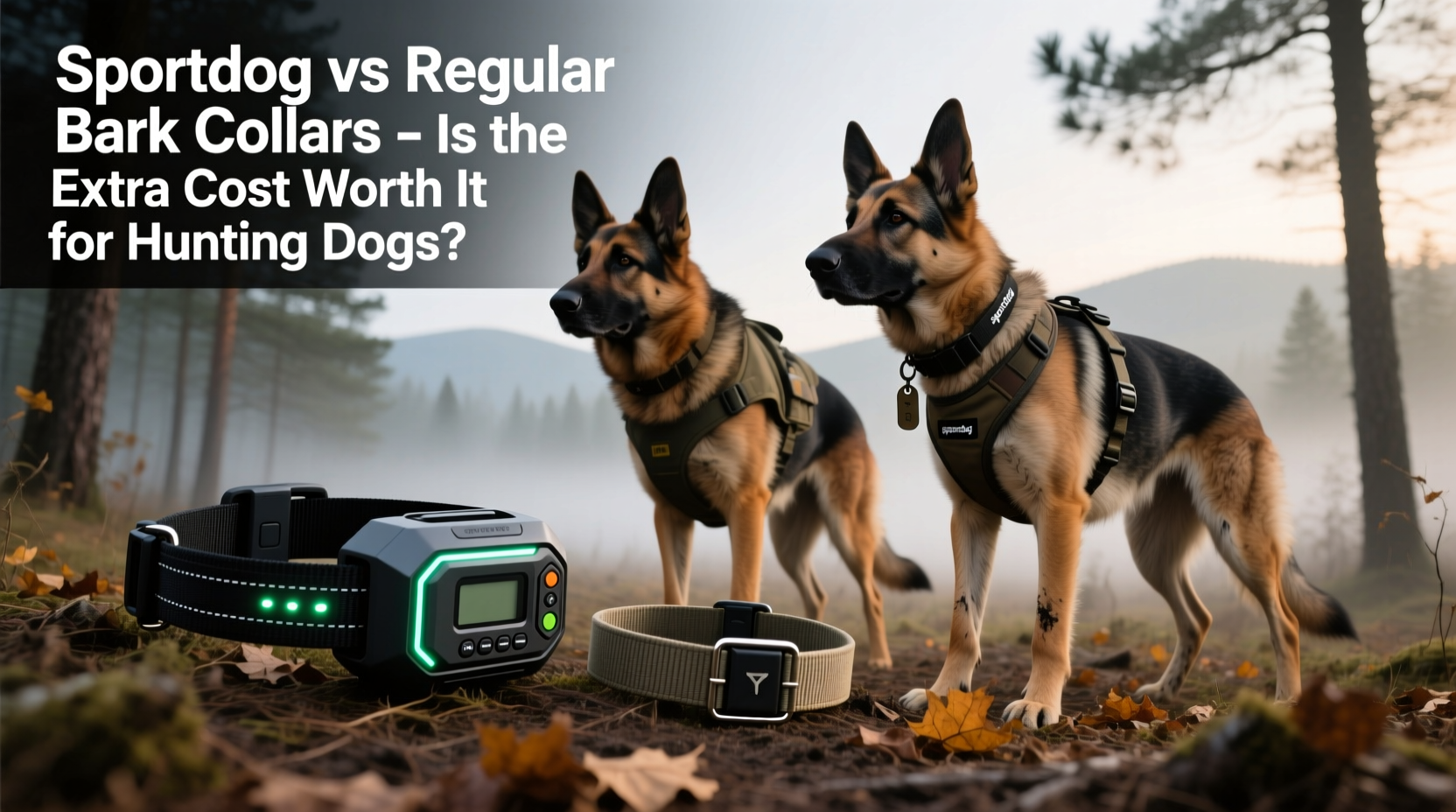
At first glance, all bark collars seem similar—adjustable straps, correction modes (vibration, tone, shock), and automatic activation via bark detection. However, when used in demanding conditions such as dense woods, freezing temperatures, or prolonged exposure to water, subtle differences become major differentiators.
SportDog, a brand developed by hunters for hunters, designs its collars with durability, range, and consistency in mind. Most models are waterproof up to 25 feet, built with reinforced polymer housings, and offer longer battery life. In contrast, many \"regular\" bark collars—often mass-produced for general pet use—are made with lighter materials, less precise sensors, and shorter operational lifespans.
The key distinction lies not just in build quality but in intended use. Standard bark collars aim to reduce nuisance barking in backyards or homes. SportDog units are engineered for active, high-drive dogs operating in unpredictable environments where failure isn’t an option.
Tip: Always test any bark collar in a controlled setting before relying on it during a hunt.Performance Comparison: Field-Tested Features
To understand whether the premium price tag holds up, consider how these collars perform across five critical categories:
| Feature | SportDog Collars | Regular Bark Collars |
|---|---|---|
| Water Resistance | Submersible up to 25 ft; ideal for waterfowl retrievers | Limited splash resistance; fails when submerged |
| Battery Life | Up to 60 days on a single charge (model-dependent) | Typically 7–14 days; frequent recharging needed |
| Durability | Impact-resistant casing; UV-stabilized strap | Plastic housing prone to cracking; straps degrade in sun |
| Correction Consistency | Precise bark detection; minimal false triggers | Inconsistent sensing; often activates from wind or movement |
| Training Flexibility | Multiple modes, remote options, adjustable sensitivity | Fixed settings; limited customization |
The table illustrates that SportDog doesn’t just offer incremental improvements—it delivers a fundamentally different level of reliability. For a hunter spending weekends in wetlands or tracking through snow, a malfunctioning collar could mean lost game or an undisciplined dog running off-course.
“With hunting dogs, consistency under stress separates adequate tools from essential ones. SportDog builds gear that performs when everything else is pushing the limit.” — Dr. Alan Reyes, Canine Behavior Specialist & Field Trainer
Real-World Example: Upland Hunting in Montana
Consider Mark T., a seasoned upland bird hunter from western Montana. He uses a German Shorthaired Pointer named Scout who has a strong prey drive and a tendency to bark excitedly when locking onto scent. Initially, Mark used a $35 bark collar from a popular pet brand. It worked fine in the backyard, but during a pheasant hunt in heavy brush, the unit failed after two hours—battery drained, sensor triggered by rustling leaves.
Frustrated, Mark invested in a SportDog SD-1225C. On his next outing, Scout spent eight hours covering rough terrain, crossed streams twice, and remained responsive throughout. The collar maintained consistent corrections, didn’t over-trigger, and lasted the entire weekend without needing a charge. “It paid for itself in one season,” Mark said. “I’m not just training better—I’m hunting smarter.”
This scenario reflects a common pattern: budget collars may suffice for casual use, but when environmental variables increase, so do the risks of failure.
When the Extra Cost Makes Sense
Not every hunting situation demands a SportDog-level collar. Here’s a checklist to help determine if the investment aligns with your needs:
- You hunt in extreme weather (rain, snow, mud)
- Your dog regularly enters water (retrievers, flushers)
- You need reliable performance over multi-day trips
- You’re training a high-energy or easily distracted breed
- You value long-term durability over short-term savings
If three or more apply, a SportDog collar likely offers tangible returns. Conversely, if you only hunt occasionally in dry conditions with a well-mannered dog, a mid-tier bark collar might be sufficient.
Step-by-Step Guide to Choosing the Right Collar
- Assess your hunting environment: Note frequency of water exposure, temperature extremes, and terrain difficulty.
- Evaluate your dog’s behavior: Does he bark excessively under excitement? Is he sensitive to correction types?
- Determine required features: Waterproofing, battery life, remote capability, and correction levels.
- Compare models within your category: Look at SportDog’s SD-825, SD-1225, or ARC series versus comparable regular collars.
- Test before committing: Use the collar during training sessions to gauge responsiveness and comfort.
- Monitor long-term performance: Track battery usage, durability, and behavioral changes over several hunts.
Common Misconceptions About Premium Bark Collars
Some hunters hesitate to adopt devices like SportDog due to myths about harshness or over-reliance. However, modern bark collars are far more nuanced than older shock-only models. SportDog offers progressive correction systems—starting with warning tones, then vibration, then static stimulation—allowing dogs to learn without undue stress.
Another misconception is that bark collars replace training. In reality, they’re best used as a reinforcement tool alongside obedience drills. As one trainer put it: “A bark collar doesn’t teach a dog what to do—it teaches them what not to do at the wrong time.” When integrated properly, it enhances, rather than replaces, foundational commands.
FAQ
Are SportDog collars safe for long-term use?
Yes, when used according to manufacturer guidelines. SportDog collars are designed with safety cutoffs and multiple intensity levels to prevent over-correction. Used responsibly, they pose no greater risk than standard training aids.
Can I use a regular bark collar for hunting if I protect it?
While possible, it’s risky. Even with protective wraps, most non-waterproof collars fail when submerged or exposed to sustained moisture. Hunters report inconsistent performance and premature battery drain, which defeats the purpose in remote areas.
Do SportDog collars work on all dog sizes?
Most models fit necks from 10” to 22”, suitable for breeds like Labs, Brittanys, Pointers, and setters. Smaller hunting breeds may require checking fit carefully, but adapters and trimmable straps are available.
Final Verdict: Is the Investment Worth It?
For hunters who rely on their dogs to perform in tough, dynamic conditions, the answer is a resounding yes. The extra cost of a SportDog bark collar translates into real benefits: longer lifespan, fewer malfunctions, and more consistent training outcomes. Over time, replacing cheap collars every season adds up—and still doesn’t match the reliability of a single high-end unit.
Think of it like choosing between a department-store knife and a forged hunting blade. Both cut, but only one is trusted when everything depends on it. For serious hunters, a SportDog collar isn’t a luxury—it’s professional-grade equipment that supports peak canine performance.
🚀 Ready to upgrade your hunting dog’s training gear? Evaluate your current setup, assess your field needs, and consider making the switch to a proven, durable solution. Your dog—and your next successful hunt—will thank you.








