When it comes to indoor sports like basketball, badminton, squash, or futsal, choosing the right footwear isn’t just about comfort—it’s about performance, injury prevention, and respect for the playing surface. A growing debate centers on whether spiked shoes offer too much traction indoors, risking damage and overgripping, or if traditional court shoes lack the grip needed for explosive movements. The answer isn't one-size-fits-all; it depends on the sport, flooring type, and personal biomechanics.
Understanding the functional differences between spiked and court shoes can help athletes make informed decisions that enhance agility while minimizing risk—both to themselves and the facility.
The Science of Traction: How Shoes Interact with Indoor Surfaces
Indoor sports demand rapid directional changes, sudden stops, and quick bursts of speed. The effectiveness of a shoe hinges on its ability to provide controlled traction without causing abrupt stress on joints or damaging the floor.
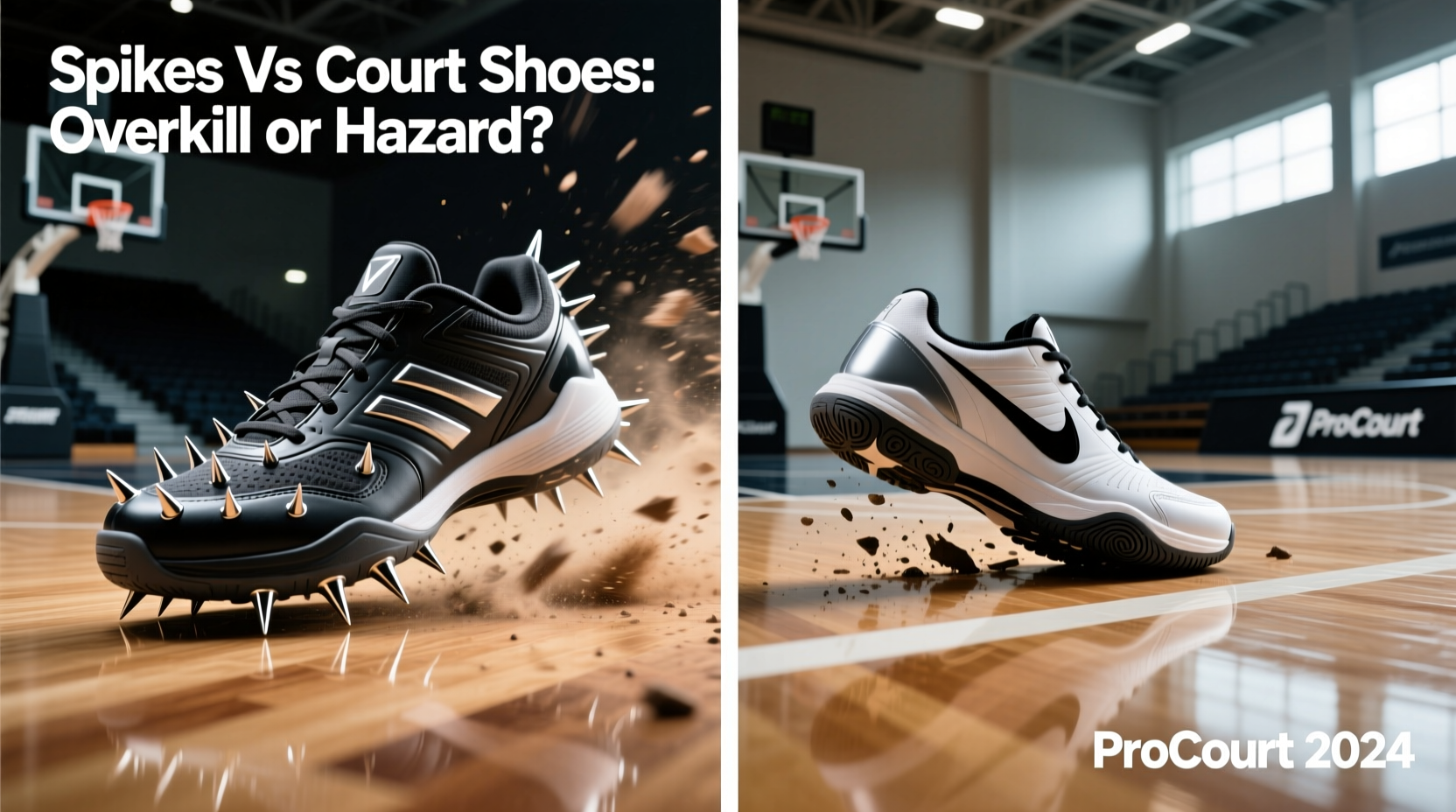
Court shoes are engineered with non-marking rubber outsoles featuring herringbone or circular tread patterns. These designs allow smooth pivoting and lateral movement on polished wood, vinyl, or synthetic surfaces common in gyms and multipurpose arenas. The rubber compound is softer, maximizing grip without excessive adhesion.
Spiked shoes, traditionally used in outdoor or turf-based sports like baseball or football, feature raised cleats or studs that penetrate soft surfaces to prevent slippage. Indoors, this design becomes problematic. Hardwood or tile floors don’t compress, so spikes can’t “dig in” as intended. Instead, they create concentrated pressure points that increase the risk of ankle rolls and knee strain during pivots.
Tip: If your shoe leaves marks, squeaks excessively, or feels \"stuck\" during rotation, it likely has too much grip for the surface.Performance Comparison: Spikes vs Court Shoes
To clarify the real-world implications, consider how each shoe type performs across key metrics.
| Feature | Spiked Shoes | Court Shoes |
|---|---|---|
| Traction on Hard Floors | Poor – creates overgrip and pivot resistance | Excellent – balanced grip with controlled release |
| Injury Risk | High – increased chance of joint strain and ankle sprains | Low – designed for dynamic indoor movement |
| Floor Damage Potential | High – may scratch or dent surfaces | Negligible – non-marking, smooth contact |
| Lateral Stability | Moderate – high studs reduce base stability | High – wide sole and low profile enhance balance |
| Sport Suitability | Unsuitable for most indoor sports | Ideal for basketball, tennis, racquetball, etc. |
The data shows a clear mismatch between spiked footwear and indoor environments. While spikes excel where surface penetration is possible, their rigid interface with hard flooring disrupts natural foot mechanics.
Real-World Example: The Amateur Futsal League Incident
In early 2023, a regional futsal league in Portland temporarily suspended play after multiple players reported knee discomfort following games. Upon investigation, facility managers discovered that two teams had been using modified turf cleats with short rubber studs, believing they’d gain an edge in acceleration.
Video analysis revealed unnatural rotational forces during sharp turns—players weren’t sliding slightly during pivots, as intended with proper footwear, but instead locking into place. This caused excessive torque on the lower limbs. One player suffered a Grade 1 MCL sprain after planting his foot during a defensive cut.
After enforcing a strict court shoe-only policy and providing guidelines on acceptable soles, injury reports dropped by 78% over the next season. The league now includes a footwear inspection at registration.
“Footwear that doesn’t allow micro-sliding on hard courts increases shear force on the knee. It’s not just about grip—it’s about controlled release.” — Dr. Lena Torres, Sports Biomechanist, University of Colorado
When Are Spikes Actually Acceptable Indoors?
There are rare exceptions where studded footwear appears in indoor settings. For example, indoor cricket nets or artificial turf fields housed within sports complexes sometimes permit molded cleats. However, these surfaces mimic grass or compressed turf, allowing limited stud penetration.
Even then, full metal spikes are typically banned. Most facilities require rubber studs under 6mm in length and mandate a flat forefoot design to minimize pivot stress.
If you're considering spiked shoes for an indoor activity, ask:
- Is the surface turf-based or cushioned?
- Does the facility explicitly permit studded footwear?
- Are the studs designed for multi-directional movement, not forward propulsion only?
In nearly all cases involving hardwood, linoleum, or polyurethane-coated courts, the answer will be no.
Action Plan: Choosing the Right Footwear for Indoor Play
Selecting appropriate shoes isn’t guesswork. Follow this step-by-step guide to ensure optimal performance and safety.
- Identify the playing surface – Confirm whether it’s hardwood, synthetic, or turf. When in doubt, assume it requires non-marking rubber soles.
- Check facility rules – Many gyms and leagues post footwear policies online or at entry points. Never assume.
- Inspect the outsole pattern – Look for herringbone, wave, or multidirectional tread. Avoid any raised protrusions resembling cleats.
- Test the pivot – On a safe section of the court, perform a half-turn jump landing. Your shoe should grip on impact but allow slight rotation when weight shifts.
- Verify non-marking certification – Reputable brands label court shoes as “non-marking.” If unsure, consult product specs or customer support.
Frequently Asked Questions
Can I wear running shoes on indoor courts?
No. Running shoes are optimized for forward motion and lack lateral support and multidirectional traction. Using them increases the risk of ankle rolls and reduces cutting efficiency. Always use sport-specific court shoes.
Do some court shoes have “micro-spikes” or hybrid treads?
A few models incorporate small lugs or hybrid patterns marketed for versatility. However, true hybrids often compromise performance on both hard courts and turf. Stick to purpose-built designs unless you’re playing on transitional surfaces under expert guidance.
Why do my court shoes squeak?
Squeaking is usually caused by high-friction interaction between clean rubber and a dry, polished floor. It’s generally harmless. Some players lightly dust the soles with talc or cornstarch to reduce noise, though this should be done sparingly to avoid reducing grip.
Final Recommendations and Checklist
The idea that more traction equals better performance is a myth in indoor sports. Controlled grip—where the shoe holds during linear sprints but releases smoothly during pivots—is what elite athletes rely on. Spiked shoes disrupt this balance, turning dynamic movements into potential hazards.
Court shoes aren’t a slip-and-slide compromise—they’re precision tools calibrated for indoor dynamics. Respect the surface, protect your joints, and optimize your game by choosing wisely.
📋 Footwear Selection Checklist- ✅ Confirmed playing surface type
- ✅ Verified facility footwear policy
- ✅ Chose non-marking rubber outsole
- ✅ Selected multidirectional tread pattern
- ✅ Ensured proper fit and ankle support
- ❌ Avoided spikes, cleats, or outdoor-only shoes
Take Action Today
Your footwear choice impacts every sprint, cut, and jump. Don’t let outdated assumptions or misplaced confidence in “maximum grip” put your performance or health at risk. Audit your current shoes, consult your league’s rules, and invest in a quality pair of sport-specific court shoes. Share this knowledge with teammates—because staying safe and competitive starts from the ground up.
💬 Have a story about the wrong shoes causing problems on the court? Share your experience in the comments and help others avoid the same mistake.








