
When the sun sets behind the trees and your phone battery dips below 10%, having a dependable power source at your campsite isn’t just convenient—it can be essential. Whether you're charging navigation tools, running a mini-fridge, or keeping your camera ready for sunrise shots, choosing between a solar generator and a gas generator comes down to more than just preference. It’s about reliability, practicality, and how well each option fits your outdoor lifestyle.
Both technologies have evolved significantly in recent years. Gas generators have long dominated the off-grid scene with their high output and rapid refueling. Solar generators, once dismissed as underpowered novelties, now offer silent, emissions-free energy that’s increasingly capable. But which one truly delivers when you’re miles from an outlet and weather turns unpredictable?
Understanding the Basics: How Each Generator Works
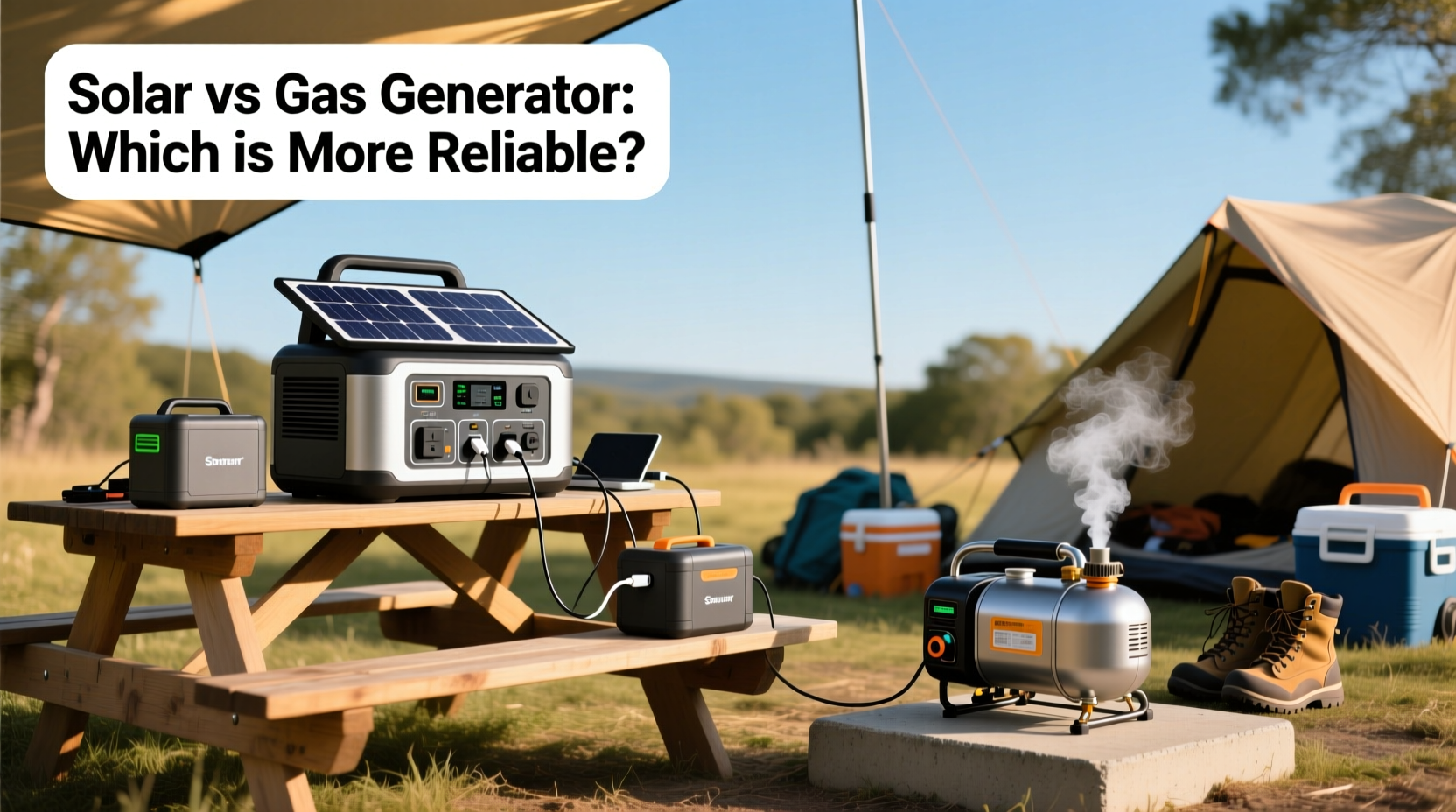
A gas generator produces electricity by burning gasoline (or sometimes propane) to power an internal combustion engine connected to an alternator. The result is continuous AC power, often ranging from 1,000 to 3,500 watts, depending on the model. These units are mechanical, noisy, and require regular maintenance like oil changes and spark plug replacements.
In contrast, a solar generator isn’t a generator in the traditional sense. It's a portable power station charged via solar panels or wall outlets. The system stores energy in lithium-ion batteries and converts it to usable AC or DC power through an inverter. Output typically ranges from 300 to 3,000 watts, with larger models matching entry-level gas units.
The key difference lies in energy source and delivery. Gas generators create energy on demand; solar generators store it for later use. This fundamental distinction shapes everything from runtime to environmental impact.
Tip: Always check the continuous wattage rating—not just peak wattage—when comparing generators for sensitive electronics like laptops or CPAP machines.Reliability in Real-World Camping Conditions
Reliability isn’t just about whether a device turns on. It includes consistency of output, resilience to weather, ease of use in remote areas, and ability to handle unexpected demands.
Gas Generators shine in scenarios requiring sustained high power. Running a coffee maker, electric kettle, and air compressor simultaneously? A 2,200-watt gas unit handles that with fuel to spare. Refueling takes minutes with a fresh gas can—critical during extended storms when solar input drops.
But they come with trade-offs. Most gas generators emit 65–75 decibels—about as loud as a vacuum cleaner. In a quiet forest or crowded campground, that draws complaints and disrupts the wilderness experience. They also produce carbon monoxide, requiring strict ventilation and distance from tents.
Solar Generators operate silently and emit zero fumes, making them ideal for close-quarters use. You can place one inside a tent vestibule to charge devices overnight without risk. Their lack of moving parts means fewer failure points. However, their reliability hinges on sunlight availability. Heavy cloud cover or short winter days limit recharging potential, potentially leaving you stranded if reserves run low.
“Battery-based systems are only as reliable as your ability to recharge them. For multi-day trips without grid access, redundancy is non-negotiable.” — Dr. Lena Patel, Off-Grid Energy Researcher, Rocky Mountain Institute
Performance Comparison: A Side-by-Side Analysis
| Feature | Solar Generator | Gas Generator |
|---|---|---|
| Noise Level | Silent (0 dB) | 65–75 dB (loud) |
| Fuel Source | Sunlight, wall outlet | Gasoline, propane |
| Emissions | Zero during operation | CO, NOx, hydrocarbons |
| Maintenance | Minimal (battery care) | Regular (oil, filters, carburetor) |
| Refueling Time | 3–8 hours (solar), 1–2 (wall) | Under 1 minute |
| Lifespan | 5–7 years (battery degradation) | 10+ years (with maintenance) |
| Portability | Light to moderate (5–60 lbs) | Moderate to heavy (30–100 lbs) |
| Cold Weather Performance | Reduced efficiency below freezing | Generally stable (with winterized fuel) |
This comparison reveals a clear divide: solar excels in quiet, clean, low-effort operation but depends heavily on environmental conditions. Gas offers brute-force independence from weather but introduces noise, emissions, and mechanical complexity.
Case Study: A Weekend Gone Wrong in the Sierra Nevada
Last October, two friends set out for a three-day backpacking trip near Lake Tahoe. One brought a 1,500-watt solar generator with a 200W foldable panel; the other packed a compact 2,000-watt gas generator.
Day one was sunny. Both charged fully. They powered a small cooler, heated blanket, and drone. No issues.
Day two brought unseasonal snowfall. Cloud cover blocked sunlight for 18 hours. The solar user couldn’t recharge. By evening, his unit hit 12%—enough for lights but not his CPAP machine. He had to sleep without it, compromising rest.
The gas generator owner refueled midday using a pre-packed gas can. His unit ran the heater intermittently and kept all devices charged. Noise drew mild complaints from nearby campers, but functionality wasn’t compromised.
On day three, the storm cleared. The solar generator began recharging slowly under thin clouds. It reached 60% by afternoon—adequate for departure needs. The takeaway? Both worked—until conditions changed. The gas unit offered resilience; the solar required favorable weather.
Choosing Based on Your Camping Style
Your choice should align with how, where, and how often you camp.
- Car Campers & Family Trips: If you drive to established sites with moderate noise tolerance, gas generators provide unmatched power density. Ideal for running multiple appliances or heating devices in cold weather.
- Backpackers & Minimalists: Solar generators under 30 lbs integrate seamlessly into pack setups. Silent operation preserves nature immersion. Best suited for lighting, phone charging, and small fans.
- Rainy Season or Forest Camping: Persistent overcast reduces solar yield. Without supplemental charging (like a car adapter), solar may fall short. Gas remains viable regardless of light.
- Ecotourism & Group Expeditions: Many parks now restrict or ban gas generators due to noise and emissions. Solar complies with regulations and supports sustainable practices.
Step-by-Step Guide: Setting Up Your Backup Power System
- Assess Your Power Needs: List all devices (e.g., phone, lamp, fan) and their wattage. Multiply wattage by hours used daily to get total watt-hours (Wh). Example: 10W lamp × 5 hrs = 50Wh.
- Add a 20% Buffer: Account for inefficiencies and unexpected use. A 500Wh daily need becomes 600Wh target.
- Select the Right Capacity: Choose a generator with at least 1.5× your daily usage. For 600Wh, pick a 900Wh+ unit.
- Plan Recharge Strategy: Will you rely on solar only? Bring extra panels? Use a car charger? Map daylight hours and weather patterns for your destination.
- Test Before You Go: Run a full cycle at home. Charge the unit, power your gear, and monitor depletion rate. Adjust expectations accordingly.
- Pack Redundancy: Include a USB power bank or dual-fuel option if traveling remotely. Never depend on a single power source in critical situations.
Common Misconceptions Debunked
Myth 1: “Solar generators work forever in the wild.”
Reality: Battery capacity is finite. Without consistent sun or alternate charging, even large units deplete within 24–48 hours under moderate load.
Myth 2: “Gas generators are too loud and dirty for camping.”
Reality: Modern inverter gas models like the Honda EU2200i operate at 48–57 dB—quieter than conversation. Used responsibly and away from sleeping areas, they’re acceptable in many settings.
Myth 3: “Solar is always the greener choice.”
Reality: While operation is emission-free, manufacturing lithium batteries has environmental costs. For occasional users, extending the life of a gas generator may have a lower lifetime footprint than replacing solar units every 5–7 years.
FAQ
Can I run a refrigerator on a solar generator?
Yes, if the generator has sufficient capacity. A 50-quart camping fridge uses ~50–80Wh per hour. A 1,000Wh solar generator could power it for 10–15 hours. Recharge daily with a 200W solar panel under good sun.
Are gas generators allowed in national parks?
Most U.S. national parks allow gas generators but restrict operating hours (e.g., 8 AM–8 PM) and require minimum distances from others (often 100 feet). Always check specific park rules before bringing one.
How long do solar generator batteries last?
Most lithium-ion units retain 80% capacity after 500–1,000 charge cycles. With proper care—avoiding full discharges and extreme temperatures—they last 5–7 years.
Final Verdict: Which Is More Reliable?
Reliability isn’t inherent to the technology—it’s contextual. For predictable, sunny environments and low-to-moderate power needs, solar generators are exceptionally reliable. Their simplicity, silence, and safety make them ideal for most recreational campers.
But when conditions turn harsh—prolonged rain, cold, or high-demand appliances—gas generators prove more resilient. Their ability to refuel quickly and deliver consistent power makes them the go-to for emergency preparedness, remote expeditions, or commercial outdoor operations.
The smartest approach? Combine both. Use a solar generator as your primary, quiet source during the day. Keep a compact gas unit as a backup for storms or heavy loads. This hybrid strategy maximizes flexibility and minimizes risk.
“The future of off-grid power isn’t choosing between solar and gas—it’s knowing when to use each.” — Mark Tran, Senior Editor, *Outdoor Tech Review*
Take Action: Build Your Resilient Power Plan
Don’t wait for a dead battery in the dark to decide your power strategy. Evaluate your next trip’s location, duration, and energy demands. Test your chosen generator at home. Pack spare cables, fuses, and fuel. Share your plan with someone in case of emergencies.
Whether you lean toward the silent hum of solar or the dependable roar of gas, preparation turns uncertainty into confidence. The wild rewards those who come ready.
🚀 Ready to upgrade your camping power? Start by calculating your daily watt-hour needs and compare one solar and one gas model this week. Your next adventure will thank you.








