Sitting for prolonged periods has become a standard part of modern work life. Whether you're at a desk, in front of a screen, or commuting, hours of inactivity can lead to muscle tightness, poor circulation, and postural imbalances. The most common complaints include stiff necks, sore lower backs, tight hips, and reduced mobility. While ergonomic chairs and standing desks help, they don’t replace the need for movement. Incorporating targeted stretches into your daily routine can significantly reduce stiffness, improve flexibility, and enhance overall well-being. These simple stretches require no equipment, take minimal time, and can be done almost anywhere—making them ideal for office workers, remote employees, and anyone who spends too much time seated.
The Impact of Prolonged Sitting on the Body
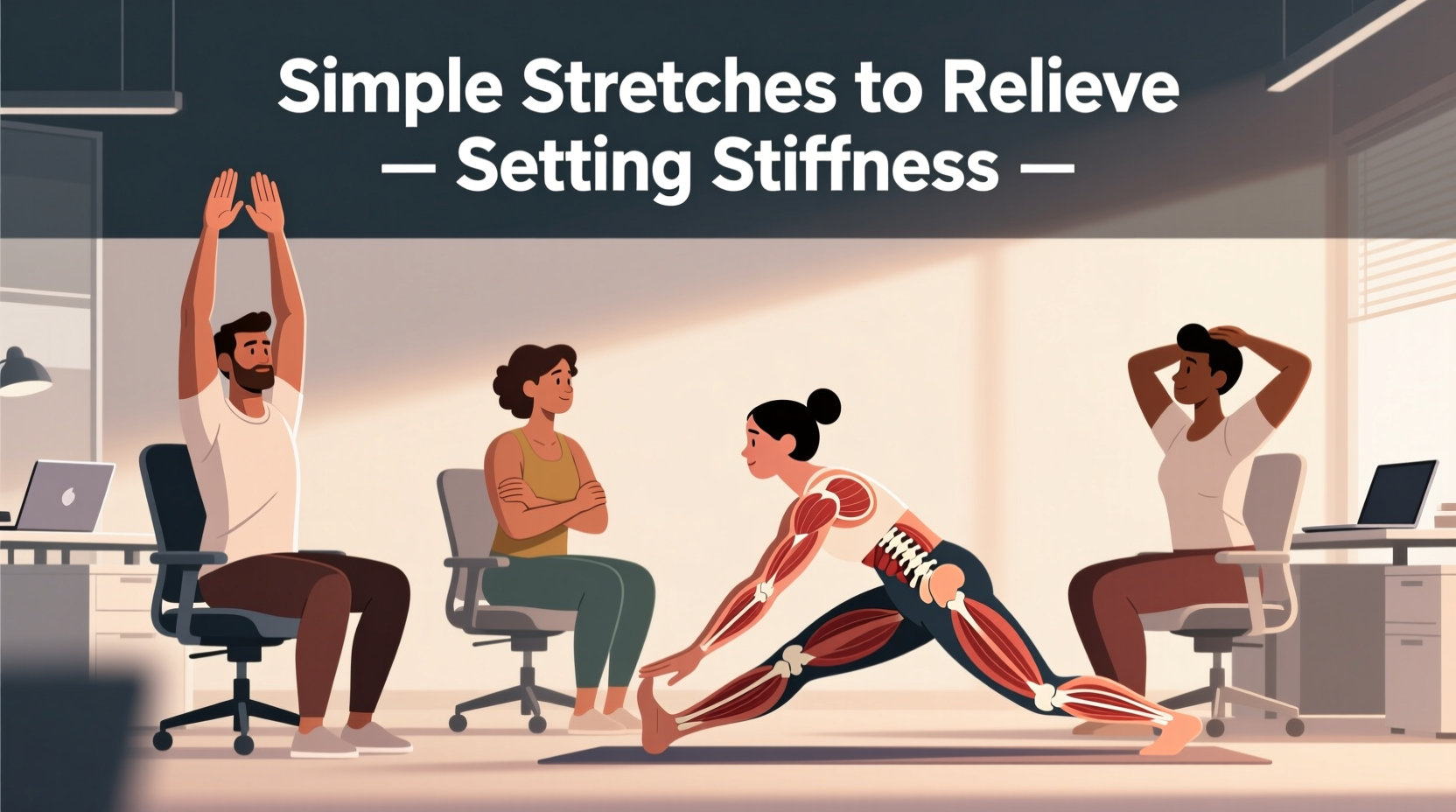
When you sit for extended periods, certain muscles remain inactive while others are held in shortened positions. For example, the hip flexors shorten from being bent at 90 degrees, while the glutes and hamstrings become underused and weak. The chest muscles tighten from slouching forward, and the upper back muscles stretch and weaken. Over time, this imbalance leads to chronic stiffness, reduced joint mobility, and even nerve compression. Poor posture compounds these issues, often resulting in tension headaches, shoulder pain, and lower back discomfort.
Research shows that individuals who sit for more than six hours a day have a higher risk of musculoskeletal disorders compared to those who move regularly. A study published in the *Journal of Physical Activity and Health* found that taking brief activity breaks every 30 minutes improved spine health and reduced discomfort. Stretching counteracts the negative effects of sedentary behavior by restoring muscle balance, increasing blood flow, and promoting joint lubrication.
“Even five minutes of stretching every hour can make a dramatic difference in how your body feels by the end of the workday.” — Dr. Lena Patel, Physical Therapist and Ergonomics Consultant
Essential Stretches to Relieve Daily Stiffness
The following stretches target the most commonly affected areas: neck, shoulders, spine, hips, and lower back. Each stretch is designed to be gentle yet effective, requiring no prior experience or special gear. Aim to perform this sequence once in the morning, once midday, and again before leaving work—or whenever you feel tension building.
1. Neck Rolls and Side Stretches
Neck stiffness is one of the most frequent complaints among desk workers. Forward head posture and screen positioning strain the cervical spine and surrounding muscles.
- Begin seated or standing with arms at your sides.
- Gently drop your chin toward your chest.
- Slowly roll your head clockwise in a circular motion for 5 full rotations.
- Repeat counterclockwise.
- For side stretches, tilt your right ear toward your right shoulder. Hold for 20 seconds. Repeat on the left.
2. Seated Spinal Twist
This stretch improves spinal mobility and relieves lower back tension caused by prolonged sitting.
- Sit upright at the edge of your chair, feet flat on the floor.
- Place your right hand on the outside of your left thigh.
- Place your left hand behind you on the chair back or seat for support.
- Inhale to lengthen your spine, then exhale as you gently twist to the left.
- Hold for 20–30 seconds, breathing deeply.
- Repeat on the opposite side.
3. Chest Opener (Doorway Stretch)
Tight pectoral muscles pull the shoulders forward, contributing to rounded posture. This stretch helps realign the upper body.
- Stand in a doorway with arms bent at 90 degrees, forearms resting on each side of the frame.
- Step one foot forward, allowing your chest to move through the doorway.
- Feel the stretch across your chest and front of shoulders.
- Hold for 30 seconds, keeping your core engaged and spine neutral.
4. Seated Forward Bend
Targets the lower back, hamstrings, and calves—all areas prone to tightness after long sitting sessions.
- Sit on the edge of a sturdy chair with legs extended slightly in front, heels on the floor.
- Keep your back straight and hinge forward from the hips.
- Reach hands toward your toes or shins—do not force the stretch.
- Hold for 20–30 seconds, focusing on deep belly breaths.
5. Hip Flexor Stretch (Standing or Kneeling)
The hip flexors tighten when seated, leading to pelvic tilt and lower back strain.
- Stand facing away from your desk or wall for balance.
- Step your right foot back into a half-lunge position.
- Lower your right knee toward the floor (optional cushion).
- Shift your weight forward until you feel a stretch in the front of your right hip.
- Hold for 30 seconds, then switch sides.
Daily Stretching Routine: Step-by-Step Guide
To get lasting relief, consistency matters more than intensity. Follow this practical timeline to integrate stretching seamlessly into your workday.
| Time | Action | Duration |
|---|---|---|
| Morning (before work) | Neck rolls + chest opener + seated twist | 5 minutes |
| Mid-morning break | Forward bend + hip flexor stretch | 4 minutes |
| Lunchtime | Full sequence (all 5 stretches) | 8 minutes |
| Afternoon slump (2–3 PM) | Neck and shoulder release | 3 minutes |
| End of workday | Repeat full sequence or focus on tightest areas | 7 minutes |
This approach prevents stiffness from accumulating and resets your posture throughout the day. Even if you can't follow the full schedule, aim for at least two short sessions—one midday and one before leaving work.
Common Mistakes to Avoid
While stretching seems straightforward, improper technique can reduce effectiveness or cause injury. Here’s what to watch out for:
| Do’s | Don’ts |
|---|---|
| Move slowly and breathe deeply | Bounce or jerk into stretches (ballistic stretching) |
| Hold each stretch 20–30 seconds | Hold your breath or tense unrelated muscles |
| Stretch both sides equally | Overstretch to the point of pain |
| Warm up lightly (e.g., walk in place) before deeper stretches | Stretch cold muscles aggressively |
Remember, stretching should feel like a gentle release—not sharp or shooting pain. Discomfort is normal, but pain is a warning sign. Modify any stretch if needed, especially if you have existing injuries or conditions.
Real-Life Example: How Sarah Reduced Her Back Pain
Sarah, a 34-year-old graphic designer, spent nearly nine hours a day seated. After just two months of remote work, she began experiencing persistent lower back stiffness and occasional numbness in her left leg. She tried adjusting her chair and using a lumbar pillow, but the discomfort persisted. On her physiotherapist’s recommendation, she started doing five-minute stretching breaks every two hours.
She began with seated twists, forward bends, and hip flexor stretches—initially feeling awkward and stiff. Within two weeks, she noticed her morning stiffness had decreased. By week four, she could sit for longer without needing to shift constantly. After six weeks, her leg numbness disappeared entirely. “I didn’t realize how much tension I was holding,” she said. “Now, my body reminds me when it’s time to stretch—even if I’m in the middle of a design sprint.”
Sarah now leads weekly stretching breaks with her team, turning personal care into a shared workplace habit.
Frequently Asked Questions
How often should I stretch if I sit all day?
Aim to stretch at least 2–3 times during your workday. Even 3–5 minutes every few hours can prevent stiffness buildup. Ideally, combine micro-stretches with brief walks or standing intervals for maximum benefit.
Can stretching help with sciatica symptoms?
Yes, gentle stretching—especially of the piriformis, hamstrings, and hip flexors—can relieve pressure on the sciatic nerve. However, if you have diagnosed sciatica, consult a healthcare provider before starting a new routine to ensure safety and proper form.
Is it better to stretch in the morning or evening?
Both have benefits. Morning stretches wake up stiff muscles and improve circulation. Evening stretches release accumulated tension and may improve sleep quality. For best results, do both—or at minimum, stretch during the day when you feel tightness setting in.
Checklist: Your Daily Anti-Stiffness Plan
Print or save this checklist to stay consistent:
- ✅ Perform neck rolls and shoulder shrugs every 2 hours
- ✅ Take a 5-minute movement break every 60–90 minutes
- ✅ Do seated spinal twists and forward bends at least twice daily
- ✅ Use a doorway to stretch chest and shoulders midday
- ✅ Perform hip flexor stretches before and after work
- ✅ Maintain neutral spine alignment while sitting
- ✅ Stay hydrated—dehydration contributes to muscle stiffness
Conclusion: Make Movement a Non-Negotiable Habit
Stiffness from sitting isn’t an inevitable cost of productivity. With intentional, simple stretches, you can reclaim comfort, mobility, and energy throughout your day. These exercises aren’t just about physical relief—they also serve as mental resets, improving focus and reducing stress. The key is consistency. You don’t need a gym, extra time, or special skills. Just a willingness to pause, breathe, and move.
💬 Start today: Set a reminder to stretch in 90 minutes. When it goes off, stand up and do three rounds of neck rolls, a chest opener, and a seated twist. Notice how your body responds. Share this article with a coworker and build a healthier routine—together.








