
Long-distance running demands focus, rhythm, and minimal distractions. Yet one of the most common disruptions isn’t fatigue or terrain—it’s gear that bounces, shifts, or chafes. For runners carrying essentials like phones, gels, keys, or water, the choice between a fanny pack and a backpack can make or break a run. While both options serve a purpose, their impact on comfort, stability, and overall experience varies significantly over distance. Understanding these differences helps you avoid mid-run frustration and optimize performance.
Comfort and Fit Over Distance
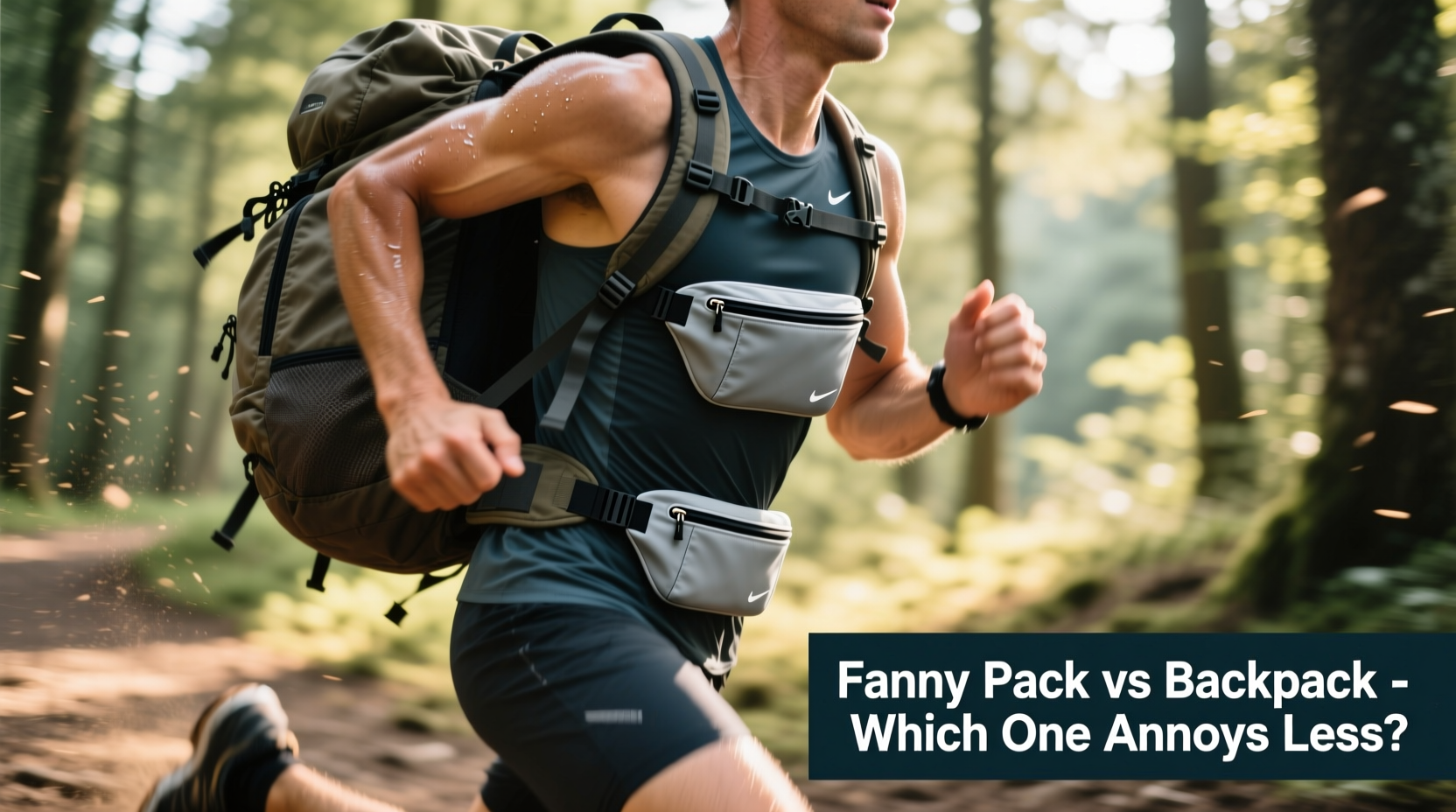
On long runs, even minor discomfort amplifies over miles. A poorly fitting carry solution can cause chafing, restricted breathing, or constant adjustments—each breaking your stride and mental flow.
Fanny packs, worn snugly around the waist or across the chest, distribute weight low and close to the body’s center of gravity. This positioning reduces vertical movement and minimizes interference with arm swing. Most modern running fanny packs use stretchable, moisture-wicking materials and adjustable straps to conform to the hips without pinching.
Backpacks, especially hydration models, sit higher on the torso. Even lightweight versions shift slightly with each stride, creating subtle but persistent pressure on shoulders and upper back. Over two or three hours, this can lead to soreness or postural fatigue. Compression straps help, but they don’t eliminate the fundamental issue: added mass above the core.
Tip: Try on your pack with full contents before a long run. Walk or jog in place to test for bounce or hot spots.Bounce and Stability: The Core Challenge
No runner wants to spend miles adjusting gear. Bounce—the up-and-down motion of a bag during footstrike—is the primary complaint with both fanny packs and backpacks, though it manifests differently.
Fanny packs are prone to lateral sway if not tightened properly. However, when fitted correctly, high-quality models remain stable, especially those with dual-side adjustment and silicone grippers that prevent slippage on technical trails or humid days.
Backpacks, particularly those with hydration bladders, suffer from vertical oscillation. Even “bounce-free” claims often fall short beyond 10K. The weight of water (approximately 1 kg per liter) amplifies movement, and shoulder straps may slip during prolonged sweating unless reinforced with sternum clips.
“After testing over 30 carry systems, I’ve found that waist-mounted solutions consistently score higher in biomechanical efficiency during endurance efforts.” — Dr. Lena Torres, Sports Ergonomics Researcher, Boulder Human Performance Lab
Storage Capacity and Accessibility
Capacity needs depend on run duration, environment, and personal preference. A 5-mile trail run in summer requires more than just keys and a phone—think sunscreen, extra layers, nutrition, and water.
| Feature | Fanny Pack | Running Backpack |
|---|---|---|
| Typical Volume | 0.5–2L | 2–10L |
| Water Storage | Limited (small flask or no) | Hose + bladder (1.5–2L standard) |
| Access During Run | Easy (front pockets) | Moderate (chest or side zips) |
| Nutrition Access | Instant (thumb-access pockets) | Requires hand reach |
| Phone Retrieval | Fast (stretch mesh front) | Slower (zippered compartment) |
Fanny packs excel in quick-access scenarios. Gels, salt tabs, or emergency cash can be grabbed without breaking stride. Many models feature dedicated slots for phones, cards, and keys—all within thumb’s reach.
Backpacks offer superior volume, making them ideal for ultramarathons or remote trail routes where self-sufficiency is critical. However, accessing items often requires removing a hand from natural swing, unzipping compartments, or pausing entirely—disruptive during pace-consistent efforts.
Real Runner Experience: A Case Study
Marissa K., an experienced trail runner training for her first 50K, tested both options over a six-week buildup. Her typical long run was 18–22 miles in mountainous terrain with variable weather.
Weeks 1–2: She used a minimalist backpack with a 1.5L bladder, two gel pockets, and space for a windbreaker. While hydration was convenient, she reported shoulder rub by mile 12 and had to stop twice to reposition the load. “It felt like it was slowly sliding down,” she noted.
Weeks 3–4: Switched to a convertible fanny pack worn crossbody. It held her phone, four gels, keys, and a small collapsible water bottle. Though she had to refill water at aid stations, she found the setup “liberating.” No chafing, no shifting, and easy access to snacks.
Final Weeks: Marissa adopted a hybrid strategy—fanny pack for shorter long runs, backpack only when self-supported sections exceeded 10 miles without resupply. “I saved the backpack for race simulations. Otherwise, the fanny pack won every time for comfort.”
Step-by-Step: Choosing Your Long-Run Carry System
Follow this decision framework to select the least disruptive option for your next long run:
- Assess your essential items: List everything you need (e.g., phone, ID, $20, 3 gels, 500ml water).
- Estimate total volume: Use a measuring cup or packing cubes to simulate size. Most runners need under 2L.
- Determine refill access: Will you pass water sources or aid stations? If yes, a smaller fanny pack with a flask works.
- Test fit and movement: Wear the loaded pack while jogging in place or climbing stairs. Check for bounce, pinch points, and breathing restriction.
- Run a trial: Do a 5–8 mile test with full load. Note how it feels at mile 3 vs. mile 7.
- Evaluate post-run: Did you adjust it frequently? Was anything hard to reach? Any skin irritation?
- Decide: If under 2L and supported route → fanny pack. If >2L or remote terrain → lightweight backpack.
Common Pitfalls and How to Avoid Them
- Overpacking: Just because a backpack has space doesn’t mean you need to fill it. Extra weight increases fatigue.
- Ignoring fit adjustments: Body shape changes slightly during long runs due to sweat and muscle fatigue. Ensure straps allow micro-adjustments.
- Using non-running-specific gear: Fashion fanny packs or hiking vests aren’t designed for repetitive motion. Stick to brands built for runners.
- Forgetting balance: Uneven weight distribution (e.g., phone on one side only) causes torque and inefficiency.
FAQ: Fanny Pack vs Backpack for Long Runs
Can a fanny pack hold enough for a marathon?
Absolutely. Most marathoners only need fuel, fluids, and essentials. A well-designed fanny pack with a soft flask or bottle can carry 4–6 gels, 500–750ml water, phone, and cards—all within easy reach.
Isn’t a backpack better for hydration?
It depends. Hydration backpacks deliver consistent sipping via a tube, which some prefer. But many runners find drinking requires too much hose management. A handheld or fanny-integrated flask offers simpler, more controlled intake.
Do fanny packs sag during long runs?
Poorly fitted ones do. Choose a model with wide, elastic waistbands and anti-slip backing. Tighten it so it moves with your body, not against it. Crossbody styles also reduce sag by distributing weight across the chest.
Conclusion: Minimize Distraction, Maximize Performance
The best carry system is the one you forget you’re wearing. For most long-distance runners, especially on supported courses or urban routes, the fanny pack delivers superior comfort, accessibility, and stability. It keeps weight low, avoids shoulder strain, and allows seamless access to essentials. Backpacks still have a place—particularly in unsupported ultras or extreme conditions—but come with trade-offs in movement efficiency and comfort.
Ultimately, the choice isn’t about trend or tradition. It’s about function. Test both options under real conditions, prioritize fit and minimalism, and let performance—not marketing—guide your decision.
💬 What’s your go-to carry system for long runs? Share your experience and favorite gear tips in the comments below—help fellow runners run lighter and smarter.








