The “iced out” aesthetic—jewelry so heavily studded with diamonds or cubic zirconia that it glitters under any light—has become a cultural symbol of success, confidence, and personal flair. At the center of this movement are two dominant styles: the rope chain and the tennis chain. While both exude luxury, they serve different purposes, appeal to different tastes, and come with distinct trade-offs. Understanding their differences isn’t just about fashion—it’s about value, durability, and long-term wearability.
Whether you're investing in your first high-end piece or expanding a growing collection, knowing what sets these chains apart can save you time, money, and regret.
Understanding the Rope Chain: Strength and Substance
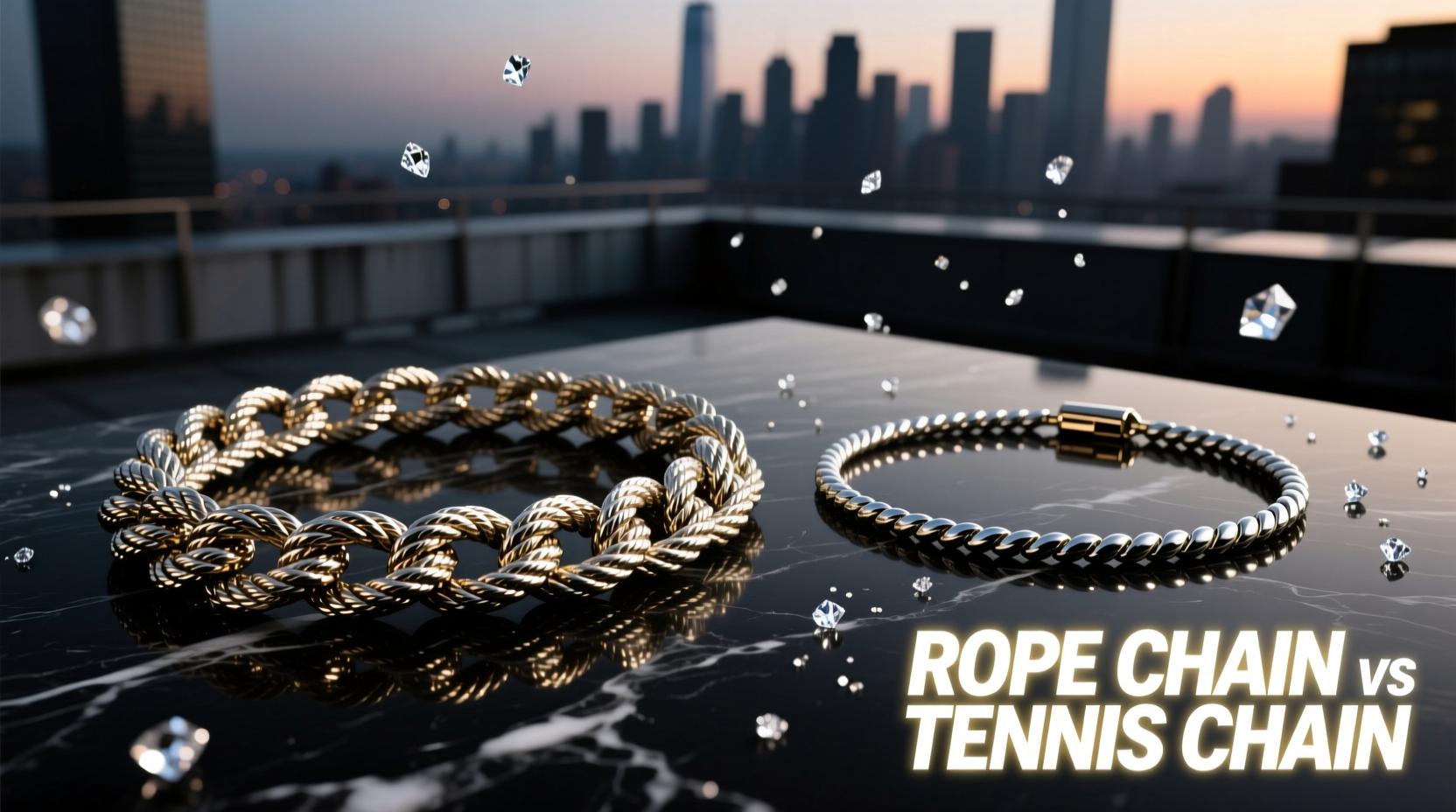
The rope chain gets its name from its intricate, twisted design that mimics the strands of a real rope. Each link is carefully interwoven, creating a dense, fluid structure that catches light from multiple angles. This complexity makes rope chains heavier and more durable than many other chain types, especially when crafted from solid gold.
Rope chains are traditionally made without stones, relying on craftsmanship for visual impact. However, modern variations now include diamond-studded versions, blurring the line between classic rope chains and fully iced-out pieces. The weight and presence of a thick rope chain make it a favorite among those who want jewelry that feels substantial and commanding.
Tip: Opt for a box or cable chain as an inner layer if wearing multiple necklaces with a rope chain to prevent tangling and uneven wear.Pros and Cons of Rope Chains
- Pros: Durable, tangle-resistant, timeless design, excellent for layering, holds value well
- Cons: Can be heavy, higher price per inch due to metal density, limited sparkle without added stones
The Tennis Chain: Where Brilliance Takes Center Stage
If the rope chain is about strength, the tennis chain is about brilliance. A tennis chain features a single row of identically cut gemstones—typically diamonds or high-grade simulants—set closely together along a delicate metal band. The result is a continuous shimmer that commands attention.
The term “tennis chain” originated in the 1980s after tennis star Chris Evert famously dropped her diamond bracelet during a match and requested a pause to retrieve it. Though the name began with bracelets, it quickly extended to necklaces with the same design philosophy: uninterrupted sparkle.
Tennis chains are often seen as the ultimate status symbol in hip-hop and celebrity culture. Artists like Jay-Z, Drake, and Kanye West have popularized ultra-thick, multi-row diamond tennis chains that redefine opulence. But behind the flash lies a practical question: does the aesthetic payoff justify the investment?
“Diamonds aren’t just forever—they’re functional. A well-made tennis chain reflects not just wealth, but attention to detail.” — Marcus Lang, Jewelry Designer & GIA Graduate
Design Variations and Metal Choices
Tennis chains are typically available in white gold, yellow gold, rose gold, or platinum. The setting style—prong, bezel, or channel—affects both security and shine. Prong settings maximize light exposure but require more maintenance; bezel settings offer protection at the cost of some brilliance.
Length and carat weight vary widely. A 16-inch chain with 5 carats of VS clarity diamonds will cost significantly less than a 24-inch, 20-carat version—but both deliver the signature iced-out effect.
Rope Chain vs Tennis Chain: A Detailed Comparison
| Feature | Rope Chain | Tennis Chain |
|---|---|---|
| Primary Appeal | Texture, weight, craftsmanship | Sparkle, luxury, visibility |
| Metal Use | High (dense links) | Moderate (thin base with stones) |
| Diamond Coverage | Optional (usually none or accents) | Full (continuous stones) |
| Durability | Very high (resists kinking) | Moderate (prone to stone loss if mishandled) |
| Comfort | Firm but smooth drape | Lightweight, but edges may catch |
| Value Retention | Strong (based on gold weight) | Variable (depends on diamond quality) |
| Style Flexibility | High (works with casual and formal) | Limited (best for statement looks) |
Is the Iced Out Look Worth the Hype?
The allure of being “iced out” goes beyond aesthetics—it’s symbolic. In music, film, and social media, heavily jeweled accessories signal achievement, individuality, and unapologetic self-expression. But translating that symbolism into everyday life requires honesty about priorities.
A diamond tennis chain may turn heads at a concert or photoshoot, but how often will you realistically wear it? Will it survive daily commutes, workouts, or even handshakes without risk of damage? Rope chains, while less flashy, integrate seamlessly into routines and age gracefully.
Consider this: a 14k white gold 20-inch tennis chain with 10 carats of near-colorless diamonds can cost upwards of $25,000. The same budget could buy a 22-inch solid gold rope chain with comparable weight and lasting power—but without the glitter. Which holds more value depends on whether you prioritize momentary impact or enduring presence.
Tip: If choosing a tennis chain, insist on a GIA-certified appraisal and ensure each stone is individually set for easier replacement if lost.Mini Case Study: From Studio to Street
Jalen Reed, a rising rapper from Atlanta, invested $18,000 in a custom twin-row tennis chain for his debut album rollout. It featured 14 carats of lab-grown diamonds on 18k white gold. The chain became central to his brand—worn in music videos, interviews, and social posts.
Within six months, however, two stones had fallen out during travel, and the chain developed a slight bend after being caught in a jacket zipper. Jalen switched to a thicker rope chain for daily wear, keeping the tennis piece for performances only. “It’s beautiful,” he said, “but it’s not living jewelry. It’s stage armor.”
His experience highlights a key truth: iced-out pieces often function best as occasional statements, not all-day companions.
How to Choose Based on Lifestyle and Goals
Selecting between a rope chain and a tennis chain shouldn’t hinge solely on trendiness. Instead, align your choice with how you live, work, and express yourself.
- Assess Your Daily Routine: Do you work in a physical job or spend time outdoors? A rope chain is less likely to snag or lose stones.
- Define Your Style Identity: Are you drawn to subtle elegance or bold declarations? Rope chains whisper; tennis chains shout.
- Budget Realistically: Factor in insurance, maintenance, and potential repairs. Tennis chains often require annual professional checks.
- Think Long-Term: Will this piece still feel authentic in five years? Trends fade; personal meaning endures.
- Consider Layering: Many wearers combine both—a rope chain underneath for structure, a tennis chain on top for sparkle.
Checklist: Before You Buy
- ✅ Verify metal purity (look for 10k, 14k, or 18k stamp)
- ✅ Confirm diamond certification (GIA, AGS, or IGI for lab-grown)
- ✅ Check return policy and warranty coverage
- ✅ Try on different lengths and thicknesses
- ✅ Consult a jeweler about resizing or repair options
FAQ
Can I wear a tennis chain every day?
You can, but it’s not ideal. Daily exposure to lotions, sweat, and friction increases the risk of stone loosening. Reserve tennis chains for special occasions or rotate them with sturdier pieces.
Are rope chains more secure than tennis chains?
Yes. Rope chains lack individual stones that can fall out, and their linked construction resists breaking under tension. They’re better suited for active lifestyles.
Do fake tennis chains look convincing?
High-quality cubic zirconia or moissanite chains on solid gold bases can appear authentic at a glance, especially in photos. However, they lack the fire and durability of real diamonds and may cloud over time.
Final Thoughts: Shine With Intention
The iced-out look isn’t inherently worth or worthless—it depends on how you wield it. A tennis chain worn with purpose radiates confidence. A rope chain worn with pride speaks of resilience. The true measure of value isn’t carats or thickness, but alignment with who you are and how you move through the world.
If your goal is maximum visibility for events, content, or performance, a tennis chain delivers unmatched brilliance. But if you seek a piece that evolves with you—something heirloom-worthy, low-maintenance, and effortlessly cool—a rope chain may be the smarter legacy.
And remember: the most powerful accessory isn’t the one that sparkles the brightest under studio lights. It’s the one that makes you stand a little taller when no one’s watching.
💬 What’s your go-to chain style—and why? Share your thoughts and experiences below. Whether you’re team rope or team tennis, your story adds to the conversation.








