
If your latest property tax bill came as a shock, you're not alone. Across the U.S., homeowners are seeing sharp increases in their annual property tax obligations. While property taxes have traditionally risen gradually, recent years have brought double-digit jumps in some areas. Understanding the reasons behind these hikes is essential—not just to make sense of your bill, but also to determine whether action can be taken.
Property taxes fund critical public services like schools, emergency response, road maintenance, and libraries. But when assessments spike or local governments increase levies, homeowners often feel the pinch. The increase isn’t always due to changes on your part—it’s typically driven by broader economic and policy trends beyond individual control.
Why Property Taxes Are Rising: Key Drivers
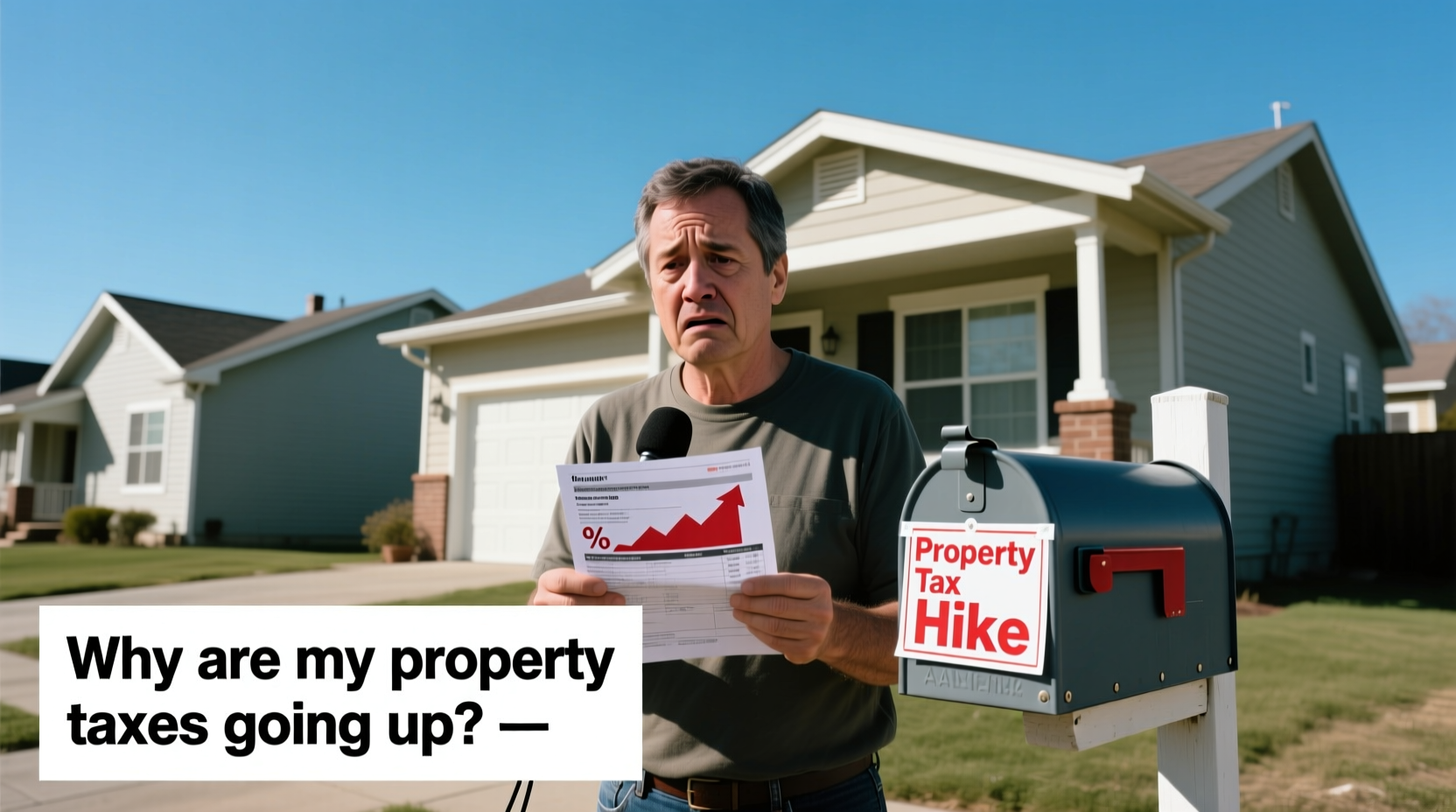
Several interrelated factors contribute to rising property taxes. It's rarely one single cause, but rather a combination of market forces, government decisions, and administrative processes.
1. Rising Home Values from Market Appreciation
The most common reason for higher property taxes is an increase in your home’s assessed value. Local assessors typically reevaluate property values every one to three years. In a strong real estate market—like those seen post-2020—home prices soared due to low interest rates, high demand, and limited inventory. Even if you didn’t renovate or expand, your home may now be worth significantly more than before.
Since property taxes are calculated as a percentage of assessed value, higher valuations directly translate into higher bills. For example:
| Year | Assessed Value | Tax Rate (1.2%) | Annual Tax |
|---|---|---|---|
| 2020 | $300,000 | 1.2% | $3,600 |
| 2024 | $450,000 | 1.2% | $5,400 |
This $1,800 increase stems entirely from appreciation, not a change in tax rate.
2. Reassessment Cycles and Catch-Up Adjustments
Some municipalities delay reassessments for years to avoid political backlash. When they finally update values, they often \"catch up\" several years of market growth at once, leading to sudden spikes. For instance, a county that hasn’t reassessed since 2019 might apply 2024 market values across the board, resulting in dramatic jumps even for unchanged properties.
“Reassessments after long gaps create fiscal whiplash. Homeowners see bills jump not because taxes went up, but because values were artificially suppressed.” — Dr. Linda Chen, Urban Policy Analyst, Brookings Institution
3. Increased Local Government Spending
Your city or county council sets the millage rate—the amount per $1,000 of assessed value used to calculate taxes. If local governments approve new budgets for schools, infrastructure, or public safety, they may raise the rate to cover costs. Even with stable property values, this leads to higher collections.
Inflation has driven up construction, labor, and operational costs, forcing municipalities to request larger budgets. These increases are passed on through property taxes, which remain the largest source of local revenue.
4. New Development and Infrastructure Projects
When communities invest in new roads, parks, or school expansions, the funding often comes from property taxes. Sometimes, special assessment districts are created where nearby homeowners pay extra to benefit from improvements. While these upgrades can boost home values, they also bring higher ongoing tax obligations.
Tip: Check if your municipality issued bonds or approved capital projects recently—this could explain a sudden tax increase unrelated to your home’s value.Real Example: A Homeowner in Austin, Texas
Sarah and James bought a three-bedroom home in East Austin in 2018 for $320,000. Their 2020 property tax was $4,100. By 2023, rapid neighborhood development and soaring demand pushed average home values up over 70%. The Travis County Appraisal District reassessed their home at $580,000—despite no major renovations.
Although the tax rate remained nearly flat, their 2024 bill jumped to $7,300—an increase of 78% in four years. They appealed the valuation, citing comparable sales of similar homes in less upgraded condition, and succeeded in reducing the assessment by 8%, lowering their tax burden by about $550 annually.
What You Can Do: A Step-by-Step Guide
You’re not powerless against rising property taxes. Follow these steps to understand, challenge, and potentially reduce your bill.
- Review Your Assessment Notice: Most jurisdictions send a formal notice before billing. Compare your home’s assessed value to recent sale prices of similar homes (comps) in your area.
- Verify the Accuracy of Property Details: Check square footage, number of bedrooms, lot size, and condition ratings. Errors here can inflate value.
- Research Comparable Sales: Use public records or real estate platforms like Zillow or Redfin to find sales of similar homes within the past six months.
- File a Formal Appeal: Contact your local assessor’s office or appraisal review board (ARB). Deadlines are strict—usually 30 days from notice.
- Attend the Hearing: Present evidence clearly: photos, repair estimates (if property is damaged), and comp sheets. Stay factual and respectful.
- Consider Hiring a Professional: Some firms specialize in tax appeals and work on contingency—only charging if they save you money.
Checklist: Responding to a Property Tax Hike
- ✅ Obtain a copy of your property tax assessment
- ✅ Confirm the accuracy of property characteristics (beds, baths, sq ft)
- ✅ Gather 3–5 recent comparable sales from your neighborhood
- ✅ Note any structural issues or needed repairs that lower value
- ✅ Determine the appeal deadline from your local authority
- ✅ Submit appeal online or by mail with supporting documentation
- ✅ Schedule and prepare for the hearing, if required
- ✅ Explore homestead exemptions or senior/ veteran discounts
Common Misconceptions About Property Taxes
Many homeowners operate under false assumptions that limit their ability to respond effectively.
| Misconception | Reality |
|---|---|
| \"My taxes went up because the rate increased.\" | Often, the rate stayed the same—your home’s value rose instead. |
| \"I can't appeal because I didn’t get a formal notice.\" | You usually still have the right to appeal; check your county’s website. |
| \"Only big estates benefit from appeals.\" | Mid-range homes are frequently overvalued; appeals succeed across price points. |
| \"Appealing will trigger a full reassessment next year.\" | No—appeals are based on current data and don’t invite future scrutiny. |
Frequently Asked Questions
Can my property taxes go up even if home prices are falling?
Yes. While declining values usually lead to lower assessments, local governments may increase tax rates to compensate for reduced revenue. This is known as a “tax rate override” and ensures budget stability despite market downturns.
Do renovations always increase my taxes?
Major improvements—like adding a room, garage, or pool—typically increase assessed value and thus taxes. Routine maintenance or cosmetic updates (e.g., painting, flooring) usually don’t trigger reassessment unless they significantly alter square footage or functionality.
How often can I appeal my property tax assessment?
You can appeal annually during the designated window after receiving your notice. Success varies, but persistence pays off—especially if market data supports your case.
Conclusion: Take Control of Your Property Tax Burden
Rising property taxes reflect complex interactions between real estate markets, government budgets, and assessment policies. While some increases are inevitable, many are negotiable. Ignoring your tax notice means accepting potentially inflated charges without recourse. By understanding how assessments work, verifying data, and using the appeal process, you can protect your finances and ensure fairness.
🚀 Don’t let your next tax bill go unchallenged. Review your assessment today, gather comparables, and file an appeal if needed. Small efforts now can save hundreds—or even thousands—over time. Share your experience or questions in the comments to help others navigate this critical aspect of homeownership.








