
When preparing for indoor camping—whether due to a storm, power outage, or off-grid living setup—reliable electricity is essential. Two popular options stand out: portable power stations and traditional fuel-powered generators. While both can keep lights on and devices charged, their safety profiles differ dramatically, especially in enclosed spaces. Choosing the wrong option could lead to carbon monoxide poisoning, fire hazards, or equipment damage. Understanding the distinctions is not just practical—it’s a matter of personal safety.
Safety Risks of Generators Indoors
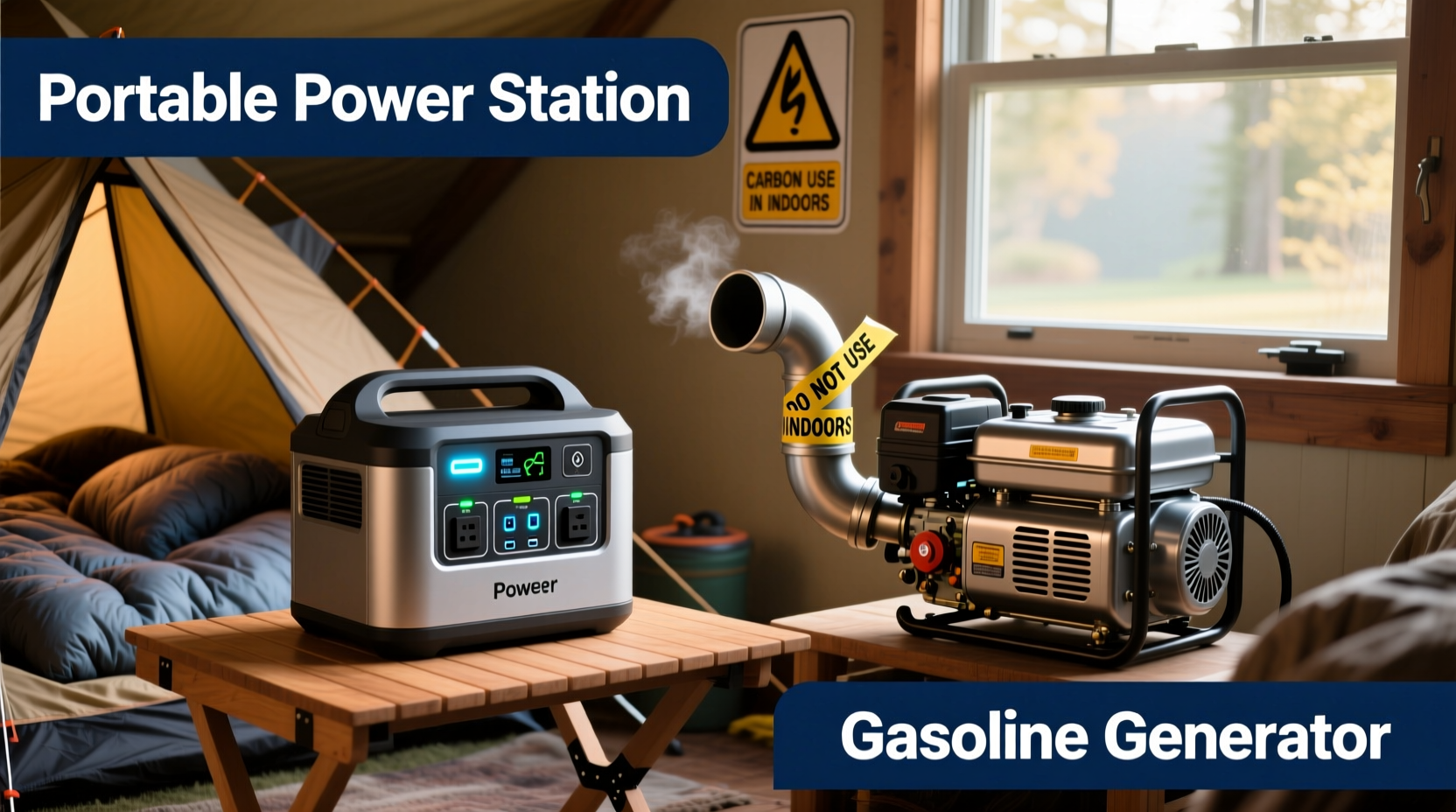
Fuel-powered generators, typically running on gasoline, propane, or diesel, produce electricity through internal combustion. This process inherently generates carbon monoxide (CO), an odorless, colorless gas that can be fatal in minutes when inhaled in confined areas. According to the Centers for Disease Control and Prevention (CDC), more than 400 Americans die annually from unintentional CO poisoning, with portable generators being a leading cause during and after natural disasters.
Even with ventilation, placing a generator in a garage, basement, or near open windows poses extreme danger. CO can seep into living spaces quickly. The Consumer Product Safety Commission (CPSC) explicitly warns against using any fuel-burning generator inside homes, tents, or recreational vehicles—even if doors and windows are open.
“Never use a portable generator indoors or in partially enclosed spaces. Carbon monoxide can accumulate rapidly and become deadly within minutes.” — U.S. Consumer Product Safety CommissionTip: Always place fuel-powered generators at least 20 feet away from your home, with the exhaust pointed away from doors and windows.
Why Portable Power Stations Are Safer Indoors
Unlike generators, portable power stations are battery-based systems charged via AC outlets, solar panels, or car adapters. They store energy rather than generate it through combustion. Because they have no moving parts and emit zero fumes, they are safe to operate indoors—provided proper ventilation isn’t compromised by other sources.
Modern units use lithium iron phosphate (LiFePO4) or lithium-ion batteries, both of which are thermally stable and less prone to overheating than older battery types. Built-in safety features such as overcharge protection, short-circuit prevention, and temperature regulation further reduce risks. Many models even include UL certification, ensuring compliance with rigorous electrical safety standards.
For indoor camping scenarios—such as setting up a temporary sleeping area in a living room during a winter blackout—a portable power station eliminates the life-threatening risks associated with CO exposure. It also operates silently, avoiding noise pollution that could disrupt sleep or communication during emergencies.
Comparing Key Features: A Practical Breakdown
| Feature | Portable Power Station | Fuel-Powered Generator |
|---|---|---|
| Emissions | Zero – safe for indoor use | Produces CO and NOx – unsafe indoors |
| Noise Level | Quiet (under 40 dB) | Loud (60–75+ dB) |
| Indoor Safety | High – no fumes or fire risk during operation | Extremely low – high CO risk |
| Maintenance | Minimal – occasional charging and storage checks | Regular – oil changes, spark plug replacement, fuel stabilization |
| Fuel Required | No – rechargeable via grid or solar | Yes – gasoline, propane, or diesel |
| Lifespan | 5–10 years (2000+ cycles for LiFePO4) | 10–15 years with proper care |
| Portability | Light to moderate weight; easy to move | Heavier; often requires wheels or two people |
The data clearly shows that for indoor applications, portable power stations offer superior safety, ease of use, and environmental compatibility. Generators, while powerful and long-running, are fundamentally incompatible with safe indoor operation.
Real-World Scenario: A Winter Blackout Test
In early 2023, a family in Vermont experienced a three-day power outage during a severe ice storm. With temperatures dropping below freezing, they set up sleeping bags in the living room and needed power for a space heater, phone charging, and a small medical device for a senior family member.
They owned both a 3,500-watt gasoline generator and a 1,000Wh portable power station. Initially considering the generator for its higher output, they remembered the CO risks and opted instead for the power station. Using a low-wattage ceramic heater intermittently, LED lights, and USB-powered devices, the unit lasted through two nights with careful management. On day three, they recharged it using a solar panel placed on a south-facing window.
“We realized how close we came to making a dangerous mistake,” said Mark T., the homeowner. “The generator was tempting because it has more power, but we’d never risk our family’s health like that. The power station kept us safe and functional.”
This case highlights a critical truth: in emergency preparedness, reliability must be balanced with safety. More power is meaningless if it comes at the cost of human life.
When Generators Make Sense (And How to Use Them Safely)
Generators remain valuable tools—just not for indoor use. They excel in outdoor settings where sustained high-wattage output is required, such as powering refrigerators, well pumps, or construction tools. Their ability to run continuously with refueling makes them ideal for extended off-grid operations.
If you rely on a generator during emergencies, follow these guidelines to ensure safety:
- Operate only outdoors, far from windows, doors, and vents.
- Use a battery-operated CO detector near sleeping areas.
- Refuel only when the generator is turned off and cooled down.
- Ground the unit properly to prevent electrical shock.
- Store fuel in approved containers, away from living spaces.
Choosing the Right Portable Power Station for Indoor Camping
Not all power stations are created equal. To maximize utility during indoor camping, consider these factors:
- Capacity (Wh): Measured in watt-hours, this determines how long the unit can run your devices. For example, a 500Wh station can power a 50W fan for about 8 hours (factoring in inefficiencies).
- Output Options: Look for multiple outlets—AC, USB-A, USB-C, and 12V DC—to support phones, laptops, CPAP machines, lights, and mini-fridges.
- Recharging Flexibility: Units that support solar, wall outlet, and car charging offer greater resilience during prolonged outages.
- Battery Chemistry: LiFePO4 batteries last longer and are safer than standard lithium-ion, especially in temperature extremes.
- Weight and Portability: If mobility matters, choose a model under 30 lbs with a built-in handle.
For most indoor camping needs, a 300–1000Wh power station strikes the right balance between runtime and portability. Pair it with a 100W solar panel for daytime recharging, and you create a sustainable, silent, and completely safe energy system.
Step-by-Step: Building a Safe Indoor Camping Power Plan
Follow this sequence to prepare a reliable and safe indoor power strategy:
- Assess Your Needs: List essential devices (e.g., phone, LED light, fan, CPAP) and their wattage.
- Calculate Total Consumption: Multiply each device’s wattage by hours used per day. Sum them to estimate daily watt-hour demand.
- Select a Power Station: Choose one with 20–30% more capacity than your total need to account for inefficiency and aging.
- Prepare Charging Methods: Ensure access to wall charging and, ideally, a foldable solar panel for emergencies.
- Test Before Crisis: Run a mock blackout drill to verify performance and refine usage patterns.
- Store Properly: Keep the unit charged to 50–80%, in a cool, dry place, and check every 3 months.
This proactive approach ensures you’re ready without compromising safety.
FAQ: Common Questions About Indoor Power Solutions
Can I use a generator in my garage with the door open?
No. Even with the garage door open, CO can build up to lethal levels in minutes. Garages are considered enclosed spaces and are unsafe for generator use.
Are all portable power stations safe indoors?
Virtually all modern, reputable brands are safe for indoor use since they produce no emissions. However, avoid damaged or counterfeit units, and always follow manufacturer instructions.
How long will a portable power station last during a blackout?
It depends on capacity and load. A 600Wh unit might run a Wi-Fi router (10W), phone (5W), and LED lights (20W) for around 15 hours. Reduce usage to extend runtime.
Final Thoughts: Safety First in Emergency Preparedness
When it comes to indoor camping preparation, the choice between a portable power station and a generator isn’t just about convenience or cost—it’s about survival. Generators, despite their power and endurance, pose unacceptable risks in enclosed environments. Carbon monoxide cannot be seen or smelled, and its effects can be irreversible within minutes.
Portable power stations, by contrast, deliver clean, silent, and safe energy exactly where you need it—inside your home. Advances in battery technology have made them more affordable, durable, and capable than ever. For families, seniors, and anyone relying on medical equipment, this shift represents a major leap in emergency resilience.
Preparedness isn’t just about having gear—it’s about using it wisely. By choosing safety over raw power, you protect what matters most: the people you love.
🚀 Ready to upgrade your emergency plan? Invest in a quality portable power station today, test it with your essential devices, and share your experience to help others stay safe.








