When it comes to at-home fitness bikes, two names dominate the conversation: Peloton and NordicTrack. Both offer immersive workout experiences with live and on-demand classes, high-quality hardware, and smart technology. But behind the sleek designs and curated playlists lies a critical difference—community. Peloton has cultivated a passionate, almost cult-like following, while NordicTrack leverages broader iFit integration with global exploration and gamified training. The real question isn’t just about which bike performs better—it’s whether Peloton’s strong sense of belonging justifies its higher price tag.
This isn’t just a battle of specs and pricing. It’s about lifestyle, motivation, and what keeps you coming back to the saddle day after day. For many users, the social aspect of exercise can be the deciding factor in long-term adherence. So, is the Peloton community really worth the premium subscription? Let’s break down the facts.
Hardware Comparison: Build, Design, and Features
The physical design and mechanical quality of each bike influence comfort, durability, and overall ride feel. Both brands deliver solid construction, but their approaches differ.
| Feature | Peloton Bike | NordicTrack S22i |
|---|---|---|
| Price (Bike Only) | $1,495 | $1,999 |
| Screen Size | 23.8” HD touchscreen | 22” HD touchscreen (swivels) |
| Resistance Type | Magnetic | Magnetic with AutoAdjust |
| Incline/Decline | No | Yes (up to 20% incline, -6% decline) |
| Weight Capacity | 297 lbs | 350 lbs |
| Fan & Speakers | Basic speakers, no fan | Loud speakers, built-in cooling fan |
| App Integration | Peloton app only | iFit ecosystem (NordicTrack, ProForm, etc.) |
The NordicTrack S22i edges ahead in versatility with its incline and decline functionality, making it ideal for hill training and varied terrain simulation. Its swiveling screen also allows for non-cycling workouts like strength or yoga, adding value beyond spinning. Peloton, meanwhile, focuses on simplicity and elegance—a minimalist design that blends into home decor. While it lacks incline, its magnetic resistance provides a smooth, quiet ride favored by indoor cycling purists.
Tip: If you enjoy outdoor-style rides with elevation changes, NordicTrack’s incline feature offers unmatched realism. For pure spin enthusiasts who value consistency, Peloton’s steady-state ride may be preferable.Subscription Models: Cost vs. Content Access
The monthly fee is where the divergence becomes steepest. Peloton charges $44/month for full access to its class library, while NordicTrack includes iFit membership with purchase of select equipment—or $18/month if bought separately.
At first glance, Peloton’s subscription costs more than double. But cost per feature matters. Peloton’s content is exclusive, professionally produced, and led by celebrity instructors known for charisma and motivational coaching. Classes are tightly curated, music-rich, and often themed around pop culture, charity events, or seasonal challenges.
NordicTrack’s iFit platform casts a wider net. Instead of focusing solely on cycling, iFit integrates cardio, strength, yoga, and even meditation across multiple devices. Its standout feature is GPS-powered outdoor route mapping—riders can virtually cycle through real-world locations like the Swiss Alps or Tokyo streets, complete with automatic incline adjustments based on terrain.
“Community doesn’t scale easily, but it creates loyalty. Peloton didn’t invent connected fitness, but they mastered emotional engagement.” — Dr. Lena Torres, Behavioral Scientist & Fitness Tech Researcher
While iFit offers breadth, Peloton excels in depth. Users report stronger emotional connections to Peloton instructors, often citing them by name as accountability partners. This personal bond drives retention—even among those who admit the subscription is expensive.
The Power of Community: Why It Matters
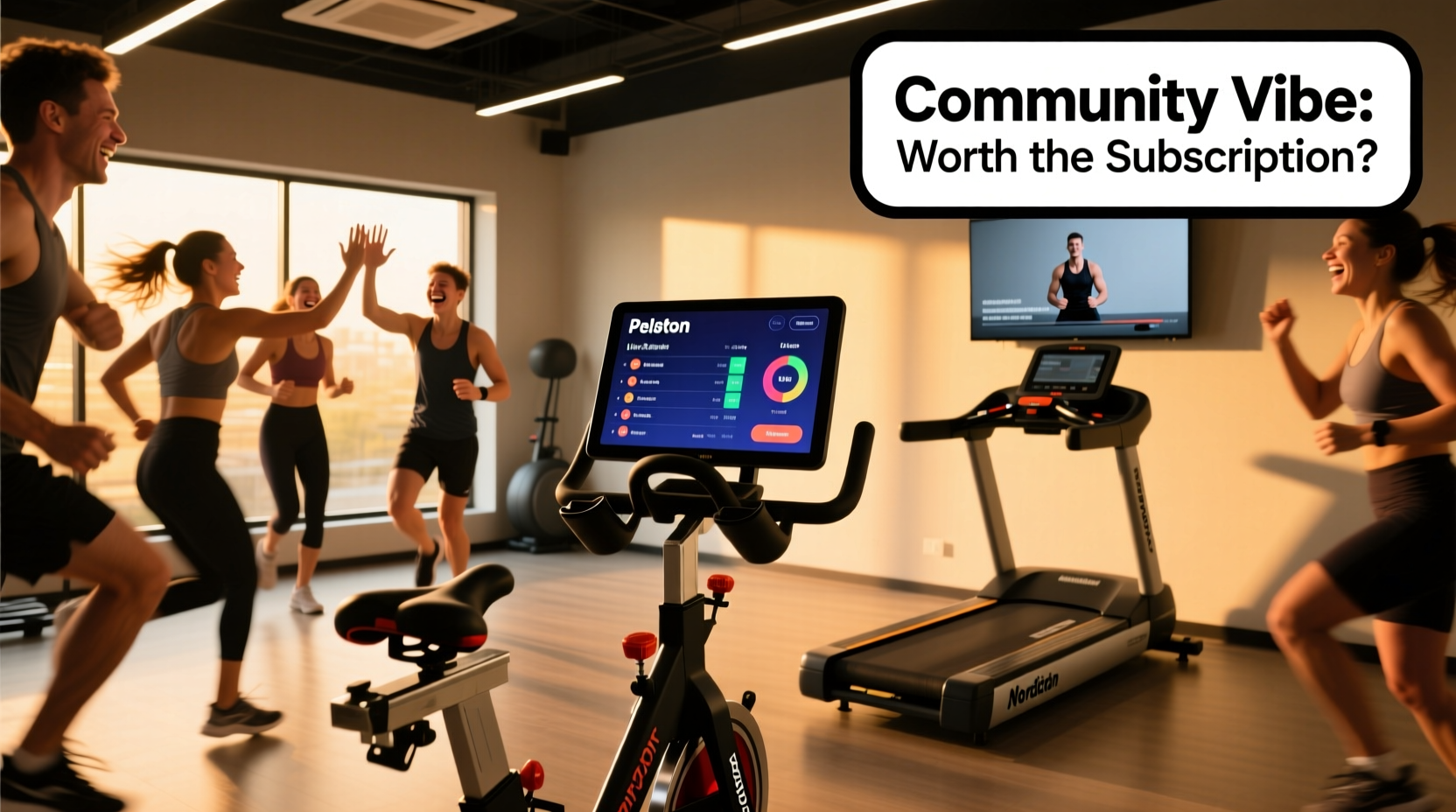
Fitness is inherently social. Humans are motivated by connection, recognition, and shared goals. Peloton has turned this insight into a core business strategy. Riders earn badges, give and receive “high-fives,” join challenge teams, and participate in member-led Facebook groups with tens of thousands of participants.
The Peloton leaderboard fosters friendly competition. Even though output numbers aren’t always accurate across different bikes, seeing your name climb—even symbolically—triggers dopamine release and reinforces effort. Instructors call out riders by name during live classes, creating an illusion of intimacy that many find deeply motivating.
Compare this to NordicTrack’s iFit. While it tracks progress and offers global leaderboards, the experience feels more transactional. You’re competing against avatars or pre-recorded data, not real-time peers. There’s less emphasis on instructor-rider relationships and minimal social infrastructure outside the app.
A mini case study illustrates the impact:
Real Example: Sarah’s Journey from Dropout to Daily Rider
Sarah, a 38-year-old teacher from Denver, bought a Peloton after struggling to maintain a gym routine. Initially skeptical, she joined a 30-day beginner challenge and started attending early-morning classes taught by instructor Robin Arzón. Over time, she began recognizing regulars on the leaderboard, exchanging virtual high-fives, and eventually joining a local Peloton meetup group.
“It wasn’t the bike that kept me going,” she said. “It was knowing Robin would say my name if I missed three days. It was seeing Jen from Ohio post her recovery ride after surgery. That kind of support made me feel seen.”
Sarah now rides six days a week—something she never achieved in traditional gyms. Her story isn’t unique. Online forums and Reddit threads are filled with similar testimonials crediting Peloton’s community for life-changing consistency.
Is the Vibe Worth the Premium?
To answer this, consider three factors: motivation style, budget, and long-term usage.
- If you thrive on encouragement and social accountability, Peloton’s ecosystem likely justifies the $44/month. The emotional resonance of its programming turns exercise into ritual.
- If you prefer autonomy and variety, NordicTrack’s iFit gives more flexibility. You can hike Machu Picchu one day, lift weights the next, and cycle through Paris—all without switching apps.
- If budget is a primary concern, NordicTrack wins hands-down. Even factoring in the slightly higher upfront cost, the lower ongoing fee saves over $300 annually.
However, savings mean little if you don’t use the equipment. Studies show that connected fitness users with strong social engagement are 68% more likely to maintain consistent routines over 12 months (American Council on Exercise, 2022). Peloton’s community directly addresses the #1 reason people quit exercising: lack of motivation.
Tip: Try both platforms via free trials before committing. Many users switch after realizing their motivation style doesn’t align with the brand’s culture.Checklist: Choosing the Right Bike for Your Lifestyle
- ✅ Define your primary goal: weight loss, endurance, stress relief, or social connection?
- ✅ Assess your preferred workout style: structured classes vs. exploratory rides?
- ✅ Test ride both bikes (if possible) or watch sample classes from each platform.
- ✅ Calculate total cost of ownership: bike + 2 years of subscriptions.
- ✅ Join online communities (e.g., r/PelotonCycle, iFit Nation) to read real user feedback.
- ✅ Consider space and noise: Peloton is quieter; NordicTrack requires more room due to incline motion.
- ✅ Decide if multi-user access matters—iFit supports more profiles under one plan.
Step-by-Step Guide to Maximizing Value
Whichever bike you choose, follow this timeline to ensure long-term success:
- Week 1: Set up the bike in a dedicated space. Complete setup tutorials. Take a beginner class to get comfortable with resistance and cadence.
- Week 2–3: Explore different instructors and class types. Identify 2–3 favorites. Begin tracking output and consistency.
- Week 4: Join a challenge (Peloton offers weekly team challenges; iFit has global adventures). Invite a friend to participate.
- Month 2: Engage socially—send high-fives, comment in class chats, or attend a virtual ride-along.
- Month 3: Evaluate usage frequency. Are you riding 3+ times per week? If not, reassess motivation triggers and adjust your approach.
- Ongoing: Reassess every 6 months. Consider pausing or canceling if usage drops below 1–2 sessions weekly.
The key is treating the bike as part of a behavioral system, not just a machine. Success depends less on hardware and more on habit formation supported by environment and emotion.
Frequently Asked Questions
Can I use the Peloton app without owning a Peloton bike?
Yes. The Peloton app ($24/month) offers cycling, strength, and yoga classes usable with any bike or mat. However, you won’t have access to performance metrics or auto-resistance control unless using Peloton hardware.
Does NordicTrack offer live classes like Peloton?
iFit does offer live studio classes, but the schedule is smaller and less centralized than Peloton’s. Most NordicTrack users rely on on-demand or location-based workouts rather than real-time interaction.
Are Peloton instructors really calling out rider names?
During live classes, instructors can see top performers and sometimes shout out usernames. More commonly, names appear in post-class recaps or personalized emails. The effect is symbolic but powerful—many users report feeling personally acknowledged.
Final Verdict: Weighing Connection Against Cost
There’s no universal winner in the Peloton vs NordicTrack debate. The best choice hinges on what drives you. If you crave human connection, rhythm-driven classes, and a tight-knit digital tribe, Peloton’s community is worth the premium. The emotional investment translates into tangible results: higher adherence, greater enjoyment, and sustained effort over time.
NordicTrack, powered by iFit, appeals to explorers, tech tinkerers, and budget-conscious families. Its adaptive workouts and global scenery provide novelty that prevents boredom, and the lower subscription cost reduces financial pressure to justify daily use.
Ultimately, the most effective fitness tool is the one you actually use. For some, that’s the thrill of climbing Alpe du Zwift with a crowd cheering them on. For others, it’s the quiet satisfaction of conquering a virtual mountain trail alone, guided by AI.
🚀 Ready to make your decision? Start with a 30-day trial of both platforms. Track not just your workouts, but your mood and motivation. The right bike won’t just fit your body—it’ll fit your life.








