Running is one of the most accessible forms of physical activity, yet how we run—especially what we run in—can significantly influence long-term joint health, injury risk, and biomechanical efficiency. In recent years, two dominant philosophies have emerged in footwear design: minimalist running shoes, which aim to mimic barefoot mechanics, and heavily cushioned trainers, engineered to absorb impact and support structured gait patterns. The central question isn't just about comfort or style—it's whether a shoe enhances or hinders natural motion.
Natural motion refers to the body’s innate ability to move efficiently through space using optimal alignment, muscle engagement, and joint articulation. When footwear supports this process, runners experience improved form, reduced overuse injuries, and greater proprioceptive feedback. But when shoes interfere—by elevating heels, restricting toe splay, or dampening ground feel—they may disrupt the very systems evolution has refined over millennia.
This article examines the science, practical outcomes, and biomechanical trade-offs between minimalist and cushioned running shoes. We’ll explore who benefits from each, under what conditions, and how to transition safely if you're considering a change.
The Biomechanics of Natural Motion
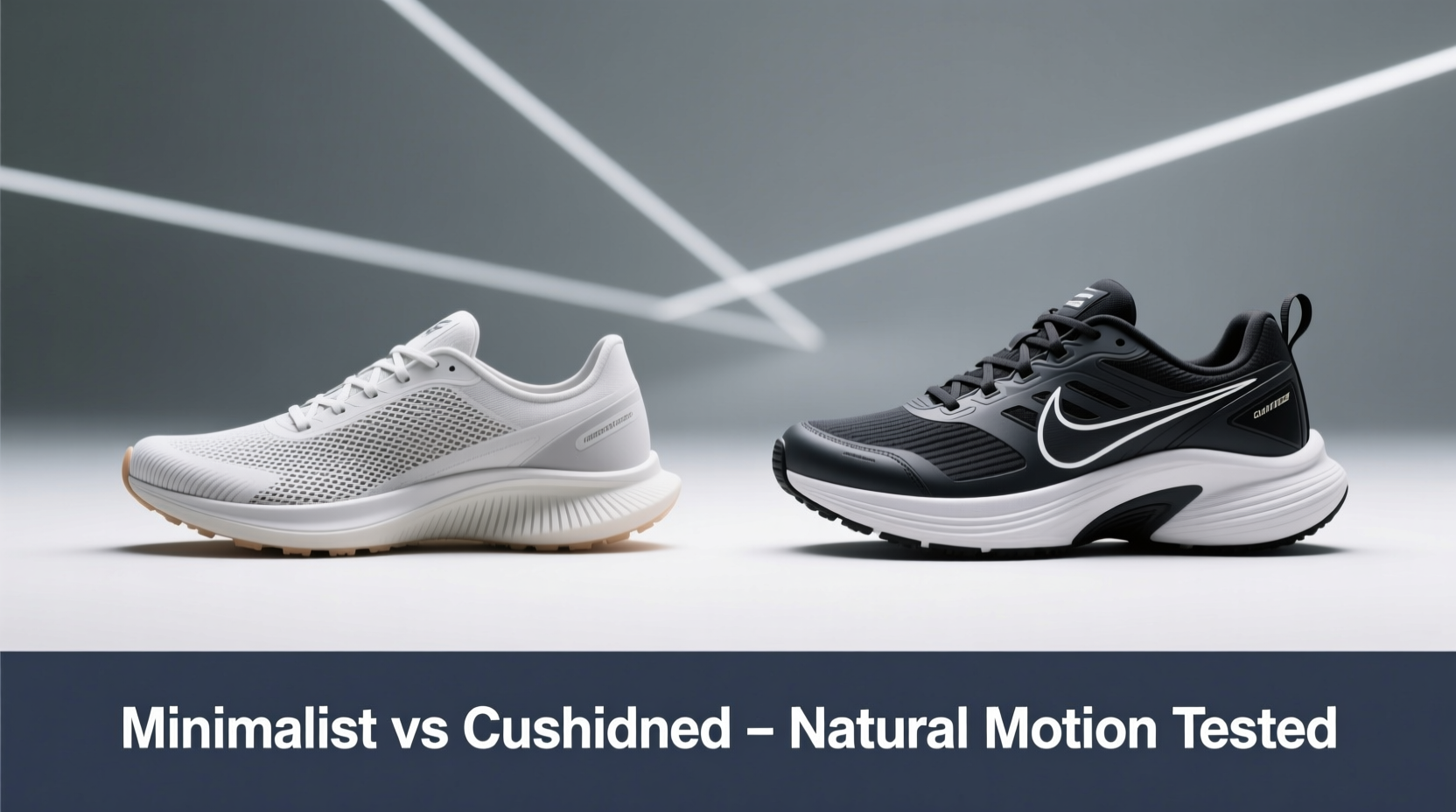
Natural human locomotion evolved without synthetic materials or elevated soles. Barefoot running encourages a forefoot or midfoot strike, shorter stride length, higher cadence, and active engagement of the foot’s intrinsic muscles. These traits reduce braking forces and distribute impact more evenly across joints.
In contrast, traditional cushioned trainers often promote a heel-strike pattern due to their thick, sloped midsoles (commonly with 8–12mm heel-to-toe drop). While this feels comfortable initially, it can encourage overstriding—a major contributor to knee pain, plantar fasciitis, and hip strain.
“Footwear should not override the foot’s natural function. The foot is not broken; it’s designed to work. Our job is to allow it to do so.” — Dr. Irene Davis, Harvard Medical School, biomechanics researcher
Supporting natural motion means preserving the foot’s sensory connection to the ground, enabling dynamic arch control, and promoting balanced weight distribution. Minimalist shoes are built around these principles. Cushioned trainers, while protective on hard surfaces, may inadvertently weaken stabilizing muscles over time by doing too much of the work.
Minimalist Running Shoes: Design, Benefits, and Limitations
Minimalist running shoes feature thin soles (typically 0–8mm drop), flexible uppers, wide toe boxes, and minimal structural interference. Brands like Vibram FiveFingers, Merrell Trail Glove, and Xero Shoes emphasize “ground feel” and freedom of movement.
Key advantages include:
- Enhanced proprioception—better awareness of foot placement and terrain
- Promotion of efficient, low-impact running form
- Strengthening of foot and lower leg musculature
- Lightweight construction that reduces energy cost
However, minimalist shoes aren’t universally beneficial. They demand adaptation. Runners accustomed to supportive footwear often lack the strength and mobility needed to transition safely. Jumping in too quickly can lead to Achilles tendonitis, calf strains, or metatarsal stress reactions.
Tip: Start with 10–15 minute runs every other day in minimalist shoes. Gradually increase duration as your feet adapt—this process can take 3–6 months.Who Benefits Most from Minimalist Shoes?
Runners with strong lower limbs, neutral pronation, and interest in form improvement tend to thrive. Those rehabbing from chronic overuse injuries related to overstriding may also benefit by retraining gait patterns. However, individuals with flat feet, arthritis, or neuropathy may find insufficient protection in minimalist designs.
Cushioned Trainers: Protection Versus Interference
Cushioned running shoes dominate the market. Models like the Hoka Clifton, Brooks Glycerin, and ASICS Nimbus prioritize shock absorption, stability features, and plush ride quality. Their thick EVA or foam-based midsoles can reduce peak impact forces by up to 30% compared to barefoot running on concrete.
For many, especially those logging high mileage on roads or managing existing joint issues, this protection is essential. Older runners, heavier athletes, and those returning from injury often report less discomfort in well-cushioned models.
But there’s a caveat: excessive cushioning can dull sensory feedback. Without accurate input from the ground, runners may develop lazy mechanics—over-relying on the shoe rather than their own neuromuscular system. Studies suggest that highly cushioned shoes correlate with increased vertical oscillation (bouncing) and longer contact times, both of which reduce running economy.
| Feature | Minimalist Shoes | Cushioned Trainers |
|---|---|---|
| Heel-to-Toe Drop | 0–6mm | 8–14mm |
| Midsole Thickness | 4–12mm | 25–35mm |
| Weight (avg. men's size 9) | 5–8 oz | 9–12 oz |
| Flexibility | High – bends at toes | Low to moderate – rigid platform |
| Ground Feel | Excellent | Poor to moderate |
| Ideal Use Case | Form training, trail, short-to-mid distance | Road marathons, recovery runs, high-mileage weeks |
When Cushioning Supports Natural Motion
It’s a misconception that cushioning always opposes natural movement. For some bodies, particularly those carrying extra weight or running on unforgiving surfaces like asphalt, adequate midsole resilience allows for smoother transitions and reduced fatigue—both of which support sustainable running habits. The key is balance: enough cushion to protect, but not so much that it masks poor form.
Real-World Comparison: A Runner’s Journey
Consider Sarah, a 38-year-old recreational runner training for her first marathon. She’d been using a max-cushioned trainer for daily runs but began experiencing persistent shin splints and knee soreness after increasing mileage. Her gait analysis revealed severe overstriding and delayed foot lift-off—signs of heel-strike dependency.
Under guidance from a physical therapist, she introduced minimalist shoes into her routine. She started with walking and short strides on grass, then progressed to 1-mile runs twice weekly. Over 10 weeks, her cadence improved from 158 to 172 steps per minute, her foot strike shifted toward midfoot, and her shin pain disappeared.
She didn’t abandon cushioned shoes entirely. On long runs exceeding 12 miles, she returned to a lightweight, moderately cushioned model with a 6mm drop—enough protection for endurance without sacrificing form. This hybrid approach allowed her to complete her marathon injury-free.
“Shoe selection isn’t one-size-fits-all. It’s about matching the tool to the task—and to the runner.” — Dr. Jay Dicharry, author of *Anatomy for Runners*
How to Choose Based on Your Goals and Body
Selecting between minimalist and cushioned options shouldn’t be ideological. It should be individualized. Below is a checklist to guide decision-making:
✅ Footwear Selection Checklist
- Have I assessed my current running form (via video or gait analysis)?
- Do I experience recurring injuries linked to impact or overstride?
- Am I willing to invest time in strengthening my feet and calves?
- What surfaces do I primarily run on (trail, road, track)?
- What is my weekly mileage and race distance goal?
- Do I have pre-existing foot conditions (e.g., plantar fasciitis, bunions)?
If you answered “yes” to injury concerns and form flaws, minimalist shoes might help correct them—but only with patience. If you’re injury-free, enjoy high mileage, or run mostly on pavement, a modern cushioned trainer with a lower drop (6–8mm) may offer the best compromise.
Step-by-Step Transition Guide to Minimalist Shoes
- Assess readiness: Test ankle mobility, toe strength, and single-leg balance. Can you stand on one foot for 30 seconds without wobbling?
- Start off-road: Begin walking or short jogging on soft surfaces like grass or dirt trails.
- Limit initial exposure: Wear minimalist shoes for no more than 10–15 minutes during easy runs, 2–3 times per week.
- Incorporate foot drills: Practice towel scrunches, toe spreads, and calf raises to build strength.
- Monitor feedback: Sore calves are normal; sharp pain in Achilles or metatarsals is not. Stop and regress if pain occurs.
- Gradually increase volume: Add 10% more time/distance weekly. Allow 3–6 months to fully adapt.
- Reassess form: Record yourself running periodically to ensure improved mechanics.
Frequently Asked Questions
Can minimalist shoes prevent running injuries?
They can reduce certain types of injuries—particularly those caused by overstriding and excessive heel striking—by encouraging better form. However, they may increase risk of foot and calf injuries if adopted too quickly. Injury prevention depends more on gradual adaptation and proper training load than shoe type alone.
Are cushioned trainers bad for natural motion?
Not inherently. Modern cushioned shoes vary widely. Some provide ample protection while maintaining flexibility and low drop. The issue arises when runners rely on cushioning to mask poor mechanics instead of addressing root causes like weak glutes or tight hip flexors.
Can I use both types of shoes?
Absolutely—and many experts recommend it. Rotating footwear exposes your body to varied stimuli, improving tissue resilience and reducing repetitive stress. For example, use minimalist shoes for speed work or form drills, and cushioned ones for long runs or recovery days.
Conclusion: Supporting Natural Motion Starts With Awareness
The debate between minimalist running shoes and cushioned trainers isn’t about declaring a winner. It’s about understanding that footwear should serve the runner—not dictate their movement. True support for natural motion comes not from technology alone, but from listening to your body, respecting adaptation timelines, and making informed choices based on your unique physiology and goals.
Whether you choose a barely-there sandal-style shoe or a cloud-like maximalist trainer, ask yourself: Does this allow me to move freely? Do I feel connected to the ground? Am I stronger after using it—not just protected, but empowered?
💬 Ready to rethink your running shoes? Try a 10-minute barefoot walk on grass, then reflect on how your feet feel. Share your experience in the comments—your journey could inspire others to move more naturally.








