
When temperatures rise, every runner knows that comfort isn’t just about pace or distance—it’s also about staying cool. One of the most critical factors in maintaining thermal comfort during a summer run is breathability. And when it comes to modern running footwear, two materials dominate the upper construction: mesh and foam. While both serve functional roles, their impact on airflow, moisture management, and overall foot climate differs significantly. Understanding these differences helps runners make informed decisions—especially when facing humid trails, midday sun, or long-distance challenges in warm climates.
Breathability isn’t merely a marketing buzzword; it directly influences performance, blister risk, and even injury prevention. Shoes that trap heat can lead to excessive sweating, increased friction, and discomfort that distracts from form and focus. So, between mesh and foam uppers, which truly wins in hot weather? The answer lies not just in material composition but in design intent, structural integration, and real-world application.
The Science of Breathability in Running Shoes
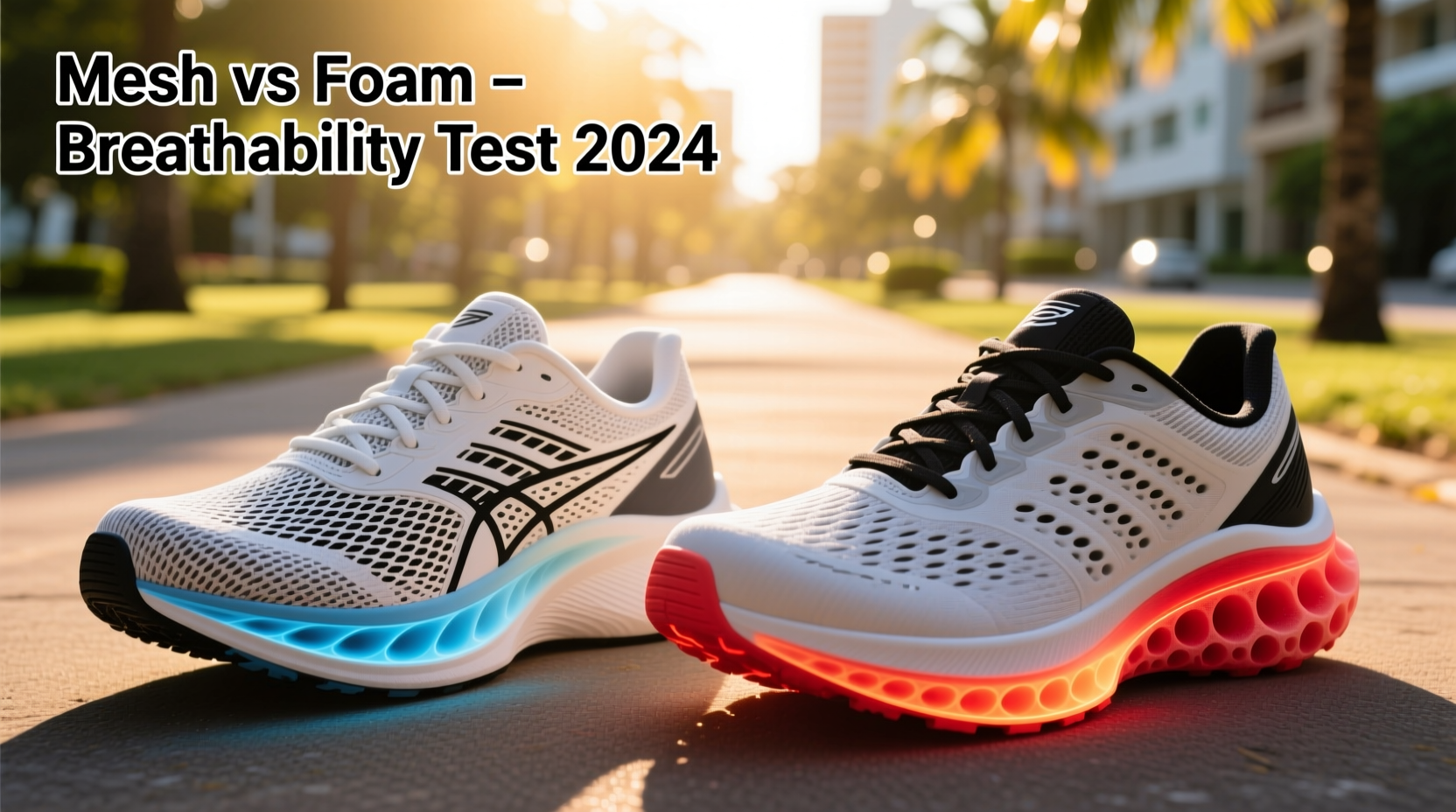
Breathability refers to a shoe’s ability to allow air circulation through the upper, facilitating heat dissipation and moisture evaporation. This process reduces the buildup of sweat inside the shoe, helping maintain a stable microclimate around the foot. When your feet overheat, blood vessels dilate, soft tissues swell, and grip within the shoe diminishes—all contributing to hot spots and potential blisters.
A breathable upper works in tandem with moisture-wicking socks to keep feet drier and cooler. But breathability doesn’t happen by accident. It depends on three key elements:
- Pore density and fabric weave: How tightly or loosely fibers are woven determines airflow capacity.
- Material thickness: Thinner materials generally allow more ventilation than thick overlays.
- Ventilation zones: Strategic placement of perforations, mesh panels, or open weaves enhances targeted airflow (e.g., over the forefoot or toe box).
Mechanically speaking, breathability is measured using standardized tests like ASTM F1868 (for fabric breathability) or ISO 9237 (air permeability). However, lab results don’t always translate directly to field performance—real-world conditions such as humidity, wind speed, and gait dynamics play major roles.
Mechanics of Mesh Uppers: Lightweight and Airy by Design
Mechanically engineered mesh has become the gold standard for high-breathability running shoes. Most modern performance models use some variation of mono-mesh, engineered mesh, or 3D-knit fabrics designed specifically for airflow optimization.
Engineered mesh typically features variable weaves across different zones of the shoe. For example, the toe box might have an open hexagonal pattern to maximize intake, while the midfoot uses tighter stitching for support without sacrificing too much ventilation. Brands like Nike (with Flyknit), Adidas (with Primeknit), and Hoka (with their early adoption of open mesh panels) have refined these textiles to balance structure and breathability.
Tip: Look for shoes labeled with “open mesh,” “vented panels,” or “3D-engineered knit” if you prioritize breathability in hot conditions.The advantages of mesh extend beyond airflow:
- Lightweight: Reduces overall shoe mass, decreasing fatigue over long runs.
- Stretch-adaptive fit: Conforms to foot swelling common in heat without restricting movement.
- Drying speed: Synthetic mesh dries faster than foam-based uppers after rain or heavy perspiration.
However, pure mesh isn’t flawless. Over time, especially in lower-tier models, thin mesh can degrade under abrasion or UV exposure. Some ultra-open weaves may lack durability on rugged terrain or provide less protection from debris. Additionally, minimal internal lining in highly breathable designs can increase friction against certain sock types, raising blister risk for sensitive runners.
Foam Uppers: Support at the Cost of Ventilation?
Foam uppers—often made from thermoplastic polyurethane (TPU) films, EVA blends, or fused synthetic layers—are increasingly used in performance and lifestyle running shoes. Unlike mesh, foam provides inherent structure, making it ideal for seamless construction and lockdown fit. Models like the Saucony Endorphin Speed 3 or certain Asics Metaspeed variants integrate foam overlays to enhance energy return and midfoot containment.
But where foam excels in stability, it often lags in breathability. Solid foam panels block airflow entirely. Even perforated foam—where small holes are laser-cut into the material—offers limited ventilation compared to true mesh. These perforations rarely connect internally to create convective channels, meaning trapped heat struggles to escape.
In humid environments, this becomes problematic. Foam absorbs minimal moisture but doesn’t wick it away either. Instead, it acts like a semi-sealed barrier, trapping sweat vapor near the skin. Runners frequently report a “sauna effect” when wearing predominantly foam-uppered shoes in temperatures above 85°F (29°C).
That said, not all foam constructions are equal. Some hybrid designs combine thin foam skins with mesh bases, allowing limited breathability while preserving structural integrity. The New Balance FuelCell series, for instance, uses a dual-layer approach: a supportive foam cage overlaid on a breathable mesh base. This balances containment and airflow more effectively than full-coverage foam.
Direct Comparison: Mesh vs Foam in Real Heat Conditions
To evaluate breathability objectively, consider a side-by-side analysis based on measurable and experiential factors:
| Feature | MESH Uppers | FOAM Uppers |
|---|---|---|
| Air Permeability | High – open weave allows continuous airflow | Low to Moderate – solid sections block air; perforations offer limited relief |
| Moisture Evaporation Rate | Fast – promotes sweat dispersion | Slow – traps moisture against foot |
| Weight | Light – typically under 200g per shoe | Medium to Heavy – added foam increases mass |
| Durability in Heat | Good – resists softening but may fray | Fair – some foams degrade or stiffen under prolonged UV/heat exposure |
| Foot Climate Control | Excellent – maintains cooler internal temperature | Poor to Fair – prone to overheating in sustained runs |
| Ideal Use Case | Long runs, racing in heat, tropical climates | Shorter tempo runs, cooler conditions, structured training |
This comparison makes one thing clear: for sheer breathability in hot weather, mesh outperforms foam consistently. That doesn’t mean foam has no place in warm-weather running—but its benefits lie elsewhere, such as propulsion efficiency or midfoot security, rather than thermal regulation.
Expert Insight: What Podiatrists and Coaches Say
“Overheating in footwear accelerates fatigue and compromises biomechanics. In my clinic, I see more blister cases in summer linked to non-breathable uppers than any other factor.” — Dr. Lena Torres, Sports Podiatrist and Gait Analyst
“When coaching athletes for marathon events in Dubai or Singapore, our first equipment check is upper material. If it’s not primarily mesh, we reconsider the shoe.” — Marcus Reed, Elite Distance Running Coach
These insights underscore a professional consensus: breathability isn’t secondary—it’s foundational to performance and foot health in extreme heat. While cushioning and responsiveness get more marketing attention, clinicians and coaches prioritize environment-appropriate materials first.
Real Runner Experience: A Case Study from Phoenix Summer Training
Jamal Carter, a sub-3-hour marathoner based in Phoenix, Arizona, adjusted his shoe selection after repeated issues during June training blocks. Running long intervals at 7:00 AM, ambient temperatures still reached 98°F (37°C) with high radiant heat from pavement.
Initially, he wore a carbon-plated racer with a fused foam upper, drawn by its speed potential. After four weeks, he experienced recurring hot spots on his lateral metatarsals and delayed recovery due to persistent foot swelling.
Switching to a lightweight racer with a full-engineered mesh upper (Brooks Hyperion Max), Jamal noticed immediate improvements. His perceived foot temperature dropped noticeably, and post-run swelling decreased by day three. He completed his half-marathon tune-up race without discomfort—even finishing 90 seconds faster than expected.
“I didn’t change my training,” he said. “Just changed the shoe. The difference in airflow was night and day.”
This anecdote illustrates how material choice impacts not just comfort but physiological response and outcome—even among experienced runners.
How to Choose the Right Shoe for Hot Weather: A Practical Checklist
Selecting a breathable running shoe requires more than trusting brand claims. Use this checklist before purchasing:
- ✅ Prioritize shoes with engineered mesh or knit uppers, especially over the forefoot and toe box.
- ✅ Avoid models with large foam overlays unless they’re strategically placed (e.g., heel counter only).
- ✅ Check for ventilation ports or laser-perforated zones—look beyond aesthetics to actual function.
- ✅ Test stretch: Press your finger into the upper. If it feels rigid or sealed, airflow will be restricted.
- ✅ Consider weight: Lighter shoes (<250g) often use more breathable materials by necessity.
- ✅ Read user reviews mentioning “hot feet,” “sweat buildup,” or “summer performance.”
- ✅ Pair with moisture-wicking socks made from merino wool or synthetic blends—not cotton.
Frequently Asked Questions
Can foam-uppered shoes be breathable?
Some foam uppers incorporate perforations or mesh backing, offering moderate breathability. However, they still lag behind full-mesh designs in airflow and moisture management. True breathability requires open pathways for air exchange, which solid foam inherently restricts.
Do all mesh shoes breathe equally well?
No. Not all mesh is created equal. Open-weave, multi-layered, or 3D-knit meshes perform best. Cheaper single-layer mesh may tear easily and offer inconsistent ventilation. Always inspect the texture and openness of the material before buying.
Is breathability the only factor to consider in hot weather?
No. While crucial, breathability should be balanced with fit, cushioning, and sweat management. A breathable shoe with poor fit can still cause blisters. Also, light-colored uppers reflect heat better than dark ones, adding another layer of thermal control.
Final Recommendations and Action Steps
For runners tackling hot weather, mesh clearly holds the advantage in breathability. Its open structure, lightweight nature, and rapid drying properties make it the superior choice for managing foot temperature and moisture. Foam uppers, while beneficial for support and energy return, tend to compromise ventilation and are best reserved for cooler conditions or shorter efforts.
If you live in or train regularly under high heat and humidity, prioritize shoes known for their breathable uppers. Top performers include the ASICS Novablast 4, Saucony Ride 17, Nike Pegasus 40, and Hoka Mach 5—all featuring advanced mesh constructions optimized for airflow.
Additionally, rotate your footwear. Continuous wear degrades mesh elasticity and clogs pores with salt and dirt. Clean your shoes gently with a damp cloth and let them air-dry away from direct sunlight to preserve breathability over time.
💬 Have you switched shoes due to overheating? Share your experience below—we’d love to hear what worked (or didn’t) for your summer runs!








