Choosing the right bicycle is about more than just aesthetics or brand preference—it’s about fit, function, and comfort. While many assume that men’s and women’s bikes differ only in color or branding, the reality is far more nuanced. From frame design and saddle shape to handlebar width and gearing, manufacturers tailor these models to accommodate average anatomical differences. Understanding these distinctions empowers riders to select a bike that supports performance, reduces injury risk, and enhances long-term enjoyment.
Frame Geometry: More Than Just Size
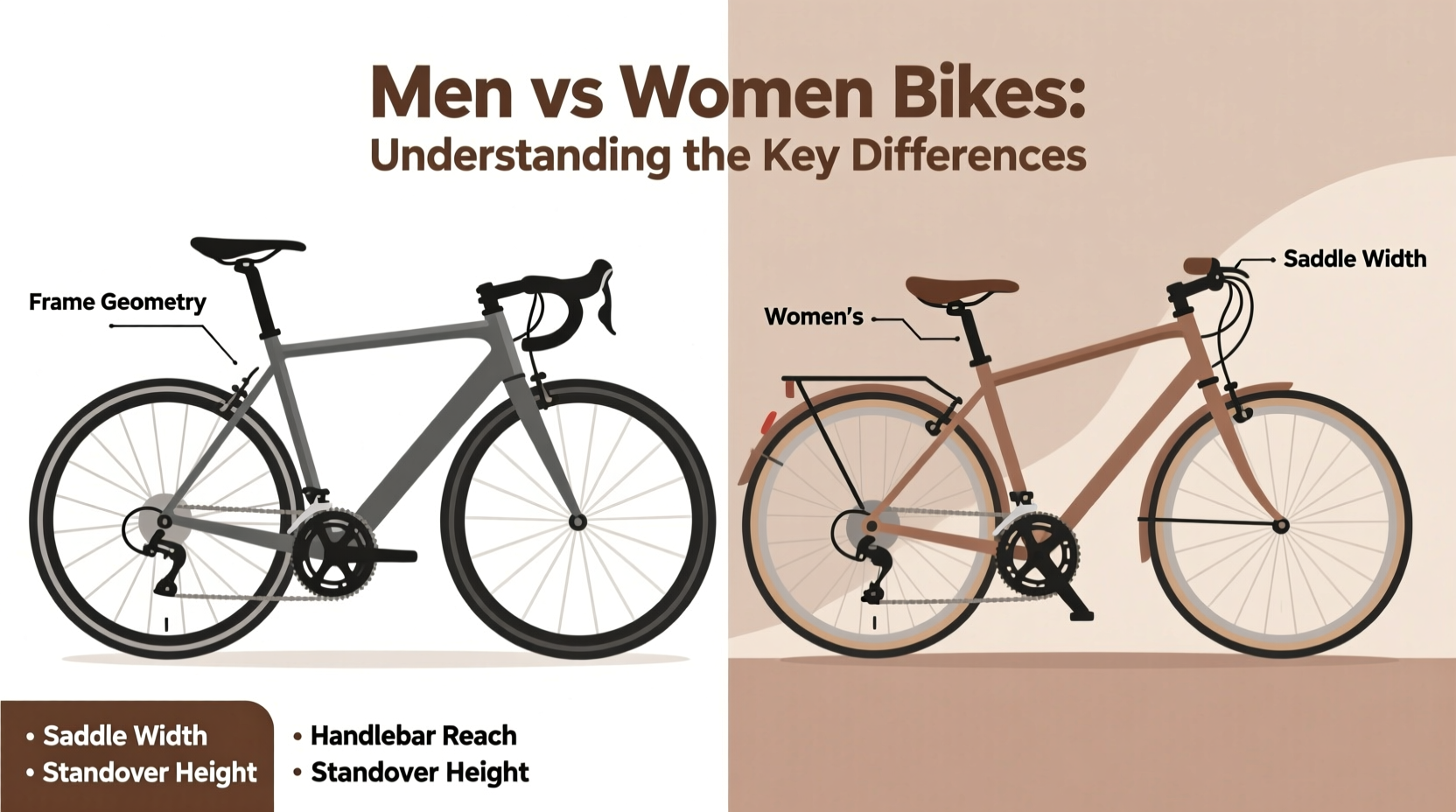
The most significant difference between men’s and women’s bicycles lies in the frame geometry. Traditionally, women have proportionally shorter torsos and arms compared to their leg length. To accommodate this, women-specific frames often feature a shorter top tube, higher bottom bracket, and a steeper seat tube angle. This allows for a more upright riding position and better weight distribution over the pedals.
Men’s bikes, on the other hand, are typically built with longer reach and a lower standover height relative to frame size. The result is a slightly more aggressive, forward-leaning posture suited to longer limbs and greater upper body strength.
Tip: Standover height matters—ensure you can stand flat-footed over the top tube with 1–2 inches of clearance for road bikes, 2–4 inches for mountain bikes.It's important to note that not all women need a \"women’s bike,\" nor do all men require a \"men’s model.\" Individual proportions vary widely, and many unisex or gender-neutral frames now offer multiple sizes and geometries to suit diverse riders.
Saddle Design: Comfort Starts Here
The saddle is arguably the most personalized component on any bike. Women generally have wider pelvic bones, which means pressure distribution differs significantly when seated. As a result, women-specific saddles are typically broader at the rear with a shorter nose and cutout relief channel to reduce soft tissue compression.
Men’s saddles tend to be narrower and longer, supporting a more forward-tilted pelvis common in traditional riding postures. Using the wrong saddle can lead to numbness, chafing, and even long-term urological or gynecological issues.
“Saddle fit is non-negotiable. A poorly matched seat affects everything from power transfer to nerve health.” — Dr. Lena Torres, Sports Physiotherapist and Cycling Injury Specialist
Component Sizing and Adjustability
Beyond the frame and saddle, subtle but impactful differences exist in component selection:
- Handlebar width: Women’s bikes often come with narrower handlebars (e.g., 38–40cm vs. 42–44cm) to match shoulder width.
- Brake levers: Short-reach brake levers are common on women’s models, accommodating smaller hands for better modulation and control.
- Gearing: Some women’s bikes use easier gear ratios (lower cranks or larger cassettes), assuming less raw power output—though this assumption is increasingly debated.
- Wheel size: While both genders use standard 700c (road) or 27.5\"/29\" (mountain) wheels, smaller frames may pair with 650b wheels for proportional balance.
These adjustments reflect thoughtful engineering rather than stereotyping—but they also mean that off-the-rack bikes should be evaluated critically based on individual needs, not gender alone.
Comparison Table: Key Differences at a Glance
| Feature | Men’s Bikes | Women’s Bikes |
|---|---|---|
| Top Tube Length | Longer reach for extended torso | Shorter for compact torso |
| Seat Tube Angle | Moderate (72°–74°) | Steeper (74°–76°) |
| Saddle Shape | Narrower, longer nose | Wider, shorter, with cutout |
| Handlebar Width | Wider (42–44cm+) | Narrower (38–40cm) |
| Brake Levers | Standard reach | Short-reach options common |
| Gearing | Standard or high-end ratios | Often lighter/easier gears |
| Color Options | Darker tones, metallics | Bright colors, pastels, floral patterns |
Note: Color schemes remain the most superficial distinction and should never influence purchasing decisions. Performance and fit matter far more.
Real-World Example: Choosing the Right Fit
Consider Sarah, a 5'4\" cyclist shopping for her first hybrid commuter bike. She initially gravitated toward a men’s model because it had better specs and was on sale. After test-riding it, she experienced wrist pain and felt stretched out on the handlebars. A bike fitter later explained that the longer reach and wider bar were forcing her into an unnatural posture.
She switched to a women’s-specific model in a smaller frame. Though nearly identical mechanically, the revised geometry allowed her to sit more upright, reduced strain on her shoulders, and improved overall control. The difference wasn’t about capability—it was about ergonomics.
Tip: Always test ride multiple bikes—even within the same category. Small changes in stack and reach can dramatically affect comfort.Step-by-Step Guide: How to Choose the Right Bike Regardless of Gender Labeling
- Measure Your Inseam: Stand barefoot against a wall, place a book between your legs, and measure from the spine of the book to the floor. Use this number to calculate appropriate frame size.
- Determine Your Riding Style: Will you commute, train, trail ride, or tour? Different styles demand different fits.
- Check Stack and Reach: These two numbers (available in geometry charts) define how the bike will feel under you. Compare them across models.
- Adjust Components as Needed: Swap saddles, stems, or handlebars if the stock setup doesn’t suit you. Many “men’s” bikes can be adapted for women—and vice versa.
- Get a Professional Fit: A dynamic bike fitting session can reveal inefficiencies and prevent chronic injuries.
Frequently Asked Questions
Can women ride men’s bikes safely?
Absolutely—if the frame size and geometry match their body dimensions. Many women thrive on men’s models, especially those with longer torsos or broader shoulders. The key is proper fit, not labeling.
Are women’s bikes weaker or less durable?
No. This is a persistent myth. Women’s bikes are not structurally inferior. Any differences in tubing or weight stem from size scaling, not quality reduction. A well-built bike performs regardless of its intended audience.
Do unisex bikes exist?
Yes. Many modern brands now offer “unisex” or “inclusive fit” lines designed without gender assumptions. These prioritize adjustable geometry, neutral saddle designs, and modular components to serve a wider range of riders.
Checklist: What to Evaluate Before Buying
- ✅ Frame geometry matches your torso and leg proportions
- ✅ Standover height allows safe dismounting
- ✅ Handlebar width aligns with shoulder span
- ✅ Brake levers are reachable without straining fingers
- ✅ Saddle supports sit bones without pressure on soft tissues
- ✅ Gearing suits your fitness level and terrain
- ✅ Option to adjust stem, seatpost, or crank length if needed
Conclusion: Prioritize Fit Over Labels
The divide between men’s and women’s bikes reflects general trends, not rigid rules. What truly matters is how the bicycle interacts with your body. A perfectly fitted “men’s” bike may serve a woman better than an ill-fitting “women’s” model, and the reverse holds true.
As the cycling industry evolves, more brands are shifting toward inclusive sizing and adaptable designs. The future of bike fitting isn't binary—it's personalized. Whether you're a seasoned rider or just starting out, take the time to assess your needs objectively. Test ride, tweak components, and trust your comfort above marketing labels.
🚀 Ready to find your perfect ride? Visit a local bike shop, request a fit assessment, and experience the difference that proper geometry makes. Share your story—what worked for you might help someone else find their ideal match.








