Walk into any forward-thinking bar in Tokyo, New York, or Copenhagen today, and you’ll likely see two drinks commanding attention—not because they’re flashy or garnished with edible gold, but because they’re refreshingly simple, deeply balanced, and unapologetically effervescent. The Japanese highball—a minimalist union of premium whiskey, chilled soda water, and a single citrus twist—and the American whiskey sour—a tart, frothy blend of bourbon or rye, fresh lemon juice, simple syrup, and often an egg white—represent divergent philosophies in cocktail culture. One embraces dilution and airiness; the other honors structure and texture. Yet both share a defining trait: they place carbonation or its functional equivalent (via vigorous shaking) at the emotional center of the experience. This isn’t just about bubbles—it’s about accessibility, intentionality, and a quiet rebellion against overcomplication. As global drinking habits shift toward lower-ABV, sessionable, and ingredient-conscious choices, the soda-forward cocktail has moved beyond novelty into legitimacy. The question isn’t whether it’s popular—but whether it’s durable.
The Origins: Two Traditions, One Shared Ethos of Restraint
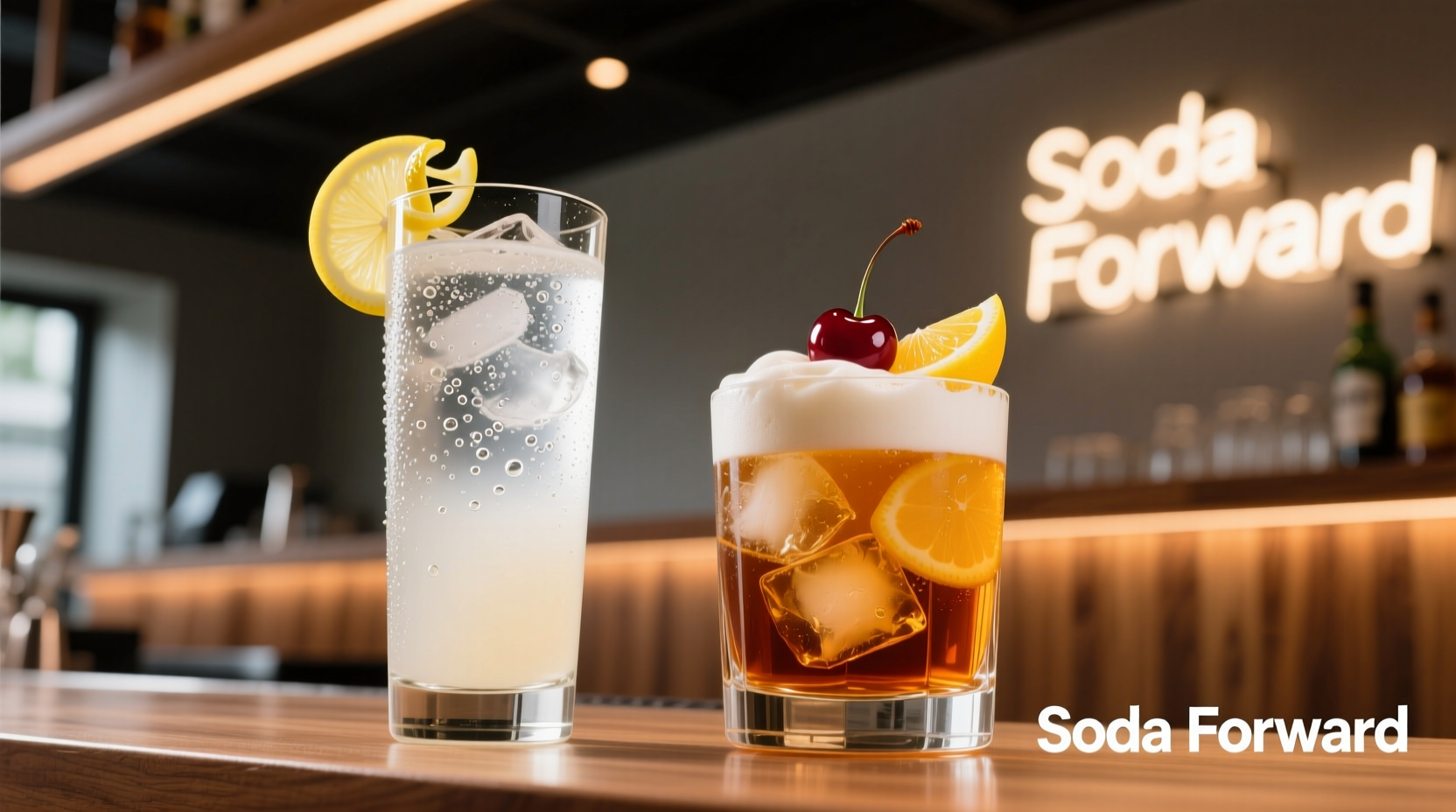
The Japanese highball emerged not as a craft cocktail innovation, but as a pragmatic response to postwar scarcity and evolving consumer expectations. In the 1950s, Suntory began promoting its aged whiskies—not as sipping spirits, but as versatile bases for refreshing mixed drinks. By the 1970s, the highball had become a national ritual: served in tall, narrow glasses over a single large ice sphere, poured with precise 1:4 or 1:5 whiskey-to-soda ratios, and stirred gently—not shaken—to preserve effervescence. Its philosophy was rooted in ma (negative space): the silence between notes, the chill of the glass, the crispness of the bubble. It wasn’t masking whiskey—it was amplifying its clarity through contrast.
The American whiskey sour, by contrast, dates to at least the 1860s and appears in Jerry Thomas’s 1862 How to Mix Drinks. Early versions were austere: spirit, citrus, sweetener. But its modern identity solidified during Prohibition’s aftermath, when bartenders sought ways to “soften” harsh bootleg whiskey. The addition of egg white—first documented in the 1930s—transformed the drink from a bracing refresher into something silken and substantial. Crucially, the dry shake (shaking without ice to emulsify the egg) and hard shake (with ice to chill and dilute) create microbubbles that suspend in the liquid, yielding a foamy, aerated texture. That foam isn’t garnish—it’s structural. It carries aroma, tempers acidity, and slows perception of alcohol. In this sense, the whiskey sour doesn’t rely on external carbonation—but achieves the same psychological effect: lift, lightness, and palate reset.
“The highball taught Japan how to drink whiskey without intimidation. The whiskey sour taught America how to respect whiskey without reverence. Both are democratic tools—designed not for connoisseurs, but for people who want flavor, refreshment, and dignity in one glass.” — Hiroshi Tanaka, Head Blender, Nikka Whisky, interviewed at Bar Benfiddich, Tokyo (2023)
Why Soda-Forward? The Convergence of Culture, Climate, and Consciousness
Three macro-trends explain why these drinks are no longer seasonal or niche—they’re foundational:
- Climate-driven consumption: Rising average temperatures globally have shifted drinking windows. A 12% ABV red wine feels heavy at noon in Lisbon or Los Angeles; a 22% ABV highball or 18% ABV whiskey sour lands cleanly. Bartenders in Miami report a 40% year-over-year increase in highball orders between May and September—not as a “summer special,” but as default service.
- ABV-awareness as lifestyle choice: Gen Z and younger millennials aren’t rejecting alcohol—they’re curating it. A 2023 IWSR Beverage Market Insights report found that 68% of consumers aged 21–34 actively seek “sessionable” drinks (under 25% ABV) for social occasions lasting more than two hours. The highball delivers 15–18% ABV; the whiskey sour, 16–19%, depending on spirit proof and dilution.
- Sustainability embedded in simplicity: Fewer ingredients mean less waste, lower energy use (no infusions, clarifications, or barrel-aging for the drink itself), and greater transparency. Highballs require only whiskey, soda, and citrus. Whiskey sours need four core components—often all shelf-stable and low-footprint. Compare that to tiki drinks requiring house-made syrups, multiple rums, and exotic garnishes with short shelf lives.
Head-to-Head: Functional Comparison Beyond Flavor
It’s tempting to compare the highball and whiskey sour as rivals—but they serve different physiological and social functions. The table below outlines key operational differences that reveal why both persist, rather than one displacing the other.
| Dimension | Japanese Highball | American Whiskey Sour |
|---|---|---|
| Primary Carbonation Source | External: Chilled, high-pressure soda water (typically 3–4.5 volumes CO₂) | Internal: Aerated via dry/hard shake; foam stabilizes microbubbles |
| Dilution Control | Highly precise: Ice melt minimal; ratio fixed pre-pour | Variable: Dependent on shake duration, ice size, and technique |
| Sessionability | Exceptional: Clean finish, neutral mouthfeel, no residual sweetness or fat | High—but requires palate reset between servings due to acidity and foam density |
| Ingredient Flexibility | Low: Soda quality and temperature are non-negotiable; whiskey must be clean and aromatic | Medium-High: Substitutions possible (e.g., aquafaba for egg white, maple for syrup, lime for lemon) |
| Cultural Ritual | Formalized: Glassware, pour angle, ice shape, garnish placement all codified | Adaptive: Served up, on rocks, or even blended; garnish varies by region and bartender |
This functional divergence explains why top bars now feature both—not as alternatives, but as complementary options on the same menu. At Bar High Five in Ginza, the highball list includes eight variations, each matched to a specific soda brand and temperature protocol. Meanwhile, at Attaboy in NYC, the whiskey sour appears in three iterations—classic, smoked, and “low-proof” with bonded rye and reduced syrup—each designed for a distinct moment in the evening.
A Mini Case Study: How Bar Kuma in Portland Shifted Its Entire Service Model
When Bar Kuma opened in 2019, it leaned heavily into complex, spirit-forward cocktails—mezcal negronis, clarified milk punches, barrel-aged manhattans. By early 2022, owner Lena Cho noticed a pattern: 62% of first-time guests ordered either a highball or whiskey sour—and 78% of those returned within three weeks. “They weren’t choosing them as ‘easy’ drinks,” she explained in a 2023 panel at Tales of the Cocktail. “They were choosing them as *entry points*—to our whiskey selection, to our service ethos, to the idea that great drinks don’t need to be loud to be meaningful.”
In June 2022, Kuma redesigned its menu around “air, acid, and aroma.” The highball section featured local craft sodas paired with Pacific Northwest single malts; the whiskey sour section offered rotating base spirits (rye, wheat, corn) with house-cured citrus peels and seasonal shrubs. Staff underwent retraining—not in flair, but in temperature discipline (soda must be below 3°C), shake rhythm (12 seconds dry, 14 seconds hard), and glass-chilling protocols. Within six months, draft soda sales rose 210%, and guest dwell time increased by 18 minutes—because people stayed for the second, third, and fourth round, not just the first.
Practical Guide: Building Your Own Soda-Forward Repertoire at Home
You don’t need a bar program to harness the power of soda-forward mixing. Here’s a tested, scalable method—applicable to both styles—with precision calibrated for home kitchens.
- Select your base wisely: For highballs, choose a whiskey with bright top notes (citrus, green apple, floral) and moderate oak—e.g., Yamazaki Distiller’s Reserve, Wild Turkey 101, or Auchentoshan Three Wood. Avoid heavily sherried or peated bottlings unless intentionally contrasting.
- Chill everything—aggressively: Refrigerate your whiskey for 30 minutes, freeze your highball glass for 15, and store soda water at ≤2°C. Warm soda goes flat before it hits the glass.
- Master the pour (highball): Fill glass with one large, dense ice sphere (or two standard cubes). Pour whiskey over ice. Then, holding the bottle at a 45° angle, stream soda down the side of the glass—not onto the ice—for 8 seconds. Stop. Stir once clockwise with a bar spoon. Express orange or yuzu peel over the surface and drop in.
- Perfect the shake (whiskey sour): Add 2 oz whiskey, ¾ oz fresh lemon juice, ½ oz rich simple syrup (2:1 sugar:water), and ½ oz pasteurized egg white to a shaker tin. Dry shake (no ice) for 12 seconds until opaque and frothy. Add ice. Hard shake for 14 seconds—listen for the “crunch” of ice breaking down. Double-strain into a chilled coupe.
- Taste, then adjust: If the highball tastes muted, your soda lacks pressure—or your whiskey is too heavy. If the sour tastes sharp, reduce lemon by ⅛ oz next time. If it’s cloying, increase lemon before adjusting syrup. Never change two variables at once.
FAQ: Addressing Real Concerns from Curious Drinkers
Isn’t the highball just “whiskey and soda”—a throwback to outdated drinking habits?
No—its resurgence is rooted in modern values. Unlike mid-century versions made with low-proof blends and generic seltzer, today’s highball uses single malts or premium bourbons and artisanal sodas with precise mineral profiles (e.g., Gerolsteiner for salinity, Topo Chico for aggressive fizz). It’s less a relic and more a distillation of contemporary priorities: purity, precision, and presence.
Can I make a whiskey sour without egg white and still get the airy texture?
Yes—but the mechanism changes. Aquafaba (chickpea brine) replicates foam well but adds subtle beaniness. A ½ oz splash of cold-brew coffee concentrate can add body and microfoam when shaken vigorously. Most reliably: double the lemon juice (to 1 oz) and shake with extra ice—increased dilution creates a lighter, more integrated mouthfeel, though without the signature cap.
Do soda-forward drinks pair well with food—or are they strictly pre-dinner?
They excel across courses. A highball cuts through fatty grilled meats (think yakitori or Korean BBQ) with its cleansing effervescence. A whiskey sour’s acidity and foam make it an exceptional match for fried foods (tempura, chicken tenders) and creamy cheeses (aged Gouda, Humboldt Fog)—the bubbles lift oil, while the citrus bridges fat and salt.
The Verdict: Not a Trend—A Tectonic Shift
“Trend” implies transience. What we’re witnessing with the highball and whiskey sour isn’t fleeting fashion—it’s infrastructure-level evolution. These drinks succeed because they solve real problems: how to enjoy whiskey without intimidation, how to socialize without fatigue, how to celebrate craftsmanship without complexity. They reflect broader cultural movements—mindful consumption, climate-responsive behavior, and the democratization of expertise. Bars no longer ask, “Should we offer a highball?” but “Which highball will define our identity?” Likewise, the whiskey sour has evolved from bar-menu staple to canvas for regional expression—from Kentucky bourbon sours with blackberry shrub in Lexington to Japanese-inspired versions using yuzu and matcha-infused syrup in Brooklyn.
What ensures longevity isn’t nostalgia or novelty—it’s adaptability. The highball absorbs new whiskeys, new sodas, new garnishes, without losing its soul. The whiskey sour absorbs new acids (sherry vinegar, fermented plum), new sweeteners (brown rice syrup, date molasses), new textures (toasted sesame foam, miso dust)—and remains unmistakably itself. That duality—rigorous in principle, generous in practice—is the hallmark of enduring design.
💬 Your turn matters. Try one highball and one whiskey sour this week—not as experiments, but as conversations with tradition. Then share what you discovered: Which ratio surprised you? Which soda elevated the whiskey? Which shake gave you that perfect foam? Leave your observations below. The future of drinking isn’t written by brands or bars alone—it’s co-authored, one thoughtful sip at a time.








