
For fashion enthusiasts on a budget, the idea of scoring a pristine Chanel flap bag at a thrift store for $200 is nothing short of exhilarating. The thrill of the hunt, the sustainability appeal, and the potential savings make secondhand designer shopping deeply alluring. But behind every viral “thrift flip” story lies a minefield of fakes, damage, and buyer’s remorse. So, is it truly worth it? The answer isn’t simple—it depends on your knowledge, patience, and risk tolerance.
Thrifting designer bags can be a brilliant way to access luxury fashion at a fraction of retail prices. However, without the right tools and awareness, you could easily walk away with a counterfeit or damaged item that costs more to restore than it saves. This guide breaks down the realities, benefits, and pitfalls of hunting for designer handbags in thrift stores, consignment shops, and online resale platforms.
The Appeal of Thrifting Designer Bags
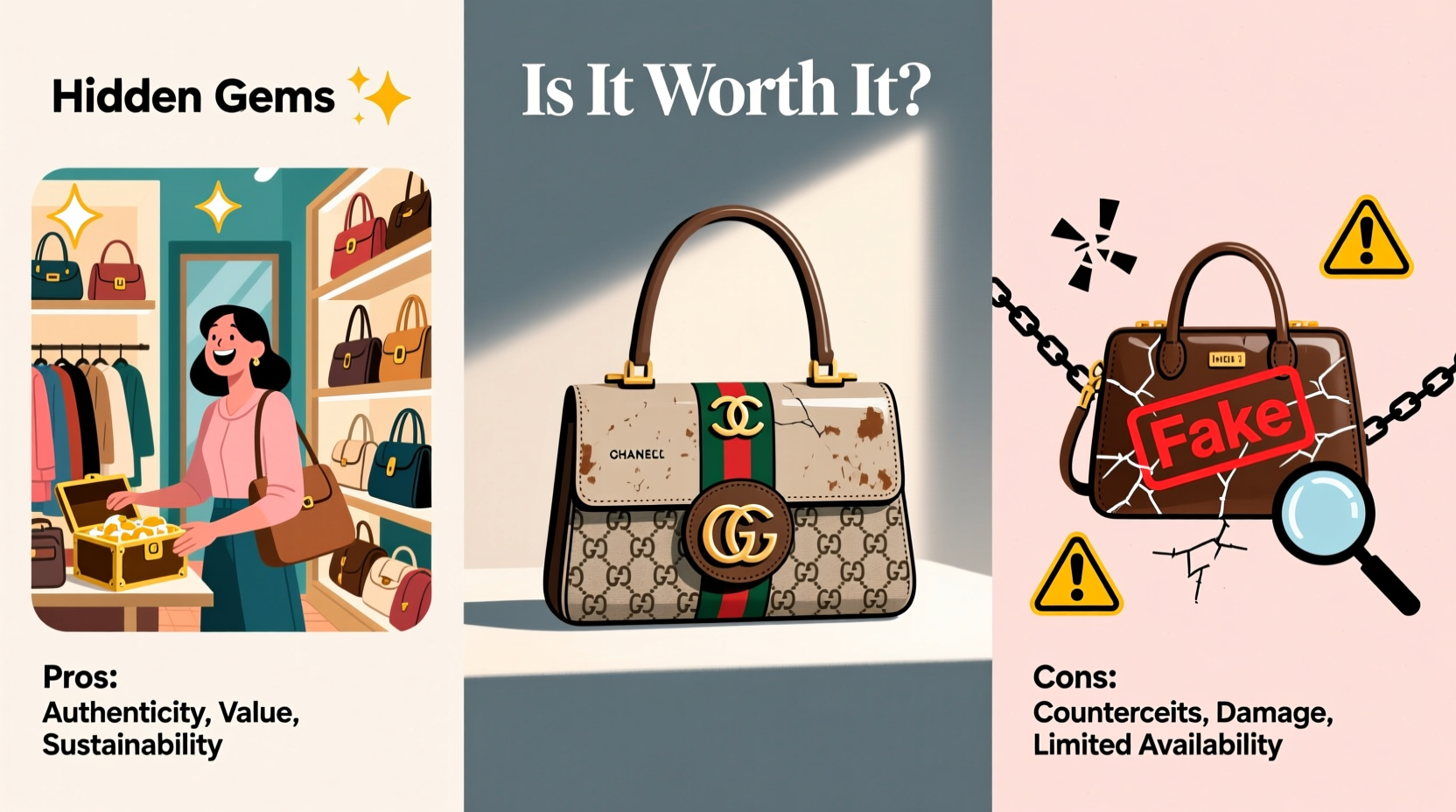
There’s more to this trend than just saving money. For many, thrifting aligns with values like sustainability, individuality, and conscious consumption. Fast fashion has long dominated the market, but vintage and pre-owned luxury offer a compelling alternative.
- Cost Savings: A gently used Celine Triomphe might retail for $3,500 new but appear for $900 in a reputable consignment shop.
- Sustainability: Extending the life of a luxury bag reduces waste and carbon footprint—designer pieces are often made to last decades.
- Rarity: Limited edition or discontinued styles (like the Hermès Evelyne or vintage Gucci Jackie) are nearly impossible to find new but show up in secondhand markets.
- Thrill of Discovery: There's undeniable excitement in finding a hidden gem others overlooked.
The Risks You Can’t Ignore
Not every thrifted designer bag is a steal. In fact, some come with hidden costs that outweigh the initial savings.
Fakes are everywhere. According to the International Chamber of Commerce, counterfeit goods account for over 3% of global trade—luxury handbags being one of the most counterfeited categories. Thrift stores rarely authenticate items, so the burden falls on the buyer.
Condition issues are common. Stains, cracked leather, broken zippers, or missing hardware may not be visible in dimly lit stores or poorly photographed online listings. Restoration can cost hundreds—sometimes exceeding the bag’s resale value.
Pricing inconsistencies also plague the secondhand market. Some thrift shops now use apps like Whatnot or Vestiaire Collective to price items accurately, but many still undervalue or wildly overprice based on guesswork.
“Over 60% of ‘designer’ bags pulled from U.S. thrift chains are either counterfeit or misrepresented.” — Lena Torres, Authentication Specialist at Rebag Insights
How to Spot Fakes: A Practical Guide
Authentication is the cornerstone of successful designer thrifting. While experts spend years mastering brand-specific details, there are baseline checks anyone can perform.
1. Examine the Hardware
Authentic designer bags use high-quality metals. Louis Vuitton zippers should glide smoothly with engraved pull tabs. Chanel’s CC turnlocks have precise alignment and weight. If the metal feels light or scratches easily, it’s likely fake.
2. Check Stitching and Alignment
Luxury brands maintain strict standards. Look for even, straight stitching with consistent spacing. Misaligned seams or loose threads are red flags.
3. Study the Logo and Branding
Compare fonts, spacing, and placement against verified examples. For example, Gucci’s double-G logo has a specific curvature; counterfeit versions often get the angle wrong.
4. Inspect Serial Numbers and Date Codes
Most major brands embed unique identifiers. Chanel uses blind stamps indicating production year and location. Louis Vuitton has date codes stamped inside. Use trusted databases like Chanel Date Code Calculator or Rebag’s Authentication Guides to verify.
5. Assess the Smell and Material
Genuine leather has a rich, natural scent. Faux leather often smells chemical or plastic-like. Also, feel the texture—real calf leather is soft yet firm, not overly shiny or slippery.
Tip: Carry a magnifying glass or use your phone’s zoom feature to inspect micro-details like engravings and lining patterns.Where to Thrift Smartly: Best Sources Ranked
Not all secondhand outlets are created equal. Your success depends heavily on where you shop.
| Source | Pros | Cons | Best For |
|---|---|---|---|
| High-End Consignment Stores | Items authenticated, curated selection, return policies | Higher prices, limited inventory | First-time buyers, investment pieces |
| Vintage Boutiques | Curated, rare finds, expert staff | Can be expensive, niche selection | Discontinued styles, collectors |
| Thrift Stores (Goodwill, Salvation Army) | Low prices, hidden gems possible | No authentication, mixed condition, time-intensive | Bargain hunters, experienced scouts |
| Online Resale Platforms (The RealReal, Vestiaire) | Global inventory, professional authentication | Fees, shipping delays, competition | Convenience, rare models |
| Estate Sales & Garage Sales | Direct access to owner history, negotiation room | Inconsistent quality, no guarantees | Local deals, full collections |
Mini Case Study: The $75 Hermès Kelly That Wasn’t
Jamie, a vintage reseller in Portland, found a “Hermès Kelly” labeled $75 at a local estate sale. The seller claimed it was her mother’s from the 1980s. Excited, Jamie bought it, only to discover upon inspection that the stitching was uneven, the hardware lacked engravings, and the leather had a synthetic sheen. She sent photos to an authentication service—confirmed fake. Lesson learned: provenance claims mean nothing without verification.
Step-by-Step: How to Safely Buy a Thrifted Designer Bag
Follow this timeline to maximize your chances of a successful, risk-minimized purchase.
- Research the Brand and Model: Know what authentic versions look like—study official product pages and collector forums.
- Set a Budget (Including Restoration): Allocate 20–30% of your budget for cleaning or repairs if needed.
- Choose Your Source: Start with consignment or vetted online platforms if you’re new.
- Inspect In Person or Request Detailed Photos: Ask for close-ups of serial numbers, corners, lining, and hardware.
- Verify Authenticity: Use third-party services like LegitGrails, Entrupy, or Authenticate First if unsure.
- Negotiate or Walk Away: Don’t let FOMO pressure you into a bad deal.
- Clean and Preserve: Once acquired, condition the bag properly and store it with stuffing and dust bag.
“Time spent learning brand details pays off tenfold. One well-informed buy beats ten impulsive guesses.” — Marcus Lin, Vintage Luxury Curator
Checklist: Before You Buy a Thrifted Designer Bag
- ✅ Verified brand authenticity through stitching, logos, and hardware
- ✅ Checked serial number/date code against reliable databases
- ✅ Inspected for stains, odor, structural damage, or dry rot
- ✅ Confirmed original components (dust bag, box, authenticity card if applicable)
- ✅ Compared current resale value (via WhatNot, eBay sold listings, Chrono24)
- ✅ Factored in potential restoration costs
- ✅ Purchased from a source with return policy or authentication guarantee
When It’s Worth the Risk—and When It’s Not
Thrifting designer bags makes sense under certain conditions:
- You’re buying a durable, timeless model (e.g., Chanel Classic Flap, Dior Saddle, Prada Galleria).
- You have basic authentication skills or access to verification tools.
- The price allows room for professional cleaning or minor repair.
- You're emotionally prepared to accept loss if the item turns out flawed.
It’s too risky when:
- You’re investing money you can’t afford to lose.
- The item is a high-counterfeit target (e.g., Birkin, vintage LV monogram).
- Photos are poor quality or the seller refuses detailed shots.
- You’re relying solely on luck rather than research.
Frequently Asked Questions
Can I return a thrifted designer bag if it’s fake?
Only if the seller offers a return policy. Most thrift stores sell “as-is,” so authentication before purchase is critical. Online resale platforms like The RealReal provide authenticity guarantees and refunds if an item fails verification post-purchase.
How much should I spend on a thrifted designer bag?
Aim for 40–60% below retail value for good condition. For example, if a new Gucci Marmont retails at $2,500, a fair secondhand price is $1,000–$1,500 depending on wear and rarity. Always check recent sold listings for accuracy.
Are vintage designer bags a good investment?
Some are. Hermès Birkins, Chanel bags with rare leathers, and discontinued lines like the YSL Tribute have appreciated over time. However, most vintage pieces are purchases for personal enjoyment, not financial gain. Treat them as wearable art, not stocks.
Conclusion: Hunt Smart, Win Big
Thrifting designer bags isn’t inherently risky—it becomes risky when done blindly. With education, patience, and a methodical approach, you can build a luxury wardrobe sustainably and affordably. The key is shifting from hopeful scavenger to informed collector.
Start small. Buy a moderately priced vintage Coach or Dooney & Bourke to practice spotting quality. Gradually work toward higher-stakes pieces once you’ve honed your eye. Use authentication tools, trust reputable sellers, and never let excitement override judgment.
The hunt isn’t just about the bag—it’s about the journey of learning, curating, and owning fashion with intention. Whether you’re after a weekend tote or a lifelong heirloom, the secondhand luxury market holds real opportunity. Just make sure you’re equipped to claim it wisely.
🚀 Ready to start your first smart thrift? Pick one brand to study this week—learn its logos, date codes, and common flaws. Share your progress or questions in the comments below and join a community of savvy shoppers turning thrift stores into treasure hunts.








