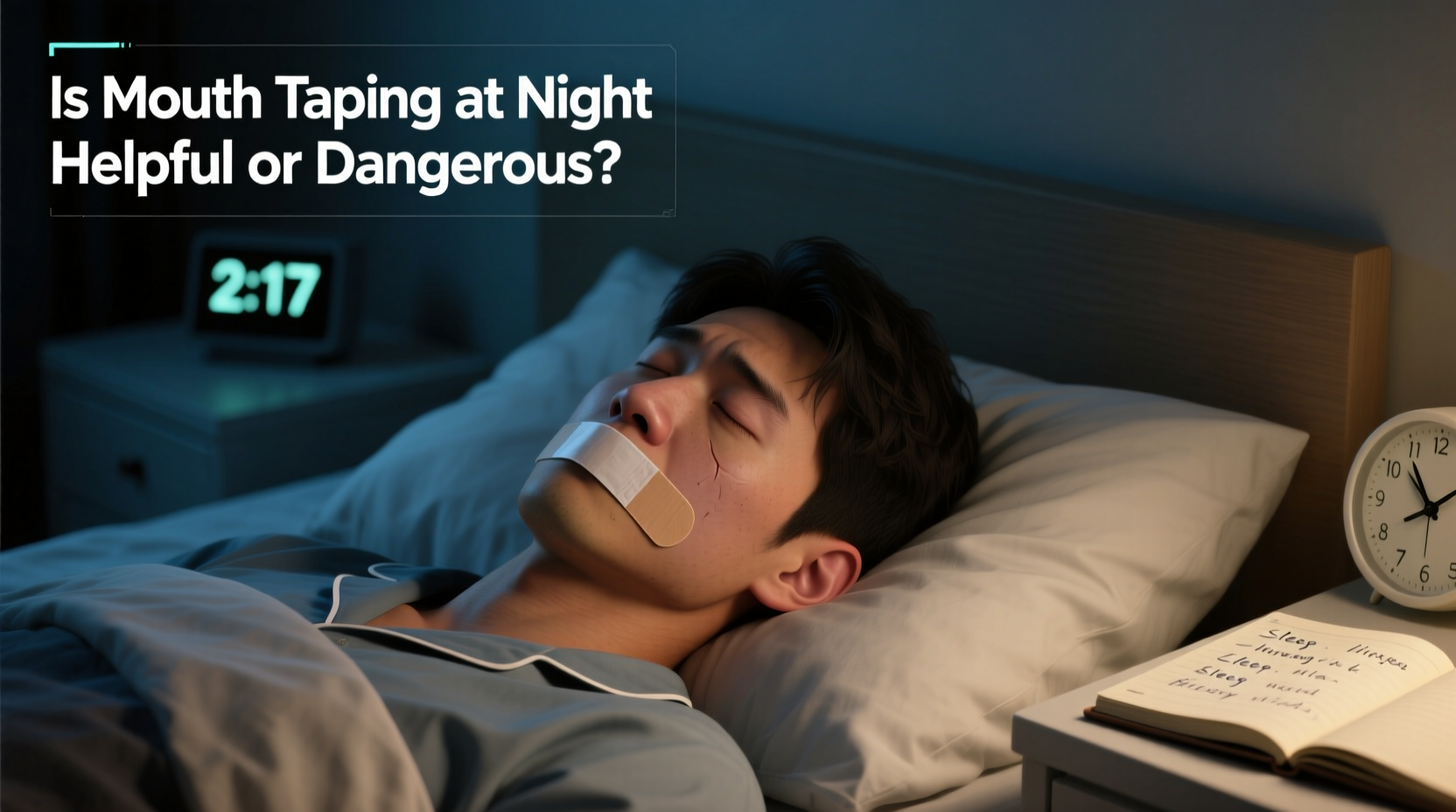
Nose breathing during sleep has long been considered the ideal respiratory pattern. It filters, warms, and humidifies air before it reaches the lungs, while also promoting optimal oxygen exchange and nitric oxide production. Yet, many people habitually breathe through their mouths at night—often due to congestion, allergies, or anatomical issues. In recent years, a controversial trend has gained traction: taping the mouth shut before bed with special tape to encourage nasal breathing. Advocates claim improved sleep quality, reduced snoring, and even better skin. But is this practice truly beneficial—or could it pose serious health risks?
This article examines the science behind mouth taping, evaluates both its potential advantages and dangers, and offers practical guidance for those considering it. Whether you're curious about trying it yourself or simply want to understand the debate, here's what you need to know.
The Science Behind Nasal Breathing During Sleep
Nasal breathing isn’t just preferred—it’s physiologically superior in most circumstances. The nose acts as a natural air processor, filtering out dust and pathogens, adjusting air temperature, and regulating airflow. Crucially, nasal passages produce nitric oxide, a molecule that enhances oxygen absorption in the lungs and supports cardiovascular health.
When people breathe through their mouths, especially over long periods during sleep, they bypass these protective mechanisms. Mouth breathing can lead to:
- Dry mouth and increased risk of dental decay
- Irritated throat and overnight dehydration
- Poorer oxygenation due to faster, shallower breaths
- Increased likelihood of snoring and mild upper airway resistance
Chronic mouth breathing, particularly in children, has been linked to facial development issues and sleep-disordered breathing. For adults, it may exacerbate conditions like obstructive sleep apnea (OSA) or contribute to poor sleep architecture.
“Nasal breathing stabilizes ventilation, improves oxygen uptake, and reduces sympathetic nervous system activation during sleep.” — Dr. Steven Park, Otolaryngologist and Sleep-Breathing Specialist
Potential Benefits of Mouth Taping
Mouth taping involves applying a small strip of porous medical tape—usually hypoallergenic paper or cloth tape—across the lips before bedtime. The goal is not to completely seal the mouth but to gently encourage nasal breathing by making mouth opening less convenient.
Proponents report several perceived benefits:
Tip: Always start with a small piece of breathable tape and test it during daytime relaxation first to assess comfort and reaction.- Reduced Snoring: By keeping the jaw closed and encouraging nasal airflow, some users experience quieter, more restful sleep.
- Better Hydration: Less evaporation from an open mouth means waking up without dry lips or a parched throat.
- Improved Sleep Quality: Some individuals report deeper sleep and fewer awakenings, possibly due to more stable breathing patterns.
- Skin and Dental Health: Reduced nighttime drooling and dry mouth may lower the risk of gum disease and morning bad breath.
A 2020 pilot study published in the *Journal of Clinical Sleep Medicine* found that participants who used chin straps (a similar concept) showed modest reductions in snoring frequency. While not directly studying tape, the results suggest that maintaining a closed mouth during sleep can influence upper airway dynamics.
Risks and Dangers of Mouth Taping
Despite anecdotal success stories, mouth taping is not without risks—especially when used improperly or by individuals with underlying health conditions.
When Mouth Taping Can Be Dangerous
If someone cannot breathe adequately through their nose—due to a deviated septum, chronic sinusitis, or nasal polyps—forcing nasal breathing via mouth taping may lead to hypoxia (low oxygen levels), panic, or disrupted sleep. In severe cases, it could worsen undiagnosed sleep apnea.
Other potential dangers include:
- Skin irritation or allergic reactions from adhesive components
- Increased anxiety or claustrophobia, especially during initial use
- Accidental aspiration if vomiting occurs while unconscious (rare but possible)
- Masking serious conditions instead of treating root causes like OSA or chronic congestion
Critically, experts warn against using mouth taping as a substitute for professional diagnosis. “Taping your mouth shut won’t fix sleep apnea,” says Dr. Meir Kryger, a leading sleep medicine physician. “It might make it worse if you’re already struggling to breathe.”
Who Should Avoid Mouth Taping?
| Condition | Why Risky | Recommended Action |
|---|---|---|
| Obstructive Sleep Apnea (OSA) | Tape may prevent compensatory mouth breathing during airway blockages | Seek CPAP therapy or oral appliance treatment |
| Chronic Nasal Congestion | Inability to breathe through nose leads to discomfort or hypoxia | Treat allergies, consider nasal dilators or steroid sprays |
| Gastroesophageal Reflux Disease (GERD) | Vomiting risk increases danger if mouth is sealed | Avoid taping; elevate head of bed instead |
| Anxiety or Claustrophobia | Feeling trapped can trigger panic attacks | Try alternative methods to train nasal breathing |
How to Try Mouth Taping Safely: A Step-by-Step Guide
If you're determined to explore mouth taping, do so cautiously and methodically. Follow this timeline to minimize risks and assess whether it works for you.
- Assess Nasal Patency First: Before bed, close one nostril and breathe through the other. Repeat on the opposite side. If airflow feels restricted, address congestion first with saline rinses or allergy management.
- Test During Wakefulness: Sit quietly and apply a small strip of tape (e.g., 3M Micropore) across your lips. Breathe normally for 5–10 minutes. Note any discomfort, shortness of breath, or anxiety.
- Start With Partial Tape: Use a narrow strip vertically down the center of your lips rather than sealing them fully. This allows emergency opening if needed.
- Use Only Breathable Medical Tape: Never use duct tape or plastic-based adhesives. Choose dermatologist-tested, low-irritant options designed for sensitive skin.
- Monitor First Nights Closely: Have someone check on you if possible. Keep the tape within easy reach of your fingers so you can remove it quickly if uncomfortable.
- Evaluate Morning Symptoms: After each trial, ask: Did I wake up gasping? Was my mouth dry despite taping? Did I feel rested? Adjust or discontinue based on feedback.
- Consult a Professional If Unsure: See an ENT specialist or sleep doctor if you have persistent congestion, loud snoring, or excessive daytime fatigue.
Real-Life Example: Sarah’s Experiment With Mouth Taping
Sarah, a 38-year-old office worker, struggled with chronic snoring and dry mouth every morning. Her partner complained about noise disrupting his sleep, and she often woke up with headaches. After reading about mouth taping online, she decided to try it—but only after ruling out sleep apnea with a home sleep test prescribed by her doctor.
She began by testing tape during meditation sessions, gradually building tolerance. On night three, she taped her lips horizontally with a small strip of paper tape. She woke up twice—once feeling slightly suffocated, which prompted her to remove the tape. Concerned, she consulted an ENT, who diagnosed mild nasal valve collapse.
After receiving nasal dilators and treating underlying allergies, Sarah retried taping six weeks later—with success. Now, she uses a vertical strip nightly and reports significantly less snoring, no dry mouth, and improved energy. “It wasn’t a magic fix,” she says. “But combined with treating my congestion, it made a real difference.”
Expert Recommendations and Alternatives
While some healthcare providers acknowledge mouth taping as a *potential* tool in select cases, most emphasize addressing root causes first. “The focus should be on why someone is mouth breathing—not just forcing a behavioral change,” says Dr. Olivia Young, a board-certified sleep dentist.
Alternative strategies to support nasal breathing include:
- Nasal strips or internal dilators (e.g., Nozovent, Breathe Right strips)
- Saline irrigation (neti pot) before bedtime
- Allergy control with antihistamines or environmental changes
- Myofunctional therapy to strengthen tongue and facial muscles
- Elevating the head of the bed to reduce airway resistance
“The best solution isn’t always the trendiest. Evaluate function first—structure second—behavior third.” — Dr. Olivia Young, Sleep Dentistry Specialist
FAQ
Can mouth taping help with sleep apnea?
No. Mouth taping is not a treatment for obstructive sleep apnea and may be dangerous for those with the condition. It does not address airway collapse and could prevent life-saving mouth breathing during apneic events. Always consult a sleep specialist for proper diagnosis and treatment.
What kind of tape should I use for mouth taping?
Use hypoallergenic, breathable medical tape such as 3M Micropore, Nexcare Paper Tape, or specialized products like Somnifix Lips Strips. Avoid tapes with strong adhesives or non-porous materials. Ensure it can be removed easily, especially if you vomit or need to cough.
Is mouth taping safe for children?
No. Children should never use mouth taping without direct supervision and evaluation by a pediatric ENT or sleep specialist. Chronic mouth breathing in kids may indicate adenoid hypertrophy or other developmental concerns requiring medical intervention.
Checklist: Is Mouth Taping Right for You?
Before Trying Mouth Taping, Ask Yourself:- Can I breathe easily through my nose right now? ✅ / ❌
- Do I snore loudly or stop breathing during sleep? ✅ / ❌
- Have I ruled out sleep apnea with a doctor? ✅ / ❌
- Am I using gentle, removable tape tested during waking hours? ✅ / ❌
- Do I have someone nearby who can assist if I struggle? ✅ / ❌
If any answer is “no” or uncertain, seek professional advice before proceeding.
Conclusion: Proceed With Caution and Clarity
Mouth taping at night sits at the intersection of wellness trends and physiological reality. For some, it may offer a simple nudge toward healthier breathing habits. For others, it poses unnecessary risks that outweigh marginal benefits.
The key lies not in blanket adoption or rejection, but in informed, individualized decision-making. Nasal breathing is valuable—but forcing it without understanding the \"why\" behind mouth breathing can backfire. Prioritize medical evaluation, treat underlying conditions, and experiment safely if you choose to proceed.
🚀 Ready to improve your sleep breathing? Start by assessing your nasal airflow tonight—without tape. If you suspect a deeper issue, talk to a sleep or ENT specialist. Share your experiences or questions in the comments below to help others navigate this complex topic responsibly.








