
Camping has always been about disconnecting from the noise of daily life and reconnecting with nature. But as outdoor gear evolves, so do our expectations. Modern campers increasingly rely on electronics — from smartphones and GPS devices to cameras, lights, and even small kitchen appliances. That raises a practical question: Is it worth investing in a portable power station for camping trips?
The short answer is: It depends. For some, a portable power station is an essential upgrade that enhances comfort and safety. For others, it’s unnecessary weight and expense. This detailed breakdown examines every angle — cost, functionality, portability, reliability, and real-world utility — so you can make an informed decision based on your specific needs.
Understanding Portable Power Stations
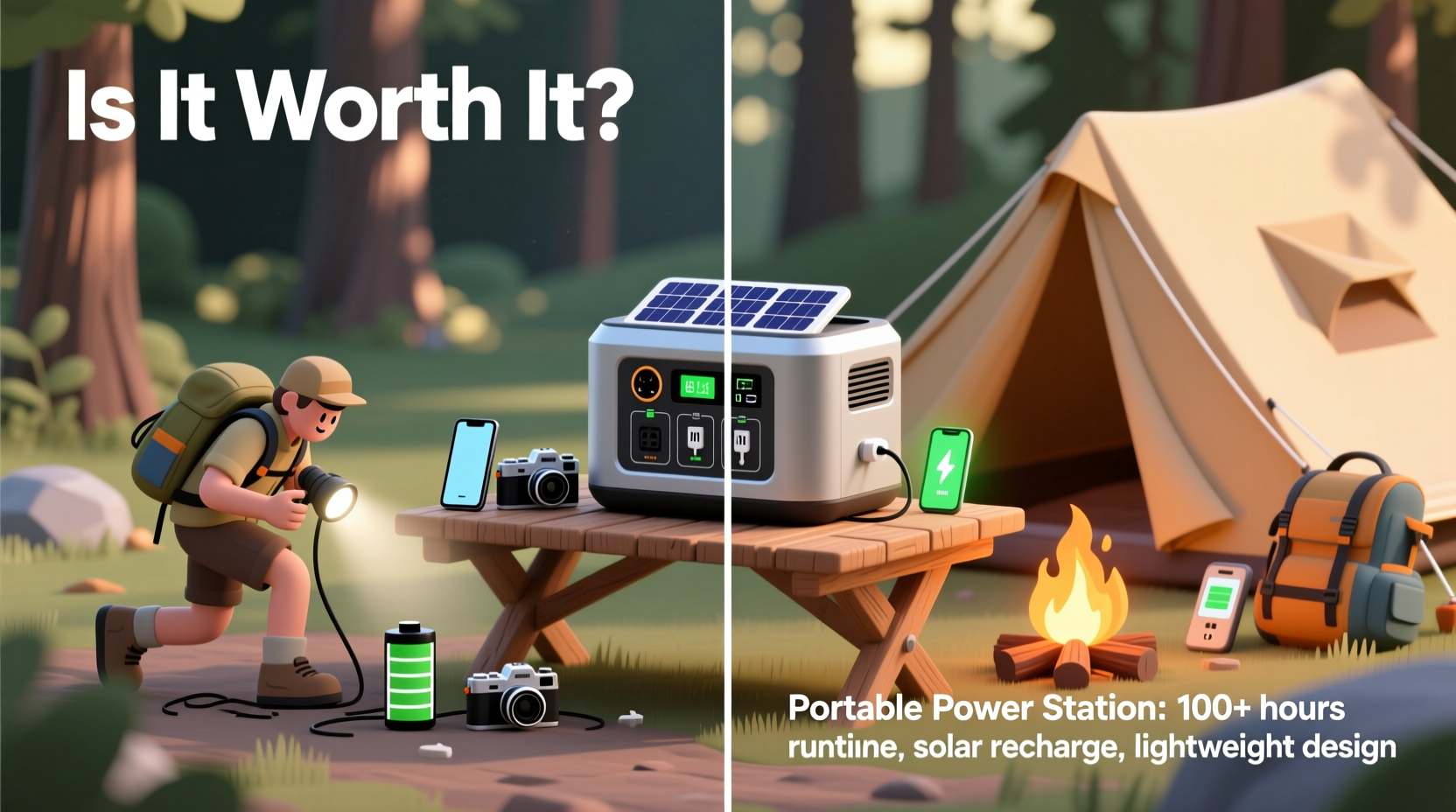
A portable power station is a battery-powered generator capable of storing electrical energy and delivering it through AC outlets, USB ports, DC outputs, and sometimes even wireless charging. Unlike gas generators, they operate silently, require no fuel, produce zero emissions, and are generally safe to use indoors or in enclosed spaces like tents or RVs.
These units range from compact models under 300Wh (watt-hours) ideal for charging phones and LED lights, to larger 2000Wh+ systems that can run mini-fridges, electric grills, or CPAP machines. Most modern stations support solar recharging, making them especially valuable for off-grid adventures.
Tip: Always check the total output wattage before powering high-draw devices like kettles or heaters — many stations can’t handle loads over 1000W.When a Power Station Makes Sense
Not all camping styles benefit equally from a portable power station. The value depends largely on how you camp and what gear you bring. Consider these scenarios where a power station becomes not just useful, but critical:
- Family camping: Multiple devices, kids’ entertainment, lighting, and refrigeration increase power demand.
- Glamping: If you're using electric coffee makers, blenders, or projectors, consistent power is non-negotiable.
- Digital creators: Photographers, vloggers, and remote workers need reliable power to charge batteries, laptops, and drones.
- Medical needs: Travelers using CPAP machines, insulin coolers, or oxygen concentrators depend on uninterrupted power.
- Winter camping: Longer nights mean more lighting; cold weather drains batteries faster.
“Portable power stations have become a lifeline for backcountry medical responders who need to keep communication and diagnostic equipment running.” — Dr. Lena Torres, Wilderness Medicine Specialist
Cost vs. Long-Term Value
Entry-level models start around $200, while premium units with 1000Wh+ capacity and solar compatibility can exceed $1,500. At first glance, this seems steep for something that doesn’t directly enhance survival. However, evaluating long-term value changes the equation.
Consider replacing disposable solutions like single-use batteries or fuel-based generators. A mid-range power station (e.g., 500–700Wh) pays for itself within 3–5 frequent camping trips when you factor in:
- Saved costs on AA/AAA batteries
- Eliminated propane or gasoline purchases
- Reduced wear on vehicle alternators from prolonged idling to charge devices
- Potential savings from avoiding spoiled food due to unreliable cooling
Moreover, most quality stations last 5–7 years with proper care and offer hundreds of charge cycles. That amortizes the upfront cost to less than $50 per year — comparable to a single piece of high-end camping gear.
Power Station Comparison Table
| Model | Battery Capacity | Output Ports | Solar Charging? | Weight | Price Range |
|---|---|---|---|---|---|
| Jackery Explorer 300 | 293Wh | AC x1, USB x3, DC x1 | Yes (max 60W) | 7.1 lbs | $250–$300 |
| EcoFlow River 2 Pro | 768Wh | AC x2, USB x5, DC x2 | Yes (max 220W) | 17.6 lbs | $650–$720 |
| Bluetti EB3A | 600Wh | AC x2, USB x4, DC x2 | Yes (max 200W) | 13.8 lbs | $550–$600 |
| Goal Zero Yeti 1000X | 1045Wh | AC x2, USB x4, DC x2 | Yes (max 120W) | 22.5 lbs | $1,100–$1,300 |
This table highlights key differences in capacity, portability, and price. Smaller units suit minimalist backpackers or weekend car campers, while larger ones serve extended family trips or digital nomads needing sustained power.
Real-World Use Case: A Weekend Glamp in the Rockies
Sarah and her family of four planned a three-day glamping trip in Colorado. They brought string lights, a Bluetooth speaker, a portable projector for movie nights, two smartphones, a drone, and a mini-fridge for drinks and baby food. Without a power source, their car battery would have drained quickly, and disposable batteries weren’t sustainable.
They rented a Bluetti EB3A (600Wh). Over the weekend:
- Charged phones twice each day
- Ran the mini-fridge continuously (consuming ~50Wh/hour)
- Used projector for 2.5 hours (approx. 200Wh total)
- Powered lights and speaker for evening ambiance
Total consumption: ~580Wh. They recharged the unit halfway through the trip using a 100W foldable solar panel during peak sunlight (4.5 hours). No grid access was needed. The rental cost was $80 — less than half the price of buying — and confirmed that ownership would pay off after 6–7 similar trips.
Tip: Rent before you buy. Many outdoor gear shops and online platforms offer weekly rentals to test performance in your typical conditions.Step-by-Step Guide: Choosing the Right Power Station
Selecting the best model requires matching your energy needs with practical constraints. Follow this sequence:
- List all devices you plan to power. Include phones, cameras, lights, fans, fridges, CPAP machines, etc.
- Check each device’s wattage. Look at labels or manuals. If only amps and volts are listed, multiply them (W = V × A).
- Estimate daily usage time per device. Example: Phone charges for 2 hours at 10W = 20Wh used.
- Add up total daily watt-hours. Include a 20% buffer for inefficiencies.
- Select a station with 25–30% more capacity than your total. This ensures headroom and accounts for battery degradation over time.
- Verify portability. Will you carry it far from the car? If yes, prioritize weight and size.
- Confirm solar input compatibility. Ensure the station accepts the voltage/wattage of your existing or planned solar panels.
Example: Running a 50W mini-fridge for 10 hours (500Wh), charging two phones (20Wh each), and using LED lights (50Wh) totals ~600Wh. A 700–800Wh station is ideal.
Common Pitfalls to Avoid
Even experienced campers make mistakes when adopting new tech. Watch out for these:
- Overestimating solar recharge speed: A 100W panel won’t fully recharge a 500Wh station in one hour. Real-world efficiency (due to angle, clouds, dust) cuts actual input by 30–50%.
- Ignoring pure sine wave output: Sensitive electronics like laptops and medical devices require clean power. Avoid modified sine wave inverters.
- Storing with low charge: Lithium-ion batteries degrade if stored below 20%. Recharge to 50–80% before long-term storage.
- Using extension cords or power strips: These can overload circuits or reduce efficiency. Plug devices directly when possible.
Do’s and Don’ts Checklist
| Do | Don’t |
|---|---|
| Calculate total watt-hour needs before buying | Assume all USB-C ports support fast charging |
| Use solar panels with MC4 connectors for stable connection | Expose the unit to rain or extreme heat |
| Recharge every 3–6 months if in storage | Run high-wattage appliances like hair dryers or microwaves unless the station supports it |
| Keep firmware updated (on smart models) | Leave devices plugged in indefinitely — unplug once charged to preserve battery health |
Frequently Asked Questions
Can I take a portable power station on a plane?
No, most airlines prohibit lithium-ion batteries over 100Wh in carry-on or checked luggage. Check FAA and airline rules — typically only units under 100Wh are allowed, and even then, approval is rare. Transport via ground shipping or purchase locally.
How long does a portable power station last?
Most quality units retain 80% capacity after 500–1000 charge cycles. With average weekend use, that translates to 5–7 years. Lifespan drops significantly if regularly drained to 0% or left fully charged for months.
Are they waterproof?
No. While some models are splash-resistant, none are fully waterproof. Always store indoors or under cover during rain. Moisture damage is not covered under warranty.
Final Verdict: Who Should Invest?
For casual campers who only need to top off a phone or power a headlamp, a rugged power bank remains the smarter choice. But for those who:
- Regularly camp for multiple days
- Use power-hungry gear
- Value convenience and safety
- Plan to use it beyond camping (e.g., emergencies, tailgating, blackouts)
— a portable power station is absolutely worth the investment. It transforms the camping experience from basic survival to comfortable, connected adventure without sacrificing environmental responsibility.
The technology has matured, prices are dropping, and solar integration makes off-grid sustainability achievable. What once felt like a luxury is now a practical tool for modern outdoor living.
“The right power station doesn’t just charge your devices — it extends your time in the wild by removing energy anxiety.” — Mark Delgado, Outdoor Tech Reviewer, *GearFrontier Magazine*
Take Action Today
If you’ve been on the fence, try renting a mid-sized unit for your next trip. Track your usage, test solar recharging, and evaluate how much it improves your experience. Chances are, you’ll wonder how you ever camped without one. Whether you’re preparing for emergency readiness or simply want to enjoy cold drinks and ambient lighting under the stars, a portable power station might be the most impactful upgrade you make this season.
🚀 Ready to find your perfect match? Start by listing your devices and calculating your watt-hour needs — then explore models that fit your budget and lifestyle. Share your setup in the comments and help fellow campers power smarter!








