Running out of laundry detergent halfway through a wash cycle is a common household dilemma. Whether you misjudged the load size or forgot to restock, the question arises: can you safely add a different brand or type of detergent mid-cycle without damaging your clothes or machine? The answer isn’t a simple yes or no—it depends on the formulations involved, the fabric types, and how the detergents interact. Understanding the chemistry behind laundry detergents and the mechanics of your washing machine can help you make an informed decision when caught in this situation.
Understanding Laundry Detergent Formulations
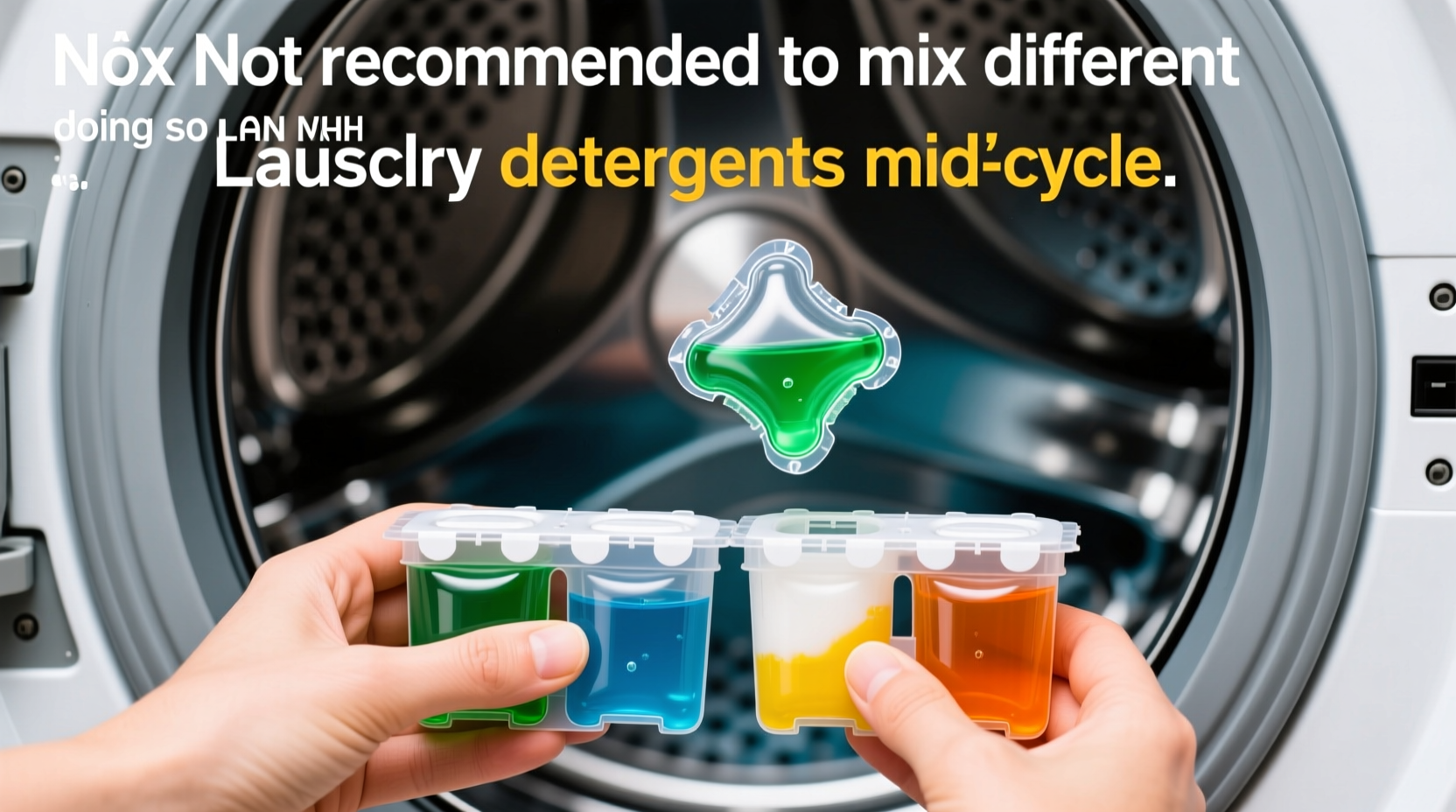
Not all laundry detergents are created equal. They vary significantly in chemical composition, pH levels, enzyme content, surfactants, and additives like brighteners or fragrances. These differences affect how they clean and react with fabrics and other cleaning agents.
Most detergents fall into one of these categories:
- High-efficiency (HE) detergents: Designed for front-loading machines with low water usage. They produce fewer suds to prevent overfoaming.
- Standard detergents: Intended for top-loading machines with higher water volume. They generate more suds, which can overwhelm HE machines.
- Pods and liquid gels: Pre-measured units that dissolve during the cycle. Their concentrated formulas may not mix well with others.
- Sensitive skin or fragrance-free detergents: Often free of dyes and perfumes, formulated for allergy-prone individuals.
- Bleach-infused or stain-targeting detergents: Contain additional chemicals like optical brighteners or chlorine alternatives.
Mixing detergents with incompatible ingredients—such as an enzyme-heavy formula with a bleach-based one—can neutralize active components or create unwanted residues. For example, chlorine bleach can deactivate enzymes in biological detergents, reducing cleaning efficiency.
Tip: Always check labels for warnings about mixing products. If one detergent contains bleach and another contains enzymes, avoid combining them.Risks of Mixing Different Detergents Mid-Cycle
Introducing a second detergent after the wash has started introduces several potential issues:
1. Sudsing Imbalance
Adding a standard detergent to a high-efficiency machine mid-cycle can cause excessive foaming. HE washers rely on low-sudsing formulas to function properly. Too many suds reduce agitation effectiveness and may leave residue on clothes or inside the drum. In extreme cases, excess foam can trigger error codes or require additional rinse cycles.
2. Chemical Incompatibility
Some detergents contain ingredients that counteract each other. For instance, fabric softeners often contain cationic surfactants, while most detergents use anionic surfactants. Mixing them can cause clumping, reduced cleaning power, and greasy buildup on fabrics.
3. Residue Buildup
Different detergents may not fully dissolve when added late in the cycle, especially if water temperature drops. Undissolved particles can stick to clothing fibers or accumulate in the washing machine’s pump and hoses, leading to odors and mechanical issues over time.
4. Fabric Damage
Delicate fabrics like silk, wool, or spandex can be sensitive to strong surfactants or alkaline pH levels. Adding a heavy-duty detergent mid-cycle to a load initially treated with a gentle formula may compromise fabric integrity, leading to fading, shrinking, or pilling.
“Mixing detergents without understanding their chemistry can compromise both cleaning performance and garment longevity.” — Dr. Lena Patel, Textile Chemist at the Institute for Fabric Innovation
When It Might Be Acceptable to Mix Detergents
While generally discouraged, there are limited scenarios where adding a different detergent mid-cycle poses minimal risk:
- You’re using two **liquid detergents** of similar type (e.g., both HE-compatible).
- The second detergent is from the same product line (e.g., Tide Original and Tide Free & Clear).
- The load consists of durable cotton or polyester blends, not delicate materials.
- The wash cycle is still in the early stages (first 10–15 minutes), allowing proper dilution.
- Neither detergent contains bleach, enzymes, or fabric softener if the other does.
In such cases, the risk of adverse reactions is low, especially if the detergents share base ingredients and are designed for similar machine types.
Mini Case Study: Emergency Mid-Cycle Switch
Sarah was doing a regular load of towels when she realized her Tide HE Liquid had run out just after the dispenser released its dose. With only Arm & Hammer Sensitive Skin detergent on hand, she hesitated. After checking both labels—confirming both were HE-compatible, dye-free, and enzyme-based—she cautiously added half the recommended dose directly into the drum during the initial agitation phase.
The cycle completed normally, with no excess suds or odor. Her towels came out clean and soft, with no visible residue. Sarah noted that future planning—keeping a backup bottle—would prevent last-minute decisions, but acknowledged that careful selection made the switch manageable.
Step-by-Step Guide: What to Do When You Run Out Mid-Cycle
If you find yourself without detergent mid-wash, follow this logical sequence to minimize damage and maximize cleaning:
- Pause the Machine: Stop the cycle before it enters the spin or rinse phase. Most modern washers allow pausing to add items or detergent.
- Assess Your Backup Detergent: Check the type (HE vs. standard), ingredients (bleach, enzymes, softeners), and compatibility with your machine and fabric.
- Use Half the Normal Dose: Since some detergent already exists in the water, adding a full dose could lead to oversaturation. Use approximately half the usual amount of the replacement detergent.
- Add Directly to the Drum: Pour the detergent into the bottom of the drum, not the dispenser, to ensure immediate dispersion. Avoid pouring directly onto clothes to prevent concentrated exposure.
- Resume and Monitor: Restart the cycle and watch for excessive suds. If foam builds up abnormally, pause again and run an extra rinse cycle.
- Inspect After Drying: Once the load is dry, check for stiffness, discoloration, or residue. If present, rewash with water only or a vinegar rinse to remove buildup.
Do’s and Don’ts of Mixing Laundry Detergents
| Do’s | Don’ts |
|---|---|
| ✅ Use detergents of the same type (e.g., HE + HE) | ❌ Mix bleach-containing and enzyme-based detergents |
| ✅ Add half the normal dose when supplementing | ❌ Use powdered detergent mid-cycle (risk of clumping) |
| ✅ Add liquid directly to the drum for faster dispersion | ❌ Combine fabric softener formulas with regular detergents |
| ✅ Check labels for pH and ingredient compatibility | ❌ Use standard detergent in an HE machine |
| ✅ Run an extra rinse if suds persist | ❌ Mix pods or tablets with liquids mid-cycle |
Alternative Solutions to Mid-Cycle Detergent Shortage
If mixing detergents feels too risky, consider these safer alternatives:
- Complete the cycle without additional detergent: Water and agitation alone can still remove loose dirt and refresh lightly soiled clothes. Reserve this for non-greasy, everyday wear.
- Use white vinegar: Add ½ cup of distilled white vinegar to the rinse compartment. It acts as a natural deodorizer and helps break down mineral deposits and soap scum.
- Baking soda boost: A ¼ cup of baking soda added to the drum can enhance cleaning power and neutralize odors without interfering with existing detergent.
- Wash again later: If the load is heavily soiled, skip adding anything now and rewash it properly once you have the right detergent.
These options are gentler on fabrics and machines than introducing an incompatible detergent at the wrong stage.
Frequently Asked Questions
Can I mix liquid and powder detergent in the same load?
No, it's not recommended. Powdered detergents dissolve slowly and may clump when introduced mid-cycle, especially in cold water. Combining forms increases the risk of undissolved residue on clothes and machine components.
Will mixing detergents ruin my washing machine?
Occasional mixing is unlikely to cause permanent damage, but repeated misuse—especially introducing high-sudsing or bleach-heavy formulas into incompatible systems—can lead to clogs, mold growth, or sensor errors over time. Prevention is key.
What should I do if my clothes feel stiff after mixing detergents?
Stiffness usually indicates residue buildup. Rewash the load with warm water and ½ cup of white vinegar in the rinse cycle. Avoid detergent this time. Dry naturally to assess texture before using heat.
Checklist: Safe Practices for Detergent Emergencies
- ☐ Confirm both detergents are HE-compatible if using a front-loader
- ☐ Verify no conflicting ingredients (e.g., bleach + enzymes)
- ☐ Use only half the standard dose of the replacement detergent
- ☐ Add liquid directly to the drum, not the dispenser
- ☐ Pause the washer before adding to ensure proper dispersion
- ☐ Watch for excessive suds; run an extra rinse if needed
- ☐ Inspect clothes post-dry for residue or texture changes
“The safest approach is consistency. Stick to one detergent type unless absolutely necessary—and when you must switch, prioritize compatibility over convenience.” — Mark Reynolds, Appliance Engineer at CleanCycle Labs
Conclusion
Mixing different laundry detergents mid-cycle is not ideal, but it’s not always catastrophic. With careful consideration of detergent types, ingredients, and application methods, you can navigate this common laundry challenge without harming your clothes or machine. The best long-term strategy is prevention: monitor detergent levels, keep a backup supply, and choose versatile, machine-safe formulas for everyday use. When emergencies arise, rely on informed decisions—not guesswork—to protect your fabrics and appliance investment.
💬 Have you ever mixed detergents mid-wash? Share your experience or tips in the comments—your insight could help others avoid laundry mishaps!








