
Stretching has long been considered a cornerstone of fitness routines, often touted as essential for preventing injury and improving flexibility. Yet, despite its widespread use, confusion persists: should you stretch before your workout, after, or both? More importantly, how does timing affect muscle recovery, performance, and long-term mobility? The answer isn’t as straightforward as many assume, and recent research challenges traditional beliefs about pre-workout static stretching. Understanding the physiological effects of different types of stretching—and when to apply them—can significantly impact your training outcomes and recovery quality.
Muscle recovery isn't just about rest and nutrition; it's also influenced by how you prepare your body for movement and how you cool down afterward. Stretching plays a role in blood flow, neuromuscular activation, and tissue elasticity—all critical components of post-exercise healing. This article breaks down the science behind stretching timing, compares pre- and post-workout approaches, and provides actionable guidance for optimizing your routine based on your goals.
The Science Behind Stretching and Muscle Recovery
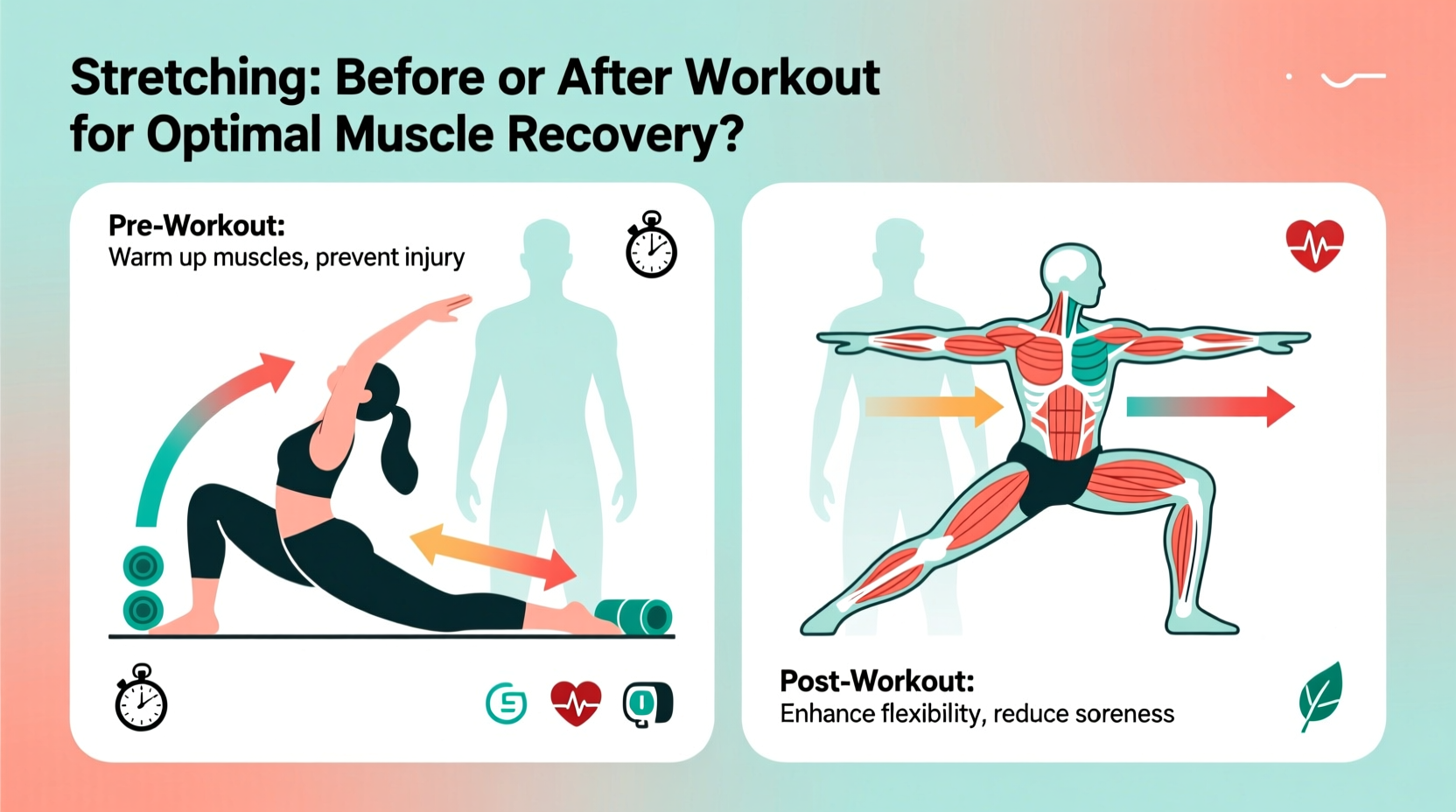
Stretching influences several physiological processes that are directly linked to muscle recovery. When muscles are exercised, especially during resistance or high-intensity training, micro-tears occur in the fibers. Recovery involves repairing these tears, reducing inflammation, restoring energy stores, and re-establishing optimal neuromuscular function. Stretching can support this process by enhancing circulation, reducing muscle stiffness, and promoting relaxation of the nervous system.
There are two primary types of stretching: static and dynamic. Static stretching involves holding a position for 15–60 seconds to lengthen a muscle, while dynamic stretching uses controlled movements through a range of motion to warm up the body. Each type affects the body differently depending on when it’s performed.
Static stretching before intense activity may temporarily reduce muscle strength and power output. A 2014 meta-analysis published in the *Scandinavian Journal of Medicine & Science in Sports* found that prolonged static stretching (over 60 seconds per muscle group) prior to exercise could impair maximal strength and sprint performance. This occurs because extended stretching may decrease muscle-tendon stiffness, which is necessary for explosive force production.
In contrast, dynamic stretching increases blood flow, elevates core temperature, and primes the nervous system for coordinated movement—making it ideal as part of a warm-up. Post-workout, static stretching becomes more beneficial. At this stage, muscles are warm and pliable, allowing for safer elongation and improved flexibility gains over time. Additionally, gentle stretching after exertion may help modulate the nervous system, shifting it from a state of high arousal to one conducive to recovery.
“Timing matters more than people realize. Stretching isn’t one-size-fits-all. What helps recovery might hurt performance if done at the wrong time.” — Dr. Lena Torres, Sports Physiologist and Performance Consultant
Pre-Workout Stretching: Purpose, Benefits, and Risks
Many athletes and gym-goers begin their sessions with a round of static stretches, believing it prevents injury and loosens tight muscles. However, modern evidence suggests this practice may be counterproductive—especially before strength or power-based workouts.
Static stretching pre-exercise can lead to:
- Reduced muscle activation due to decreased neural drive
- Temporary loss of elastic energy storage in tendons
- Lowered rate of force development, affecting jump height or sprint speed
That said, not all pre-workout stretching is harmful. Dynamic stretching, such as leg swings, arm circles, walking lunges, or hip openers, serves as an effective neuromuscular primer. These movements mimic the actions of the upcoming workout, increasing joint mobility and preparing the mind-body connection without suppressing muscle output.
Tip: Replace static stretches before lifting with dynamic drills that match your workout—e.g., high knees before running or shoulder rolls before upper-body training.A practical example: a powerlifter warming up for heavy squats shouldn’t spend five minutes doing seated forward folds. Instead, they should perform bodyweight squats, kettlebell halos, and banded hip distractions to activate key muscle groups and lubricate joints. This approach enhances performance and reduces injury risk far more effectively than passive stretching.
Post-Workout Stretching: Maximizing Recovery and Flexibility
After exercise, muscles are warm, blood flow is elevated, and connective tissues are more responsive to elongation. This makes the post-workout window ideal for static stretching aimed at improving flexibility and aiding recovery.
Stretching after a workout can:
- Help release residual muscle tension
- Improve range of motion over time
- Support parasympathetic nervous system engagement, promoting relaxation
- Enhance lymphatic drainage, potentially reducing soreness
Studies suggest that consistent post-exercise stretching leads to greater long-term flexibility improvements compared to pre-workout stretching alone. A 2020 review in the *Journal of Strength and Conditioning Research* concluded that chronic flexibility gains were most significant when stretching was performed after resistance training, particularly when held for 30–45 seconds per muscle group across multiple sets.
For endurance athletes, like runners or cyclists, post-workout stretching helps counteract repetitive shortening patterns. For instance, prolonged cycling can tighten hip flexors and hamstrings. Gentle static holds targeting these areas immediately after cooling down can mitigate imbalances and discomfort.
Mini Case Study: Recovery Routine of a Competitive Runner
Sophie, a 28-year-old marathon runner, struggled with recurring tightness in her calves and lower back. She had been stretching before every run—holding calf raises and toe touches for 30 seconds each—but still experienced frequent stiffness and delayed recovery.
Her coach recommended eliminating static stretching from her pre-run routine and replacing it with dynamic movements: leg swings, butt kicks, and skipping drills. After runs, she began dedicating 10 minutes to static stretching—focusing on calves, hamstrings, hip flexors, and glutes—while breathing deeply and relaxing into each pose.
Within four weeks, Sophie reported reduced muscle soreness, improved stride efficiency, and fewer instances of lower-back discomfort. Her recovery times shortened, and she felt more limber throughout her training cycle. The shift in stretching timing made a measurable difference in both comfort and performance.
Do’s and Don’ts of Stretching for Muscle Recovery
| Action | Do | Don't |
|---|---|---|
| Before Workout | Perform dynamic stretches specific to your activity | Hold static stretches longer than 20 seconds per muscle |
| After Workout | Use static stretches to improve flexibility and relax muscles | Force stretches to the point of pain or bounce aggressively |
| Frequency | Stretch major muscle groups 3–5 times per week post-exercise | Expect immediate flexibility gains overnight |
| Holding Time | Hold static stretches 30–45 seconds for optimal effect | Stretch cold muscles without warming up first |
| Breathing | Breathe deeply and rhythmically during stretches | Hold your breath or tense unrelated muscles |
Step-by-Step Guide to Optimizing Your Stretching Routine
To align your stretching habits with muscle recovery goals, follow this structured approach:
- Assess Your Workout Type: Determine whether your session is strength-focused, endurance-based, or skill-oriented. This guides your warm-up strategy.
- Warm Up First (5–10 min): Engage in light cardio (jogging, jumping jacks) to raise body temperature before any stretching.
- Pre-Workout: Use Dynamic Movements (5–10 min): Perform 6–8 dynamic exercises that replicate your workout motions. Examples include walking lunges with rotation, inchworms, or scorpion reaches.
- Complete Your Training Session: Focus on form, intensity, and progression without interruption.
- Cool Down (3–5 min): Gradually reduce intensity—e.g., slow jog to walk—to normalize heart rate and initiate recovery processes.
- Post-Workout: Apply Static Stretches (10–15 min): Target major working muscle groups. Hold each stretch for 30–45 seconds, repeat 2–3 times. Prioritize areas that feel tight or overused.
- Integrate Foam Rolling (Optional): Combine self-myofascial release with stretching for enhanced tissue relaxation.
- Hydrate and Refuel: Follow stretching with water and balanced nutrition to further support recovery.
Frequently Asked Questions
Can stretching prevent delayed onset muscle soreness (DOMS)?
Current research indicates that stretching—either before or after exercise—has minimal impact on the severity or duration of DOMS. While it may provide temporary relief by increasing blood flow and reducing perceived tightness, it does not eliminate microtrauma-induced soreness. Active recovery, hydration, and sleep remain more effective strategies for managing DOMS.
Should I stretch every day for better recovery?
Daily stretching can improve overall flexibility and reduce chronic muscle tension, but it’s not required for recovery unless you’re highly active. For most individuals, stretching 3–5 times per week after workouts is sufficient. Overstretching fatigued muscles daily may lead to instability or hypermobility, especially without adequate strengthening.
Is there a best time to stretch for longevity and mobility?
Yes. For long-term joint health and functional mobility, the most effective time is post-exercise or during dedicated flexibility sessions when muscles are warm. Consistency over months and years yields the greatest results. Incorporating yoga or mobility work 2–3 times weekly complements athletic training and supports graceful aging.
Putting It All Together: A Balanced Approach
The question of whether it’s better to stretch before or after a workout for muscle recovery ultimately depends on the type of stretching and the context of your training. Static stretching before exercise offers little benefit and may hinder performance, especially in power or speed activities. In contrast, dynamic preparation primes the body for movement and reduces injury risk.
Post-workout is where static stretching shines. It supports flexibility development, reduces residual muscle tension, and contributes to a mindful transition out of intense physical effort. When combined with proper cool-down, hydration, and rest, it becomes a valuable component of holistic recovery.
No single habit transforms recovery overnight. But consistently choosing the right kind of stretch at the right time compounds over weeks and months into noticeable improvements in movement quality, resilience, and well-being.
“The goal isn’t to stretch more—it’s to stretch smarter. Match your method to your moment.” — Coach Marcus Reed, Director of Human Performance at Apex Athletic Institute
Take Action Today
Reevaluate your current stretching routine. Are you spending valuable pre-lift minutes in deep static holds that might be weakening your output? Consider swapping those for purposeful, movement-based activations. After your next workout, dedicate just 8–10 minutes to intentional static stretching. Notice how your body feels in the hours and days that follow.
Small adjustments in timing and technique can yield meaningful gains in recovery, performance, and long-term joint health. Start applying these principles today—not just to train harder, but to recover better and move freely for years to come.
💬 What’s one change you’ll make to your stretching routine this week? Share your commitment in the comments and inspire others to stretch with intention.








