
For hikers venturing into remote wilderness, staying powered isn’t just about convenience—it’s often essential. GPS devices, headlamps, satellite messengers, and smartphones are lifelines when trails get tough. But how dependable is a solar charger when you're miles from an outlet? Many outdoor enthusiasts assume solar panels are a green solution to battery anxiety, but real-world conditions can challenge their reliability. The truth lies between optimism and realism: solar chargers can be effective, but they’re rarely a standalone solution.
Understanding their strengths and limitations helps backpackers make informed decisions. Whether you're planning a weekend trek or a multi-week thru-hike, knowing when to rely on solar—and when to fall back on alternatives—can mean the difference between a connected emergency call and a powerless wait.
How Solar Chargers Work in the Wild
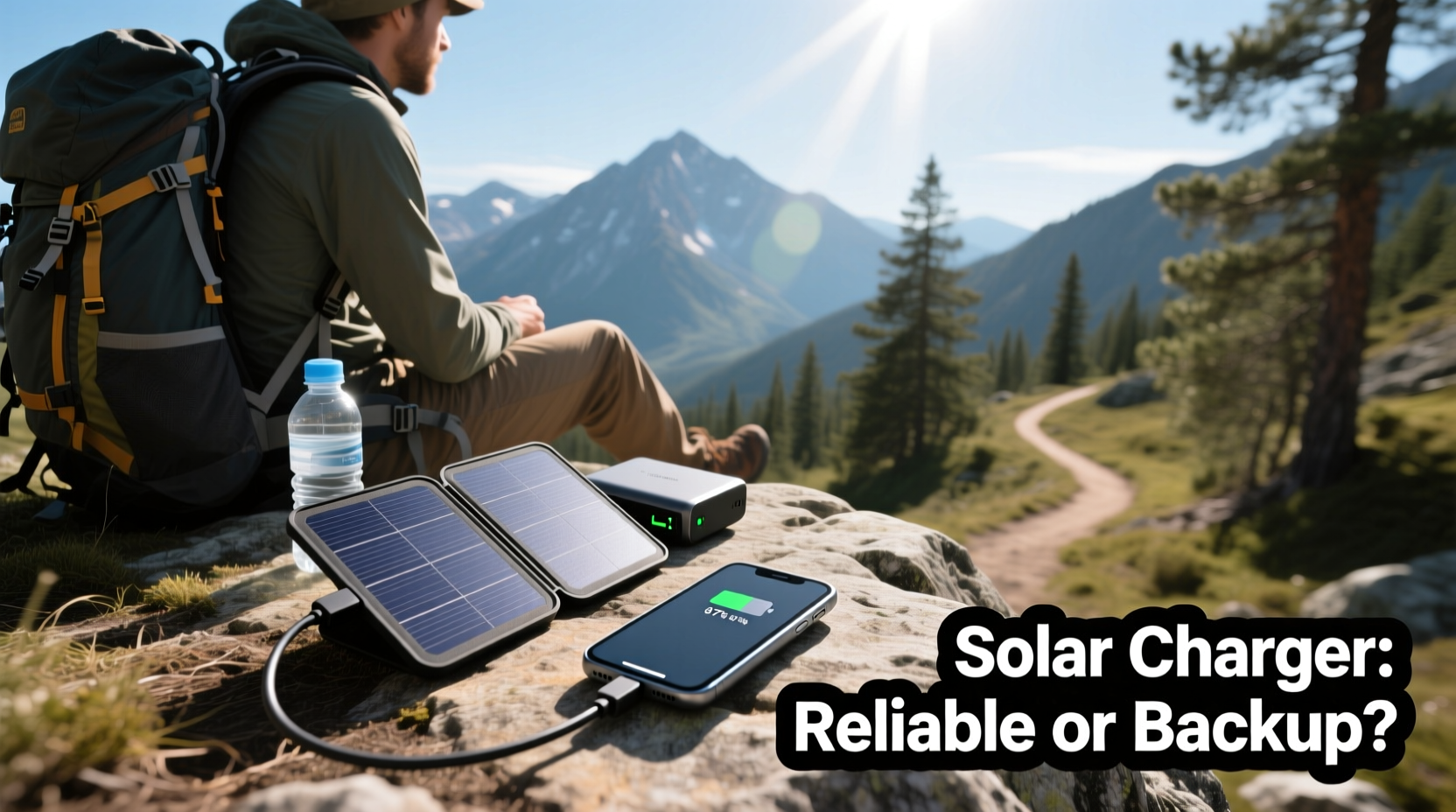
Solar chargers convert sunlight into electrical energy using photovoltaic (PV) cells. Most portable models designed for hiking are lightweight, foldable, and equipped with USB ports to charge small electronics. They range from 5W to 20W in output, with higher wattage generally meaning faster charging—but also more weight and bulk.
In ideal conditions—direct sunlight, clear skies, and optimal panel angle—a 10W solar charger can fully charge a smartphone in 3–5 hours. However, \"ideal\" is rare on the trail. Cloud cover, tree canopy, rain, and seasonal sun angles dramatically reduce efficiency. A study by the Outdoor Gear Lab found that under heavy forest shade, solar output can drop by as much as 90%.
Moreover, solar doesn’t work at night. Unlike a power bank that delivers energy on demand, solar requires patience and planning. You can’t simply plug in your phone during dinner and expect it to be charged by morning unless you’ve been actively harvesting sunlight all day.
Tip: Angle your solar panel toward the sun every few hours. Even a 30-degree adjustment can boost efficiency by 25%.Pros and Cons of Relying on Solar While Hiking
The decision to use solar hinges on balancing benefits against practical drawbacks. Here's a breakdown of key factors:
| Advantages | Disadvantages |
|---|---|
| Renewable & Sustainable: No need to carry extra batteries or find outlets. | Weather Dependent: Overcast days or rain severely limit charging. |
| Lightweight Options Available: Some models weigh under 10 oz. | Slow Charging: Full phone charge may take most of the day. |
| Long-Term Value: One-time purchase with no recurring costs. | Vulnerable to Damage: Thin panels can tear or malfunction if mishandled. |
| Emergency Use: Can top up critical devices when power banks die. | Requires Active Management: Must be set up, angled, and monitored. |
While solar offers undeniable environmental and logistical advantages, its inconsistency makes it risky as a primary power source. It shines best as part of a layered strategy rather than a sole solution.
Real-World Example: A 7-Day Trek Through the Sierra Nevada
Consider Alex, an experienced backpacker hiking the John Muir Trail. He carried a 12W foldable solar panel clipped to his pack and a 10,000mAh power bank. His goal: keep his GPS, phone, and headlamp charged without resupply.
Days 1–3 were sunny. He laid the panel on a rock during lunch breaks and propped it against his tent in the afternoon. By day’s end, he gained about 60–70% phone charge daily—enough to maintain navigation and send occasional check-in texts via satellite app.
Day 4 brought thunderstorms. Clouds rolled in by 10 a.m., and rain lasted through evening. Despite leaving the panel exposed, it generated less than 5% charge. Fortunately, his power bank had stored excess from previous days, so he didn’t lose critical functions.
On Day 6, under partial sun, he managed only a 30% phone boost. Without prior storage, he would have run out of power before reaching civilization.
This case illustrates a crucial lesson: solar works best when paired with energy storage. It’s not the charger itself that fails—it’s the expectation of instant, consistent power that leads to disappointment.
“Solar is a tool, not a magic wand. It extends your power window, but only if you treat it like a weather-dependent resource.” — Dr. Lena Torres, Renewable Energy Specialist at the National Outdoor Research Group
Maximizing Solar Efficiency: A Step-by-Step Guide
To get the most from your solar charger, follow this field-tested routine:
- Start with a full power bank. Before departure, ensure your battery pack is fully charged. This creates a buffer for low-sun days.
- Attach the panel to your pack during daylight hours. Even indirect exposure generates some trickle charge, especially on bright overcast days.
- Pause for dedicated charging sessions. During long breaks (lunch, camp setup), lay the panel flat and angle it toward the sun. Avoid shading from trees or rocks.
- Use a solar tracker app. Apps like Sun Surveyor show sun path and peak intensity times, helping you optimize placement.
- Charge the power bank first, then your devices. Directly charging a phone in fluctuating light can interrupt the process. Instead, feed energy into a battery pack, which stabilizes output.
- Protect the panel. Wipe dust off regularly and avoid folding while damp to prevent micro-cracks in the cells.
This approach turns solar into a supplemental system rather than a gamble. It won’t eliminate the need for planning, but it significantly reduces reliance on external power sources.
Checklist: Is Your Solar Setup Ready for the Trail?
- ✅ Panel wattage matches your device needs (e.g., 10W+ for smartphones)
- ✅ Compatible with your devices (check USB-A/USB-C output)
- ✅ Durable build (ripstop fabric, reinforced connectors)
- ✅ Lightweight and packable (under 1 lb preferred)
- ✅ Paired with a high-capacity power bank (at least 10,000mAh)
- ✅ Tested in variable light conditions before the trip
- ✅ Includes a protective case or pouch
Skipping any of these steps increases the risk of failure. For example, a 5W panel may struggle to overcome even minor inefficiencies, while a fragile model could fail after two weeks of rugged use.
When Solar Isn’t Enough: Backup Power Strategies
No matter how efficient your gear, nature doesn’t guarantee sunshine. Smart hikers always prepare for worst-case scenarios. Consider these alternatives:
- High-capacity power banks: Reliable, compact, and immune to weather. Modern lithium-polymer units offer 20,000mAh+ and can recharge a phone 4–5 times.
- Hand-crank chargers: Useful in emergencies, though labor-intensive. Best for topping up radios or headlamps.
- Battery cases: Ideal for short trips. Add 50–100% extra capacity to your phone without extra cables.
- Resupply planning: Route hikes near ranger stations, hostels, or towns where charging is possible every 5–7 days.
The most resilient systems combine solar with one or more of these backups. Think of solar as extending your battery life, not replacing it.
Tip: Charge your power bank at night using solar-stored energy during the day. This decouples generation from usage and improves efficiency.Frequently Asked Questions
Can I charge my phone directly from a solar panel while hiking?
Technically yes, but it’s inefficient. Movement, changing light, and inconsistent angles cause frequent disconnects. Most modern phones stop charging if voltage drops momentarily. It’s better to charge a power bank during the day and use that to charge devices later.
Do solar chargers work on cloudy days?
Yes, but at reduced capacity—typically 10% to 30% of rated output. Thin-film panels perform slightly better in diffuse light than rigid ones. Don’t expect fast charging, but every bit helps when conserved.
Are foldable solar panels durable enough for long hikes?
Quality varies widely. Look for models with IPX4 or higher water resistance, reinforced stitching, and UV-resistant coatings. Brands like Goal Zero, Anker, and BigBlue have field-tested reputations. Avoid ultra-cheap options—they often fail within months.
Final Verdict: Backup Plan or Reliable Tool?
A solar charger is neither purely a backup nor a fully reliable primary power source. Its value lies in its role as a force multiplier. When integrated wisely into a broader energy strategy, it can extend your off-grid endurance, reduce battery waste, and provide peace of mind.
For casual hikers on 2–3 day trips with moderate sun, a solar panel might be sufficient. But for serious backpackers, thru-hikers, or those traveling in unpredictable climates, solar should be viewed as a supplement—not a substitute—for stored power.
Reliability comes not from the technology alone, but from how you use it. Pairing solar with smart habits, proper gear, and realistic expectations transforms it from a hopeful gadget into a dependable ally.
🚀 Ready to power your next adventure smarter? Audit your current charging setup, test your solar panel in varied conditions, and build a dual-layer power system. Share your trail-tested tips in the comments below—your insight could help fellow hikers stay connected and safe.








