Humidifiers are common household appliances, especially during dry winter months or in arid climates. They promise relief from dry skin, irritated sinuses, and scratchy throats. But many users wonder: is it safe—or even beneficial—to run a humidifier all night? More importantly, could leaving it on create the perfect environment for mold growth, turning a health aid into a health hazard?
The answer isn’t a simple yes or no. It depends on how you use your humidifier, how well you maintain it, and the conditions in your home. When used correctly, a humidifier can significantly improve comfort and respiratory health. However, neglecting maintenance or over-humidifying a space can lead to damp surfaces, condensation on windows, and, ultimately, mold proliferation.
This article breaks down the science behind overnight humidifier use, identifies real risks, and provides actionable strategies to get the benefits without inviting mold into your bedroom or living space.
How Humidifiers Work and Why People Use Them at Night
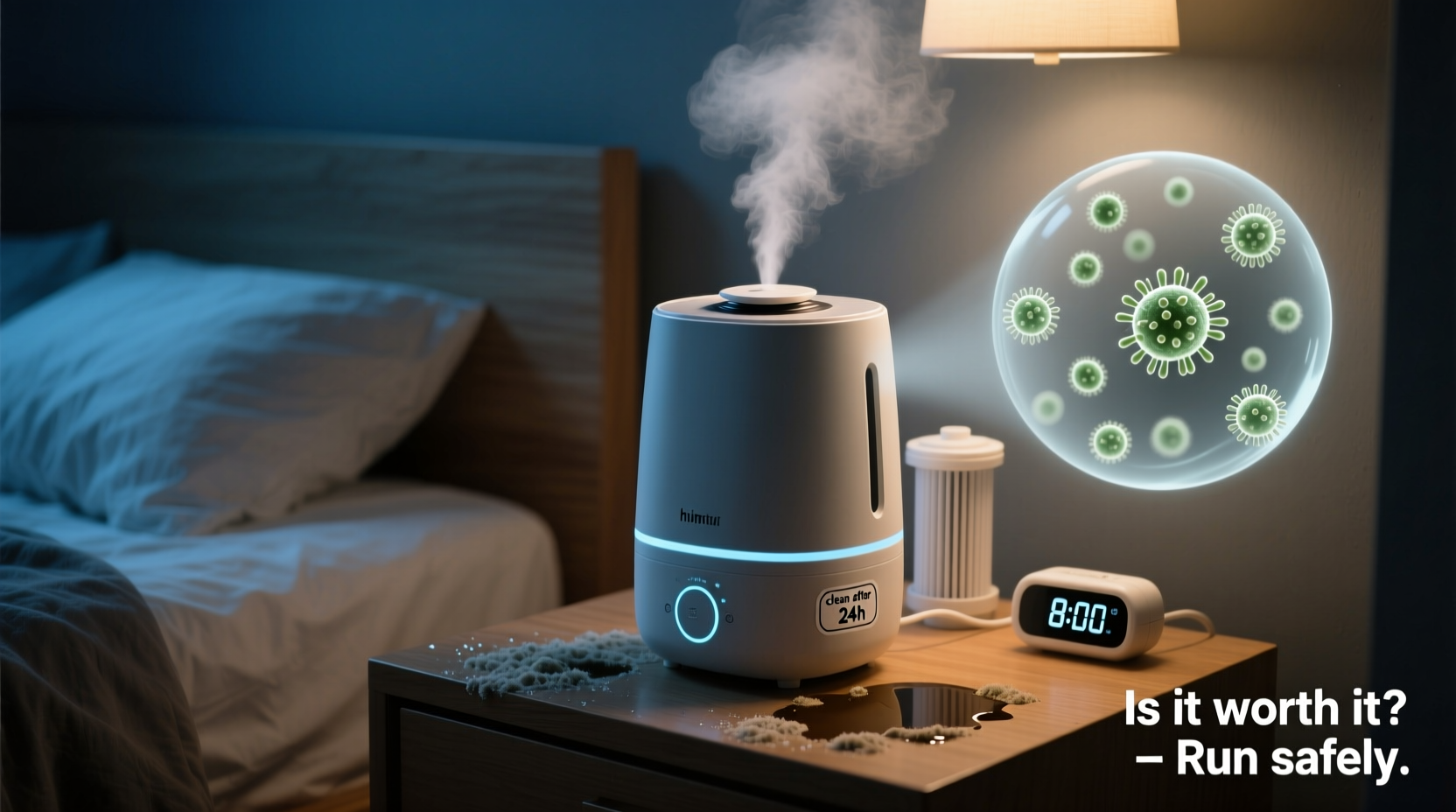
Humidifiers add moisture to the air by converting water into vapor. There are several types—cool mist (ultrasonic and evaporative), warm mist, and steam vaporizers—each with different mechanisms but the same goal: increasing indoor relative humidity.
During colder months, indoor heating systems drastically reduce humidity levels, often dropping below 30%. This dry air can cause:
- Nasal congestion and dry sinuses
- Irritated throat and coughing
- Dry, itchy skin and chapped lips
- Worsened symptoms of asthma or allergies
- Increased static electricity
Running a humidifier at night helps counteract these issues. Many people report better sleep, reduced snoring, and fewer nighttime awakenings due to dryness when using a humidifier. Pediatricians often recommend cool-mist humidifiers for children with colds, as moist air can loosen mucus and ease breathing.
Tip: Place your humidifier at least 2–3 feet away from your bed and on an elevated surface to prevent direct exposure to excess moisture.The Mold Risk: Fact or Myth?
The concern about mold isn’t unfounded. Mold thrives in damp, warm environments with organic material to feed on—conditions that can arise if a humidifier is misused. The issue isn’t the device itself, but how it’s maintained and how much moisture it releases.
When a humidifier runs continuously without cleaning, stagnant water inside the tank becomes a breeding ground for bacteria, mold, and fungi. These contaminants can then be aerosolized and dispersed into the air you breathe—especially dangerous for individuals with allergies, asthma, or compromised immune systems.
A study published in the Journal of Allergy and Clinical Immunology found that poorly maintained humidifiers were associated with increased airborne fungal spores and worsened respiratory symptoms in sensitive individuals.
“Humidifiers can be excellent tools for improving indoor air quality, but only if they’re cleaned regularly and used at appropriate humidity levels.” — Dr. Linda Chen, Pulmonary Specialist
The real danger lies not in running the humidifier overnight, but in allowing it to operate unchecked in unclean conditions or over-humidify a room. Condensation on walls, windows, or furniture signals excessive moisture—a red flag for potential mold growth within days.
Optimal Humidity Levels and How to Monitor Them
Maintaining the right humidity level is crucial. The ideal indoor relative humidity range is between 30% and 50%. Below 30%, the air is too dry; above 60%, the risk of mold, dust mites, and mildew increases significantly.
Many modern humidifiers come with built-in hygrometers or humidity controls, but standalone digital hygrometers are inexpensive and more accurate. Placing one in the room where you run the humidifier allows you to monitor conditions in real time.
| Relative Humidity Level | Effects | Action Required |
|---|---|---|
| <30% | Dry skin, irritated airways, static buildup | Safe for humidifier use |
| 30–50% | Optimal comfort and health | Maintain current settings |
| 50–60% | Slightly damp feeling; dust mites may thrive | Reduce humidifier output |
| >60% | Condensation, mold risk, musty odors | Turn off humidifier; ventilate room |
If your hygrometer consistently reads above 50%, consider using a humidifier with a built-in humidistat that automatically shuts off when the desired level is reached. Alternatively, limit runtime to a few hours before bedtime rather than all night.
Step-by-Step Guide to Safe Overnight Use
You don’t have to give up the comfort of a humidifier at night. Follow this routine to minimize risks while maximizing benefits:
- Choose the right type: Ultrasonic humidifiers are quiet but prone to spreading minerals and microbes if not cleaned. Evaporative models naturally filter out some contaminants via wicks, making them slightly safer for continuous use.
- Use distilled or demineralized water: Tap water contains minerals that promote bacterial growth and create white dust. Distilled water reduces buildup and contamination risk.
- Clean the tank daily: Empty, rinse, and dry the water tank every morning. Wipe down internal surfaces with a soft cloth.
- Deep clean weekly: Once a week, disinfect the entire unit with a mixture of white vinegar and water (1:1 ratio) or a manufacturer-approved solution. Soak the tank and base for 20–30 minutes, then scrub and rinse thoroughly.
- Replace filters and wicks regularly: If your model uses them, follow the replacement schedule. Clogged or old filters harbor mold and reduce efficiency.
- Monitor humidity: Keep a hygrometer nearby and adjust settings accordingly. Never let humidity exceed 55%.
- Ensure proper ventilation: Crack a window slightly or run a bathroom fan periodically to prevent moisture buildup, especially in tightly sealed bedrooms.
Real-Life Scenario: A Cautionary Tale
Sarah, a 34-year-old teacher from Denver, started using a cool-mist humidifier every night during a harsh winter. She noticed immediate relief from her chronic dry throat and was sleeping better. But after two months of inconsistent cleaning—sometimes going a week without a thorough wash—she began waking up with headaches, nasal congestion, and a persistent cough.
Her doctor suspected environmental allergens. Upon inspecting her bedroom, Sarah noticed a faint musty smell near the humidifier and black specks on the wall behind it. A professional air quality test revealed elevated levels of *Aspergillus* mold spores, likely aerosolized from the dirty humidifier tank.
After discarding the old unit, purchasing a new one with a humidistat, and committing to a strict cleaning schedule, Sarah’s symptoms disappeared within weeks. Her experience underscores a critical point: convenience should never override hygiene when it comes to indoor air devices.
Do’s and Don’ts of Humidifier Use
| Do’s | Don’ts |
|---|---|
| Use distilled water | Use tap water regularly |
| Clean the tank daily | Leave standing water in the tank for days |
| Run a hygrometer to monitor humidity | Run the humidifier blindly all night without control |
| Place the unit on a waterproof tray | Set it directly on wood furniture or carpet |
| Replace filters as recommended | Ignore manufacturer maintenance instructions |
| Ventilate the room occasionally | Seal the room completely with no airflow |
Frequently Asked Questions
Can I leave my humidifier on all night safely?
Yes, but only if it’s clean, uses distilled water, and doesn’t push humidity above 50%. Models with automatic shut-off or humidistats are safest for overnight operation.
How do I know if my humidifier is growing mold?
Signs include a musty odor, visible slime or black spots inside the tank, frequent allergy-like symptoms, or residue around the unit. If you suspect mold, stop using it immediately and perform a deep clean or replace the device.
Are there alternatives to running a humidifier all night?
Yes. You can run it for 1–2 hours before bedtime to moisten the air, then turn it off. Other options include sealing drafts, using moisture-retaining bedding, or placing bowls of water near heat sources to slowly release vapor.
Final Verdict: Worth It—With Conditions
Running a humidifier all night can be worth it—for better sleep, improved skin, and easier breathing—provided you take responsibility for its upkeep. The appliance itself isn’t the problem; negligence is. A well-maintained humidifier operating within safe humidity limits is a health ally, not a threat.
Think of it like a kitchen appliance: a blender is useful until you stop cleaning it. The same principle applies. With regular care, smart usage, and monitoring, you can enjoy the benefits of moist air without inviting mold into your home.
💬 Have you experienced issues—or benefits—from running a humidifier overnight? Share your story in the comments to help others make informed decisions about their indoor air health.