
For decades, nutrition advice has been split on the best way to eat for sustained energy and appetite control. One side champions eating small, frequent meals throughout the day to “stoke the metabolic fire.” The other promotes intermittent fasting—intentionally extending the time between meals—to reduce cravings and improve metabolic health. But when it comes to keeping hunger at bay, which approach actually works better?
The answer isn’t as simple as choosing one over the other. Hunger is influenced by hormones, circadian rhythms, food composition, psychological cues, and individual metabolism. What works for a 35-year-old office worker may not suit a shift nurse or an endurance athlete. This article dives deep into the science and real-world experience behind both strategies, comparing their effects on satiety, insulin response, and long-term adherence.
The Science of Hunger: Why We Eat When We Do
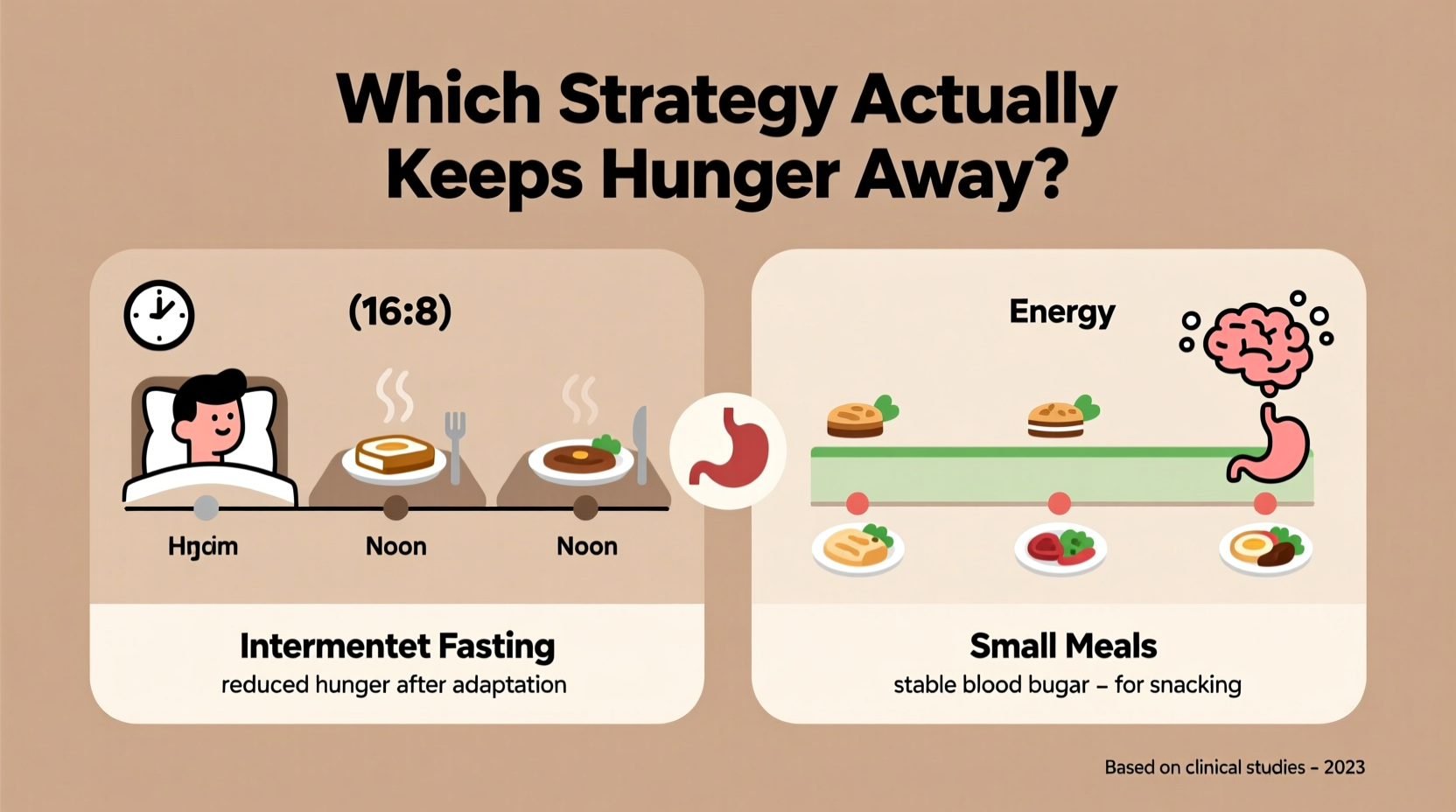
Hunger isn't just about an empty stomach. It’s a complex interplay of hormonal signals, primarily governed by ghrelin (the \"hunger hormone\") and leptin (the \"satiety hormone\"). Ghrelin levels rise before meals and drop after eating, while leptin signals fullness and helps regulate long-term energy balance.
Insulin also plays a key role. Every time you eat—especially carbohydrates—insulin spikes to shuttle glucose into cells. Frequent eating can lead to repeated insulin surges, potentially contributing to insulin resistance over time. This rollercoaster effect may increase hunger between meals, especially if blood sugar drops too quickly.
Additionally, the brain's reward system responds to food cues. Eating every few hours can condition the body to expect food on a schedule, making people feel hungry even when they don’t need calories. On the flip side, going too long without food can trigger intense hunger pangs, especially during adaptation periods.
Tip: Focus on protein, fiber, and healthy fats in your meals—they increase satiety more effectively than refined carbs, regardless of your eating pattern.Intermittent Fasting: Can Skipping Meals Reduce Cravings?
Intermittent fasting (IF) involves cycling between periods of eating and fasting. Popular methods include the 16:8 method (fasting for 16 hours, eating within an 8-hour window), the 5:2 diet (eating normally five days a week, restricting calories two days), and alternate-day fasting.
Proponents argue that IF helps reset hunger signals. During the fasting window, insulin levels remain low, allowing the body to burn stored fat for fuel. Over time, many people report reduced hunger—even during extended fasts—because the body becomes more efficient at using fat for energy.
A 2020 study published in Obesity found that participants practicing 16:8 fasting reported lower levels of perceived hunger after four weeks, despite consuming fewer calories overall. Researchers suggested that this might be due to improved leptin sensitivity and stabilized blood sugar.
“After the first few days, my body stopped demanding food at 10 a.m. I realized most of my ‘hunger’ was just habit.” — Sarah L., who has practiced 16:8 fasting for 18 months
However, adaptation takes time. Many newcomers to IF report increased hunger, irritability, and difficulty concentrating in the first week. This often subsides as the body shifts from relying on glucose to utilizing ketones—a process known as metabolic flexibility.
Still, IF isn’t for everyone. People with a history of disordered eating, pregnant women, or those with certain medical conditions like diabetes should consult a healthcare provider before starting.
Small, Frequent Meals: Does Constant Fueling Prevent Hunger?
The idea behind eating small meals every 2–3 hours is rooted in old-school metabolism theory: keep your metabolic engine running by feeding it consistently. The belief is that frequent eating prevents blood sugar crashes, reduces overeating at mealtimes, and maintains steady energy.
In practice, this approach can work well for some—particularly those with high metabolic rates, athletes, or individuals managing blood sugar issues like reactive hypoglycemia. For them, going too long without food leads to dizziness, shakiness, and true physiological hunger.
But research doesn’t strongly support the metabolic advantage of frequent eating. A 2015 meta-analysis in the Journal of the Academy of Nutrition and Dietetics concluded that meal frequency had no significant effect on total daily energy expenditure or weight loss when calorie intake was matched.
Worse, constant snacking can blunt fat-burning. With insulin elevated throughout the day, the body never fully enters a fat-oxidation state. Additionally, frequent eating may reinforce habitual rather than biological hunger, making it harder to distinguish between emotional cravings and actual need.
Head-to-Head Comparison: Which Strategy Wins for Hunger Control?
| Factor | Intermittent Fasting | Small, Frequent Meals |
|---|---|---|
| Hormonal Response | Lower insulin, improved leptin sensitivity, increased fat oxidation | Frequent insulin spikes, potential for insulin resistance over time |
| Satiety Duration | Longer-lasting fullness after meals due to concentrated eating | Shorter satiety; may require constant refueling |
| Adaptation Period | 3–7 days of increased hunger, then improvement | Immediate comfort but may reinforce food dependency |
| Lifestyle Fit | Better for structured routines, less ideal for erratic schedules | Flexible for on-the-go lifestyles, travel, or shift work |
| Long-Term Sustainability | High for those who adapt; low for others due to rigidity | Moderate; risk of mindless snacking and calorie creep |
The table shows that neither approach is universally superior. Success depends heavily on individual physiology, lifestyle, and psychological relationship with food.
Real-World Example: Two People, Two Strategies
Consider Mark and Lisa, both 42, working full-time jobs and trying to manage midday hunger.
Mark used to eat breakfast at 7 a.m., a snack at 10 a.m., lunch at 1 p.m., another snack at 4 p.m., and dinner at 7 p.m. Despite constant eating, he felt sluggish by afternoon and craved sweets. After switching to a 14:10 intermittent fasting window (eating from 9 a.m. to 7 p.m.), he noticed his energy stabilized. Within two weeks, his mid-morning and mid-afternoon hunger disappeared. He now eats two satisfying meals and one snack, focusing on protein and vegetables.
Lisa, however, tried the same schedule and struggled. By 11 a.m., she felt dizzy and irritable. She switched back to smaller, balanced meals every 3–4 hours—starting with a high-protein breakfast—and found her focus and mood improved. Her secret? Each meal includes 20–25 grams of protein, fiber-rich carbs, and healthy fats, which keeps her full longer.
Their experiences highlight a crucial point: biology trumps trends. What matters is not the number of meals, but the quality of food and alignment with personal metabolic needs.
Expert Insight: What the Research Says
Dr. Jennifer Rivers, a metabolic health specialist, explains:
“The biggest mistake people make is assuming one eating pattern fits all. Some thrive on fasting because it simplifies their eating and reduces decision fatigue. Others do better with regular fueling. The key is hormonal balance—specifically insulin and cortisol. If someone is stressed or sleep-deprived, fasting can raise cortisol and worsen hunger. In that case, consistent nourishment is smarter.”
She emphasizes that food quality outweighs timing. “You could fast 20 hours a day but still struggle with hunger if your eating window is filled with processed foods. Conversely, frequent meals rich in whole foods can keep hunger low—regardless of frequency.”
Actionable Checklist: How to Choose the Right Strategy for You
Use this checklist to determine which approach aligns with your body and lifestyle:
- ✅ Have I ruled out medical conditions (e.g., diabetes, thyroid issues) that affect hunger?
- ✅ Am I eating enough protein and fiber in my current meals?
- ✅ Do I often eat out of boredom or stress, rather than physical hunger?
- ✅ Can I go 3–4 hours without feeling shaky, dizzy, or irritable?
- ✅ Is my sleep consistent and sufficient (7+ hours per night)?
- ✅ Am I willing to experiment for at least 2–3 weeks to assess adaptation?
- ✅ Can I maintain social and work obligations with this eating pattern?
If you answer “no” to several of these, focus on foundational habits—like improving sleep, reducing stress, and upgrading food quality—before committing to a specific meal-timing strategy.
Step-by-Step Guide to Testing Both Approaches
You don’t have to pick a side forever. Try each method systematically to see what works.
- Week 1–2: Baseline Tracking
Record your meals, hunger levels (on a scale of 1–10), energy, and mood. Note patterns—when do cravings hit? - Week 3–4: Try Intermittent Fasting
Start with a 12-hour fast (e.g., 7 p.m. to 7 a.m.). Gradually extend to 14 or 16 hours. Keep meals balanced. Track changes in hunger and energy. - Week 5–6: Switch to Small, Frequent Meals
Eat every 3–4 hours. Include protein and fiber in each. Avoid liquid calories. Monitor satiety and calorie intake. - Week 7: Compare and Decide
Review your notes. Which pattern led to fewer cravings, better focus, and easier appetite control? Choose based on data, not ideology.
Frequently Asked Questions
Does intermittent fasting cause muscle loss?
No, not when done correctly. IF combined with adequate protein intake and resistance training preserves muscle mass. In fact, some studies show improved body composition due to increased growth hormone during fasting.
Can eating too frequently slow down my metabolism?
No—meal frequency doesn’t significantly impact metabolic rate. However, constant snacking can lead to excess calorie intake and fat storage, especially with ultra-processed foods.
What if I feel hungry during my fasting window?
Initial hunger usually passes in 15–30 minutes. Try drinking water, black coffee, or tea. If hunger persists daily beyond the first week, your eating window may be too long, or your meals may lack sufficient protein and fat.
Conclusion: Hunger Control Is Personal—Not Prescriptive
The debate between intermittent fasting and small meals misses a larger truth: hunger management isn’t about timing alone. It’s about building a sustainable relationship with food that respects your biology, lifestyle, and mental well-being.
Some people find freedom in fasting, enjoying the simplicity and mental clarity it brings. Others thrive on regular nourishment, especially when meals are nutrient-dense and satisfying. The winning strategy is the one that keeps you full—not just physically, but emotionally and practically—without obsession or restriction.
Instead of chasing the “perfect” eating schedule, focus on principles: prioritize whole foods, balance macronutrients, manage stress, and listen to your body. Test both approaches with curiosity, not dogma. Your hunger cues will tell you more than any trend ever could.
🚀 Ready to take control of your hunger? Start your 2-week experiment today—track your meals, energy, and cravings. Share your results in the comments and help others discover what really works.








