Energy is the currency of productivity, mood, and overall vitality. When choosing an intermittent fasting protocol, one of the most pressing concerns isn’t just weight loss or metabolic health—it’s how you feel throughout the day. Two popular approaches—16:8 intermittent fasting and One Meal a Day (OMAD)—offer distinct rhythms and nutritional strategies. But when it comes to sustained energy, mental sharpness, and avoiding fatigue, they deliver very different experiences.
Understanding how each method influences blood sugar stability, hormonal balance, and brain function is essential for making an informed decision. While both protocols can enhance metabolic flexibility, their impact on daily energy varies significantly based on meal timing, calorie density, and individual physiology.
How Intermittent Fasting Influences Energy Levels
Intermittent fasting works by extending the time between meals, allowing insulin levels to drop and the body to shift from glucose-based to fat-based fuel. This transition, known as ketosis, can lead to more stable energy levels—provided the adaptation period is managed well.
The key mechanism behind improved energy during fasting is reduced insulin resistance and enhanced mitochondrial efficiency. When insulin drops, stored fat becomes accessible, and fatty acids are converted into ketones, which many consider a cleaner-burning fuel than glucose. Ketones provide steady energy to the brain and muscles without the spikes and crashes associated with high-carb meals.
However, not all fasting protocols produce this effect equally. The length of the eating window, total caloric intake, and food quality within that window play crucial roles in whether energy improves—or plummets.
16:8 Intermittent Fasting: Structure and Energy Impact
In the 16:8 method, individuals fast for 16 hours and consume all daily calories within an 8-hour window. For example, someone might eat between 12 p.m. and 8 p.m., then fast until noon the next day. This approach is often considered sustainable because it aligns with natural circadian rhythms and allows two to three balanced meals per day.
From an energy perspective, 16:8 offers several advantages:
- Blood sugar stability: With regular meals spaced appropriately, glucose levels remain consistent, reducing the risk of mid-afternoon slumps.
- Moderate fasting stress: The 16-hour fast is long enough to trigger fat burning but short enough to prevent excessive cortisol elevation, which can drain energy.
- Sustainable nutrient intake: Eating twice or thrice a day makes it easier to meet micronutrient and protein needs, both critical for cellular energy production.
Many people report increased alertness in the morning due to elevated norepinephrine and growth hormone during the fasted state. By delaying breakfast, they avoid the post-meal drowsiness often caused by carbohydrate-heavy morning meals.
Tip: To maximize energy on 16:8, break your fast with a high-protein, moderate-fat, low-glycemic meal—such as eggs with avocado and leafy greens—to avoid insulin spikes.OMAD: How One Meal a Day Affects Daily Energy
One Meal a Day (OMAD) involves consuming all daily calories in a single feeding window, typically lasting one hour or less. This extreme form of time-restricted eating pushes the body into deeper ketosis and amplifies autophagy, but it also introduces unique challenges for energy regulation.
While some experienced fasters thrive on OMAD, reporting heightened focus and mental clarity, others experience fatigue, irritability, and brain fog—especially during the adaptation phase.
The primary energy-related issues with OMAD stem from:
- Nutrient compression: Packing a full day’s worth of nutrients into one meal increases the risk of deficiencies in magnesium, B vitamins, and iron—all vital for ATP (energy) production.
- Digestive burden: A large meal triggers significant parasympathetic activation (“rest and digest”), often leading to post-meal lethargy.
- Hormonal fluctuations: Prolonged fasting can elevate cortisol, especially if under-eating occurs, which may disrupt sleep and daytime energy.
That said, those who adapt successfully often describe a “fasting high”—a state of calm alertness driven by elevated ketone levels and dopamine sensitivity. This state usually emerges after 3–6 weeks of consistent practice and proper nutrition.
“OMAD can enhance mental clarity, but only if you prioritize nutrient density and avoid caloric deficits that trigger energy conservation mode.” — Dr. Lena Patel, Functional Medicine Physician
Comparative Analysis: 16:8 vs OMAD for Energy
To better understand how these two protocols affect energy, let’s compare them across key dimensions:
| Factor | 16:8 Intermittent Fasting | OMAD |
|---|---|---|
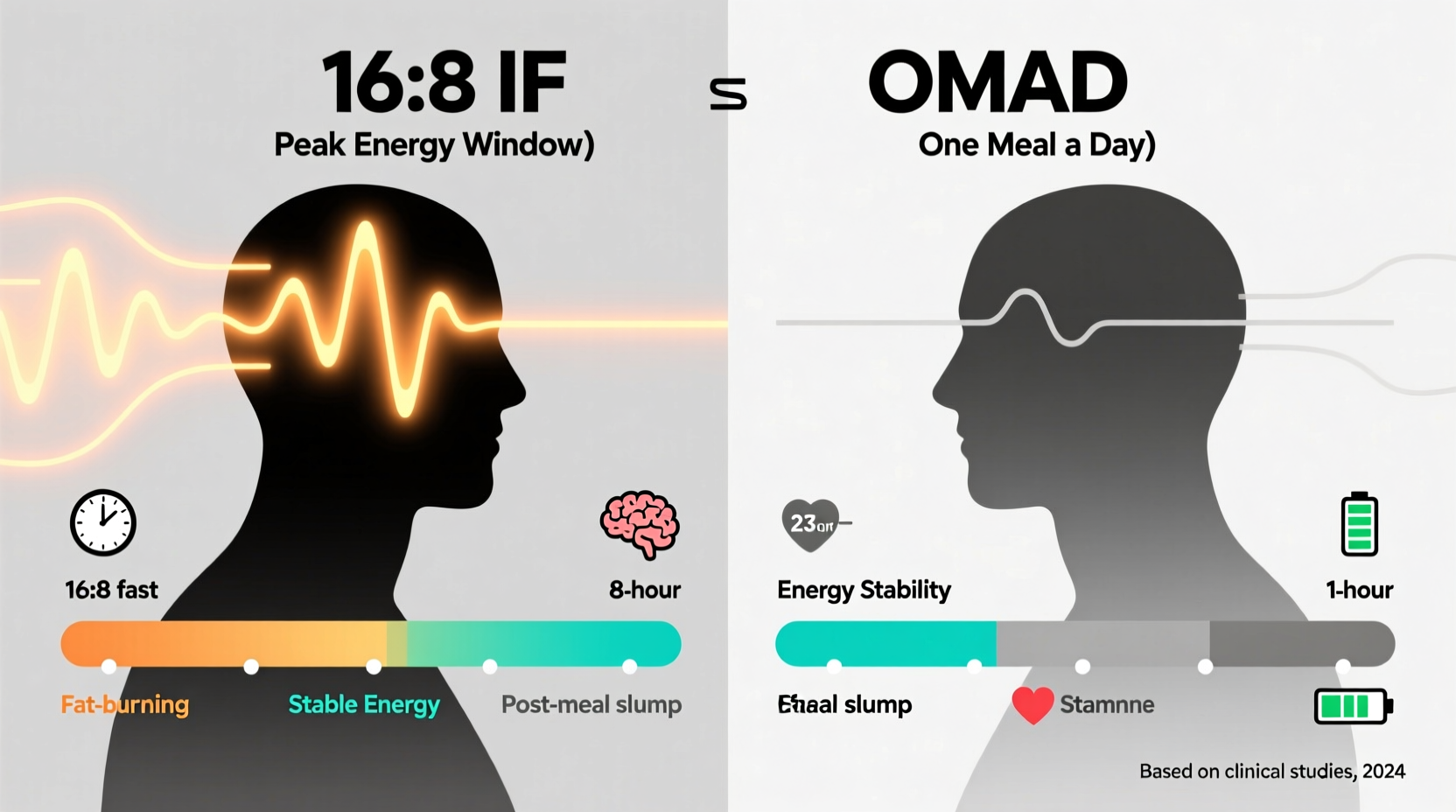
| Energy Stability | High – consistent fuel supply throughout the day | Variable – peaks after meal, dips before it |
| Mental Clarity | Moderate to high – steady ketone production | High (after adaptation) – deep ketosis enhances focus |
| Fatigue Risk | Low – easier to meet energy needs | High – especially during adaptation or under-eating |
| Hormonal Impact | Balanced – mild cortisol rise, stable leptin | Potentially elevated cortisol if prolonged |
| Sustainability | High – fits easily into social and work routines | Low to moderate – challenging for long-term adherence |
| Digestive Load | Low to moderate – meals are normal size | High – large meal requires significant digestion effort |
This comparison shows that 16:8 is generally more conducive to stable, predictable energy, while OMAD offers potential for peak cognitive performance—but at the cost of consistency and comfort, particularly in the early stages.
Real-World Example: Sarah’s Transition from OMAD to 16:8
Sarah, a 38-year-old project manager, adopted OMAD to accelerate fat loss and improve discipline. Initially, she felt energized and proud of her control over hunger. However, by week three, she began experiencing afternoon fatigue, difficulty concentrating, and disrupted sleep.
Her evening meal, though calorically sufficient, was consumed quickly and consisted largely of carbohydrates and lean protein. She wasn’t getting enough healthy fats or electrolytes. Her cortisol stayed elevated due to chronic mild stress, and her thyroid markers showed signs of slowdown.
After consulting a nutritionist, Sarah switched to a 16:8 schedule, breaking her fast at noon with a nutrient-dense smoothie (spinach, chia seeds, almond butter, protein), eating a balanced dinner at 6 p.m., and finishing by 8 p.m. Within a week, her energy stabilized. She reported clearer thinking, fewer cravings, and improved workout performance.
“I thought more fasting meant better results,” she said. “But I didn’t realize I was trading energy for austerity. 16:8 gave me the benefits without the burnout.”
Step-by-Step Guide to Optimizing Energy on Either Protocol
Whether you choose 16:8 or OMAD, energy optimization depends on execution. Follow this timeline to support sustained vitality:
- Week 1–2: Assess Baseline Energy
Track your energy levels hourly using a simple journal. Note crashes, focus periods, and sleep quality. - Week 3: Dial in Macronutrients
Ensure adequate protein (1.6–2.2g/kg body weight), healthy fats (avocado, olive oil, nuts), and fiber-rich vegetables. Limit refined carbs. - Week 4: Prioritize Electrolytes
Supplement sodium, potassium, and magnesium—especially if fasting longer than 14 hours. Low electrolytes cause fatigue and headaches. - Week 5: Optimize Meal Timing
Break your fast when cortisol is naturally high (typically 8–10 a.m.) for better glucose tolerance. Avoid late-night eating. - Ongoing: Monitor and Adjust
Reassess every month. If energy dips, consider shortening your fast or adding a small second meal.
Checklist: Maximizing Energy on Intermittent Fasting
Use this checklist to ensure your fasting routine supports high energy:
- ✅ Consume enough calories to meet basal metabolic needs
- ✅ Include healthy fats in your meals (e.g., olive oil, fatty fish, nuts)
- ✅ Eat sufficient protein to preserve muscle and support enzyme function
- ✅ Add leafy greens and colorful vegetables for micronutrients
- ✅ Hydrate with water and electrolytes (especially sodium and magnesium)
- ✅ Avoid sugary foods during your eating window to prevent insulin spikes
- ✅ Maintain consistent sleep patterns—poor sleep undermines fasting benefits
- ✅ Start with 16:8 before attempting OMAD to build metabolic resilience
Frequently Asked Questions
Can intermittent fasting cause fatigue?
Yes, especially during the adaptation phase or if you're not consuming enough calories, electrolytes, or nutrients. Fatigue is common with OMAD due to larger energy gaps and digestive strain. It usually resolves within 2–4 weeks if properly managed.
Which is better for mental energy: 16:8 or OMAD?
For most people, 16:8 provides more consistent mental energy. OMAD can enhance focus in adapted individuals due to higher ketone levels, but it carries a greater risk of brain fog and irritability, particularly early on.
Should I exercise while doing OMAD?
You can, but performance may suffer initially. Strength and endurance athletes often find OMAD too restrictive for recovery. If exercising, consider training near your mealtime and supplementing with BCAAs or electrolytes to preserve energy.
Final Recommendations Based on Lifestyle and Goals
Choosing between 16:8 and OMAD should depend on your goals, lifestyle, and current metabolic health.
If your priority is stable energy, focus, and sustainability, 16:8 is likely the superior choice. It offers many of the metabolic benefits of fasting—improved insulin sensitivity, autophagy, and fat oxidation—without the physiological stress of extreme calorie compression.
OMAD may be appropriate for those seeking deeper therapeutic effects—such as advanced metabolic healing or enhanced autophagy—and who have already adapted to shorter fasting windows. However, it demands meticulous attention to nutrition and is not recommended for individuals with high physical or cognitive demands, history of disordered eating, or adrenal fatigue.
“The best fasting protocol is the one you can maintain without sacrificing energy, mood, or health.” — Dr. Rajiv Mehta, Metabolic Health Specialist
Conclusion: Choose the Fast That Fuels You
Energy is not a side effect of fasting—it should be a central outcome. Both 16:8 and OMAD can transform your metabolism, but only 16:8 consistently supports sustained vitality for most people. OMAD offers a powerful tool for specific goals, but its energy costs are often underestimated.
Listen to your body. Track your energy, mood, and performance. Start conservatively with 16:8, master your nutrition, and assess whether further restriction adds value—or simply drains your reserves.
🚀 Ready to optimize your energy? Try 16:8 for four weeks with a focus on nutrient-dense meals and electrolyte balance. Track your progress and share your experience with others exploring sustainable fasting.








