Intermittent fasting has become one of the most popular dietary strategies for weight management, metabolic health, and longevity. Among its many variations, two of the most accessible are the 16:8 and 12:12 fasting protocols. The numbers refer to hours: 16 hours of fasting with an 8-hour eating window, versus 12 hours of fasting with a 12-hour eating window. While both are forms of time-restricted eating, a key question arises: Is the more restrictive 16:8 method necessary to achieve meaningful results, or can the gentler 12:12 approach deliver similar benefits?
The answer isn’t straightforward. It depends on individual goals, lifestyle, insulin sensitivity, and how deeply one wants to tap into metabolic switching—the process where the body shifts from using glucose to burning fat for fuel. Understanding the nuances between these two approaches can help you make an informed decision without unnecessary restriction.
How Intermittent Fasting Works: The Science Behind the Clock
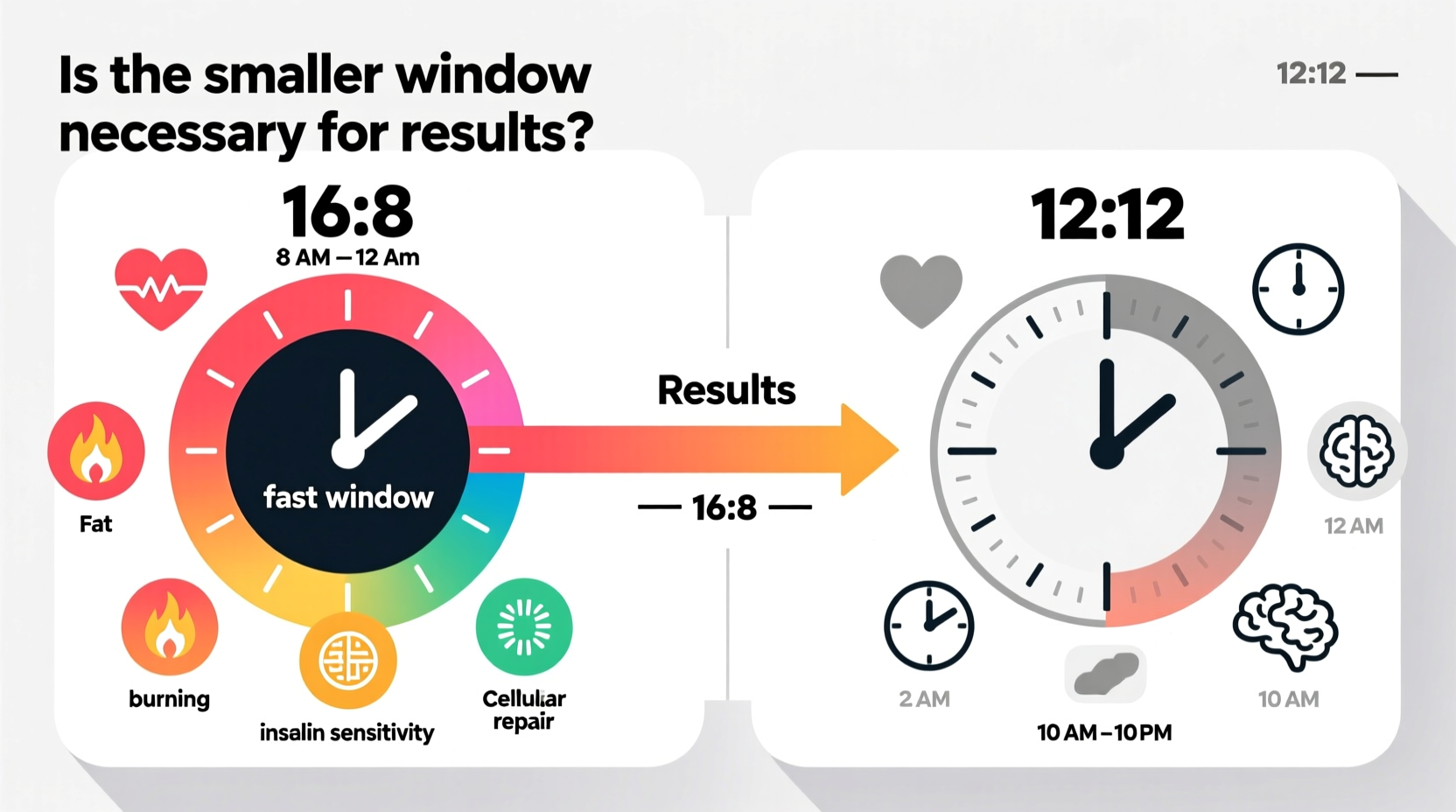
At its core, intermittent fasting isn't about what you eat—it's about when you eat. When you stop consuming calories, your body transitions through stages of digestion, glycogen depletion, and eventually fat oxidation. This shift typically begins after 10–12 hours of fasting, but deeper metabolic effects like autophagy (cellular cleanup) and enhanced insulin sensitivity often require longer fasts.
The 12-hour mark is a physiological threshold. After approximately 12 hours without food, liver glycogen stores start to decline, prompting the body to increase fat utilization. However, this transition is mild compared to what occurs beyond 14–16 hours, when insulin levels drop significantly and fat-burning accelerates.
“Time-restricted eating aligns with our circadian biology. Even a 12-hour fast can improve metabolic markers, but extending it amplifies the effect.” — Dr. Satchin Panda, Circadian Rhythm Researcher, Salk Institute
Dr. Panda’s research highlights that humans are genetically wired to eat during daylight and fast at night. Disrupting this rhythm—by eating late into the evening or starting breakfast too early—can impair glucose metabolism and contribute to weight gain over time.
Comparing 16:8 vs 12:12: A Side-by-Side Breakdown
To evaluate whether the smaller eating window is necessary, let’s compare the two methods across several key dimensions.
| Factor | 12:12 Protocol | 16:8 Protocol |
|---|---|---|
| Fasting Duration | 12 hours | 16 hours |
| Eating Window | 12 hours (e.g., 8 AM – 8 PM) | 8 hours (e.g., 12 PM – 8 PM) |
| Metabolic Switch Onset | Mild activation (~12 hrs) | Strong activation (~14–16 hrs) |
| Insulin Sensitivity Impact | Moderate improvement | Significant improvement |
| Weight Loss Potential | Low to moderate (mainly via reduced snacking) | Moderate to high (via calorie deficit + fat oxidation) |
| Sustainability | High – easy to maintain long-term | Moderate – may require habit adjustment |
| Autophagy Stimulation | Minimal | Emerging evidence suggests mild activation |
| Best For | Beginners, circadian alignment, maintenance | Weight loss, metabolic reset, insulin control |
The data shows that while both protocols offer advantages over unrestricted eating, the 16:8 method generally produces stronger metabolic effects. However, the 12:12 approach remains highly effective for those seeking gentle, sustainable change.
When 12:12 Is Enough — And When It’s Not
For many people, especially those new to fasting or focused on long-term health rather than rapid transformation, 12:12 is sufficient. Simply avoiding late-night snacks and allowing a full 12-hour overnight fast can regulate appetite hormones, improve sleep quality, and support stable energy levels.
A real-world example illustrates this well: Sarah, a 38-year-old teacher, struggled with afternoon fatigue and gradual weight gain over five years. She wasn’t interested in extreme diets but agreed to try 12:12 fasting—eating dinner by 7:30 PM and not eating again until 7:30 AM. Within three weeks, she noticed improved morning clarity, fewer cravings, and a 3-pound weight loss without changing her diet otherwise. Her blood pressure and fasting glucose also trended downward at her annual checkup.
This case reflects a growing trend: small, consistent changes often yield better long-term outcomes than aggressive interventions that are hard to sustain.
However, for individuals aiming for significant fat loss, improved insulin resistance, or reversal of prediabetes, 12 hours may not be enough. Studies show that extending the fast beyond 14 hours increases lipolysis (fat breakdown) and reduces insulin spikes throughout the day. In clinical settings, patients with metabolic syndrome often see greater improvements in HbA1c and triglycerides when following 16:8 compared to shorter windows.
Tip: If you're unsure which protocol suits you, start with 12:12 for two weeks to build discipline, then gradually extend to 14:10 before attempting 16:8.Step-by-Step Guide to Choosing and Implementing Your Fasting Window
Selecting the right fasting strategy should be goal-driven and personalized. Follow this timeline to determine what works best for your body and lifestyle.
- Week 1: Baseline Assessment
Track your current eating pattern. Note when you consume your first and last calories each day. Use a journal or app to identify late-night eating or frequent snacking. - Week 2–3: Transition to 12:12
Set a consistent bedtime meal cutoff (e.g., 7 PM) and delay breakfast until 7 AM. Maintain your usual diet. Observe changes in hunger, energy, and sleep. - Week 4: Evaluate Results
Assess weight, waist circumference, energy levels, and any lab markers if available. If satisfied, continue 12:12 as a maintenance plan. - Week 5–6: Progress to 14:10 (Optional)
Extend the fast by two hours—eat between 10 AM and 6 PM, for example. Monitor satiety and mental focus during the extended fast. - Week 7+: Consider 16:8 (If Needed)
Shift to an 8-hour window (e.g., noon to 8 PM). Prioritize nutrient-dense meals to avoid undereating. Reassess every two weeks.
This phased approach minimizes discomfort and increases adherence. Rushing into 16:8 without preparation often leads to burnout, irritability, or binge-eating episodes later in the day.
Expert Insights: What the Research Says
A 2022 randomized trial published in Nutrition and Metabolism compared 12:12 and 16:8 fasting in adults with overweight over a 12-week period. Both groups were instructed not to alter their total caloric intake. The results showed:
- The 16:8 group lost an average of 3.5% body weight versus 1.8% in the 12:12 group.
- Insulin resistance improved significantly only in the 16:8 cohort.
- Participants in the 12:12 group reported higher adherence and less perceived stress.
These findings suggest that while 16:8 produces superior metabolic outcomes, 12:12 offers a viable entry point with notable health benefits—especially for prevention and wellness.
“The best fasting regimen is the one you can stick to consistently. For some, that’s 16:8. For others, 12:12 is the sweet spot between efficacy and sustainability.” — Dr. Krista Varady, Professor of Nutrition, University of Illinois Chicago
Frequently Asked Questions
Can I drink coffee during my fasting window?
Yes. Black coffee, tea, or sparkling water with no added sugar or cream is permitted during fasting periods. These beverages do not trigger insulin release and may even enhance fat oxidation. Avoid bulletproof coffee (with butter or MCT oil) if strict fasting compliance is your goal, as fats contain calories and can interrupt autophagy.
Is 12:12 considered real intermittent fasting?
Technically, yes. Any cycle of eating and fasting qualifies as intermittent fasting. While purists may argue that meaningful benefits begin after 14+ hours, 12:12 still leverages circadian biology and provides metabolic rest. It’s particularly effective for breaking the habit of constant grazing.
Will I lose muscle on 16:8 fasting?
Not if you consume adequate protein and stay active. Muscle preservation depends more on daily protein intake (aim for 1.6–2.2g per kg of body weight) and resistance training than on meal timing. In fact, some studies show improved body composition on 16:8 due to increased growth hormone secretion during prolonged fasting.
Action Plan Checklist: Choosing Your Fasting Strategy
Checklist: Use this guide to decide between 12:12 and 16:8:- ✅ Define your primary goal: weight loss, metabolic health, or maintenance?
- ✅ Assess your current eating schedule and sleep patterns.
- ✅ Start with 12:12 if you're new to fasting or have trouble sleeping.
- ✅ Gradually extend to 14:10 or 16:8 if progress stalls after 3–4 weeks.
- ✅ Prioritize sleep and hydration regardless of fasting duration.
- ✅ Monitor energy, hunger, and mood—not just the scale.
- ✅ Consult a healthcare provider if you have diabetes, take medications, or are pregnant.
Conclusion: Results Depend on Consistency, Not Just Restriction
The debate over 16:8 versus 12:12 fasting ultimately comes down to balance. While the 16:8 method offers stronger physiological effects for fat loss and insulin control, the 12:12 protocol delivers meaningful health benefits with far greater ease of adoption. For most people, especially those managing busy schedules or recovering from disordered eating patterns, starting gently leads to lasting success.
The smaller window isn’t universally necessary. What matters most is consistency, circadian alignment, and overall dietary quality. Whether you choose 12 or 16 hours of fasting, the true power lies in creating a rhythm that supports your body’s natural biology—not forcing it into extremes.
💬 Ready to find your optimal fasting window? Start tonight by closing the kitchen after dinner and observe how you feel tomorrow. Share your experience or questions in the comments—your journey could inspire someone else to begin theirs.








