
Every year, thousands of outdoor enthusiasts experience itchy, blistering rashes after brushing against a seemingly harmless plant. Poison ivy and poison oak are two of the most common culprits behind these allergic reactions—and they’re often mistaken for one another. For hikers, trail runners, and campers, knowing how to distinguish between them isn’t just helpful; it’s essential for staying safe on the trail.
The rash caused by both plants comes from urushiol, an oily resin found in their leaves, stems, and roots. This substance triggers an allergic reaction in up to 85% of people, leading to redness, swelling, blisters, and intense itching. While neither plant is deadly, the discomfort can sideline your adventures for weeks. The best defense? Recognition and avoidance.
This guide breaks down the key differences between poison ivy and poison oak, equips you with visual identification strategies, and provides actionable steps to protect yourself while hiking.
Understanding Urushiol: The Hidden Threat
Before diving into plant identification, it's critical to understand what makes these plants dangerous. Urushiol is a clear, sticky oil that binds quickly to skin, clothing, tools, and even pet fur. Once exposed, the oil can remain active for months under the right conditions—meaning old boots or gear stored in a garage could still cause a reaction.
Urushiol doesn’t need direct contact to cause harm. Inhaling smoke from burning poison ivy or oak can lead to severe respiratory issues, as the oil becomes airborne. Even touching a dead plant can trigger a reaction, since the oil doesn’t degrade easily.
“Urushiol is one of the most potent allergens in nature. A mere nanogram—billionth of a gram—can provoke a rash in sensitive individuals.” — Dr. Laura Nguyen, Dermatologist and Wilderness Medicine Specialist
The onset of symptoms typically occurs 12 to 72 hours after exposure, though it may take longer in first-time exposures. The rash usually appears in streaks or patches where the plant brushed against the skin and can last anywhere from one to three weeks. Secondary infections from scratching are not uncommon, especially if blisters break open.
Tip: If you suspect contact with urushiol, wash the affected area with soap and cold water within 10 minutes to reduce absorption.How to Identify Poison Ivy: Look for the Rule of Three
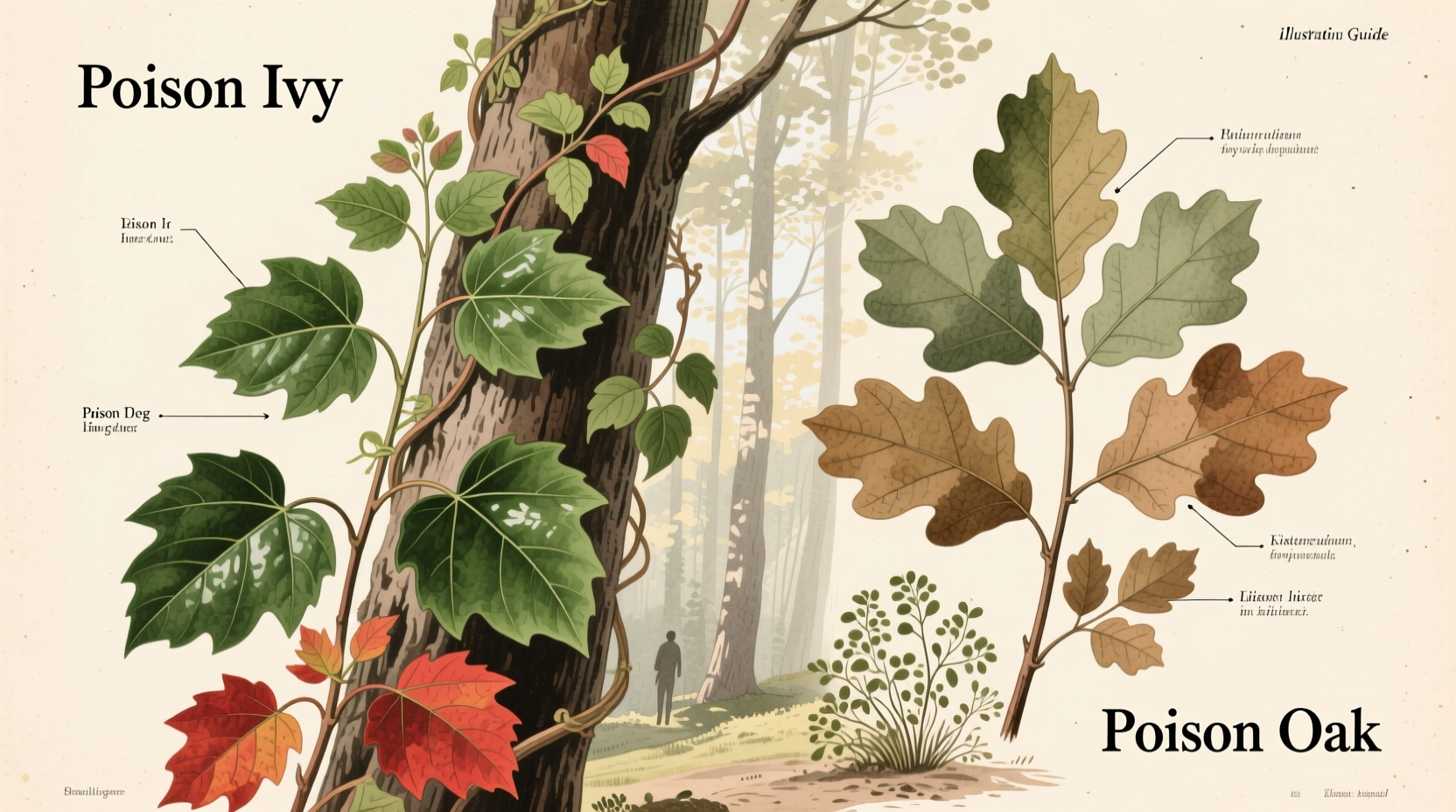
One of the most reliable ways to spot poison ivy is the phrase: “Leaves of three, let it be.” This applies across all seasons and regional variations. Each leaf cluster consists of three leaflets emerging from a single stem. But beyond this basic rule, several features help confirm its identity.
- Leaf Shape: The center leaflet has a longer stalk than the two side leaflets. Leaf edges can be smooth, toothed, or slightly lobed.
- Color Changes: In spring, leaves emerge reddish and turn glossy green in summer. Fall brings vibrant hues of yellow, orange, or red.
- Growth Form: Poison ivy grows as a vine or shrub. Vines often climb trees with hairy, rope-like aerial roots and can reach over 100 feet long.
- Non-Flowering Features: It produces small, greenish-white flowers in clusters during late spring, followed by whitish-gray berries that birds eat (and spread).
It’s important to note that poison ivy adapts to its environment. In shaded forests, it tends to grow vertically as a climbing vine. In open fields or along trails, it spreads horizontally as a low shrub. Regardless of form, the “three leaflets” pattern remains consistent.
Regional Variations of Poison Ivy
Eastern poison ivy (Toxicodendron radicans) is widespread across North America east of the Rockies. Western poison ivy exists but is less common. Both share similar characteristics, though western varieties may grow more upright and lack climbing tendencies.
Tip: Never assume a plant is safe just because it lacks flowers or berries. Urushiol is present year-round.Recognizing Poison Oak: Similarities and Key Differences
Poison oak also follows the “leaves of three” rule, which is why confusion between the two is so common. However, there are distinguishing traits that set it apart.
Poison oak primarily grows as a shrub, though it can occasionally vine. Its leaflets resemble oak leaves—hence the name—with deeply lobed, rounded edges. The surface is often duller and fuzzier than poison ivy, especially on the underside.
- Leaf Texture: Fuzzy or velvety to the touch, particularly on young growth.
- Color: Bright green in spring and summer, turning red or brown in fall.
- Growth Habit: Typically stays low to the ground (3–6 feet tall), forming dense thickets in dry, sunny areas.
- Berries: Clusters of tan or white berries that hang downward.
There are two main types: Pacific poison oak (Toxicodendron diversilobum) found along the West Coast, and Atlantic poison oak (Toxicodendron pubescens) in the Southeastern U.S. The Pacific variety can climb like poison ivy, making identification trickier in regions like California or Oregon.
Real Example: A Hiker’s Close Call in the Sierra Nevada
Jamie, an experienced backpacker, was hiking through the Tahoe National Forest when she paused to adjust her pack near a dense thicket. Unaware, she leaned against a low-growing shrub with three lobed leaves. Two days later, a streaky rash appeared on her lower back and hips. She hadn’t seen any vines or classic “ivy,” so she initially dismissed the possibility of poison exposure.
After consulting a park ranger, she learned she’d encountered Pacific poison oak—a common but often misidentified plant in that region. Her mistake? Assuming only vining plants were dangerous. This case highlights the importance of recognizing growth forms beyond the textbook image.
Side-by-Side Comparison: Poison Ivy vs Poison Oak
| Feature | Poison Ivy | Poison Oak |
|---|---|---|
| Leaf Pattern | Three leaflets; center one has longer stalk | Three leaflets; all similar in size, oak-like lobes |
| Leaf Surface | Smooth, sometimes glossy | Fuzzy or matte, especially underneath |
| Growth Form | Vine (with hairy roots) or shrub | Shrub or climbing vine (West Coast) |
| Geographic Range | East of Rockies, some West | West Coast (Pacific), Southeast (Atlantic) |
| Berries | White or gray, waxy, upright clusters | Tan or white, drooping clusters |
| Seasonal Color | Red (spring/fall), green (summer) | Green to red (fall), bright green (spring) |
Use this table as a quick reference when evaluating unfamiliar plants on the trail. When in doubt, err on the side of caution and avoid contact altogether.
Step-by-Step Guide to Avoid Exposure While Hiking
Prevention is far more effective than treatment. Follow this practical sequence before, during, and after your hike to minimize risk.
- Research Your Trail: Check local park websites or apps like AllTrails for recent reports of poison ivy or oak sightings.
- Dress Appropriately: Wear long sleeves, pants, and closed-toe shoes. Consider gaiters in dense brush.
- Stay on Marked Paths: Avoid brushing through undergrowth or sitting on logs surrounded by vegetation.
- Use Gear Wisely: Don’t use sticks or trekking poles to push aside foliage. Clean gear after each hike with rubbing alcohol or specialized wipes.
- Wash Immediately After Hiking: Shower within 30 minutes using lukewarm water and a degreasing soap like Tecnu or Dawn dish soap.
- Launder Clothing Separately: Wash exposed clothes in hot water before wearing again.
- Check Pets: If you hike with dogs, wipe their fur with a damp cloth afterward—they can carry urushiol to you.
“The fastest way to prevent a rash is decontamination within the first half hour. Time is your ally.” — Dr. Raj Patel, Emergency Medicine Physician
What to Do If You’ve Been Exposed
If you suspect contact with either plant, act quickly. Here’s what to do:
- Wash the skin with cold water and soap immediately. Cold water helps close pores and limits oil absorption.
- Avoid hot showers initially—they open pores and increase absorption.
- Use a commercial urushiol remover (e.g., Zanfel, Tecnu) for best results.
- Clean under fingernails thoroughly to prevent spreading oil to other body parts.
- Wipe down any equipment, shoes, or tools with rubbing alcohol.
If a rash develops, treat it with over-the-counter remedies:
- Calamine lotion or hydrocortisone cream to reduce itching.
- Oral antihistamines like diphenhydramine (Benadryl) for nighttime relief.
- Cool compresses to soothe inflamed skin.
Seek medical attention if:
- The rash covers more than 25% of your body.
- You develop swelling, fever, or signs of infection.
- The rash affects your face, eyes, or genitals.
- You inhale smoke from burning vegetation and experience breathing difficulties.
Common Myths About Poison Ivy and Oak
Misinformation abounds when it comes to these plants. Let’s clarify a few misconceptions:
- Myth: Only the leaves contain urushiol.
Reality: Stems, roots, and even dormant winter branches contain the oil. - Myth: You can build immunity by repeated exposure.
Reality: Sensitivity often increases over time. Some people become more reactive with each exposure. - Myth: Animals can’t spread the rash.
Reality: Dogs and cats don’t react to urushiol, but their fur carries it to humans. - Myth: Bleach or alcohol kills the oil.
Reality: Alcohol can help remove oil if used early, but bleach is ineffective and harmful to skin.
FAQ: Common Questions About Poison Ivy and Oak
Can you get a rash from touching someone else’s rash?
No. The fluid in blisters does not contain urushiol. However, if the original oil remains on their skin, clothing, or hands, it can transfer to you. Transmission stops once the oil is washed off.
Is there a way to completely remove urushiol from gear?
Yes. Wash contaminated clothing in hot water with heavy-duty detergent. Wipe down gear with rubbing alcohol or a solution of water and dish soap. For porous materials like leather, consider professional cleaning or dedicated wipes.
Are there look-alike plants that are safe?
Yes. Several harmless plants have three leaflets, including boxelder seedlings, blackberry brambles, and Virginia creeper (which actually has five leaflets). Blackberries have thorns and edible fruit; Virginia creeper has five leaves and blue berries. Always verify multiple features before assuming safety.
Final Checklist for Safe Hiking
- ✔ Know the “leaves of three” rule and apply it consistently.
- ✔ Learn regional differences: poison oak dominates the West and Southeast; poison ivy is widespread elsewhere.
- ✔ Wear protective clothing on brush-heavy trails.
- ✔ Stay on designated paths and avoid touching unknown vegetation.
- ✔ Carry a small bottle of urushiol-removing wipe or soap in your daypack.
- ✔ Wash skin, clothes, and gear promptly after potential exposure.
- ✔ Educate fellow hikers—especially children—about the risks.
Conclusion: Stay Alert, Stay Protected
Hiking should be about connection—with nature, with friends, with yourself—not about enduring weeks of itching and discomfort. By learning to identify poison ivy and poison oak accurately, you gain a vital skill that enhances both your safety and enjoyment outdoors.
These plants aren’t rare anomalies; they’re part of the ecosystem in forests, meadows, and even suburban parks. Respect them, recognize them, and take simple precautions. Your next adventure doesn’t have to end with a trip to the clinic.
💬 Have a story about identifying poison ivy or oak on the trail? Share your experience or tips in the comments below—your insight could help others avoid a painful mistake.








