Choosing the right running shoes isn’t just about brand loyalty or cushioning preference—it’s deeply personal. Your foot arch type plays a pivotal role in determining how your foot strikes the ground, absorbs impact, and propels you forward with each stride. Wearing shoes that don’t match your arch can lead to discomfort, inefficient biomechanics, and even long-term injuries such as plantar fasciitis, shin splints, or knee pain.
Understanding your arch—whether flat, neutral, or high—allows you to make informed decisions when selecting footwear. This knowledge empowers runners of all levels to find shoes that support natural motion, enhance performance, and protect joints over miles.
Determine Your Foot Arch Type
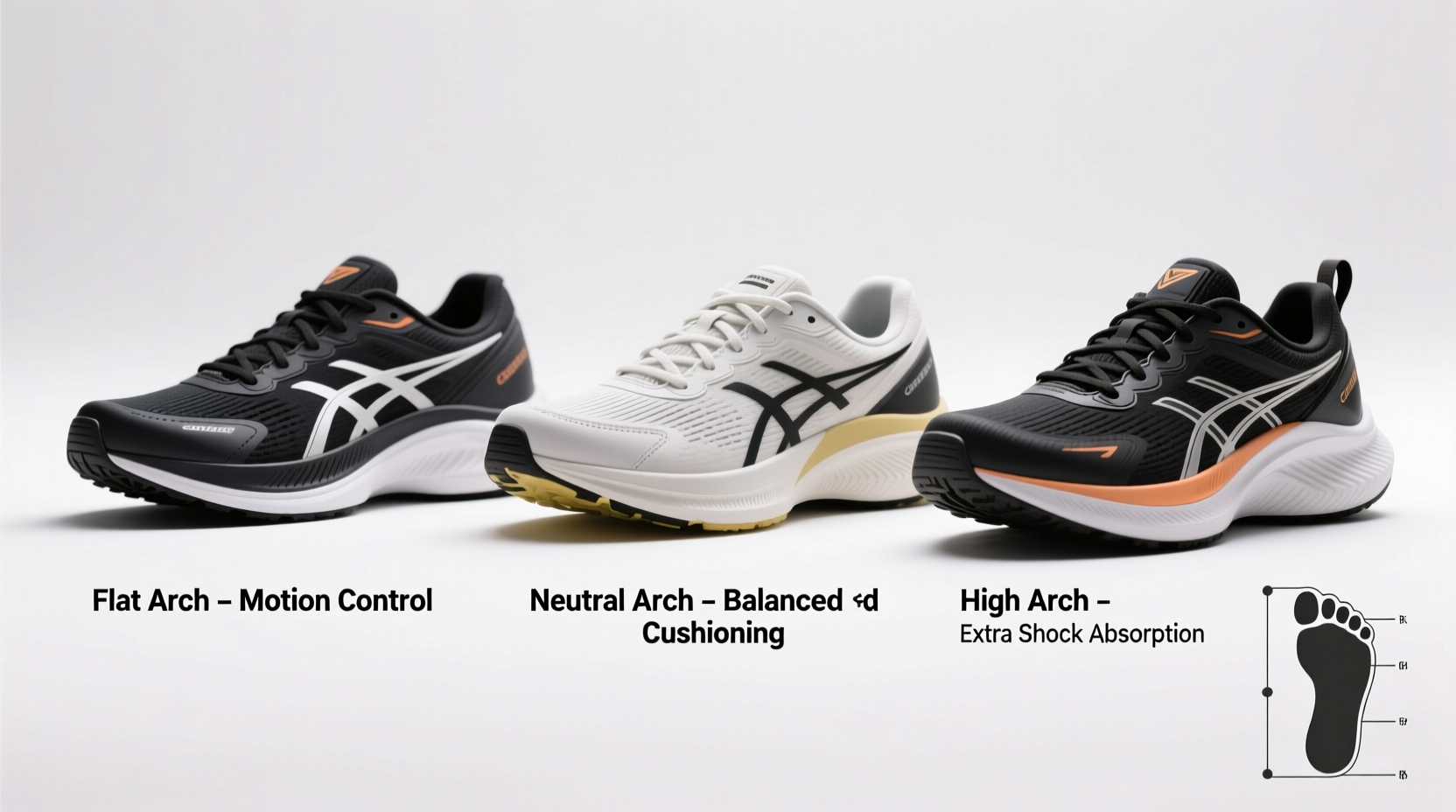
The first step in choosing appropriate running shoes is identifying your foot arch. There are three primary arch types: low (flat feet), medium (neutral), and high (rigid). Each influences how your foot rolls during gait—a movement known as pronation.
To determine your arch type at home, perform the \"wet test\":
- Wet the sole of your bare foot.
- Step onto a piece of cardboard or paper towel.
- Examine the imprint left behind.
- Flat arch: The entire sole leaves a broad imprint with little inward curve along the inside. This indicates overpronation—your foot rolls excessively inward upon impact.
- Neutral arch: A balanced imprint shows a distinct but moderate curve along the arch. Your foot rolls slightly inward, which is normal and efficient.
- High arch: Only a narrow band connects the heel and forefoot. This suggests underpronation (supination), where weight shifts to the outer edge of the foot.
How Arch Type Affects Shoe Choice
Your arch type dictates the kind of support and structure your foot needs from a running shoe. Mismatched footwear forces your body to compensate, increasing stress on muscles, tendons, and joints.
Here’s how each arch type interacts with different shoe categories:
| Arch Type | Pronation Pattern | Recommended Shoe Category | Key Features to Look For |
|---|---|---|---|
| Low (Flat) | Overpronation | Stability or Motion Control | Firm midsole, medial post, structured heel counter |
| Medium (Neutral) | Normal Pronation | Neutral Cushioned | Balanced cushioning, flexible forefoot, smooth transition |
| High | Underpronation (Supination) | Cushioned or Max-Cushion | Soft midsole, extra shock absorption, curved last |
For example, runners with flat feet often benefit from stability shoes that limit excessive inward roll. These models typically feature dual-density foam or a denser material on the inner side of the midsole to resist collapse. In contrast, those with high arches need maximum cushioning because their feet absorb less shock naturally due to reduced surface contact.
“Matching your shoe to your arch type isn't optional—it's foundational. A runner with untreated overpronation wearing a minimalist neutral shoe is setting themselves up for injury.” — Dr. Lena Patel, Sports Podiatrist
Step-by-Step Guide to Selecting the Right Running Shoes
Follow this practical process to ensure you choose the best possible shoe for your feet and running goals.
- Assess your arch and gait. Use the wet test or schedule a professional gait analysis. Many running stores offer free treadmill assessments with slow-motion video playback.
- Identify your running terrain. Road, trail, track, or treadmill? Trail shoes have aggressive outsoles and protective uppers; road shoes prioritize lightweight cushioning and flexibility.
- Know your mileage and purpose. Are you training for a marathon or doing short recovery runs? High-mileage runners may prefer durable, well-cushioned models, while speedwork demands lighter, responsive shoes.
- Try shoes later in the day. Feet swell throughout the day. Shop in the evening when your feet are largest to avoid tightness during runs.
- Test for proper fit. Leave a thumb’s width (about ½ inch) between your longest toe and the end of the shoe. The heel should be snug without slipping. Width matters—many brands offer wide or narrow options.
- Walk or jog in them. Take a lap around the store. Pay attention to pressure points, heel slippage, and overall comfort. Don’t assume discomfort will “break in.”
- Consider replacing shoes every 300–500 miles. Monitor wear patterns. Excessive wear on the inner edge suggests overpronation; outer wear may indicate supination. Replace before midsole compression leads to instability.
Common Mistakes to Avoid
Even experienced runners fall into traps when selecting footwear. Awareness helps prevent costly errors.
- Choosing style over function. A sleek design doesn’t guarantee biomechanical support. Prioritize engineering over aesthetics.
- Assuming one brand fits all. Fit varies widely between manufacturers—and even within a single brand’s lineup. Don’t hesitate to switch if your usual brand lacks suitable models for your arch.
- Ignoring changes in foot shape. Pregnancy, aging, weight fluctuations, and past injuries can alter your arch height and foot width. Reassess your needs annually.
- Using old or worn-out shoes as reference. As shoes degrade, they lose structural integrity. Trying new shoes while wearing damaged ones distorts perception of support.
- Overcorrecting pronation. Some runners with mild overpronation wear overly rigid motion-control shoes meant for severe cases, restricting natural movement unnecessarily.
Real Runner Example: From Pain to Performance
Sarah, a 34-year-old recreational runner, began experiencing sharp heel pain after increasing her weekly mileage. She assumed it was normal fatigue until a physical therapist diagnosed early-stage plantar fasciitis. Upon reviewing her gear, the therapist noted Sarah had been using a lightweight neutral shoe despite having flat feet and visible overpronation.
She switched to a stability shoe with a medial post and structured arch support. Within two weeks of consistent use—and paired with targeted stretching—her pain diminished. After six weeks, she resumed training without setbacks. The simple act of matching her footwear to her foot type transformed her experience from painful to sustainable.
This case illustrates how overlooked details in shoe selection can have outsized consequences. What seemed like minor discomfort turned into a diagnosable condition—all preventable with proper footwear alignment.
Checklist: Choosing Running Shoes by Arch Type
Use this checklist to streamline your decision-making process:
- ✅ Performed the wet test or gait analysis to identify arch type
- ✅ Selected shoe category based on arch: stability/control (low), neutral (medium), cushioned (high)
- ✅ Verified heel fit—snug but not tight, no slippage
- ✅ Ensured adequate toe box space—thumb’s width clearance
- ✅ Confirmed correct width—not pinching forefoot
- ✅ Tested shoes on an incline or treadmill if available
- ✅ Compared multiple models across brands
- ✅ Considered replacement timeline—set reminder at 300 miles
Expert Insight: Why Arch Support Matters Beyond Comfort
It’s not just about avoiding pain—proper arch alignment affects whole-body mechanics. When your foot collapses inward or fails to absorb shock, the chain reaction travels up through the ankles, knees, hips, and lower back.
“A misaligned foot is like driving a car with unbalanced tires. Over time, uneven wear damages other systems. In runners, poor footwear choices contribute to up to 60% of overuse injuries.” — Mark Tran, Biomechanics Researcher, University of Oregon Human Dynamics Lab
This systemic impact underscores why arch-appropriate shoes aren’t merely comfort items—they’re preventive medicine. Custom orthotics can help some individuals, especially those with extreme arch deviations, but most runners achieve sufficient correction through properly engineered shoes alone.
Frequently Asked Questions
Can I use the same running shoes for walking or gym workouts?
While possible, it’s not ideal. Running shoes are designed for forward motion and repeated impact. Using them for lateral movements (like in strength training or aerobics) increases wear on the wrong parts of the sole and may compromise stability. If you're cross-training frequently, consider a versatile trainer or cross-trainer built for multidirectional support.
Do high-arched runners always need max-cushion shoes?
Most do—but not universally. Some high-arched runners with stiff feet respond better to moderate cushioning and increased flexibility. It depends on individual mobility and strike pattern. Try both styles and assess comfort and fatigue levels after several runs.
Are barefoot or minimalist shoes safe for any arch type?
Minimalist shoes work best for runners with strong intrinsic foot muscles and neutral or high arches. They provide minimal support and encourage natural foot motion, but can overload flat-footed runners who lack the musculature to control pronation. Transition slowly—if at all—and only under guidance if you have existing biomechanical concerns.
Final Thoughts: Invest in Your Foundation
Your feet are the foundation of every run. Just as a house built on unstable ground risks structural failure, a runner wearing mismatched shoes invites breakdowns down the line. Taking the time to understand your arch type and align it with the right footwear pays dividends in comfort, efficiency, and longevity.
You don’t need the most expensive model—just the most appropriate one. Whether you're logging daily commutes or prepping for a personal best, let your arch guide your choice. Visit a specialty store, ask questions, try multiple pairs, and trust data over branding.
🚀 Ready to upgrade your run? Perform the wet test tonight, then visit a local running shop this weekend. Your next pair of shoes could be the difference between limping home and finishing strong.








