
Losing your driver’s license is more than just an inconvenience—it can disrupt travel plans, complicate identification needs, and raise concerns about identity theft. While the physical card may be missing, the need to access your license number often remains urgent: for insurance claims, employment verification, or DMV procedures. However, retrieving this information requires caution. The driver’s license number is a key piece of personal data, and mishandling it—even in good faith—can expose you to privacy risks or even fraud.
There are safe, legitimate pathways to recover your license number without compromising security. This guide outlines practical steps backed by official protocols, expert insights, and real-world scenarios to help you regain access to your information responsibly.
Why You Should Never Guess or Improvise
Some individuals attempt to reconstruct their license number using patterns they remember—such as initials, birth year, or state-specific formats. This approach is not only unreliable but potentially dangerous. Submitting incorrect or fabricated identifiers on official forms can trigger compliance flags, delay processing, or even result in penalties.
Moreover, sharing partial license details with third parties in hopes of recovery increases exposure to social engineering attacks. Cybersecurity experts warn that even seemingly harmless disclosures—like “My license starts with AB123”—can be exploited in combination with other publicly available data.
“Your driver’s license number is a primary identifier used across government and financial systems. Treating it with the same level of care as a Social Security number is no longer optional—it’s essential.” — Linda Chen, Identity Protection Analyst at SecureID Labs
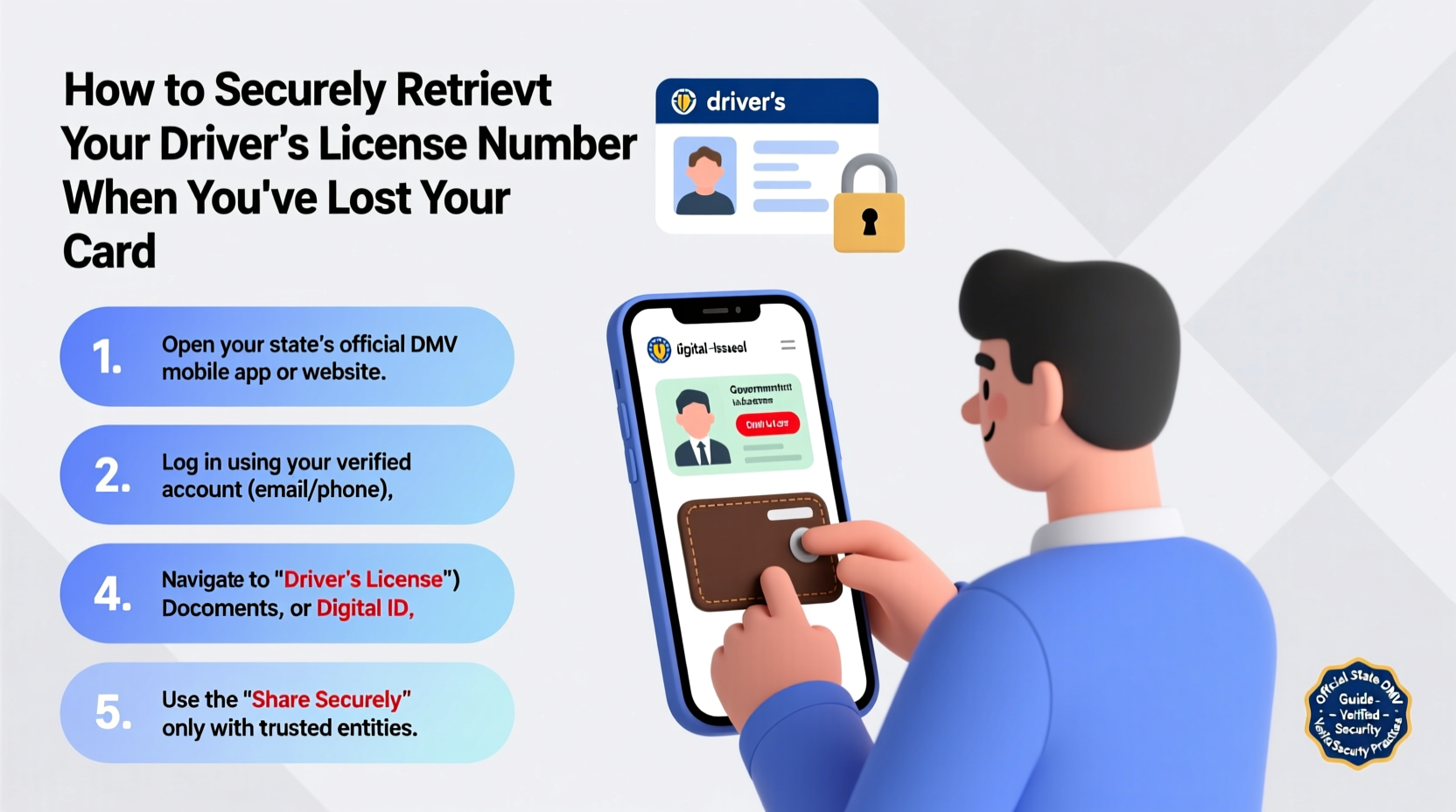
Step-by-Step Guide to Securely Retrieve Your License Number
The safest way to recover your license number follows a structured, verified process. Below is a timeline-based method endorsed by state motor vehicle departments and consumer protection agencies.
- Confirm the Loss: Double-check all likely locations—wallets, bags, glove compartments, and recent pockets. If still missing, proceed under the assumption the card is lost or stolen.
- Contact Your State’s DMV Immediately: Most states offer online portals, phone support, or in-person services to assist with lost licenses.
- Verify Your Identity Securely: Be prepared to provide identifying information such as your full name, date of birth, Social Security number, and address history.
- Request Access to Your Record: Explain that you need to confirm your license number for personal reference. Some DMVs will display it directly; others may send it via secure mail or email.
- File a Report if Necessary: If theft is suspected, file a report with local law enforcement and request a replacement license to prevent misuse.
Official Channels by State: What Works and What Doesn’t
Access methods vary significantly depending on your jurisdiction. The table below summarizes common options across major states:
| State | Online Lookup Available? | Phone Support Option | Replacement Process |
|---|---|---|---|
| California | No direct number access | Yes (1-800-777-0133) | Visit DMV or use online renewal |
| Texas | Limited through MyDMV account | Yes (512-424-2600) | Online application with fee |
| New York | No public lookup | Yes (518-402-2100) | In-person or mail-in form |
| Florida | Through FLHSMV Portal (after login) | Yes (850-617-2000) | Online or office visit |
| Illinois | No self-service lookup | Yes (217-782-7753) | Must apply for duplicate |
Note: No state allows unrestricted public access to license numbers due to privacy laws. Always authenticate through official domains ending in .gov.
Real Example: Recovering a License After a Theft
Consider the case of Marcus T., a resident of Denver who discovered his wallet stolen after attending a concert. Without his license, he couldn’t rent a car for an upcoming business trip. He avoided posting on social media asking for help, recognizing the risk.
Instead, Marcus called the Colorado DMV and used their automated system to verify his identity with his SSN and previous address. A representative confirmed his license number over the phone and advised him to file a police report. He then applied for a replacement online using the verified number and received a new card by mail within seven days. His proactive, secure approach prevented further complications.
Common Missteps and How to Avoid Them
- Messaging DMV on social media: Public platforms are not secure. Never share personal details via Facebook Messenger or X (Twitter).
- Using third-party websites: Sites claiming to “look up” license numbers are scams. They harvest data or install malware.
- Asking employers or insurers to disclose your number: These entities cannot legally release your license number back to you without proper authorization.
- Delaying replacement: Every day without a valid ID increases vulnerability to fraud.
Checklist: Secure Recovery Action Plan
Use this checklist to ensure you cover all bases when retrieving your license number:
- ✅ Confirm the license is truly missing
- ✅ Locate any backup documentation (e.g., copy of old application, tax records, passport)
- ✅ Call your state DMV using the official phone number from their .gov website
- ✅ Prepare identity verification documents
- ✅ Request confirmation of your license number through secure channels
- ✅ File a police report if theft is suspected
- ✅ Apply for a replacement license immediately
- ✅ Monitor credit reports for signs of identity misuse
Frequently Asked Questions
Can I find my license number on my vehicle registration or insurance card?
Generally, no. While some older insurance cards listed driver’s license numbers, most have discontinued this practice for privacy reasons. Vehicle registration documents do not include your license number.
Will the DMV give my license number over the phone?
Many states will confirm your license number after rigorous identity verification. Be ready to answer security questions and provide personal details. Calls are typically recorded for compliance.
Is it safe to store a photo of my license on my phone?
Only if stored securely. Use encrypted apps or password-protected folders. Never save it to unsecured cloud albums or messaging apps. Consider redacting the license number digitally while keeping the photo for visual ID purposes.
Protecting Yourself Beyond the Number
Recovering your license number is only one part of the process. Once retrieved, take steps to minimize future risks. Update your records with trusted institutions, consider placing a fraud alert with credit bureaus if theft occurred, and opt for digital ID options where available—such as Apple Wallet or state-backed mobile licensing programs.
Several states now offer digital driver’s licenses through secure smartphone wallets. These reduce reliance on physical cards and limit exposure of sensitive data during routine checks.
Conclusion
Losing your driver’s license doesn’t mean you must compromise your security to regain access to your information. By relying on official DMV channels, following verified procedures, and avoiding shortcuts, you can safely retrieve your license number and protect yourself from identity threats. Treat your license number with the seriousness it deserves—not just as an ID code, but as a critical component of your personal security infrastructure.
🚀 Take action today: Bookmark your state’s DMV website, create a secure digital backup of your ID, and share this guide with friends and family to help them stay safe too.








