
The arrival of the holiday season brings joy, warmth, and a centerpiece most families cherish: the Christmas tree. Yet for pet owners, this festive tradition often comes with anxiety. Cats leap at dangling ornaments like they’re live prey. Dogs investigate tinsel as if it were edible confetti. Both can turn a beautifully decorated tree into a toppled disaster within seconds. Beyond the mess, there are real safety concerns—broken glass, electrical hazards, and toxic ingestion risks.
Protecting your tree isn’t just about preserving decor—it’s about safeguarding your pets and ensuring peace of mind during the holidays. With thoughtful planning and consistent boundaries, you can coexist harmoniously with your furry family members while still enjoying a fully decked tree. The key lies in understanding animal behavior, applying preventive measures, and reinforcing household rules early.
Understand Why Pets Are Drawn to the Tree
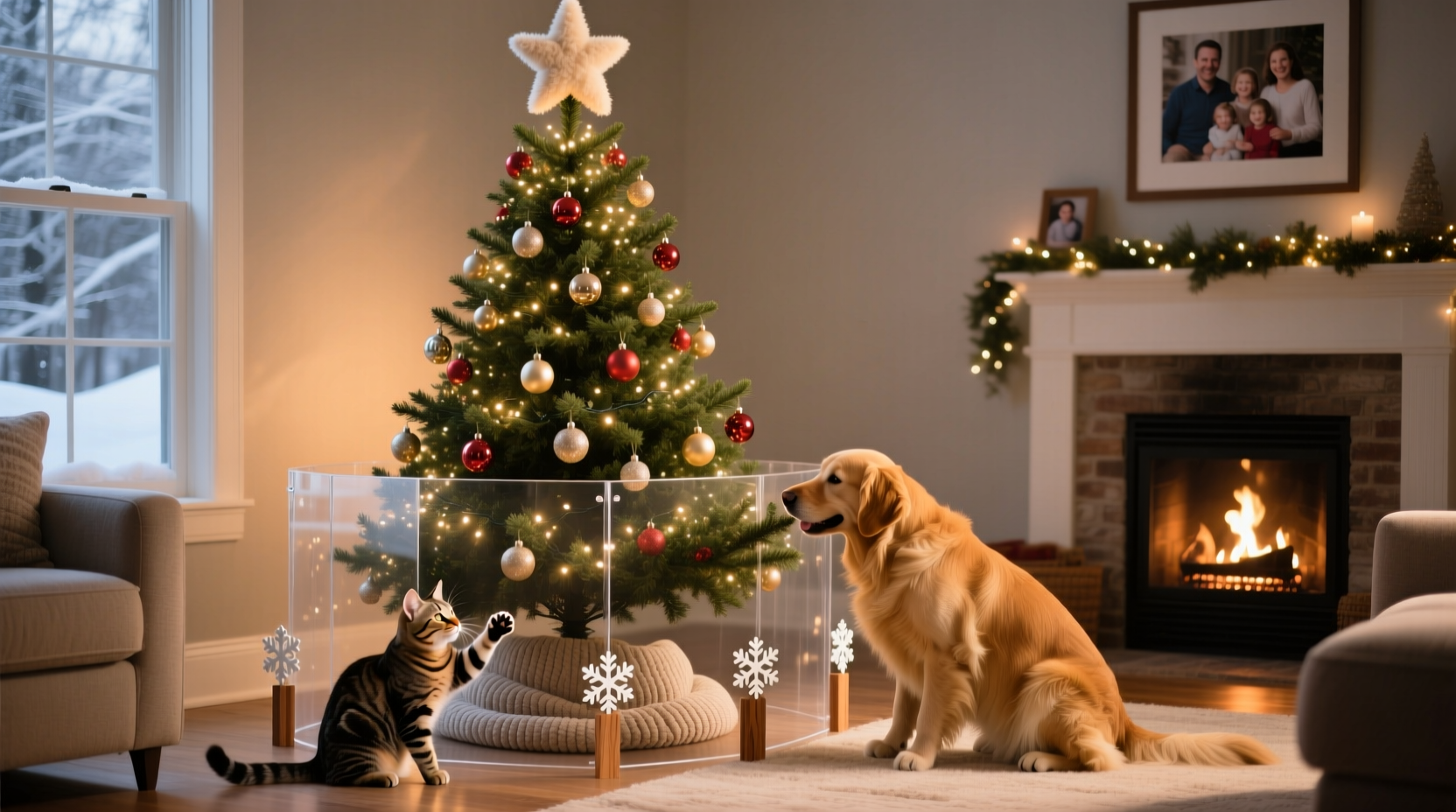
Cats and dogs don’t see a Christmas tree as sacred holiday ground. To them, it’s an object full of movement, scent, and novelty. For cats, the shimmering lights mimic insects or small animals. Ornaments swing unpredictably, triggering predatory instincts. The texture of pine needles offers tactile stimulation, and some cats even find the smell appealing. Puppies and young dogs may treat the tree like a new toy—an irresistible structure to explore, sniff, and nudge.
Dogs with herding or retrieving tendencies might circle the base or attempt to “fetch” fallen pine needles. Larger breeds can accidentally knock over a poorly secured tree simply by brushing past it. Even well-trained pets can regress under the excitement of seasonal changes, guests, and altered routines.
Recognizing these motivations helps you anticipate problems before they occur. Prevention is more effective than correction, especially when dealing with fast-moving animals and fragile decor.
Tip: Introduce your pets to the tree gradually. Let them sniff and inspect it without ornaments first, under supervision, to reduce novelty-driven curiosity.Secure the Tree Physically and Environmentally
The foundation of tree protection starts with stability. A wobbly tree invites trouble. Whether real or artificial, ensure your tree is anchored firmly. Use a heavy, wide-based stand appropriate for the tree’s height and weight. For real trees, keep the water reservoir filled—dry bases become loose, increasing tipping risk.
Beyond the stand, consider additional anchoring methods:
- Ceiling hooks: Attach soft nylon cords from the top branches to ceiling hooks. This prevents vertical lifting and swaying.
- Furniture brackets: Anchor the trunk to a nearby wall stud using adjustable straps designed for furniture stabilization.
- Weighted bases: Place sandbags or decorative boxes filled with books around the stand’s perimeter.
Location matters. Avoid placing the tree near furniture pets can jump from—such as sofas or bookshelves. Keep it away from high-traffic areas where excited dogs might dash into it during play. If possible, choose a room with a door that can be closed when unsupervised.
“An unsecured tree is one of the top household hazards during the holidays. A 30-pound dog leaning against a poorly anchored tree can generate enough force to bring it down.” — Dr. Lena Peterson, DVM, Pet Safety Advocate
Design a Pet-Safe Decor Strategy
Not all decorations are pet-friendly. Some pose choking hazards; others are toxic if ingested. Tinsel, ribbon, and small ornaments are particularly dangerous. Cats may swallow linear objects like tinsel, leading to intestinal blockages requiring emergency surgery. Glass balls can shatter and cause internal injuries. Even pine needles, while mildly toxic, can irritate the stomach and cause vomiting or diarrhea in sensitive animals.
Adopt a decoration philosophy centered on safety and durability:
- Use large, sturdy ornaments made of plastic or fabric instead of glass.
- Hang breakable items toward the top third of the tree, out of reach.
- Avoid tinsel, ribbons, and garlands—especially metallic or glitter-coated types.
- Use battery-powered LED lights instead of electric strands to eliminate shock risk.
- Consider leaving the lower third of the tree bare or use only soft, plush ornaments.
| Decoration Type | Pet Risk Level | Recommended Alternative |
|---|---|---|
| Glass Ornaments | High (breakage, ingestion) | Plastic, felt, or wooden ornaments |
| Tinsel & Ribbons | Very High (intestinal obstruction) | Lights only, or fabric streamers |
| Electric Lights | Moderate (chewing wires) | Battery-operated LEDs |
| Pine Cones | Low (if untreated) | Yes, but monitor for chewing |
| Edible Decor (popcorn, candy canes) | High (choking, toxicity) | Avoid entirely—use paper chains instead |
Some pet owners opt for a “pet tree”—a smaller, secondary tree decorated with pet-safe items placed in a separate area. This allows animals to interact safely without threatening the main display.
Create Behavioral Boundaries Early
Training begins the moment the tree arrives. Waiting until after incidents occur reduces effectiveness. Use positive reinforcement to teach pets what is allowed. When your dog or cat approaches the tree calmly without touching it, reward immediately with praise or a treat. Redirect unwanted behavior—like pawing or sniffing too closely—with a favorite toy or command such as “leave it.”
Consistency is crucial. All household members must enforce the same rules. If one person allows nudging while another scolds, confusion sets in, and the pet learns the boundary is negotiable.
For persistent climbers or chewers, consider temporary barriers:
- Exercise pens: Set up a metal or plastic corral around the tree base.
- Baby gates: Block access to the room when supervision isn’t possible.
- Tree skirts with deterrents: Place aluminum foil or double-sided tape under the skirt—most pets dislike the texture.
Some pet owners successfully use motion-activated air sprays that emit a harmless puff when triggered. These devices startle rather than harm and help condition pets to avoid the area.
Tip: Rotate your pet’s toys during the holidays to reduce boredom-driven mischief. A stuffed Kong or puzzle feeder near the tree area can redirect attention.Step-by-Step Guide: Securing Your Tree in 5 Days
Don’t wait until the last minute. Begin preparations early to minimize stress for both you and your pets.
- Day 1 – Setup Without Decor: Assemble the tree and let pets investigate under close watch. Observe their reactions. Note any signs of obsession or aggression.
- Day 2 – Install Anchors: Secure the tree to the ceiling or wall. Test stability by gently pushing the top. No significant movement should occur.
- Day 3 – Add Lights Only: String lights (preferably battery-powered) and monitor interactions. Use deterrents if pets show interest in chewing cords.
- Day 4 – Partial Decoration: Add upper-half ornaments. Leave the bottom bare. Reward calm behavior around the tree.
- Day 5 – Final Touches: Complete decorating, including a secure tree skirt. Place treats or toys nearby to encourage positive associations.
Real-Life Example: The Thompson Family’s Trial Run
The Thompsons, a family in Portland with two rescue cats and a Labrador puppy, learned the hard way during their first holiday together. Their seven-foot Douglas fir was up for less than four hours before Luna, the adventurous tabby, scaled the lower branches and knocked off three ornaments. Max, the pup, chewed through a light cord, causing a short circuit.
Determined not to repeat the incident, they redesigned their approach the following year. They chose a sturdier stand, anchored the tree to a wall bracket, and used only plastic ornaments above four feet. They replaced electric lights with battery-operated LEDs and wrapped cords in protective tubing. A baby gate blocked the living room at night and during work hours.
They also introduced a “no tree zone” training protocol. Whenever either pet approached within two feet, they redirected with a feather toy or clicker command. Within a week, both animals lost interest. By Christmas Eve, the tree remained pristine—and so did the pets’ health.
Essential Holiday Pet Safety Checklist
Use this checklist to ensure your home is ready before bringing in the tree:
- ✅ Choose a stable tree stand with a wide base
- ✅ Anchor the tree to ceiling or wall
- ✅ Use only pet-safe ornaments (no glass, tinsel, or small parts)
- ✅ Replace electric lights with battery-powered LEDs
- ✅ Conceal or protect all cords
- ✅ Keep toxic plants (mistletoe, poinsettia, holly) out of reach
- ✅ Train pets with positive reinforcement and redirection
- ✅ Install physical barriers (gates, pens) if needed
- ✅ Supervise initial interactions closely
- ✅ Have your vet’s emergency number accessible
Frequently Asked Questions
Can I use citrus peels or essential oils to deter pets?
Citrus scents may repel some cats and dogs due to their strong smell, but essential oils can be toxic if ingested or absorbed through the skin. Peels are safer but should not be placed where pets can eat them. Instead, use commercial pet deterrent sprays labeled as non-toxic.
Is it safe to let my cat touch the tree at all?
Controlled, supervised contact is usually fine once the tree is secure and decorated safely. However, discourage climbing or pawing to prevent habit formation. If your cat only sniffs or sits near the base, that’s generally low-risk.
What should I do if my pet eats part of the tree or an ornament?
Contact your veterinarian or the ASPCA Animal Poison Control Center immediately. Do not induce vomiting unless instructed. Bring a sample of the ingested material if possible. Symptoms like drooling, lethargy, vomiting, or loss of appetite require urgent care.
Final Thoughts: Celebrate Safely, Not Stressfully
The holiday season should be joyful, not fraught with worry every time your pet enters the room. By taking proactive steps to secure your Christmas tree and respect your pets’ natural behaviors, you create a home where celebration and safety coexist. It’s not about eliminating fun—it’s about managing risks intelligently.
Start early, stay consistent, and remember that your pets aren’t being “bad”—they’re responding to an unfamiliar object in their territory. With patience and preparation, you can enjoy twinkling lights, festive decor, and happy, healthy pets all season long.
🚀 Ready to protect your tree and celebrate stress-free? Share this guide with fellow pet owners, or leave a comment with your own tried-and-true tip!








